
What is NVQ Level 6 in Occupational Health and Safety? Complete Guide
Occupational health and safety have become essential for organizations that aim to maintain safe working environments and reduce workplace accidents. Industries such as construction, oil and gas, manufacturing, logistics, and engineering require qualified professionals who can manage safety risks and ensure compliance with workplace safety regulations.
One of the most recognized professional qualifications for safety professionals is the NVQ Level 6 Diploma in Occupational Health and Safety Practice.For professionals who want to gain practical skills and an internationally recognized qualification, the ProQual Level 6 NVQ Diploma in Occupational Health and Safety Practice provides comprehensive training in workplace safety management, risk assessment, and regulatory compliance.
This qualification is designed for individuals responsible for managing workplace safety and implementing occupational health and safety systems within organizations. It equips professionals with the knowledge and practical competence required to identify hazards, conduct risk assessments, and implement effective safety management systems.
What is NVQ Level 6 in Occupational Health and Safety?
The NVQ Level 6 Diploma in Occupational Health and Safety Practice is a professional qualification that focuses on developing practical competence in workplace safety management.
NVQ stands for National Vocational Qualification, which means the program assesses a professional’s ability to perform tasks effectively in real workplace environments rather than relying solely on academic examinations.
This qualification enables professionals to demonstrate their competence in key areas such as:
- Identifying workplace hazards
- Conducting risk assessments
- Implementing safety management systems
- Developing workplace safety policies
- Ensuring compliance with occupational safety regulations
Unlike traditional classroom-based programs, NVQ Level 6 is a competence-based qualification, meaning learners are assessed based on real workplace performance and evidence of professional practice.
NVQ Level 6 Qualification Level Explained
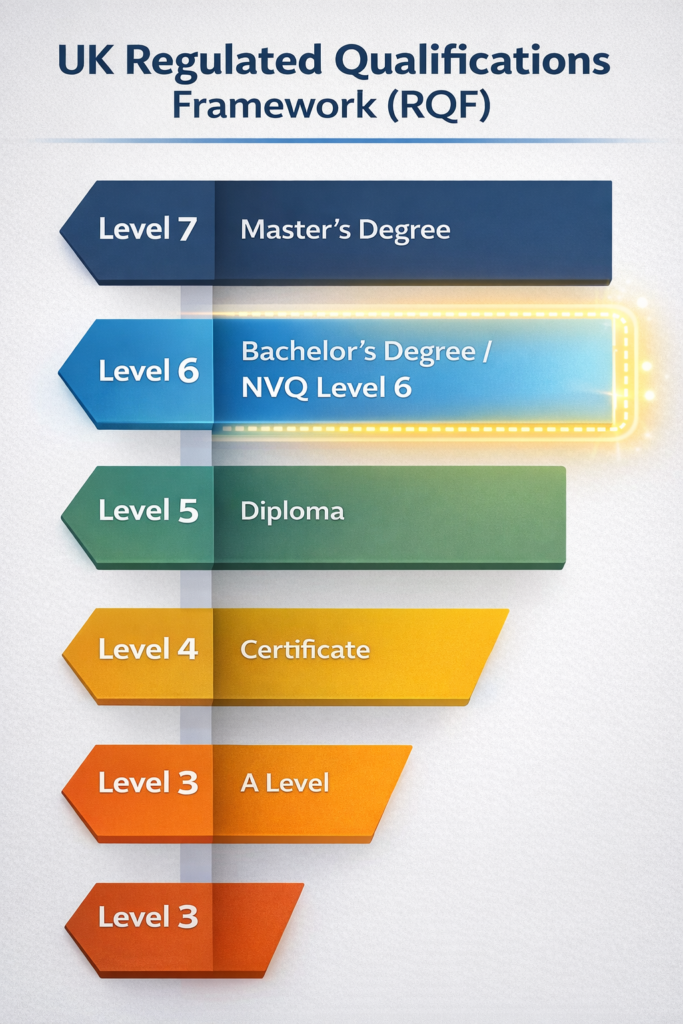
The NVQ Level 6 Diploma in Occupational Health and Safety Practice is a high-level professional qualification that sits at Level 6 on the UK Regulated Qualifications Framework (RQF). The RQF is a nationally recognized system used in the United Kingdom to classify and compare different qualifications based on their level of difficulty, knowledge requirements, and professional competence.
At Level 6 of the RQF, the qualification is considered academically comparable to a Bachelor’s degree. This does not mean it is a traditional university degree; however, it reflects a similar level of complexity, professional responsibility, and depth of knowledge. While academic degrees focus mainly on theoretical learning and examinations, NVQ qualifications emphasize practical competence and real-world application of skills in the workplace.
The NVQ Level 6 qualification is specifically designed for professionals who are responsible for managing health and safety systems, implementing workplace safety policies, and ensuring compliance with occupational safety regulations within an organization. Learners demonstrate their competence by providing evidence from their workplace activities, such as risk assessments, safety reports, incident investigations, and safety management procedures.
Because this qualification focuses on practical workplace performance, it allows professionals to demonstrate their ability to apply safety management principles in real organizational settings rather than simply learning theoretical concepts.
Another key advantage of NVQ Level 6 is its strong professional recognition across industries and international safety organizations. Employers in sectors such as construction, oil and gas, manufacturing, engineering, logistics, and infrastructure development highly value this qualification because it proves that the holder has the knowledge and practical ability to manage complex workplace safety challenges.
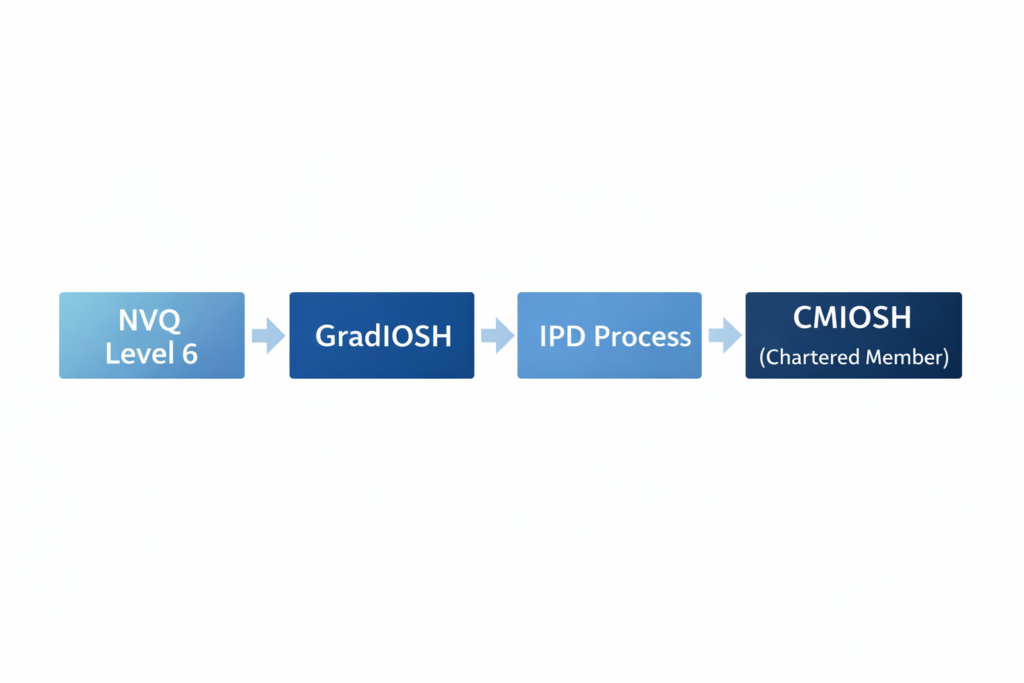
Additionally, the NVQ Level 6 Diploma can support career progression toward professional memberships with recognized bodies such as the Institution of Occupational Safety and Health (IOSH). Many professionals who complete this qualification become eligible for Graduate Membership (GradIOSH), which can eventually lead to Chartered Membership (CMIOSH) after meeting professional development requirements.
Who Should Take NVQ Level 6 Health and Safety?
The NVQ Level 6 qualification is designed for professionals who already work in roles related to workplace safety and risk management.
Typical candidates include:
- Health and Safety Officers
- Safety Managers
- HSE Advisors
- Construction Safety Officers
- Risk Management Professionals
- Workplace Safety Consultants
This qualification is particularly beneficial for professionals who want to progress into senior health and safety management roles.
Key Skills Developed in NVQ Level 6
The NVQ Level 6 Diploma in Occupational Health and Safety Practice is designed to equip safety professionals with the advanced knowledge and practical skills required to manage workplace health and safety effectively. Since the qualification is competence-based and assessed through real workplace activities, learners develop skills that can be directly applied to improving safety standards within their organizations.
Throughout the program, professionals gain expertise in several critical areas of occupational health and safety management, enabling them to identify risks, implement safety systems, and promote a safe working environment for employees.
Below are some of the key skills developed during the NVQ Level 6 qualification.
Risk Assessment and Hazard Management
One of the most important responsibilities of a health and safety professional is the ability to identify potential hazards and assess workplace risks. In the NVQ Level 6 program, learners develop the skills required to systematically evaluate workplace environments and recognize hazards that could lead to accidents or injuries.
Participants learn how to conduct comprehensive risk assessments, analyze the likelihood and severity of hazards, and implement appropriate control measures to minimize or eliminate risks. This process involves identifying hazards related to equipment, workplace processes, environmental conditions, and employee activities.
By mastering risk assessment and hazard management techniques, safety professionals can help organizations prevent workplace accidents, protect employees, and maintain compliance with safety regulations.
Health and Safety Management Systems
Another key competency developed through the NVQ Level 6 qualification is the ability to design, implement, and manage effective health and safety management systems. These systems provide structured processes that organizations use to monitor, control, and continuously improve workplace safety performance.
Learners gain knowledge about developing safety policies, establishing safety procedures, monitoring safety performance indicators, and ensuring that health and safety objectives are aligned with organizational goals. They also learn how to implement internationally recognized safety frameworks and management standards within the workplace.
By understanding how to build and maintain a strong safety management system, professionals can help organizations create structured safety programs that reduce risks and improve overall workplace safety culture.
Incident Investigation and Accident Analysis
Workplace incidents and accidents can occur despite preventive measures. Therefore, it is essential for safety professionals to have the ability to investigate incidents thoroughly and identify their root causes.
The NVQ Level 6 program teaches learners how to conduct detailed accident investigations, collect evidence, analyze contributing factors, and determine the underlying causes of workplace incidents. Professionals also learn how to develop corrective and preventive actions to ensure that similar incidents do not occur in the future.
Effective incident investigation helps organizations improve safety procedures, prevent recurring accidents, and strengthen workplace safety systems.
Safety Leadership and Communication
Successful health and safety management requires more than technical knowledge; it also requires strong leadership and communication skills. The NVQ Level 6 Diploma helps professionals develop the ability to lead safety initiatives, influence employee behavior, and promote a positive safety culture within their organizations.
Participants learn how to communicate safety policies clearly, provide safety training to employees, and encourage active participation in safety programs. They also develop leadership skills that enable them to motivate teams, enforce safety standards, and ensure that health and safety practices are consistently followed throughout the organization.
Strong safety leadership helps create a workplace environment where employees understand the importance of safety and actively contribute to maintaining safe working conditions.
Regulatory Compliance and Safety Standards
Health and safety professionals must ensure that their organizations comply with national and international occupational safety regulations. The NVQ Level 6 qualification provides learners with the knowledge required to interpret safety laws, apply regulatory requirements, and maintain compliance with workplace safety standards.
Professionals learn how to implement procedures that meet legal requirements, conduct safety audits, and ensure that organizations operate within established health and safety guidelines. This helps organizations avoid legal penalties while protecting employees from workplace hazards.
Entry Requirements for NVQ Level 6 Health and Safety
Unlike traditional academic programs, NVQ qualifications focus primarily on professional competence rather than strict academic requirements.
However, candidates typically:
- Work in a health and safety related role
- Have responsibilities related to workplace safety management
- Possess practical experience in occupational health and safety
Since the qualification is work-based, learners must have access to a workplace where they can demonstrate their safety management skills.
NVQ Level 6 Course Units
The NVQ Level 6 Diploma typically includes several units that focus on different aspects of occupational health and safety management.
Common units include:
- Promote a positive Health and Safety culture
- Develop and implement the Health and Safety policy
- Develop and implement effective communication systems for Health and Safety information
- Develop and maintain individual and organisational competence in Health and Safety matters
- Identify, access and control Health and Safety risks
- Develop and implement proactive monitoring systems for Health and Safety
- Develop and implement reactive monitoring systems for Health and Safety
- Develop and implement Health and Safety emergency response systems and procedures
- Develop and implement Health and Safety review systems
- Maintain knowledge of improvements to influence health and safety practice
These units ensure that learners gain both theoretical knowledge and practical experience.
How is NVQ Level 6 Assessed?
The NVQ Level 6 Diploma is assessed through a portfolio of workplace evidence rather than written examinations.
Assessment methods typically include:
- Workplace documentation
- Risk assessment reports
- Safety policies and procedures
- Incident investigation reports
- Professional discussions with assessors
Because the qualification is competence-based, learners demonstrate their ability to perform health and safety management tasks effectively in their workplace.
How Long Does NVQ Level 6 Take?
The NVQ Level 6 Diploma generally takes 6 to 12 months to complete.
However, the duration can vary depending on:
- The learner’s professional experience
- Availability of workplace evidence
- Individual learning pace
Since the program is flexible, professionals can complete the qualification while continuing their full-time employment.If you want to understand the full structure, units, and assessment process of this qualification, read our complete guide to the Level 6 NVQ Diploma in Health and Safety.
NVQ Level 6 vs NEBOSH Diploma
Many professionals compare NVQ Level 6 with the NEBOSH Diploma when choosing a health and safety qualification.
| Feature | NVQ Level 6 | NEBOSH Diploma |
|---|---|---|
| Learning Type | Work-based | Academic |
| Exams | No exams | Written exams |
| Assessment | Workplace portfolio | Assignments & exams |
| Flexibility | Highly flexible | Structured study |
| Best For | Working professionals | Academic learners |
Both qualifications are highly respected in the safety industry, but NVQ Level 6 is often preferred by professionals who want practical workplace assessment instead of exams.
Career Opportunities After NVQ Level 6
Completing the NVQ Level 6 qualification can significantly improve career prospects in occupational health and safety.
Common career roles include:
- Health and Safety Manager
- HSE Advisor
- Safety Consultant
- Occupational Safety Specialist
- Environmental Health and Safety Manager
These professionals are highly valued in industries such as construction, manufacturing, oil and gas, logistics, and infrastructure development.Many professionals pursue this qualification to improve their career prospects and move into senior safety roles. You can explore the career benefits of NVQ Level 6 in health and safety in detail.
IOSH Membership Pathway
One of the major advantages of completing the NVQ Level 6 Diploma in Occupational Health and Safety Practice is its recognition by leading professional safety organizations, particularly the Institution of Occupational Safety and Health (IOSH). IOSH is one of the world’s largest professional bodies for health and safety practitioners, and its memberships are widely respected by employers across many industries.
After successfully completing the NVQ Level 6 qualification, safety professionals may become eligible to apply for Graduate Membership of IOSH (GradIOSH). This membership level is designed for individuals who have achieved a recognized safety qualification and are working toward becoming fully chartered safety professionals.
Graduate members are required to complete IOSH’s Initial Professional Development (IPD) program. During this stage, professionals demonstrate their practical experience, professional competence, and commitment to continuous improvement in occupational health and safety management.
Once the IPD process is completed and the required professional standards are met, individuals can progress to Chartered Membership (CMIOSH). Chartered membership represents the highest level of professional recognition within IOSH and indicates that a professional has demonstrated advanced competence, leadership ability, and a strong commitment to maintaining high standards of workplace safety.
Achieving IOSH membership offers several significant benefits for safety professionals, including:
- Enhanced professional credibility within the health and safety industry
- Recognition by employers worldwide as a qualified safety practitioner
- Increased career opportunities in senior safety management roles
- Access to professional development resources, training, and networking opportunities
- The ability to demonstrate commitment to maintaining high safety standards
For many health and safety professionals, the NVQ Level 6 Diploma serves as an important step toward achieving Chartered Safety and Health Practitioner status, which can greatly improve both career prospects and professional reputation on a global scale.
Benefits of NVQ Level 6 Health and Safety Qualification
The NVQ Level 6 Diploma in Occupational Health and Safety Practice offers several important advantages for professionals who want to build a successful career in workplace safety management. Because the qualification focuses on practical workplace competence and internationally recognized safety standards, it is highly valued by employers across many industries.
Below are some of the key benefits of obtaining the NVQ Level 6 health and safety qualification:
- Career Advancement Opportunities
NVQ Level 6 helps professionals progress into senior roles such as Health and Safety Manager, HSE Advisor, Safety Consultant, or Occupational Safety Specialist. It demonstrates that you have the skills and competence required to manage workplace safety systems and lead safety initiatives within an organization. - International Recognition
This qualification is part of the UK Regulated Qualifications Framework (RQF) and is recognized by employers worldwide. Professionals with NVQ Level 6 can pursue job opportunities in industries such as construction, oil and gas, manufacturing, engineering, and logistics across different countries. - Practical and Work-Based Learning
Unlike many academic qualifications, NVQ Level 6 focuses on real workplace performance rather than traditional exams. Learners demonstrate their competence through workplace evidence such as risk assessments, safety reports, incident investigations, and safety management documentation. - Improved Professional Credibility
Holding an NVQ Level 6 qualification shows employers that you possess advanced knowledge and practical skills in occupational health and safety management. This increases your credibility and strengthens your professional profile. - Professional Membership Opportunities
Completing NVQ Level 6 may allow professionals to apply for Graduate Membership (GradIOSH) with the Institution of Occupational Safety and Health (IOSH). This membership pathway can eventually lead to Chartered Membership (CMIOSH), one of the highest professional recognitions in the health and safety industry. - Higher Earning Potential
With advanced safety qualifications and professional competence, many NVQ Level 6 graduates gain access to better job opportunities and higher salary packages in safety management roles.
Overall, the NVQ Level 6 Diploma provides a strong foundation for professionals who want to advance their careers, gain international recognition, and become leaders in occupational health and safety management.
Conclusion
The NVQ Level 6 Diploma in Occupational Health and Safety Practice is one of the most valuable qualifications for professionals working in workplace safety management. It provides practical skills that enable safety professionals to identify hazards, manage workplace risks, and implement effective safety management systems.
Because the qualification focuses on real workplace competence and professional development, it offers excellent opportunities for career advancement and professional recognition in the health and safety industry.
Professionals who want to build a successful career in occupational health and safety management can greatly benefit from obtaining this internationally recognized qualification.