
Health and Safety Manager: Roles, Responsibilities, Skills and Career Guide
Health and Safety Manager Roles and Responsibilities
Workplace safety is a critical concern for organizations across industries such as construction, manufacturing, oil and gas, logistics, healthcare, and engineering. Companies must ensure that employees work in a safe environment where hazards are identified and controlled effectively.
This is where a Health and Safety Manager plays a vital role.To understand the qualification structure and how it works, read our detailed article explaining what NVQ Level 6 in Occupational Health and Safety is.
A health and safety manager is responsible for developing, implementing, and monitoring workplace safety policies that protect employees and ensure compliance with occupational safety regulations. Their work helps organizations reduce workplace accidents, improve productivity, and maintain legal compliance with health and safety laws.
What is a Health and Safety Manager?
A Health and Safety Manager is a trained professional responsible for planning, implementing, and monitoring workplace safety programs to ensure that employees work in a safe and healthy environment. Their primary role is to protect workers, visitors, and company assets by ensuring that all workplace activities comply with occupational health and safety regulations and industry safety standards.
Health and safety managers play a crucial role in preventing workplace accidents, injuries, and occupational illnesses. They achieve this by identifying potential hazards, assessing risks, and implementing effective safety policies and procedures that reduce the likelihood of incidents. In addition to preventing accidents, they also ensure that organizations follow national and international safety regulations, which helps companies avoid legal penalties and operational disruptions.
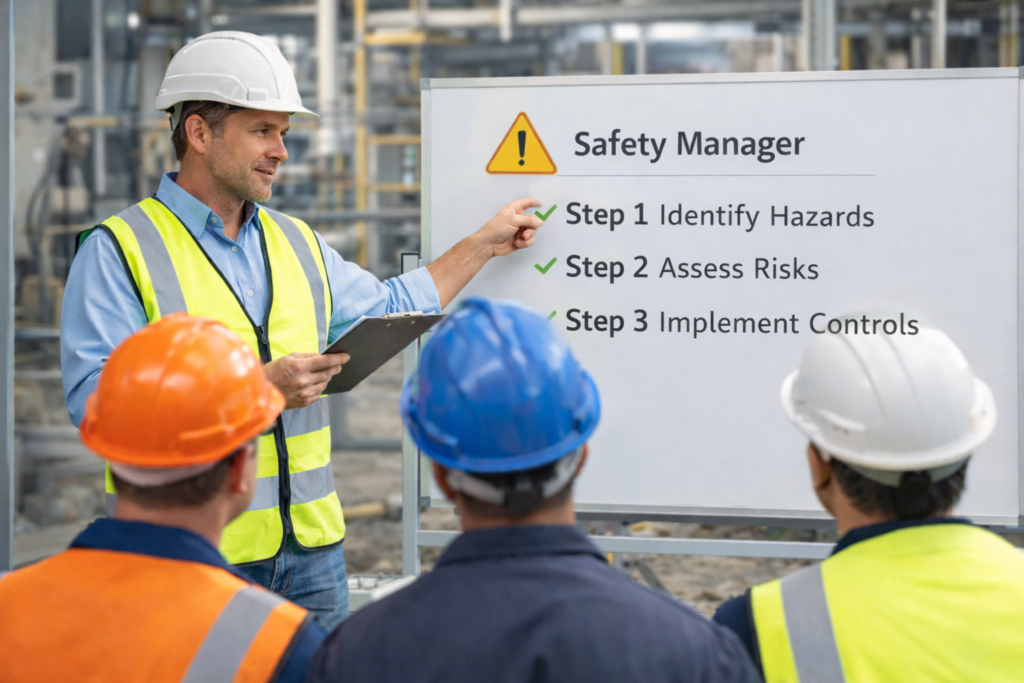
Health and safety managers regularly collaborate with senior management, department supervisors, safety officers, and employees to identify workplace hazards and develop strategies to control or eliminate risks. They conduct workplace inspections, safety audits, and employee training sessions to ensure that safety procedures are understood and followed by everyone in the organization.
Because workplace hazards can vary depending on the industry, health and safety managers are especially important in sectors where the risk of accidents is higher. These industries often require strict safety management practices and continuous monitoring of workplace conditions.
Common industries that employ health and safety managers include:
- Construction – managing safety risks related to heavy machinery, working at heights, and hazardous materials.
- Oil and Gas – ensuring safe operations in high-risk environments involving drilling, chemical exposure, and heavy equipment.
- Manufacturing – monitoring machine safety, industrial processes, and employee protection measures.
- Energy and Utilities – managing safety in power plants, electrical systems, and infrastructure projects.
- Logistics and Transportation – overseeing safety in warehouses, transport operations, and material handling activities.
- Healthcare – ensuring compliance with health regulations and protecting healthcare workers from biological and chemical hazards.
Overall, health and safety managers are responsible for creating and maintaining a strong safety culture within organizations. Their work ensures that companies operate safely, employees are protected from workplace hazards, and safety regulations are consistently followed across all operational activities.Learn how to become a health and safety manager.
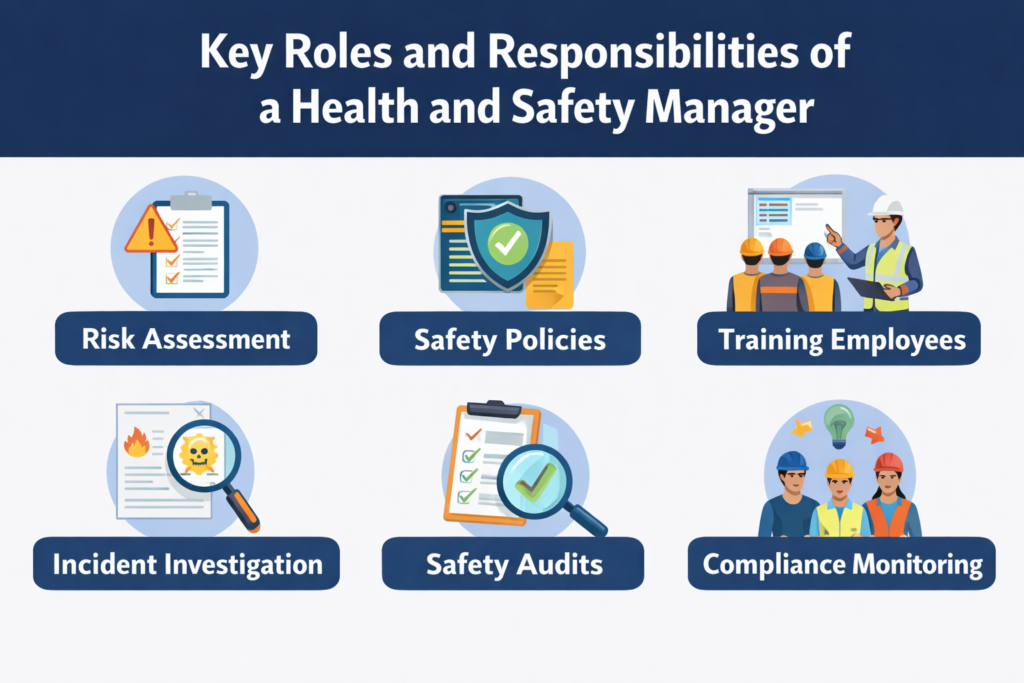
Key Roles and Responsibilities of a Health and Safety Manager
The responsibilities of a health and safety manager can vary depending on the industry and organization. However, the following duties are commonly associated with this role.
1. Conducting Risk Assessments and Hazard Identification
One of the most important responsibilities of a health and safety manager is identifying workplace hazards and conducting risk assessments.
This process involves evaluating potential dangers such as:
- Unsafe machinery
- Hazardous materials
- Poor workplace ergonomics
- Fire risks
- Electrical hazards
By identifying these risks, safety managers can implement preventive measures to protect employees and reduce workplace accidents.
2. Developing Health and Safety Policies
Health and safety managers are responsible for creating and implementing workplace safety policies that guide employees on safe work practices.
These policies may include:
- Emergency procedures
- Hazard control measures
- Safe operating procedures
- Personal protective equipment (PPE) requirements
Well-structured safety policies help organizations establish clear safety standards and ensure employees follow safe working practices.
3. Ensuring Compliance with Safety Regulations
Organizations must comply with national and international health and safety regulations. Health and safety managers ensure that the company meets these legal requirements.
This includes compliance with standards related to:
- Occupational health and safety laws
- Workplace safety regulations
- Environmental safety standards
- Industry-specific safety guidelines
Failure to comply with these regulations can lead to legal penalties and workplace accidents.
4. Conducting Safety Training and Awareness Programs
Health and safety managers play an important role in educating employees about workplace safety.
They organize training sessions that help workers understand:
- Workplace hazards
- Emergency response procedures
- Proper use of safety equipment
- Accident prevention strategies
Regular safety training improves employee awareness and helps create a strong safety culture within the organization.
5. Investigating Workplace Incidents
When accidents or safety incidents occur, health and safety managers investigate the cause of the incident.
The investigation process includes:
- Collecting evidence
- Interviewing employees
- Analyzing safety procedures
- Identifying root causes
After the investigation, safety managers implement corrective measures to prevent similar incidents from happening in the future.
6. Conducting Safety Inspections and Audits
Regular safety inspections are necessary to ensure that workplace safety standards are maintained.
Health and safety managers conduct routine inspections to check:
- Equipment safety
- Compliance with safety procedures
- Proper use of PPE
- Workplace hazard controls
These inspections help organizations identify potential safety risks before accidents occur.
7. Promoting a Positive Safety Culture
Another key responsibility of safety managers is promoting a strong safety culture within the workplace.
They encourage employees to:
- Follow safety procedures
- Report hazards
- Participate in safety programs
When employees actively participate in safety initiatives, organizations experience fewer workplace accidents and improved productivity.
Skills Required to Become a Health and Safety Manager
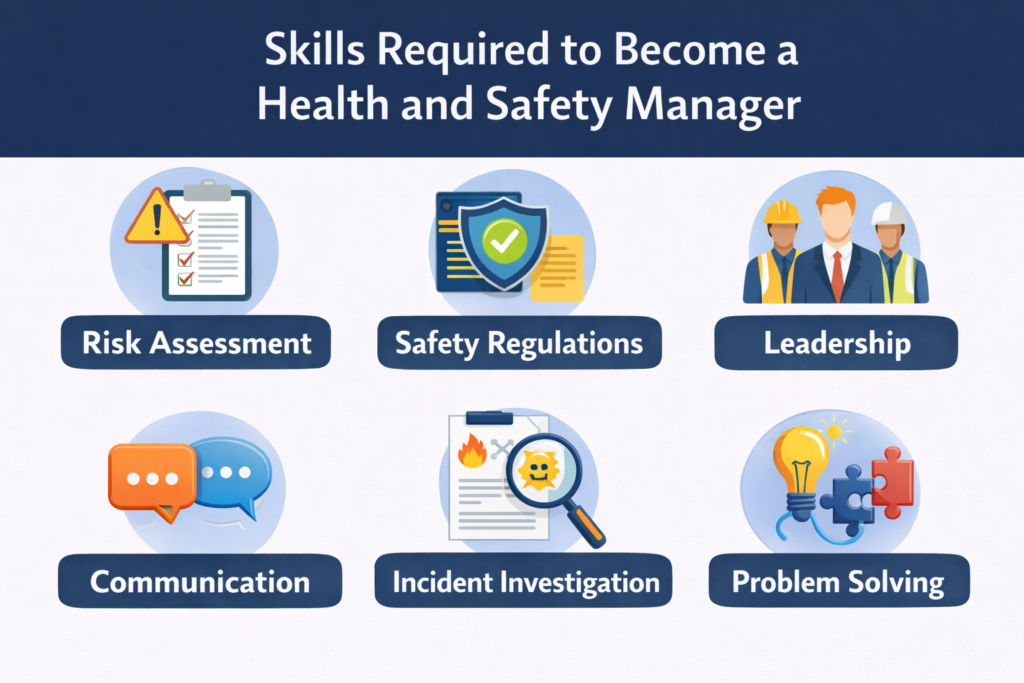
To perform their responsibilities effectively, Health and Safety Managers must possess a combination of technical knowledge, leadership abilities, and strong communication skills. Their role involves identifying workplace risks, implementing safety management systems, ensuring regulatory compliance, and guiding employees to follow safe working practices.
Below are some of the most important skills required for professionals who want to succeed as health and safety managers.
Risk Assessment and Hazard Analysis
Health and safety managers must be skilled at identifying workplace hazards and assessing risks that could cause accidents or injuries. This skill helps organizations prevent incidents and maintain safe working conditions.
Key abilities include:
- Identifying potential hazards in the workplace
- Conducting detailed risk assessments
- Evaluating the severity and likelihood of risks
- Implementing appropriate control measures
- Monitoring and reviewing risk management strategies

Knowledge of Safety Regulations and Standards
A strong understanding of occupational health and safety laws and industry regulations is essential for safety managers. They must ensure that their organization complies with legal requirements and safety standards.
Important aspects include:
- Understanding national and international safety regulations
- Implementing workplace safety policies
- Ensuring compliance with occupational health and safety laws
- Keeping up to date with new safety regulations
- Conducting compliance audits and inspections
Leadership and Management Skills
Health and safety managers often lead safety initiatives within an organization. Strong leadership skills enable them to guide teams, enforce safety policies, and promote a culture of safety.
Key leadership responsibilities include:
- Leading safety teams and coordinating safety programs
- Developing safety strategies and policies
- Motivating employees to follow safety procedures
- Managing workplace safety initiatives
- Encouraging employee participation in safety programs
Communication and Training Abilities
Effective communication is essential for ensuring that employees understand safety procedures and workplace policies.
Important communication skills include:
- Delivering safety training sessions and workshops
- Conducting safety briefings and toolbox talks
- Explaining safety procedures clearly to employees
- Promoting awareness of workplace hazards
- Providing guidance on safe working practices
Incident Investigation and Analytical Skills
When accidents or incidents occur, safety managers must be able to investigate the situation and identify the root causes.
Key investigation skills include:
- Conducting accident and incident investigations
- Collecting evidence and analyzing incident reports
- Identifying root causes of workplace accidents
- Developing corrective and preventive actions
- Improving safety procedures to prevent future incidents
Problem-Solving and Decision-Making
Health and safety managers frequently face unexpected safety challenges and must make quick decisions to protect employees and operations.
Essential problem-solving abilities include:
- Identifying workplace safety problems
- Evaluating potential solutions
- Making informed decisions during emergencies
- Implementing effective corrective measures
- Continuously improving workplace safety systems
Qualifications Required for Health and Safety Managers
Most health and safety managers hold professional qualifications in occupational health and safety.
Some of the commonly recognized qualifications include:
- NVQ Level 6 Diploma in Occupational Health and Safety Practice
- NEBOSH Diploma in Occupational Health and Safety
- IOSH Managing Safely Certification
- OSHA Safety Certifications
Professionals who want to progress into senior safety management roles often pursue advanced qualifications such as the ProQual Level 6 NVQ Diploma in Occupational Health and Safety Practice, which focuses on practical workplace safety management skills.Professionals who want to move into senior safety roles often pursue advanced qualifications such as the ProQual Level 6 NVQ Diploma in Occupational Health and Safety Practice. You can learn more in our complete guide to the Level 6 NVQ Diploma in Health and Safety.
Industries That Hire Health and Safety Managers
Health and safety managers are needed in many industries where workplace risks must be carefully managed.
Some of the major industries that employ safety managers include:
- Construction industry
- Oil and gas sector
- Manufacturing and production facilities
- Transportation and logistics
- Energy and utilities
- Healthcare and pharmaceuticals
These industries rely on safety professionals to maintain safe working environments and reduce operational risks.
Health and Safety Manager Salary
The salary of a Health and Safety Manager can vary depending on factors such as experience, industry, location, and qualifications. Professionals with advanced safety certifications and several years of experience generally earn higher salaries.
| Country | Average Annual Salary |
|---|---|
| United Kingdom | £40,000 – £70,000 |
| United States | $80,000 – $120,000 |
| UAE / Gulf Countries | $50,000 – $90,000 |
| Pakistan | PKR 1,200,000 – PKR 3,000,000 |
Professionals with advanced safety qualifications and experience often earn higher salaries and have access to better career opportunities.In Pakistan, experienced health and safety managers working in industries such as construction, oil & gas, manufacturing, and infrastructure projects can earn competitive salaries, especially if they hold internationally recognized qualifications such as NVQ Level 6 or IOSH certifications. These qualifications often open doors to higher-paying roles both locally and internationally.
Career Path of a Health and Safety Professional
A career in occupational health and safety offers excellent opportunities for professional growth and advancement. As safety professionals gain experience, develop specialized skills, and obtain recognized safety qualifications, they can progress into more senior roles with greater responsibilities and leadership opportunities.
Most professionals in this field begin with entry-level safety positions and gradually move into management and strategic leadership roles within organizations. Career progression typically depends on work experience, professional certifications, and advanced safety qualifications.
A common career progression path in the health and safety field includes:
- Safety Officer
This is often the starting role for many professionals in the safety field. Safety officers monitor workplace conditions, conduct safety inspections, assist in risk assessments, and ensure that employees follow basic safety procedures. - HSE Advisor (Health, Safety, and Environment Advisor)
After gaining experience, professionals may move into an HSE advisor role. In this position, they provide expert guidance on workplace safety practices, assist management in developing safety policies, and support the implementation of health and safety programs. - Health and Safety Manager
At the managerial level, professionals take responsibility for overseeing the organization’s entire safety management system. Health and safety managers develop safety strategies, conduct audits, manage safety teams, and ensure compliance with occupational health and safety regulations. - HSE Director or Safety Director
With extensive experience and leadership skills, professionals can progress to executive-level roles such as HSE Director or Safety Director. In these positions, they develop company-wide safety strategies, influence organizational policies, and oversee health and safety performance across multiple departments or locations.
Many professionals progress from safety officer to safety manager by gaining experience and professional qualifications. Discover the career benefits of the Level 6 NVQ Health and Safety qualification and how it helps professionals move into senior safety roles.
Why Health and Safety Managers Are Important
Health and safety managers play a critical role in maintaining safe working environments and protecting employees from potential workplace hazards. In industries where employees work with machinery, hazardous materials, or complex operational processes, effective safety management is essential to prevent accidents and ensure smooth business operations.
A health and safety manager is responsible for developing and implementing safety policies, monitoring workplace conditions, and ensuring that organizations comply with occupational health and safety regulations. Their work not only protects employees but also helps organizations operate more efficiently and avoid costly disruptions caused by workplace incidents.
By effectively managing workplace safety systems, health and safety managers contribute to several important organizational goals, including:
- Preventing Workplace Accidents
Health and safety managers identify hazards and implement preventive measures that reduce the risk of workplace accidents, injuries, and occupational illnesses. - Reducing Operational Risks
Through risk assessments and safety management systems, they help organizations identify potential risks and implement strategies to control or eliminate them. - Ensuring Legal and Regulatory Compliance
Organizations must comply with occupational health and safety laws and regulations. Safety managers ensure that workplace policies, procedures, and operations meet these legal requirements, helping companies avoid penalties and legal issues. - Improving Employee Wellbeing
A safe workplace environment promotes employee confidence, reduces stress, and improves overall job satisfaction. Workers who feel safe are more likely to perform their duties effectively. - Increasing Workplace Productivity
Fewer accidents and safer working conditions lead to fewer work disruptions, reduced downtime, and improved operational efficiency across the organization.
Without effective safety management, organizations may face serious consequences such as workplace injuries, legal penalties, financial losses, and damage to their reputation. This is why health and safety managers are considered essential professionals for maintaining safe, compliant, and productive workplaces.
Health and Safety Managers play a vital role in creating safe and compliant workplaces by identifying hazards, implementing safety policies, and ensuring that organizations follow health and safety regulations. Their responsibilities help prevent accidents, protect employees, and improve overall workplace productivity. With the growing importance of workplace safety across industries, qualified health and safety professionals continue to be in high demand.