
How to Become a Health and Safety Manager
How to Become a Health and Safety Manager: Career Path, Skills and Qualifications
Workplace safety is one of the most important responsibilities for modern organizations. Industries such as construction, oil and gas, manufacturing, logistics, healthcare, and engineering involve complex operations where workplace hazards can lead to accidents, injuries, or operational disruptions if not properly managed.
To ensure a safe working environment, organizations rely on trained professionals known as Health and Safety Managers. These professionals are responsible for identifying workplace hazards, implementing safety policies, training employees, and ensuring compliance with occupational health and safety regulations.
Because workplace safety is now a global priority, the demand for skilled health and safety professionals continues to grow across many industries. Companies are actively looking for qualified individuals who can lead safety programs and reduce workplace risks.
What Does a Health and Safety Manager Do?
A Health and Safety Manager is responsible for developing, implementing, and monitoring workplace safety programs that protect employees and ensure compliance with safety regulations.
Their primary goal is to prevent workplace accidents, injuries, and occupational health hazards while maintaining a safe and productive work environment.
Health and safety managers work closely with company leadership, supervisors, and employees to ensure that safety procedures are followed in all operational activities. Their responsibilities often include conducting risk assessments, implementing safety policies, and training employees on safe working practices.
Some of the key responsibilities of a health and safety manager include:
- Identifying workplace hazards and conducting risk assessments
- Developing workplace safety policies and procedures
- Ensuring compliance with occupational safety regulations
- Conducting safety inspections and audits
- Investigating workplace accidents and incidents
- Organizing safety training programs for employees
- Promoting a strong safety culture within the organization
By performing these responsibilities, health and safety managers help organizations reduce operational risks, protect employees, and maintain compliance with safety regulations.
If you want to understand this role in more detail, you can read our guide on What Does a Health and Safety Manager Do? Roles and Responsibilities.
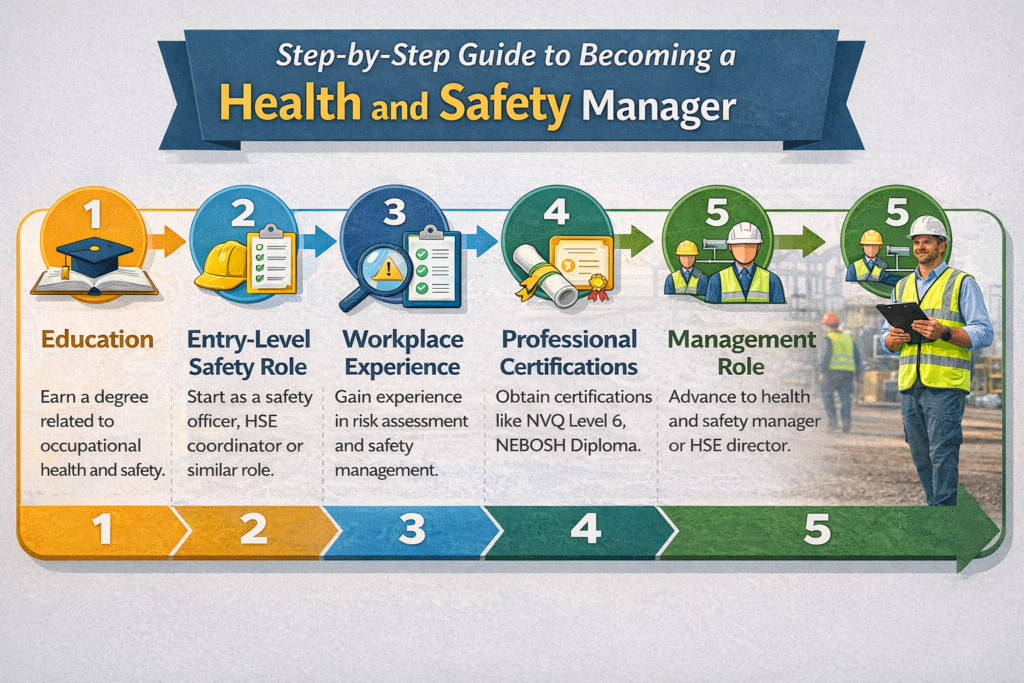
Step-by-Step Guide to Becoming a Health and Safety Manager
Becoming a health and safety manager typically requires a combination of education, professional qualifications, and practical experience. Below is a step-by-step roadmap to help you start and progress in this career.
1. Obtain Relevant Education
The first step toward becoming a health and safety manager is obtaining an educational background related to occupational health and safety.
Many professionals study subjects such as:
- Occupational Health and Safety
- Environmental Health and Safety
- Engineering
- Industrial Safety Management
- Environmental Science
Although a degree can be helpful, many successful safety professionals advance their careers through professional safety certifications and practical workplace experience.
2. Start Your Career in Entry-Level Safety Roles
Most health and safety managers begin their careers in entry-level safety positions, where they gain practical experience in workplace safety management.
Common starting roles include:
- Safety Officer
- HSE Coordinator
- Safety Supervisor
- Safety Technician
In these roles, professionals assist with safety inspections, monitor workplace hazards, and support safety programs. This experience helps develop practical knowledge of workplace safety systems.
3. Gain Experience in Risk Assessment and Safety Management
Practical experience is essential for advancing in the health and safety profession. As safety professionals gain experience, they begin to take on more responsibilities related to safety management.
Important experience areas include:
- Conducting workplace risk assessments
- Monitoring safety compliance
- Performing safety inspections
- Investigating incidents and accidents
- Developing safety procedures
These activities help professionals develop the skills needed to manage workplace safety programs effectively.
4. Obtain Professional Health and Safety Qualifications
Professional certifications play a major role in advancing a career in occupational health and safety.
Some of the most recognized safety qualifications include:
- NVQ Level 6 Diploma in Occupational Health and Safety Practice
- NEBOSH Diploma in Occupational Health and Safety
- IOSH Managing Safely Certification
- OSHA Safety Training Certifications
Professionals who want to move into senior safety management roles often pursue advanced qualifications such as the ProQual Level 6 NVQ Diploma in Occupational Health and Safety Practice, which focuses on practical workplace safety management and leadership skills.
To better understand this qualification, you can read our article on What is NVQ Level 6 in Occupational Health and Safety.
5. Develop Leadership and Management Skills
Health and safety managers must possess strong leadership abilities because they are responsible for managing safety teams and implementing safety strategies within organizations.
Professionals should develop skills such as:
- Team leadership and management
- Safety program development
- Workplace safety training
- Communication and employee engagement
Strong leadership skills help safety managers influence employees and create a culture where safety is a shared responsibility.
Skills Required for Health and Safety Managers
To perform their duties effectively, health and safety managers must develop several important skills.
Risk Assessment and Hazard Identification
Health and safety managers must be able to identify workplace hazards and evaluate potential risks that may cause accidents or injuries.
Key abilities include:
- Identifying workplace hazards
- Conducting detailed risk assessments
- Evaluating risk severity and probability
- Implementing risk control measures
Knowledge of Safety Regulations
Health and safety professionals must have a strong understanding of occupational safety laws and industry standards.
Important knowledge areas include:
- Occupational health and safety regulations
- Industry safety standards
- Workplace compliance requirements
- Safety policy development
Leadership and Communication
Safety managers must effectively communicate safety procedures and lead safety initiatives across the organization.
Essential communication responsibilities include:
- Delivering safety training sessions
- Conducting safety briefings
- Communicating safety policies
- Promoting workplace safety awareness
Incident Investigation
When accidents occur, safety managers must investigate incidents and determine the root causes.
Important investigation skills include:
- Accident analysis
- Root cause identification
- Corrective action planning
- Safety improvement recommendations
Problem-Solving and Decision-Making
Safety managers frequently face unexpected workplace risks. They must be able to quickly evaluate safety problems and implement effective solutions to protect employees and operations.
Career Path of a Health and Safety Manager
A typical career progression in occupational health and safety follows a structured path as professionals gain experience and qualifications.
A common career progression includes:
Safety Officer
↓
HSE Advisor
↓
Health and Safety Manager
↓
HSE Director or Safety Director
As professionals gain experience and obtain advanced safety certifications, they can progress into senior leadership roles responsible for managing safety strategies across large organizations.
Many professionals accelerate their career growth by obtaining professional qualifications such as the NVQ Level 6 Diploma in Occupational Health and Safety Practice, which prepares individuals for senior safety management roles.
You can also explore the Career Benefits of Level 6 NVQ Health and Safety Qualification to understand how it supports professional growth.
Industries That Hire Health and Safety Managers
Health and safety managers are required in many industries where workplace safety risks must be carefully managed.
Major industries that employ safety managers include:
- Construction
- Oil and Gas
- Manufacturing
- Energy and Utilities
- Logistics and Transportation
- Healthcare
- Infrastructure Development
These industries rely on safety professionals to ensure safe operations and protect employees from workplace hazards.

Health and Safety Manager Salary
The salary of a health and safety manager varies depending on experience, industry, and geographic location.
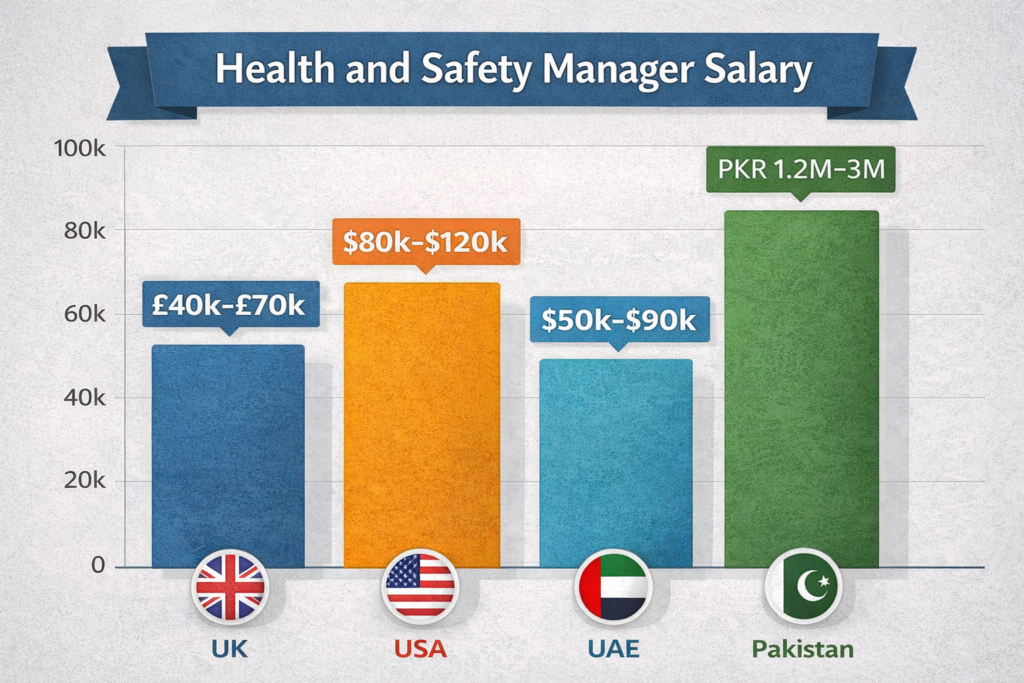
Professionals with advanced certifications and extensive experience often earn higher salaries and have access to international career opportunities.
Why Health and Safety Management Is a Good Career
A career in health and safety management offers many benefits for professionals who are passionate about protecting workers and improving workplace safety.
Some advantages of this profession include:
- Strong demand across multiple industries
- Opportunities for international employment
- Competitive salary packages
- Career advancement opportunities
- The ability to make workplaces safer
Because organizations are increasingly focused on risk management and regulatory compliance, skilled health and safety professionals continue to be in high demand worldwide.
Becoming a health and safety manager requires a combination of education, practical workplace experience, and professional safety certifications. By gaining experience in safety roles, developing essential safety management skills, and obtaining recognized qualifications, professionals can build successful careers in occupational health and safety management.
As organizations continue to prioritize workplace safety and regulatory compliance, the demand for qualified safety professionals will continue to grow. Individuals who invest in developing their expertise and professional qualifications can position themselves for rewarding and impactful careers as health and safety managers.