
What is RQF? Complete Guide to the Regulated Qualifications Framework (UK)
Introduction
What is RQF? The Regulated Qualifications Framework (RQF) is a system used in the UK to classify qualifications based on their level and complexity.The Regulated Qualifications Framework (RQF) forms the foundation of the United Kingdom’s modern qualification system, providing a clear and structured way to understand how different qualifications compare in terms of difficulty, complexity, and learning outcomes. Introduced to replace older frameworks, the RQF was designed to bring greater transparency, flexibility, and consistency to education and training across England, Wales, and Northern Ireland.
In an increasingly competitive global job market, qualifications are more than just certificates they represent a learner’s knowledge, practical skills, and professional competence. The RQF plays a critical role in ensuring that these qualifications are meaningful, comparable, and aligned with industry expectations. By organizing qualifications into clearly defined levels and sizes, it enables learners to progress smoothly from basic education to advanced professional or academic achievement.
Understanding what is RQF is essential for a wide range of stakeholders. For students and learners, it provides a clear roadmap for educational progression, helping them choose the right qualification based on their current level and career ambitions. For employers, it offers a reliable benchmark to assess the value and relevance of a candidate’s qualifications, making recruitment decisions more efficient and informed. For training providers and educational institutions, the RQF offers a flexible framework to design and deliver courses that meet regulatory standards while addressing real-world industry needs.
The framework is regulated by Ofqual, the official body responsible for maintaining standards and quality in UK qualifications. Ofqual ensures that all RQF-accredited qualifications meet strict criteria for credibility, consistency, and effectiveness. This regulation not only protects learners but also enhances the reputation and global recognition of UK qualifications.
As a result, RQF qualifications are widely accepted not only across the UK but also internationally, making them a valuable asset for individuals seeking career opportunities or further education worldwide. By providing a unified and transparent system, the RQF continues to support lifelong learning, professional development, and workforce readiness in today’s evolving educational landscape.
What is the Regulated Qualifications Framework (RQF)?
The Regulated Qualifications Framework (RQF) is a structured system used in the UK to organize and classify qualifications in a clear and easy-to-understand way. It helps learners, employers, and training providers quickly identify the value, level, and scope of any qualification.
How the RQF Classifies Qualifications
The framework is based on two key elements:
- Level
Indicates the difficulty and complexity of a qualification
(from Entry Level to Level 8) - Size
Reflects the time and effort required to complete the qualification
Why the RQF Was Introduced
The RQF replaced the older Qualifications and Credit Framework (QCF) to improve the system by:
- Removing rigid credit-based structures
- Allowing more flexibility in course design
- Focusing on learning outcomes rather than just credits
- Making qualifications easier to understand and compare
Simple Definition
RQF is a framework that helps you understand:
- How difficult a qualification is
- How long it takes to complete
- How it compares to other qualifications
Key Features of RQF
The Regulated Qualifications Framework (RQF) is designed to make qualifications more transparent, flexible, and relevant to modern education and employment needs. Its key features highlight why it is widely trusted across the UK and internationally.
Core Features
- Comprehensive Level Structure
Covers qualifications from Entry Level to Level 8, providing a clear progression route from basic learning to doctoral-level expertise - Wide Range of Qualification Types
Includes academic, vocational, and professional courses, making it suitable for both education and industry-focused training - Focus on Learning Outcomes
Emphasizes what learners know, understand, and can do, rather than just the amount of study time completed - Flexible Learning Pathways
Allows learners to choose qualifications based on their career goals, experience, and availability, without rigid restrictions - Global Recognition
Accepted by universities, employers, and professional bodies worldwide, enhancing career and education opportunities
What Makes RQF Stand Out?
Compared to many traditional qualification systems, the RQF offers:
- Greater flexibility in course structure and delivery
- Improved clarity in qualification levels and progression
- Strong alignment with real-world skills and industry needs
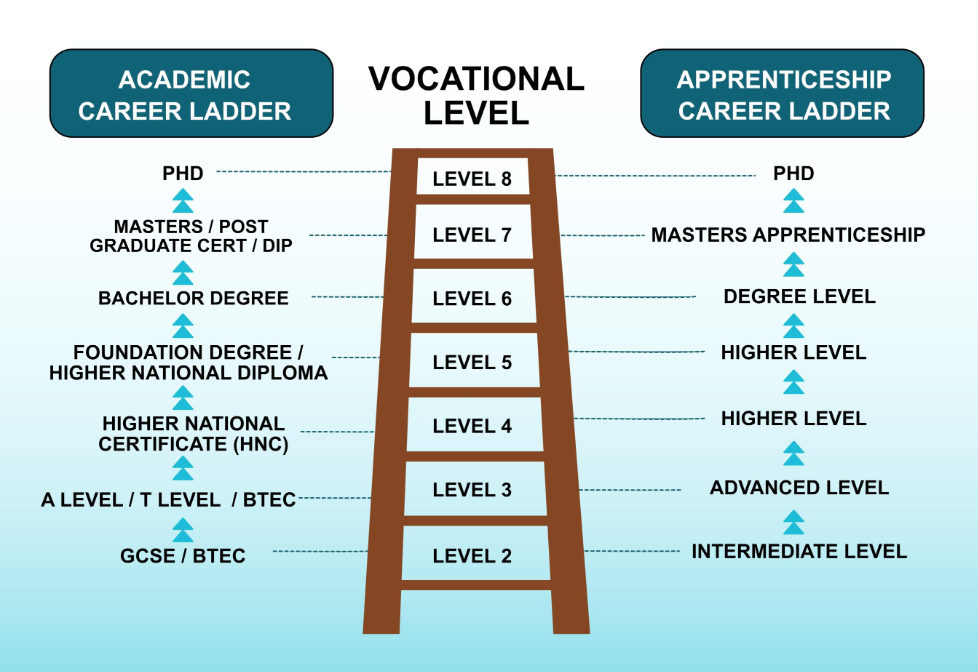
RQF Levels Explained (With UK Equivalents)
Understanding the different levels within the Regulated Qualifications Framework (RQF) is essential for choosing the right qualification and planning your academic or career progression. Each level represents the complexity, depth of knowledge, and level of responsibility expected from the learner.
Below is a detailed breakdown of each RQF level with real-world equivalents and practical insights.
| RQF Level | Difficulty | UK Equivalent | Career Stage |
|---|---|---|---|
| Entry Level | Basic | School Level | Beginner |
| Level 1 | Introductory | GCSE (3–1) | Entry-level |
| Level 2 | Intermediate | GCSE (9–4) | Job-ready |
| Level 3 | Advanced | A-Level | Skilled roles |
| Level 4 | Higher | HNC / Year 1 Degree | Technician |
| Level 5 | Advanced Higher | HND / Foundation Degree | Supervisor |
| Level 6 | Degree | Bachelor’s | Professional |
| Level 7 | Postgraduate | Master’s | Specialist |
| Level 8 | Expert | PhD | Leadership |
Entry Level (Entry 1, Entry 2, Entry 3)
Overview:
Entry Level qualifications are designed for beginners who are starting their learning journey.
Key Characteristics:
- Focus on basic knowledge and simple tasks
- Develop essential skills such as literacy, numeracy, and communication
- Require guided learning and support
Who is it for?
- School learners
- Individuals with little or no prior education
- Beginners entering a new field
Level 1
Overview:
Level 1 builds on basic knowledge and introduces simple subject understanding.
UK Equivalent:
GCSE grades 3–1 (D–G)
Key Characteristics:
- Ability to perform routine tasks
- Basic understanding of a subject area
- Limited independence in learning
Career Insight:
Ideal for entry-level roles or progressing to Level 2 qualifications.
Level 2
Overview:
Level 2 qualifications provide a solid foundation for employment and further study.
UK Equivalent:
GCSE grades 9–4 (A–C)*
Key Characteristics:
- Development of practical skills and knowledge
- Ability to work with some independence
- Application of learning in real-world scenarios
Career Insight:
Recognized by employers as basic job readiness level
Level 3
Overview:
Level 3 represents advanced knowledge and is a key milestone for higher education.
UK Equivalent:
A-Levels
Key Characteristics:
- In-depth understanding of a subject
- Ability to analyze, evaluate, and solve problems
- Greater independence and responsibility
Career Insight:
- Required for university entry
- Opens pathways to skilled professions
Level 4
Overview:
Level 4 introduces higher education concepts and specialized learning.
UK Equivalent:
- First year of a Bachelor’s degree
- Higher National Certificate (HNC)
Key Characteristics:
- Advanced theoretical and practical knowledge
- Ability to evaluate information and develop solutions
- Increased autonomy in learning
Career Insight:
Suitable for technical and supervisory roles
Level 5
Overview:
Level 5 qualifications deepen expertise and practical application.
UK Equivalent:
- Foundation Degree
- Higher National Diploma (HND)
Key Characteristics:
- Strong understanding of complex concepts
- Ability to manage tasks and projects
- Application of skills in professional settings
Career Insight:
Prepares learners for mid-level management and specialist roles
Level 6
Overview:
Level 6 reflects full undergraduate-level achievement.At Level 6, learners achieve qualifications equivalent to a Bachelor’s degree, preparing them for professional and managerial roles. A popular example is the ProQual Level 6 NVQ Diploma in Occupational Health and Safety Practice, which is designed for professionals aiming to advance their careers in workplace safety and risk management.
UK Equivalent:
Bachelor’s Degree
Key Characteristics:
- Advanced knowledge in a specific field
- Critical thinking and independent problem-solving
- Ability to manage complex professional responsibilities
Career Insight:
- Access to professional and managerial positions
- Entry requirement for postgraduate study
Level 7
Overview:
Level 7 focuses on advanced specialization and strategic thinking.
UK Equivalent:
Master’s Degree
Key Characteristics:
- Highly specialized knowledge
- Ability to conduct research and critical analysis
- Strategic decision-making skills
Career Insight:
- Suitable for senior management and leadership roles
- Enhances career advancement opportunities
Level 8
Overview:
Level 8 is the highest level within the RQF, representing original research and expertise.
UK Equivalent:
Doctorate (PhD)
Key Characteristics:
- Creation of new knowledge or research
- Expert-level understanding of a subject
- Leadership in academic or professional fields
Career Insight:
- Careers in academia, research, and top-level consultancy
- Recognized as the highest academic achievement
The RQF levels provide a clear and structured pathway from basic education to the highest level of expertise. This makes it easier for learners to progress step-by-step, while employers can quickly understand the capability and competence associated with each level.
RQF Qualification Sizes (TQT Explained)
One of the most important features of the Regulated Qualifications Framework (RQF) is how it measures the size of a qualification using Total Qualification Time (TQT).
What is Total Qualification Time (TQT)?
TQT represents the total number of hours a learner is expected to spend to complete a qualification. This includes:
- Guided learning (classroom, online sessions, tutor support)
- Self-study (reading, research, assignments)
- Assessments (projects, exams, practical tasks)
This approach gives students a realistic understanding of workload, unlike older systems that focused only on credits.
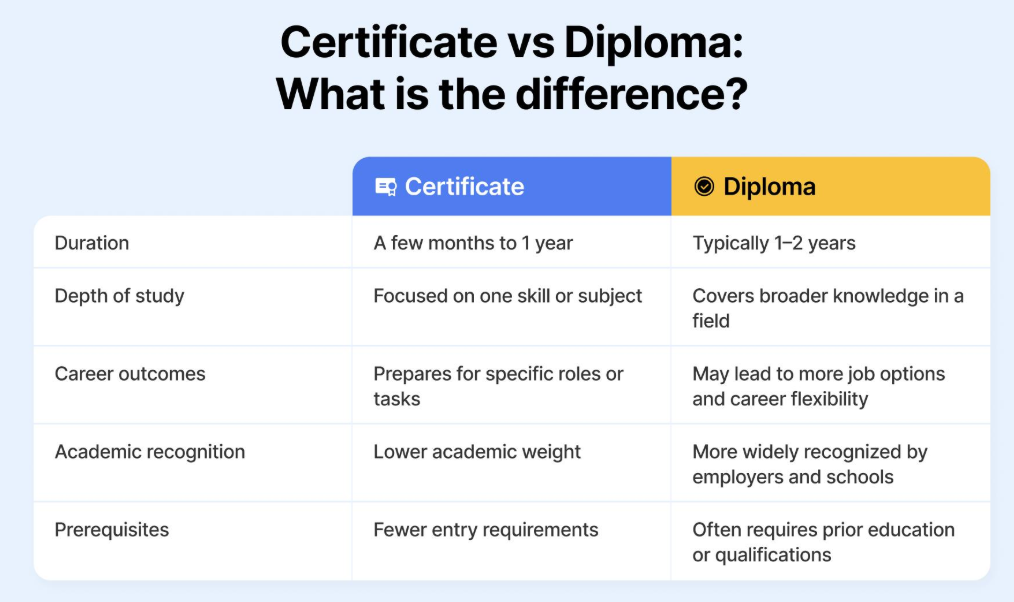
Types of RQF Qualification Sizes
RQF qualifications are divided into three main categories based on TQT. Understanding these will help you choose the right option based on your time, goals, and career plans.
Award (Short Qualifications)
Overview:
Awards are the smallest and quickest RQF qualifications, ideal for gaining specific skills in a short time.
Typical TQT:
Up to 120 hours
Key Benefits:
- Quick to complete
- Focused on specific skills or knowledge areas
- Flexible for busy learners or working professionals
Best For:
- Beginners exploring a new field
- Professionals needing quick upskilling
- Adding a specialized skill to your CV
Example Use Case:
A short course in health & safety, IT basics, or workplace skills
Certificate (Medium-Length Qualifications)
Overview:
Certificates provide a broader and more detailed understanding of a subject compared to Awards.
Typical TQT:
121 to 369 hours
Key Benefits:
- More in-depth knowledge and practical skills
- Better recognition by employers
- Balanced learning without long-term commitment
Best For:
- Learners building solid foundational knowledge
- Individuals aiming to improve job prospects
- Progression to higher-level qualifications
Example Use Case:
Certificate in Business Management, Education, or Cybersecurity
Diploma (Comprehensive Qualifications)
Overview:
Diplomas are the largest and most detailed RQF qualifications, designed for full professional development.
Typical TQT:
370+ hours
Key Benefits:
- Extensive knowledge and practical expertise
- Strong focus on career readiness
- Highly valued by employers
Best For:
- Learners aiming for career advancement or specialization
- Individuals preparing for professional roles
- Progression to higher education (e.g., Level 5 → Level 6)
Example Use Case:
Diploma in Engineering, Health & Safety, or Business Leadership
Why This Matters for Students
The flexibility of TQT-based qualification sizes allows you to:
- Choose a course that fits your schedule and lifestyle
- Progress step-by-step (Award → Certificate → Diploma)
- Balance study, work, and personal commitments
- Clearly understand the time investment before enrolling
Unlike older rigid systems, RQF qualification sizes give learners complete control over their learning journey. Whether you want a quick skill boost or a full professional qualification, the framework ensures there’s an option that matches your goals.
This flexibility is one of the key reasons why RQF qualifications are more practical, learner-friendly, and career-focused than traditional frameworks.
Why Was RQF Introduced?
RQF replaced QCF to:
- Remove strict credit requirements
- Provide greater flexibility for learners
- Focus on real learning outcomes
- Simplify qualification comparison
RQF vs QCF vs EQF
RQF vs QCF
- RQF is more flexible
- No mandatory credit accumulation
- Better suited for modern learning
RQF vs EQF
- EQF = European framework
- RQF aligns with it for global recognition
RQF vs SCQF
- SCQF is used in Scotland
- Different structure but comparable levels
This comparison section is critical because many users search these differences directly.
| Framework | Region | Key Feature |
|---|---|---|
| RQF | UK | Flexible, outcome-based |
| QCF | Old UK | Credit-based (replaced) |
| EQF | Europe | International alignment |
| SCQF | Scotland | Separate system |
Who Regulates RQF Qualifications?
The Regulated Qualifications Framework (RQF) is supported by official regulatory bodies that ensure all qualifications meet strict standards of quality, consistency, and reliability. These organizations play a crucial role in maintaining the integrity and global recognition of UK qualifications.
Key Regulatory Bodies
RQF qualifications are overseen by the following authorities:
- Ofqual (England)
The Office of Qualifications and Examinations Regulation is the main regulatory body in England. It monitors awarding organizations, sets standards, and ensures that qualifications are fair, valid, and reliable. - Qualifications Wales (Wales)
Responsible for regulating qualifications, exams, and assessments in Wales, ensuring they meet national standards and support learner progression. - CCEA Regulation (Northern Ireland)
Oversees qualifications and assessments in Northern Ireland, ensuring consistency and quality across all regulated courses.
What Do These Regulatory Bodies Do?
These organizations are responsible for maintaining the overall quality and trustworthiness of RQF qualifications by:
✔️ Ensuring Quality Assurance
- Monitoring awarding bodies and training providers
- Making sure courses meet strict educational and industry standards
- Regularly reviewing qualifications for relevance and effectiveness
✔️ Maintaining Standardization
- Ensuring all qualifications are consistent in level and difficulty
- Allowing fair comparison between different courses and providers
- Aligning qualifications with national and international frameworks
✔️ Protecting Credibility
- Verifying that qualifications are genuine, recognized, and respected
- Preventing low-quality or unregulated certifications
- Building trust among students, employers, and institutions
Why This Matters for Students
For learners, regulation means:
- You receive a recognized and trusted qualification
- Your certification holds value with employers and universities
- You are protected from unaccredited or low-quality courses
The involvement of these regulatory bodies ensures that RQF qualifications are not just educational achievements, but reliable indicators of real skills and knowledge. This strong regulatory framework is one of the key reasons why UK qualifications are respected and accepted worldwide.
Benefits of RQF Qualifications
The Regulated Qualifications Framework (RQF) offers significant advantages for everyone involved in education and employment. Its structured yet flexible approach ensures that qualifications are practical, relevant, and widely recognized, making them valuable for learners, employers, and training providers alike.
Benefits for Learners
RQF qualifications are designed to support learners at every stage of their academic and professional journey.
✔️ Clear Progression Pathways
- Provides a step-by-step route from Entry Level to Level 8
- Helps learners understand where they are and what comes next
- Supports smooth progression into higher education or advanced roles
✔️ Flexible Study Options
- Offers different qualification sizes (Award, Certificate, Diploma)
- Allows learners to study at their own pace
- Suitable for full-time students, part-time learners, and working professionals
✔️ International Recognition
- Widely accepted by universities and employers globally
- Enhances opportunities for studying or working abroad
- Aligns with international frameworks, increasing global mobility
✔️ Career-Focused Learning
- Emphasizes practical skills and real-world knowledge
- Prepares learners for job-ready roles
- Increases employability and career advancement potential
Benefits for Employers
RQF makes it easier for employers to evaluate and select the right candidates.
✔️ Easy Comparison of Qualifications
- Standardized levels make it simple to compare different qualifications
- Helps employers quickly understand a candidate’s capability and expertise
✔️ Confidence in Candidate Skills
- Regulated qualifications ensure consistent quality and standards
- Employers can trust that candidates possess verified knowledge and skills
✔️ Improved Hiring Decisions
- Reduces uncertainty during recruitment
- Supports better talent matching and workforce planning
- Leads to more efficient and effective hiring processes
✔️ Workforce Development
- Helps organizations identify training needs
- Supports employee upskilling and professional development
Benefits for Training Providers
RQF provides a strong framework for delivering high-quality and relevant education.
✔️ Flexibility in Course Design
- Enables providers to create customized and modular programs
- Allows adaptation to industry trends and learner needs
✔️ Alignment with Industry Standards
- Ensures courses meet current market and employer expectations
- Improves the relevance and value of training programs
✔️ Wider Market Reach
- RQF qualifications are recognized both nationally and internationally
- Attracts a diverse range of learners, including international students
- Enhances the provider’s credibility and reputation
✔️ Quality Assurance and Trust
- Being part of a regulated framework builds confidence among learners and employers
- Strengthens brand authority in the education sector
The RQF creates a win-win ecosystem where learners gain valuable qualifications, employers find skilled professionals, and training providers deliver high-quality education. This balanced approach is what makes RQF qualifications highly respected and effective in today’s global education and employment landscape.
Why RQF Qualifications Are Important
RQF qualifications are widely accepted by:
- UK universities
- Government bodies
- Employers across industries
They ensure learners gain:
- Practical skills
- Industry-relevant knowledge
- Career-ready competencies
Popular RQF Courses
High-demand RQF qualifications include:
- Business Management
- Health and Safety
- Cybersecurity
- Education and Training
- Engineering
How to Choose the Right RQF Qualification
1. Assess Your Current Level
Start at a level that matches your education or experience.
2. Define Career Goals
Choose qualifications aligned with your desired job role.
3. Consider Study Time
Pick Award, Certificate, or Diploma based on availability.
4. Check Progression Routes
Ensure it leads to higher qualifications or career growth.
Common Misconceptions About RQF
- RQF is not only for academic study
- It includes vocational and professional training
- It is not limited to the UK it has global recognition
The Regulated Qualifications Framework (RQF) plays a vital role in shaping a transparent, flexible, and globally respected education system in the UK. By clearly defining qualification levels and sizes, it allows learners to understand their academic position, plan their progression, and achieve their career goals with confidence.
For students, the RQF provides a structured pathway from basic knowledge to advanced expertise, ensuring that every step of learning is meaningful and recognized. For employers, it offers a reliable benchmark to assess skills and qualifications, making recruitment more effective and trustworthy. For training providers, it creates opportunities to deliver high-quality, industry-relevant programs that meet modern workforce demands.
What makes the RQF particularly valuable is its focus on real-world skills, flexibility, and international recognition. It not only supports academic growth but also prepares individuals for practical challenges in their chosen careers.
In a rapidly evolving global landscape, where skills and qualifications are key to success, the RQF stands as a trusted framework that connects education with employment, helping individuals and organizations move forward with clarity, credibility, and confidence.