
What Is an ESG Consultant? Complete Guide to Roles, Skills, Career Path and Business Benefits
Environmental, Social, and Governance (ESG) has become a global business priority as organisations face increasing expectations from investors, customers, regulators, and stakeholders to operate responsibly and sustainably. Strong ESG practices help businesses manage risks, meet regulatory requirements, strengthen their reputation, and achieve long-term growth.
An ESG Consultant helps organisations develop and implement effective ESG strategies, improve sustainability performance, ensure compliance with reporting standards, and create long-term value. This guide explains the role of an ESG consultant, their key responsibilities, required skills, career opportunities, and the benefits they bring to modern businesses.
What Is an ESG Consultant?
An ESG Consultant is a professional who advises organisations on integrating Environmental, Social, and Governance (ESG) principles into their business operations and long-term strategy. Their role is to help businesses identify ESG risks and opportunities, improve sustainability performance, comply with regulations, and meet the expectations of investors, customers, employees, and other stakeholders.
ESG consultants work with organisations of all sizes, from start-ups and SMEs to multinational corporations and public sector bodies. They assess current ESG practices, recommend improvements, develop sustainability strategies, and support the implementation of internationally recognised reporting frameworks and best practices.
As sustainability becomes a core business objective, ESG consultants play an increasingly important role in helping organisations balance financial performance with environmental responsibility, social impact, and ethical governance.
Why Are ESG Consultants Important?
The global business environment is changing rapidly. Companies are expected to reduce their environmental footprint, treat employees fairly, operate transparently, and demonstrate responsible corporate governance. Investors and regulators also require more detailed ESG disclosures than ever before.
An ESG consultant helps organisations navigate these evolving expectations by providing expert guidance and practical solutions. Their expertise enables businesses to build resilience, reduce operational risks, improve stakeholder trust, and remain competitive in a sustainability-focused economy.
Businesses that adopt strong ESG practices are often better positioned to attract investment, win new contracts, strengthen customer loyalty, and prepare for future regulatory changes.
Types of ESG Consultants
ESG consultants specialise in different areas of sustainability, helping organisations address specific environmental, social, and governance challenges.
Environmental Consultant
Helps organisations reduce environmental impacts, improve resource efficiency, manage waste, and comply with environmental regulations.
Social Impact Consultant
Focuses on employee wellbeing, diversity and inclusion, human rights, labour practices, and community engagement.
Governance Consultant
Advises on corporate governance, ethics, compliance, risk management, and transparent decision-making.
Climate Consultant
Supports organisations in managing climate risks, developing climate strategies, and improving resilience.
Carbon Consultant
Measures carbon emissions, develops carbon reduction plans, and helps organisations achieve decarbonisation goals.
ESG Reporting Consultant
Assists with ESG data collection, sustainability reporting, and compliance with recognised reporting frameworks.
Sustainability Consultant
Develops sustainability strategies to improve environmental, social, and business performance.
Net Zero Consultant
Creates practical roadmaps to help organisations reduce emissions and achieve net zero targets.
What Does an ESG Consultant Do?
The responsibilities of an ESG consultant vary depending on the organisation and industry, but their work generally includes:
- Conducting ESG assessments and gap analyses
- Developing ESG and sustainability strategies
- Identifying environmental, social, and governance risks
- Supporting ESG reporting and disclosures
- Advising on carbon reduction and climate action initiatives
- Helping organisations meet regulatory and compliance requirements
- Engaging with stakeholders on sustainability matters
- Developing ESG policies and governance frameworks
- Monitoring ESG performance using key metrics
- Providing sustainability training and awareness programmes
- Supporting responsible supply chain initiatives
- Recommending continuous improvement strategies
Their goal is to help organisations create measurable ESG improvements while supporting long-term business success.
Key Roles and Responsibilities of an ESG Consultant
An ESG consultant performs a wide range of strategic and operational activities, including:
Environmental Responsibilities
- Assess carbon emissions and environmental impacts
- Improve energy efficiency and resource management
- Develop climate action and net-zero strategies
- Support waste reduction and recycling initiatives
- Promote sustainable procurement practices
Social Responsibilities
- Improve employee wellbeing and workplace culture
- Promote diversity, equity, and inclusion
- Strengthen health and safety programmes
- Support community engagement initiatives
- Enhance human rights and labour practices
Governance Responsibilities
- Improve corporate governance structures
- Develop ethical business policies
- Strengthen compliance programmes
- Enhance risk management processes
- Support transparent ESG reporting
Essential Skills Every ESG Consultant Needs
Successful ESG consultants combine technical expertise with strong business and communication skills.
Some of the most important skills include:
- Sustainability strategy development
- ESG reporting and disclosure
- Risk assessment and management
- Regulatory compliance knowledge
- Project management
- Data analysis and interpretation
- Stakeholder engagement
- Leadership and communication
- Problem-solving and critical thinking
- Business strategy and corporate governance
- Environmental management knowledge
- Change management
These skills enable consultants to develop practical ESG solutions that align with organisational goals.
ESG Frameworks and Standards Every Consultant Should Know
An ESG consultant should have a strong understanding of recognised sustainability frameworks and reporting standards, including:
- Global Reporting Initiative (GRI)
- Sustainability Accounting Standards Board (SASB)
- International Sustainability Standards Board (ISSB)
- Task Force on Climate-related Financial Disclosures (TCFD)
- Corporate Sustainability Reporting Directive (CSRD)
- Greenhouse Gas (GHG) Protocol
- United Nations Sustainable Development Goals (UN SDGs)
- ISO 14001 Environmental Management Systems
- ISO 45001 Occupational Health and Safety Management Systems
- ISO 26000 Social Responsibility Guidance
Knowledge of these frameworks helps organisations prepare reliable ESG reports and align with global best practices.
ESG Risk Assessment
ESG risk assessment is the process of identifying, evaluating, and prioritising environmental, social, and governance risks that could affect an organisation’s performance, reputation, or regulatory compliance. ESG consultants assess both internal operations and external factors to uncover potential risks and recommend practical mitigation strategies.
Common ESG risks include climate change impacts, carbon emissions, resource consumption, labour and human rights issues, health and safety concerns, supply chain risks, regulatory changes, cyber security, and corporate governance weaknesses. By conducting a comprehensive ESG risk assessment, consultants help organisations reduce risks, strengthen resilience, improve compliance, and support long-term sustainable growth.
Industries That Hire ESG Consultants
ESG consultants are needed across a wide range of industries to improve sustainability, manage ESG risks, and meet regulatory requirements.
| Industry | Why ESG Consultants Are Needed |
|---|---|
| Construction | Sustainable building and compliance |
| Manufacturing | Resource efficiency and emissions reduction |
| Energy & Utilities | Renewable energy and climate strategies |
| Oil & Gas | Carbon management and environmental compliance |
| Financial Services | ESG risk assessment and responsible investing |
| Banking | Sustainable finance and ESG reporting |
| Insurance | Climate risk and governance management |
| Healthcare | Sustainable operations and regulatory compliance |
| Pharmaceuticals | Ethical supply chains and ESG reporting |
| Retail | Responsible sourcing and sustainability initiatives |
| Technology | Data governance and environmental responsibility |
| Telecommunications | Energy efficiency and digital sustainability |
| Transportation & Logistics | Emissions reduction and sustainable logistics |
| Real Estate | Green buildings and ESG compliance |
| Education | Sustainability programmes and governance |
| Government Organisations | Public sector sustainability initiatives |
| Hospitality & Tourism | Sustainable operations and responsible tourism |
As ESG regulations expand, organisations across these industries increasingly rely on ESG consultants to support compliance and sustainability initiatives.
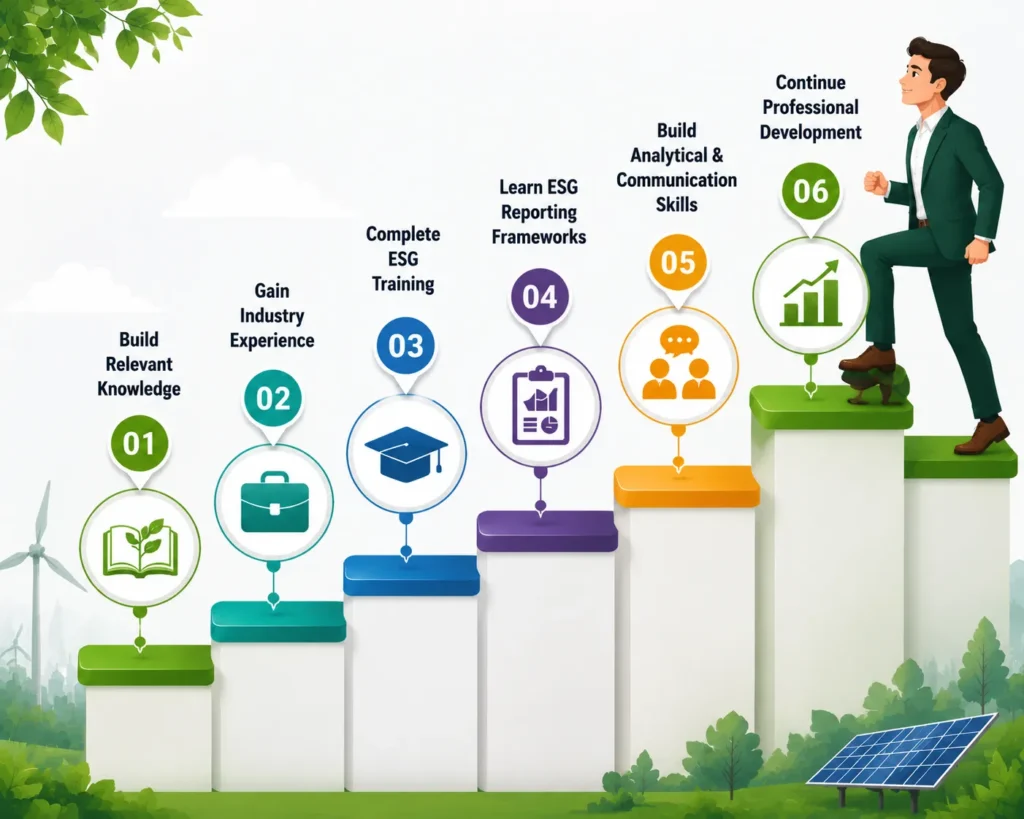
How to Become an ESG Consultant
If you are interested in building a career in ESG consulting, follow these steps:
Step 1: Build Relevant Knowledge
Learn the fundamentals of environmental management, corporate governance, sustainability, and social responsibility.
Step 2: Gain Industry Experience
Work in sustainability, compliance, auditing, environmental management, finance, or corporate governance to develop practical skills.
Step 3: Complete ESG Training
Enhance your expertise through recognised ESG and sustainability courses and certifications.
Step 4: Learn ESG Reporting Frameworks
Develop practical knowledge of internationally recognised ESG reporting standards.
Step 5: Build Analytical and Communication Skills
Strong analytical thinking and the ability to communicate complex ESG issues clearly are essential for success.
Step 6: Continue Professional Development
Stay updated with emerging regulations, sustainability trends, and evolving ESG frameworks throughout your career.
Business Benefits of Hiring an ESG Consultant
Hiring an ESG consultant offers several strategic advantages:
- Improved regulatory compliance
- Better ESG reporting quality
- Reduced operational and reputational risks
- Enhanced investor confidence
- Stronger stakeholder relationships
- Improved corporate reputation
- Increased operational efficiency
- Better risk management
- Competitive market advantage
- Support for long-term sustainability goals
An experienced ESG consultant helps organisations transform sustainability from a compliance requirement into a strategic business advantage.
Future of ESG Consulting
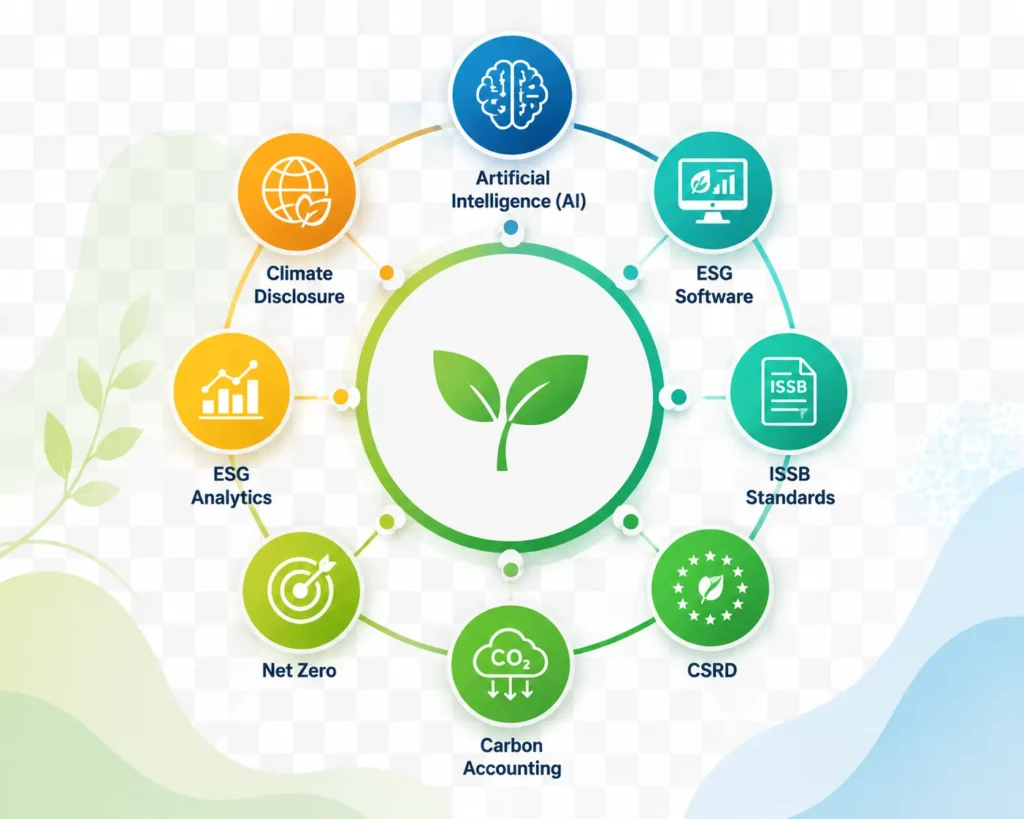
The future of ESG consulting is driven by technology, evolving regulations, and the growing demand for sustainable business practices. As organisations strengthen their ESG commitments, consultants will play an increasingly important role in helping businesses manage risks, improve reporting, and achieve long-term sustainability goals.
Artificial Intelligence (AI)
AI helps automate ESG data collection, risk analysis, and reporting, enabling faster and more accurate decision-making.
ESG Software
Digital ESG platforms simplify data management, performance tracking, and sustainability reporting across organisations.
ISSB Standards
ESG consultants help businesses align with ISSB sustainability disclosure standards to improve transparency and investor confidence.
CSRD
The Corporate Sustainability Reporting Directive (CSRD) requires more comprehensive ESG reporting, increasing the demand for expert guidance.
Climate Disclosure
Businesses are expected to disclose climate-related risks, emissions, and sustainability initiatives to regulators and stakeholders.
ESG Analytics
Advanced analytics help organisations measure ESG performance, identify trends, and make informed sustainability decisions.
Net Zero
ESG consultants develop strategies to reduce emissions and help organisations achieve their net zero commitments.
Carbon Accounting
Carbon accounting measures greenhouse gas emissions, enabling organisations to improve reporting and reduce their environmental impact.
Challenges ESG Consultants Help Solve
Businesses often face several ESG-related challenges, including:
- Meeting evolving regulatory requirements
- Collecting reliable ESG data
- Preparing transparent sustainability reports
- Reducing carbon emissions
- Managing climate-related risks
- Improving supply chain sustainability
- Addressing stakeholder expectations
- Preventing greenwashing
- Integrating ESG into business strategy
ESG consultants provide practical solutions that help organisations overcome these challenges effectively.
Conclusion
An ESG Consultant helps organisations integrate sustainability into their business strategy by improving environmental performance, strengthening social responsibility, and enhancing corporate governance. Their expertise supports regulatory compliance, effective ESG reporting, risk management, and long-term business growth.
As ESG continues to shape the future of business, the demand for skilled ESG consultants is expected to grow across industries. Whether you are looking to build a career in ESG consulting or hire an expert for your organisation, investing in ESG expertise can create lasting value, improve stakeholder confidence, and support sustainable success.