
What Is an Environmental Consultant? Roles, Responsibilities, Skills and How to Become One (2026)
An Environmental Consultant is a professional who helps organisations understand, manage, and reduce their environmental impacts. They provide expert advice on environmental risks, compliance requirements, sustainability practices, and environmental improvement strategies.
Environmental Consultants work with industries such as construction, energy, manufacturing, and infrastructure to assess environmental issues, prepare reports, and develop solutions that support responsible and sustainable development.
This guide explains what an Environmental Consultant does, their key roles and responsibilities, the skills required, and how to start a career in environmental consulting in 2026.
What Is an Environmental Consultant?
An Environmental Consultant is a professional who helps organisations understand and manage their impact on the environment. They provide advice on environmental issues, regulations, and sustainable practices to help businesses operate responsibly.
Environmental Consultants assess environmental risks, review projects, collect information, prepare reports, and suggest solutions to reduce negative effects on the environment. They help organisations follow environmental requirements, improve their environmental performance, and achieve sustainability goals.
In simple words, an Environmental Consultant helps businesses protect the environment while making sure their activities follow environmental standards and best practices.
What Does an Environmental Consultant Do?
| Area | Responsibilities |
|---|---|
| Environmental Assessment | Conduct environmental surveys and impact assessments |
| Compliance Management | Ensure organisations follow environmental laws and standards |
| Risk Assessment | Identify environmental hazards and recommend controls |
| Sustainability Planning | Develop strategies to improve environmental performance |
| Reporting | Prepare environmental reports and documentation |
| Auditing | Review environmental management practices |
Key Responsibilities of an Environmental Consultant
1. Conduct Environmental Impact Assessments (EIA)
Explain:
- Project impact evaluation
- Biodiversity assessment
- Pollution assessment
- Mitigation planning
2. Environmental Risk Assessment
Cover:
- Identifying environmental hazards
- Evaluating risks
- Developing control measures
- Monitoring environmental performance
3. Regulatory Compliance Support
Explain how consultants help organisations:
- Understand environmental requirements
- Maintain legal compliance
- Prepare environmental documentation
- Avoid environmental penalties
4. Sustainability and ESG Support
Connect with current trends:
- Climate change strategies
- Carbon reduction plans
- Net Zero targets
- ESG reporting
- Sustainable resource management
Environmental Consultant Services
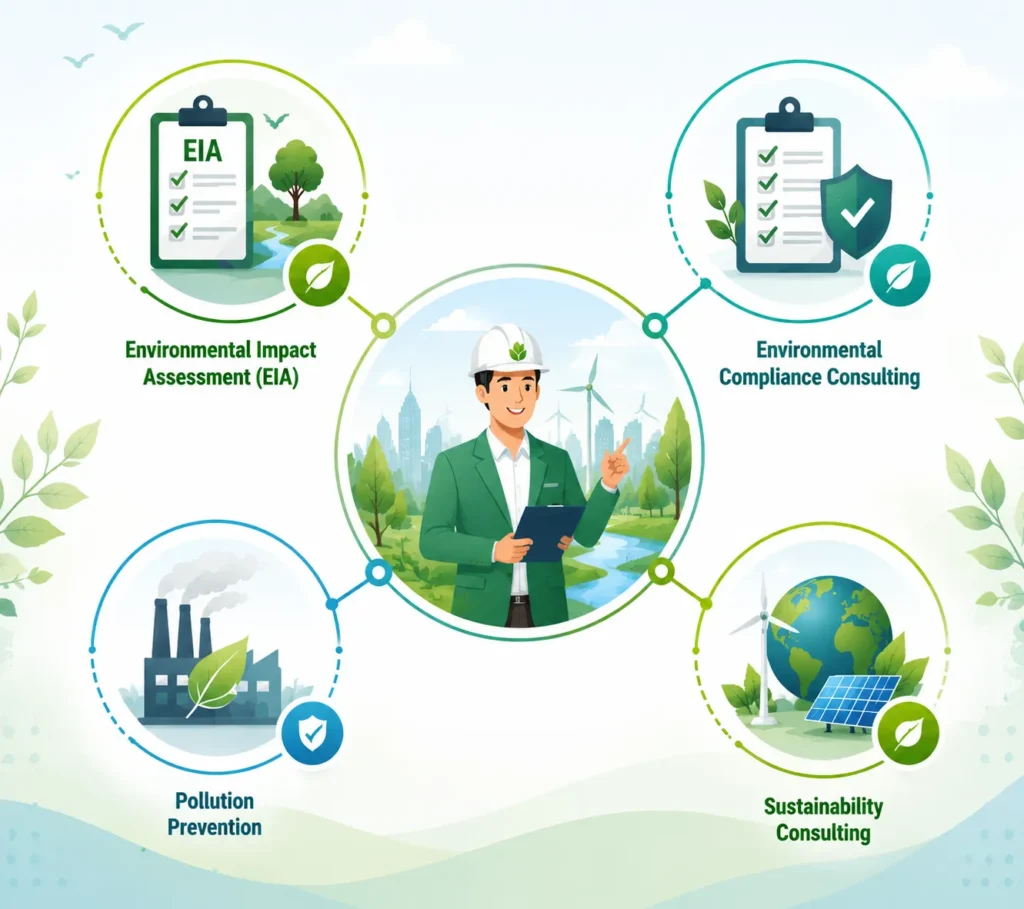
Environmental Consultants provide a wide range of services to help organisations assess environmental impacts, manage risks, meet regulatory requirements, and improve sustainability performance. Their services support responsible decision-making across industries such as construction, energy, manufacturing, and infrastructure.
Environmental Impact Assessment (EIA)
Environmental Impact Assessment helps organisations understand the possible environmental effects of a project before it begins. Environmental Consultants conduct:
- Baseline Studies: Collect information about existing environmental conditions, including land, water, air, and ecosystems.
- Environmental Effects Assessment: Evaluate how proposed activities may affect the environment.
- Mitigation Plans: Develop solutions to reduce or prevent negative environmental impacts.
Environmental Compliance Consulting
Environmental Consultants help organisations follow environmental laws, standards, and regulatory requirements by providing support with:
- Environmental Permits: Assisting with obtaining and managing required environmental approvals.
- Regulatory Requirements: Helping businesses understand and meet environmental obligations.
- Monitoring: Tracking environmental performance to ensure continued compliance.
Pollution Prevention
Environmental Consultants help organisations reduce pollution and improve environmental protection through:
- Air Pollution Management: Identifying sources of emissions and recommending reduction measures.
- Water Pollution Control: Supporting water quality protection and wastewater management.
- Waste Management: Developing strategies for waste reduction, recycling, and responsible disposal.
Sustainability Consulting
Sustainability Consultants help organisations achieve long-term environmental goals through:
- ESG Support: Improving environmental, social, and governance performance and reporting.
- Carbon Reduction Strategies: Helping businesses measure and reduce greenhouse gas emissions.
- Net Zero Strategies: Developing plans to achieve carbon reduction targets and support climate action.
Industries That Hire Environmental Consultants
| Industry | Environmental Consultant Role |
|---|---|
| Construction | Environmental impact studies and compliance |
| Energy | Renewable energy assessments |
| Manufacturing | Pollution control and waste management |
| Government | Environmental policy support |
| Agriculture | Land and ecosystem management |
| Mining | Environmental monitoring |
| Real Estate | Sustainable development planning |
Environmental Consultant vs Sustainability Consultant
Environmental Consultants and Sustainability Consultants both support organisations in improving their environmental and sustainability performance, but their areas of focus are different. An Environmental Consultant mainly helps organisations assess environmental impacts, identify risks, and follow environmental regulations. A Sustainability Consultant focuses on wider sustainability strategies, including ESG practices, responsible business approaches, and long-term environmental and social improvements.
| Environmental Consultant | Sustainability Consultant |
|---|
| Focuses on identifying and managing environmental impacts | Focuses on broader sustainability goals and business practices |
| Conducts environmental assessments and impact studies | Develops sustainability strategies and improvement plans |
| Helps organisations meet environmental regulations and requirements | Supports ESG reporting and corporate responsibility initiatives |
| Works with environmental laws, permits, and compliance standards | Works with sustainability frameworks, climate goals, and responsible business models |
| Focuses on areas such as pollution, waste, biodiversity, and environmental risks | Focuses on areas such as carbon reduction, ESG, resource efficiency, and sustainable development |
| Provides solutions to reduce direct environmental impacts | Helps organisations create long-term sustainability strategies |
Skills Required to Become an Environmental Consultant
Becoming an Environmental Consultant requires a combination of technical knowledge and professional skills. Environmental Consultants need to understand environmental issues, assess risks, communicate findings, and provide practical solutions to support organisations in meeting environmental goals.
Technical Skills
- Environmental Assessment: Ability to evaluate the environmental impact of projects, activities, and operations.
- Environmental Legislation: Knowledge of environmental laws, regulations, and compliance requirements.
- Data Analysis: Ability to collect, analyse, and interpret environmental data to support decision-making.
- Environmental Monitoring: Skills in monitoring environmental conditions such as air, water, soil, and biodiversity.
- Risk Assessment: Ability to identify environmental risks and recommend suitable control measures.
- GIS Knowledge: Understanding of Geographic Information Systems (GIS) for mapping, analysing, and presenting environmental information.
Soft Skills
- Communication: Ability to explain environmental information clearly to clients, teams, and stakeholders.
- Report Writing: Skill in preparing accurate environmental reports, assessments, and documentation.
- Problem Solving: Ability to identify environmental challenges and develop effective solutions.
- Stakeholder Management: Ability to work with clients, government bodies, communities, and other stakeholders to achieve environmental objectives.
Qualifications and Training Required for an Environmental Consultant
To become an Environmental Consultant, individuals need a combination of environmental knowledge, professional training, and practical skills. A strong understanding of environmental science, sustainability principles, and environmental management practices helps professionals assess risks and provide effective solutions.
Key areas of knowledge and training include:
- Environmental Science Knowledge: Understanding ecosystems, pollution, natural resources, and environmental impacts.
- Sustainability Qualifications: Learning sustainable practices, resource management, and environmental improvement strategies.
- Environmental Management Training: Developing skills to manage environmental risks and support compliance.
- ISO 14001 Environmental Management Systems Knowledge: Understanding how organisations manage and improve their environmental performance.
- ESG and Climate-Related Training: Gaining knowledge of climate action, carbon reduction, and responsible business practices.
Environmental Consultant Career Roadmap
A career in environmental consulting offers opportunities to progress from entry-level environmental roles to senior leadership positions. Professionals can advance by gaining experience, developing technical skills, and building expertise in environmental management and sustainability.
Career Flowchart
Environmental Assistant
↓
Supports environmental data collection, site activities, documentation, and basic environmental tasks.
↓
Environmental Officer
↓
Manages environmental compliance, inspections, monitoring activities, and environmental procedures.
↓
Environmental Consultant
↓
Provides expert advice, conducts environmental assessments, performs risk analysis, and develops mitigation plans.
↓
Senior Environmental Consultant
↓
Leads complex environmental projects, manages client relationships, and guides junior consultants.
↓
Environmental Manager
↓
Oversees environmental strategies, compliance programmes, risk management, and organisational environmental performance.
↓
Sustainability Director
↓
Leads sustainability vision, develops long-term strategies, and manages environmental goals at executive level.
How Environmental Consultants Support Sustainable Development
Environmental Consultants play an important role in helping organisations achieve sustainable development by providing guidance on reducing environmental impacts and improving responsible practices. They help businesses balance economic growth with environmental protection through effective planning, assessment, and risk management.
- Reducing Environmental Damage: Environmental Consultants identify potential environmental risks and recommend solutions to minimise pollution, waste, and negative impacts on nature.
- Supporting Responsible Business Practices: They help organisations follow environmental regulations, improve sustainability practices, and make environmentally responsible decisions.
- Improving Resource Efficiency: They provide advice on reducing resource consumption, managing waste, and using energy and materials more efficiently.
- Protecting Ecosystems: Environmental Consultants assess impacts on wildlife, habitats, and natural resources to support conservation and responsible development.
- Supporting Climate Goals: They help organisations reduce carbon emissions, develop climate strategies, and work towards sustainability and net-zero targets.
Benefits of Hiring an Environmental Consultant
Hiring an Environmental Consultant helps organisations manage environmental challenges, improve sustainability practices, and make informed decisions. Their expertise allows businesses to reduce risks, meet environmental requirements, and improve overall performance.
- Improved Regulatory Compliance: Environmental Consultants help organisations understand and meet environmental laws, standards, and regulatory requirements.
- Reduced Environmental Risks: They identify potential environmental issues and recommend solutions to prevent pollution, damage, and operational risks.
- Better Sustainability Performance: They support businesses in developing sustainable practices, improving resource use, and achieving environmental goals.
- Improved Reputation: Strong environmental management helps organisations build trust with customers, stakeholders, and communities.
- Cost Savings Through Efficient Resource Management: Environmental Consultants help reduce waste, improve energy efficiency, and optimise the use of resources, leading to long-term cost benefits.
Environmental Consulting Process: Step-by-Step
The environmental consulting process helps organisations identify environmental issues, manage risks, and implement effective solutions. The main steps include:
Step 1: Initial Environmental Review
The consultant reviews the organisation’s activities, objectives, and potential environmental concerns.
Step 2: Data Collection and Site Assessment
Environmental data is collected through site visits, inspections, and assessments to understand existing conditions.
Step 3: Environmental Risk Analysis
Identified risks are evaluated to determine their potential impact and required control measures.
Step 4: Development of Recommendations
The consultant provides practical solutions and strategies to improve environmental performance.
Step 5: Implementation Support
Support is provided to help organisations apply recommended actions and meet environmental goals.
Step 6: Monitoring and Reporting
Environmental performance is monitored, and reports are prepared to track progress and compliance.
Future Trends in Environmental Consulting
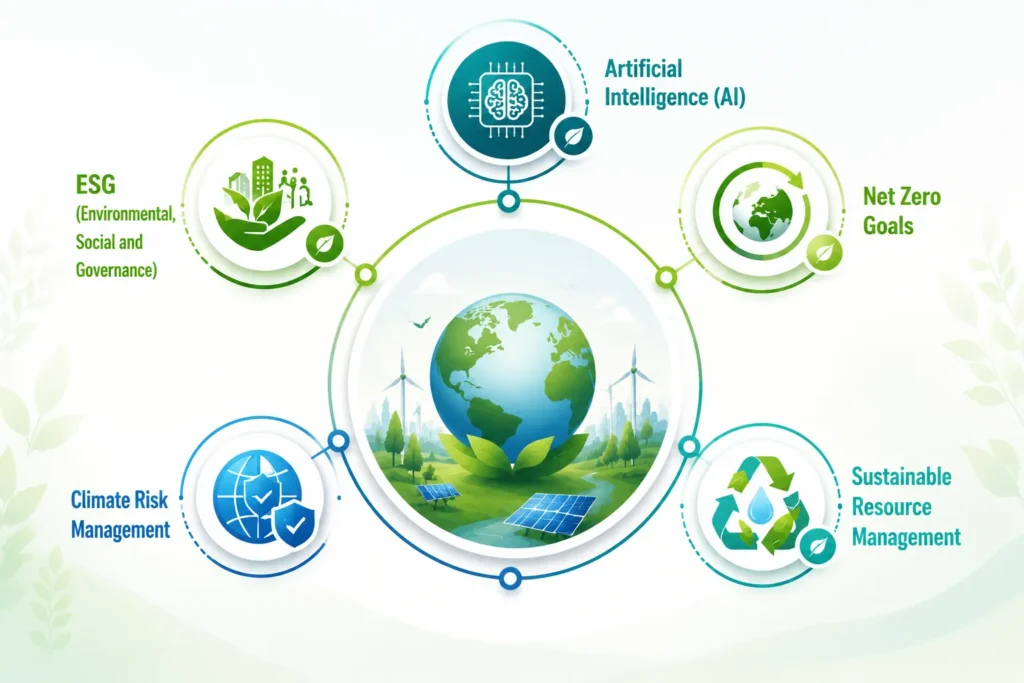
The role of Environmental Consultants is changing with new technologies and global sustainability goals. Future environmental consulting will focus more on digital solutions, climate action, and responsible business practices.
- Artificial Intelligence (AI): AI tools will help Environmental Consultants analyse environmental data, predict risks, improve monitoring, and create more accurate reports.
- ESG (Environmental, Social and Governance): Growing demand for ESG reporting will increase the need for consultants who can help organisations measure sustainability performance and meet stakeholder expectations.
- Net Zero Goals: Environmental Consultants will support businesses in reducing carbon emissions, improving energy efficiency, and developing strategies to achieve net-zero targets.
- Climate Risk Management: Organisations will increasingly require support to identify and manage risks related to climate change and environmental impacts.
- Sustainable Resource Management: Consultants will help businesses adopt circular economy practices, reduce waste, and use resources more efficiently.
Case Study: Environmental Consultant Supporting a Construction Project
A construction company planned a large infrastructure project that could have potential environmental impacts. Before starting the project, the organisation needed support to identify risks and ensure compliance with environmental requirements.
Challenges
The project faced several environmental challenges, including:
- Habitat Disturbance: Potential impact on local ecosystems and wildlife.
- Waste Generation: Increased construction waste requiring proper management.
- Regulatory Compliance: Need to meet environmental laws and project requirements.
Environmental Consultant Actions
The Environmental Consultant supported the project by:
- Conducting an environmental assessment to identify possible impacts.
- Evaluating environmental risks and recommending control measures.
- Developing a mitigation plan to reduce negative effects.
- Creating a monitoring framework to track environmental performance throughout the project.
Outcome
With the consultant’s support, the project was able to:
- Reduce environmental impacts.
- Improve compliance with environmental requirements.
- Implement more sustainable construction practices.
How Environmental Consultants Reduce Project Risks
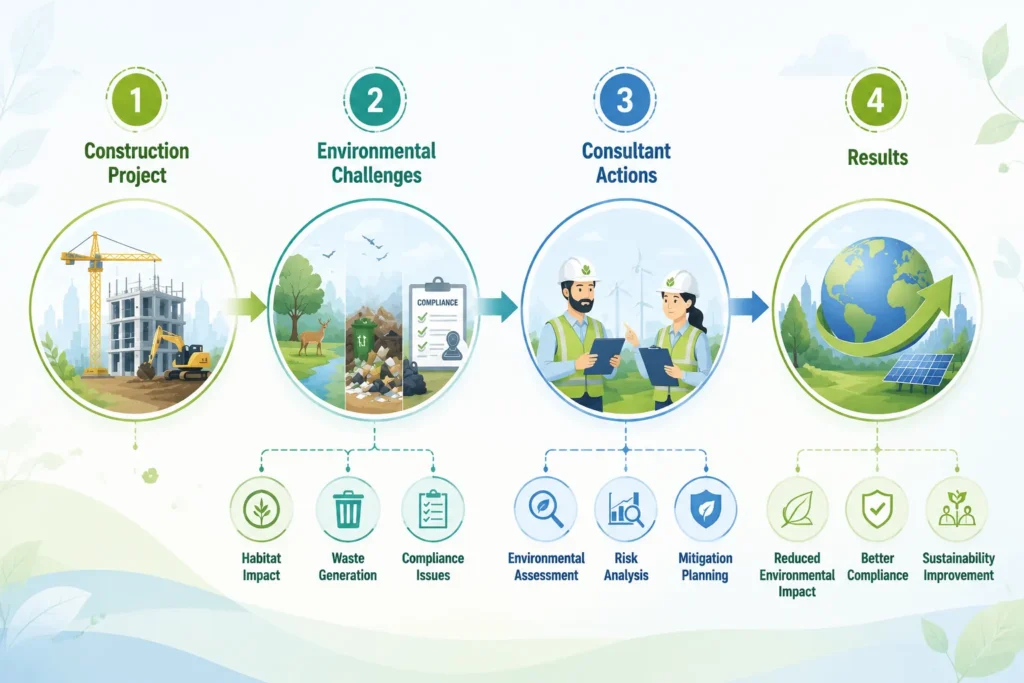
Environmental consultants help organisations identify and manage environmental risks before they affect a project. They assess potential environmental challenges, develop practical solutions, and ensure projects follow sustainability requirements and regulations.
1. Construction Project
Large projects such as construction, infrastructure, and development activities may create environmental risks that need proper management.
2. Environmental Challenges
Projects may face challenges such as:
- Habitat Impact – Risk of affecting wildlife, ecosystems, and natural areas.
- Waste Generation – Poor waste management can increase pollution and resource loss.
- Compliance Issues – Failure to meet environmental regulations can cause delays, penalties, and legal risks.
3. Consultant Actions
Environmental consultants reduce these risks through:
- Environmental Assessment – Evaluate potential impacts before project activities begin.
- Risk Analysis – Identify environmental risks and their possible effects.
- Mitigation Planning – Develop solutions to reduce or control environmental impacts.
4. Results
Effective environmental consulting helps achieve:
- Reduced Environmental Impact – Minimises damage to ecosystems and resources.
- Better Compliance – Ensures projects meet environmental laws and standards.
- Sustainability Improvement – Supports responsible project development and long-term environmental protection.
Conclusion
An Environmental Consultant plays an important role in helping organisations manage environmental challenges, meet regulatory requirements, and achieve sustainability goals. Through environmental assessments, risk management, compliance support, and sustainable solutions, they help businesses reduce their environmental impact and make responsible decisions.
As organisations continue to focus on climate action, ESG practices, and sustainable development, the demand for skilled Environmental Consultants is expected to grow. With the right knowledge, technical skills, and professional training, individuals can build a valuable career while contributing to the protection of the environment and the future of sustainable development.