
Course Overview
The OSHAA 30-Hours Professional Diploma in Paediatric First Aid (PFA) is a specialised professional qualification designed to develop essential knowledge of emergency first aid for infants and children. This internationally relevant diploma provides learners with a comprehensive understanding of paediatric first aid principles, enabling them to recognise, assess, and respond appropriately to medical emergencies involving young children in a variety of settings.
The qualification is ideal for individuals working or aspiring to work in childcare, education, healthcare support, community services, and family care environments where the health, safety, and wellbeing of children are a priority. It promotes best practices in emergency preparedness and helps learners understand the importance of providing timely and effective assistance while awaiting professional medical support.
The OSHAA 30-Hours Professional Diploma in Paediatric First Aid (PFA) supports both personal and professional development by enhancing first aid awareness, strengthening safeguarding knowledge, and improving confidence in managing child-related emergencies. It also demonstrates a commitment to maintaining safe environments for infants and children in schools, nurseries, childcare centres, community organisations, and other child-focused settings.
Whether you are beginning a career in childcare or looking to strengthen your existing professional credentials, this diploma provides valuable, internationally relevant first aid knowledge that supports responsible childcare practices, promotes health and safety, and contributes to improved emergency preparedness wherever children are cared for.
Course Structure
This qualification, the OSHAA 30-Hours Professional Diploma in Paediatric First Aid (PFA), consists of 9 units.
Study Units
Learning Outcomes
Here are the learning outcomes for each study unit:
Introduction to Paediatric First Aid and Legal Responsibilities (2 Hours)
- Understand the principles and scope of paediatric first aid.
- Recognise the legal and ethical responsibilities of providing first aid to children.
- Identify the importance of accurate record-keeping and incident reporting.
Understanding Child Physiology and Emergency Response Principles (3 Hours)
- Understand key differences between adult and child anatomy and physiology.
- Recognise signs of medical distress in infants and children.
- Apply basic emergency response protocols tailored to paediatric needs.
Primary Survey, Casualty Assessment, and Recovery Position for Infants and Children (3 Hours)
- Conduct a structured primary survey for paediatric emergencies.
- Perform an effective casualty assessment to identify priorities for care.
- Demonstrate correct techniques for placing infants and children in the recovery position.
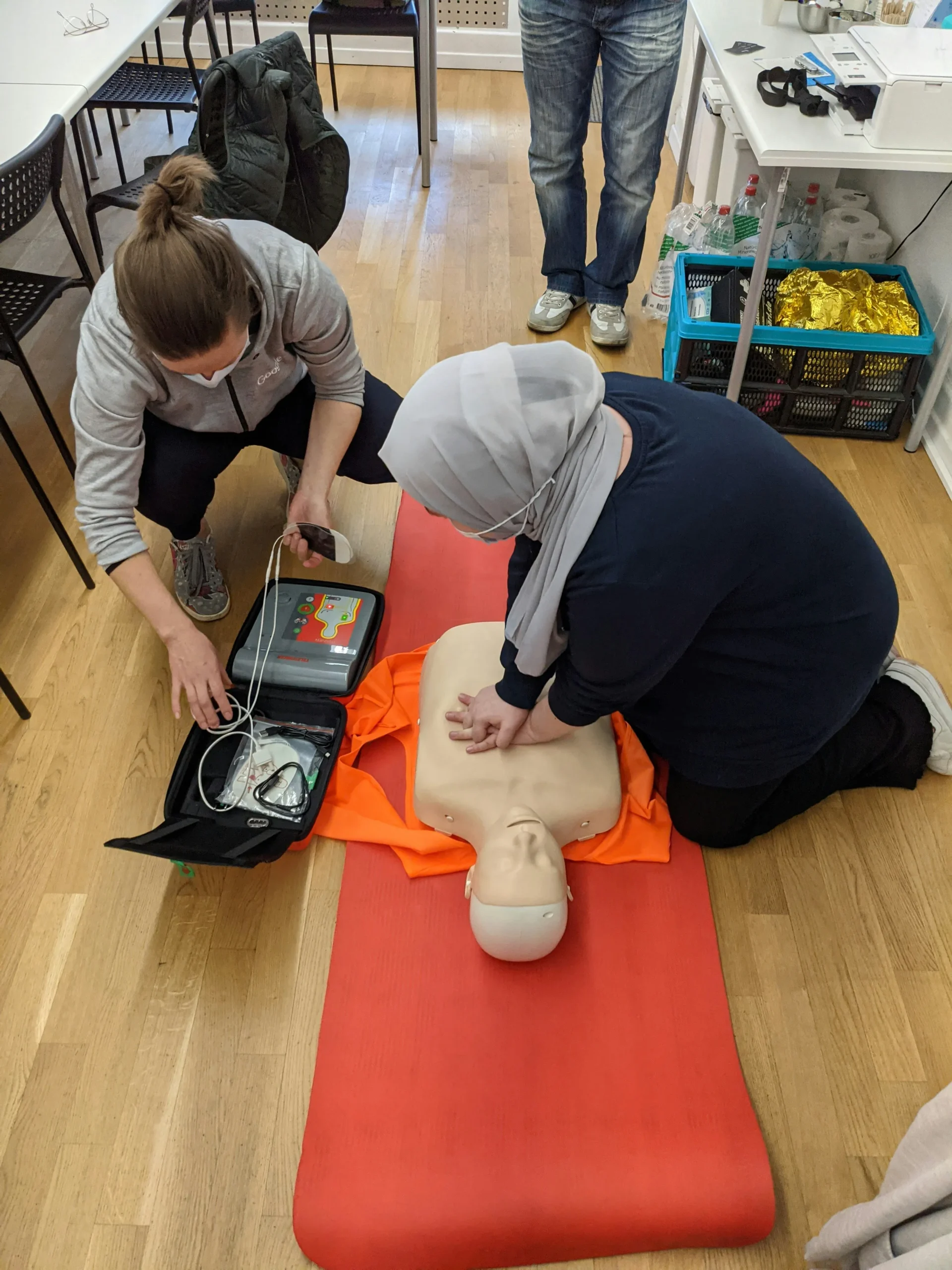
Paediatric Cardiopulmonary Resuscitation (CPR) and AED Operation (5 Hours)
- Demonstrate paediatric-specific CPR techniques for infants and children.
- Safely operate an Automated External Defibrillator in paediatric emergencies.
- Integrate CPR and AED use into an effective resuscitation sequence.
Management of Unconscious Infants and Children (4 Hours)
- Identify causes of unconsciousness in paediatric cases.
- Apply safe handling techniques to maintain airway and breathing.
- Implement appropriate care while awaiting advanced medical support.
Control of Bleeding, Wound Care, and Shock Management in Children (4 Hours)
- Identify different types of bleeding in paediatric patients.
- Apply correct first aid techniques for wound cleaning and dressing.
- Recognise and manage signs of shock in children effectively.
First Aid for Burns, Scalds, and Thermal Injuries in Paediatric Cases (4 Hours)
- Distinguish between different degrees of burns in children.
- Apply immediate and effective treatment for burns and scalds.
- Understand when to seek urgent medical care for burn injuries.
Managing Fractures, Sprains, and Soft Tissue Injuries in Children (3 Hours)
- Identify common musculoskeletal injuries in paediatric patients.
- Apply safe immobilisation techniques for fractures and sprains.
- Provide appropriate first aid to minimise further injury.
Response to Common Paediatric Medical Emergencies: Asthma, Seizures, and Allergic Reactions (2 Hours)
- Recognise symptoms of asthma attacks, seizures, and severe allergic reactions.
- Apply correct first aid techniques for each medical emergency.
- Understand the importance of rapid response and escalation of care.
Certification Benefits
The OSHAA 30-Hours Professional Diploma in Paediatric First Aid (PFA) equips learners with essential knowledge to support the health, safety, and wellbeing of infants and children in a variety of childcare and community settings.
- Develops a strong understanding of paediatric first aid principles.
- Enhances confidence in responding to child-related emergencies.
- Promotes safer childcare, education, and family environments.
- Improves awareness of emergency response procedures for infants and children.
- Supports professional development in childcare and healthcare support roles.
- Demonstrates a commitment to child safety and wellbeing.
- Enhances employability across childcare, education, and community care sectors.
- Provides valuable Continuing Professional Development opportunities.
- Strengthens knowledge of health, safety, and safeguarding practices.
- Develops transferable emergency response skills for everyday situations.
- Supports responsible caregiving and professional practice.
- Offers an internationally relevant qualification recognised for professional development.
Course Eligibility
Learners should meet the following entry requirements:
Course Fee
140k PKR / 375GBP / 500 USD