
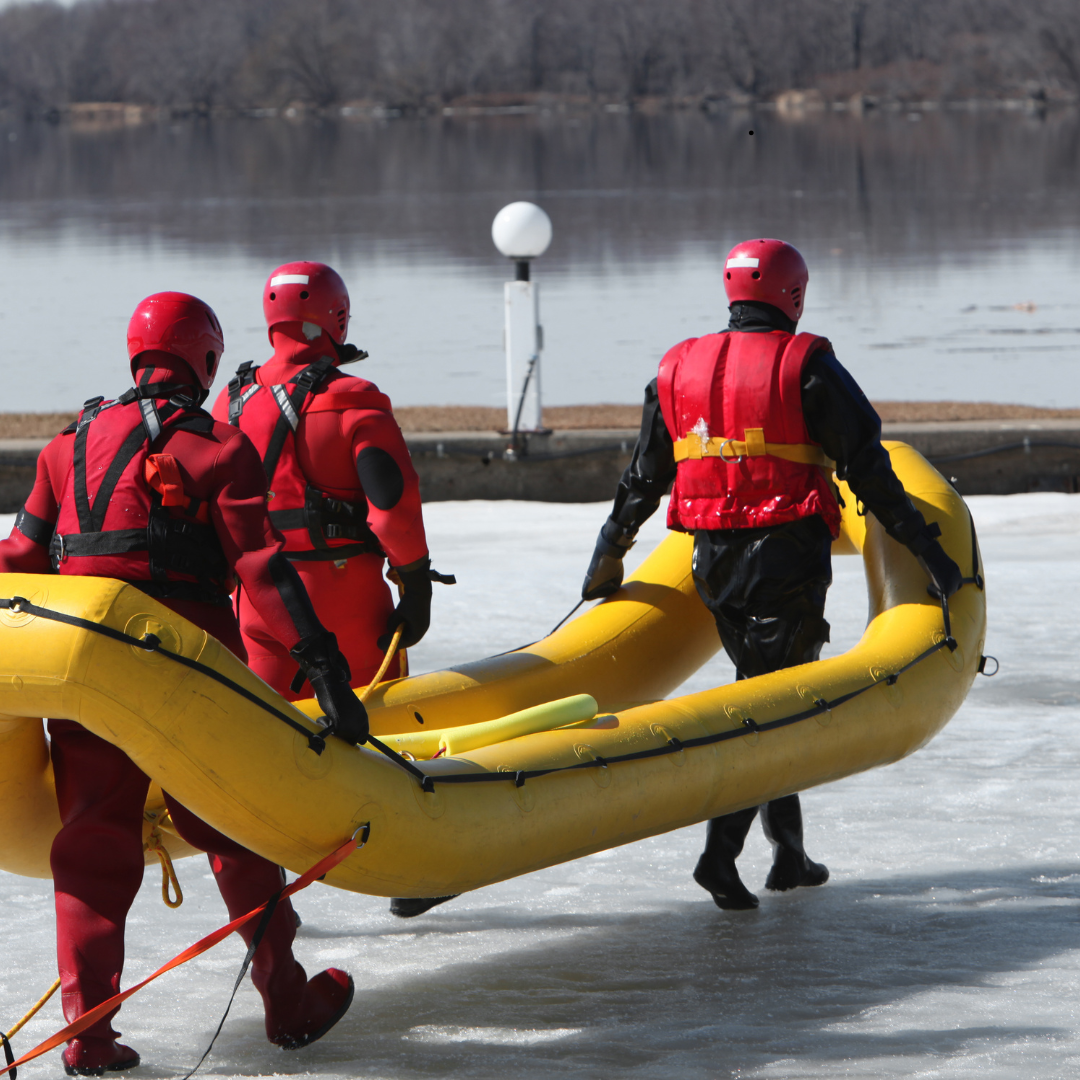
Course Overview
The Professional Diploma in Open Water Emergency Rescue is a professional development program designed for individuals who want to build specialized knowledge in open water rescue, aquatic emergency response, and water safety. The course is intended for those seeking careers or professional advancement in emergency services, lifeguarding, marine operations, coastal safety, disaster response, public safety, water sports, and other sectors where responding to water-related emergencies is an essential responsibility.
This diploma provides learners with a strong foundation in the principles and professional practices of open water emergency rescue. It is designed to help individuals understand the roles and responsibilities of emergency responders operating in open water environments, including beaches, lakes, rivers, reservoirs, harbors, and coastal areas. The qualification is suitable for aspiring rescue personnel, lifeguards, emergency responders, maritime professionals, water sports instructors, public safety personnel, and anyone interested in developing expertise in aquatic emergency response and water rescue.
As water-based recreation, marine activities, and coastal tourism continue to expand worldwide, the demand for professionals with knowledge of open water safety and emergency response is increasing. The Professional Diploma in Open Water Emergency Rescue provides an industry-focused educational pathway that enhances professional credibility, supports career development, and prepares learners for opportunities in emergency services, marine operations, coastal management, recreation, tourism, and aquatic safety while promoting recognized best practices in water rescue and emergency preparedness.
Course Structure
This qualification, the OSHAA 30-Hours Professional Diploma in Open Water Emergency Rescue, consists of 9 units.
Study Units
Learning Outcomes
Here are the learning outcomes for each study unit:
Introduction to Open Water Emergency Rescue and Roles (3 Hours)
- Understand the scope and importance of open water emergency rescue
- Identify key roles and responsibilities within rescue teams
- Recognise the significance of teamwork and coordination in rescue operations
Environmental Factors and Hazards in Open Water (4 Hours)
- Identify common environmental hazards in open water settings
- Assess the impact of weather, currents, tides, and visibility on rescue operations
- Develop strategies to mitigate risks associated with natural water environments
Principles of Risk Assessment and Safety Planning (3 Hours)
- Conduct thorough risk assessments for open water rescue scenarios
- Create effective safety plans to minimise hazards during operations
- Apply risk management techniques to enhance rescuer and casualty safety
Open Water Rescue Techniques and Approaches (5 Hours)
- Demonstrate a variety of rescue techniques suitable for different open water conditions
- Execute safe and effective approaches to reach and assist casualties
- Adapt rescue methods based on situational variables and environmental factors
Use and Maintenance of Rescue Equipment in Open Water (3 Hours)
- Identify essential rescue equipment for open water environments
- Perform correct usage and handling of rescue tools during operations
- Carry out routine inspection and maintenance to ensure equipment readiness
Emergency Communication and Coordination Strategies (3 Hours)
- Apply effective communication techniques within rescue teams
- Coordinate multi-agency and team responses during emergencies
- Use communication tools to facilitate efficient rescue operations
Casualty Assessment and Safe Recovery Procedures (4 Hours)
- Conduct rapid and accurate assessment of casualties in open water
- Apply safe recovery techniques to minimise further injury
- Provide initial care and support during and after rescue
Legal, Ethical, and Professional Responsibilities in Rescue Operations (3 Hours)
- Understand the legal obligations relevant to open water rescue
- Recognise ethical considerations and professional conduct standards
- Ensure compliance with policies, regulations, and best practices
Post-Rescue Care and Incident Reporting (2 Hours)
- Deliver appropriate post-rescue care to support casualty recovery
- Complete detailed and accurate incident reports
- Evaluate rescue operations for continuous improvement and learning
Certification Benefits
The Professional Diploma in Open Water Emergency Rescue is designed to enhance your professional knowledge of aquatic emergency response, water rescue principles, and open water safety. Whether you are pursuing a career in lifeguarding, emergency services, marine operations, or public safety, this diploma provides a strong foundation for professional development and supports the knowledge required for water-related emergency response roles.
Key Benefits
- Develop professional knowledge of open water emergency rescue principles.
- Build a strong understanding of aquatic safety, hazard identification, and risk management.
- Learn the fundamentals of emergency response in coastal, inland, and marine environments.
- Enhance your understanding of rescue planning, incident response, and emergency preparedness.
- Strengthen your knowledge of drowning prevention and water safety best practices.
- Increase your awareness of marine safety, environmental conditions, and rescue considerations.
- Support career development in lifeguarding, emergency services, maritime operations, public safety, and outdoor recreation.
- Gain an industry-focused qualification that demonstrates your commitment to professional development.
- Expand your knowledge of internationally recognized open water rescue and aquatic safety practices.
- Prepare for further education, professional certifications, and career opportunities in water rescue and emergency response.
Course Eligibility
Learners should meet the following entry requirements:
Course Fee
140k PKR / 375GBP / 500 USD