
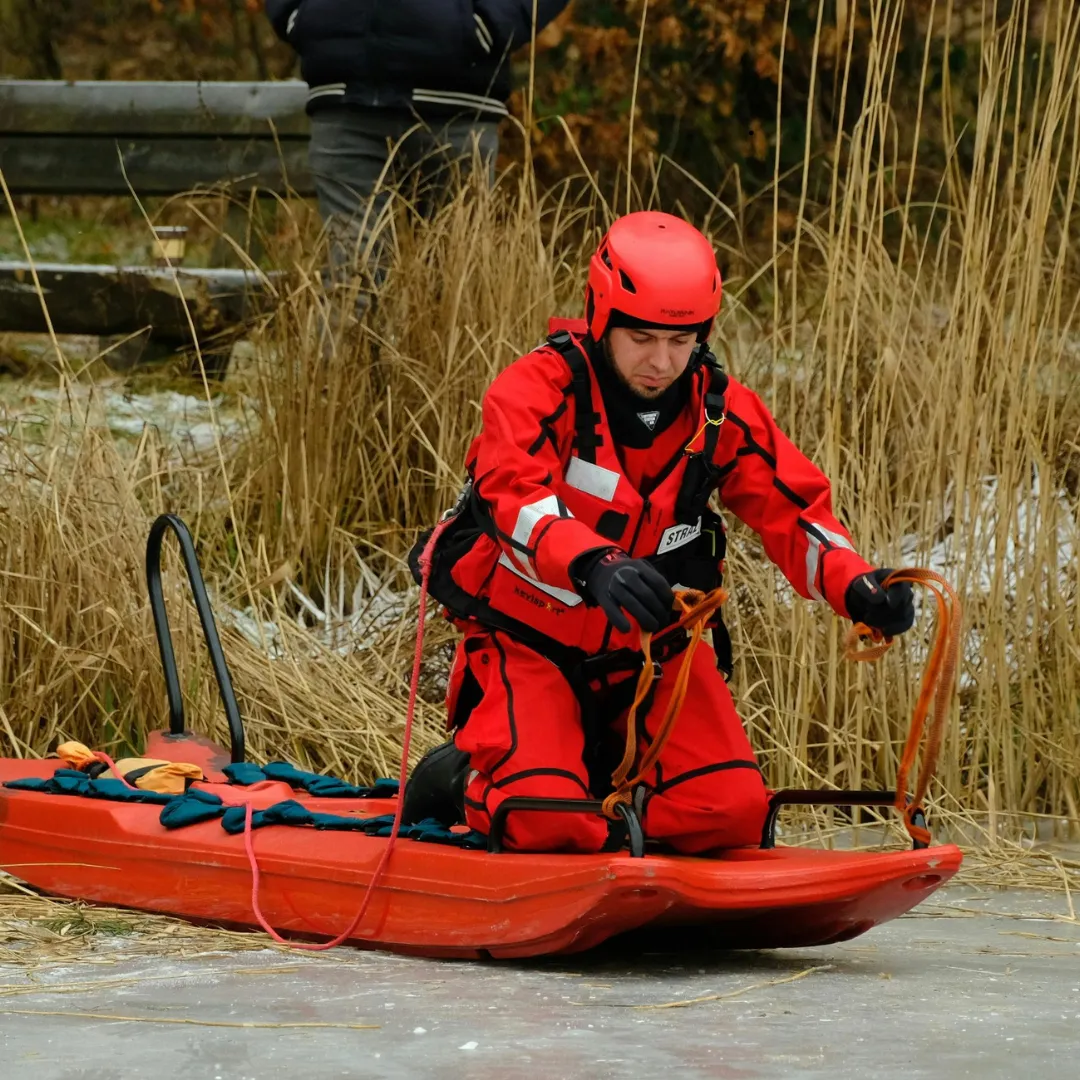
Course Overview
The OSHAA 30-Hours Professional Diploma in Water Rescue Equipment Training (WRET) is a professional development program designed to provide learners with comprehensive knowledge of water rescue equipment, aquatic safety, and emergency response principles. The course is intended for individuals seeking careers or professional advancement in lifeguarding, emergency services, marine operations, public safety, disaster response, water sports, and other industries where water rescue equipment plays a critical role in protecting lives.
This diploma introduces the purpose, selection, application, and importance of water rescue equipment used in a variety of aquatic environments, including beaches, rivers, lakes, reservoirs, swimming pools, harbors, and coastal areas. It is suitable for aspiring lifeguards, emergency responders, rescue personnel, maritime professionals, water sports instructors, public safety officers, and anyone interested in expanding their knowledge of water rescue systems, rescue resources, and emergency preparedness.
As water-based recreation, marine activities, and coastal operations continue to grow worldwide, the need for professionals who understand the safe and effective use of water rescue equipment is increasing. The OSHAA 30-Hours Professional Diploma in Water Rescue Equipment Training (WRET) provides an industry-focused educational pathway that enhances professional credibility, supports career development, and prepares learners for opportunities in water rescue, emergency management, marine safety, aquatic facilities, and public safety while promoting internationally recognized best practices in aquatic emergency response.
Course Structure
This qualification, the OSHAA 30-Hours Professional Diploma in Water Rescue Equipment Training (WRET), consists of 9 units.
Study Units
Learning Outcomes
Here are the learning outcomes for each study unit:
Introduction to Water Rescue Equipment and Roles (3 Hours)
- Understand the purpose and importance of water rescue equipment
- Identify key roles and responsibilities in managing rescue equipment
- Recognise how effective equipment use supports successful rescue operations
Types and Functions of Water Rescue Equipment (4 Hours)
- Identify different types of water rescue equipment and their specific functions
- Understand the appropriate use of each equipment type in various rescue scenarios
- Develop knowledge of equipment capabilities and limitations
Safe Handling and Operation Techniques (4 Hours)
- Demonstrate correct and safe handling techniques for water rescue equipment
- Apply operational protocols to minimise risk during rescue missions
- Ensure personal and team safety while using equipment in aquatic environments
Inspection and Maintenance of Rescue Equipment (3 Hours)
- Perform thorough inspections to identify wear, damage, or defects
- Apply routine maintenance practices to prolong equipment lifespan
- Document inspection and maintenance activities according to standards
Storage and Equipment Management Best Practices (3 Hours)
- Implement proper storage methods to protect equipment integrity
- Manage equipment inventory efficiently for readiness and accessibility
- Understand environmental factors affecting equipment storage and care
Rescue Board Operation and Deployment (5 Hours)
- Operate rescue boards effectively in simulated rescue scenarios
- Demonstrate deployment techniques that maximise rescue success and safety
- Coordinate with team members during rescue board usage
Use of Throw Bags and Flotation Devices (3 Hours)
- Utilize throw bags accurately to assist in water rescues
- Deploy flotation devices appropriately to support casualties
- Maintain and inspect throw bags and flotation equipment regularly
Communication and Coordination during Rescue Operations (3 Hours)
- Apply clear communication strategies during rescue incidents
- Coordinate roles and actions among rescue team members effectively
- Use communication tools to enhance operational efficiency and safety
Compliance with Safety Standards and Regulations (2 Hours)
- Understand relevant safety standards and regulatory requirements
- Ensure equipment usage and management align with legal obligations
- Promote adherence to policies that safeguard rescuers and casualties
Certification Benefits
The OSHAA 30-Hours Professional Diploma in Water Rescue Equipment Training (WRET) is designed to enhance your professional knowledge of water rescue equipment, aquatic safety, and emergency response principles.
Key Benefits
- Develop professional knowledge of water rescue equipment and its applications.
- Build a strong understanding of aquatic safety principles and risk management.
- Learn the purpose and appropriate use of common water rescue equipment.
- Enhance your understanding of emergency response procedures in aquatic environments.
- Strengthen your knowledge of drowning prevention and water safety practices.
- Increase your awareness of rescue planning, hazard identification, and emergency preparedness.
- Support career development in lifeguarding, emergency services, marine operations, and public safety.
- Gain an industry-focused qualification that demonstrates your commitment to professional development.
- Expand your knowledge of internationally recognized water rescue and lifesaving practices.
- Prepare for further education, professional certifications, and career opportunities in water rescue and emergency response.
Course Eligibility
Learners should meet the following entry requirements:
Course Fee
140k PKR / 375GBP / 500 USD