
What is a Biodiversity Specialist? Role, Responsibilities, Skills, Qualifications and Career Path
Biodiversity is facing increasing threats from climate change, deforestation, pollution, habitat loss, and human activities. Protecting species, habitats, and ecosystems is essential for maintaining environmental balance and supporting sustainable development.
Biodiversity Specialists help protect nature by assessing ecosystems, monitoring species, managing conservation projects, and supporting environmental planning. With growing focus on sustainability and conservation, they have increasing career opportunities in environmental management, ecological consulting, and conservation organisations.
What Is a Biodiversity Specialist?
A Biodiversity Specialist is an environmental professional responsible for studying, protecting, and managing biological diversity, including plants, animals, habitats, ecosystems, and species populations.
They use knowledge of ecology, environmental science, conservation biology, and environmental management to assess biodiversity conditions, identify ecological risks, and develop strategies that support nature protection and sustainable development.
Biodiversity Specialists work with governments, conservation organisations, environmental consultancies, research institutions, NGOs, and businesses to ensure development projects minimise environmental impacts while maintaining ecosystem health.
What Does a Biodiversity Specialist Do?
A Biodiversity Specialist is an environmental professional who studies, protects, and manages biodiversity, including species, habitats, and ecosystems. They assess ecological conditions, identify environmental risks, and support efforts to conserve natural resources.
They help organisations develop sustainable strategies by providing biodiversity assessments, conservation recommendations, and environmental guidance to protect ecosystems and promote responsible development.
Key Responsibilities
Biodiversity Surveys and Field Assessments
- Conduct ecological surveys to identify species and habitats.
- Collect field data on plants, wildlife, and ecosystems.
- Assess biodiversity conditions in different environments.
- Monitor changes in species populations and habitats.
Environmental Impact Assessment Support
- Evaluate how development projects affect biodiversity.
- Identify ecological risks and conservation concerns.
- Recommend mitigation measures to reduce environmental damage.
- Support environmental assessment reports.
Conservation Planning and Management
- Develop biodiversity conservation strategies.
- Support habitat restoration projects.
- Create species protection plans.
- Assist with protected area management.
Ecological Data Analysis and Reporting
- Analyse biodiversity data collected from field studies.
- Prepare technical environmental reports.
- Maintain biodiversity databases.
- Present findings to stakeholders and decision-makers.
Policy and Regulatory Compliance
- Support compliance with environmental regulations.
- Apply biodiversity protection standards.
- Work with government agencies and environmental organisations.
- Ensure projects follow conservation requirements.
Difference Between an Ecologist and a Biodiversity Specialist
| Ecologist | Biodiversity Specialist |
|---|---|
| An Ecologist studies the relationships between living organisms and their environment. | A Biodiversity Specialist focuses on protecting, managing, and conserving biological diversity. |
| Researches ecosystems, species interactions, population changes, and ecological processes. | Assesses biodiversity risks, develops conservation strategies, and supports environmental planning. |
| Mainly focuses on scientific research and understanding how ecosystems function. | Focuses on applying ecological knowledge to conservation, development projects, and sustainability decisions. |
| May work in research institutions, universities, or environmental organisations. | Often works in conservation organisations, environmental consultancies, government agencies, and sustainability teams. |
| Uses ecological studies to understand environmental changes. | Uses biodiversity assessments, monitoring data, and conservation plans to protect species and habitats. |
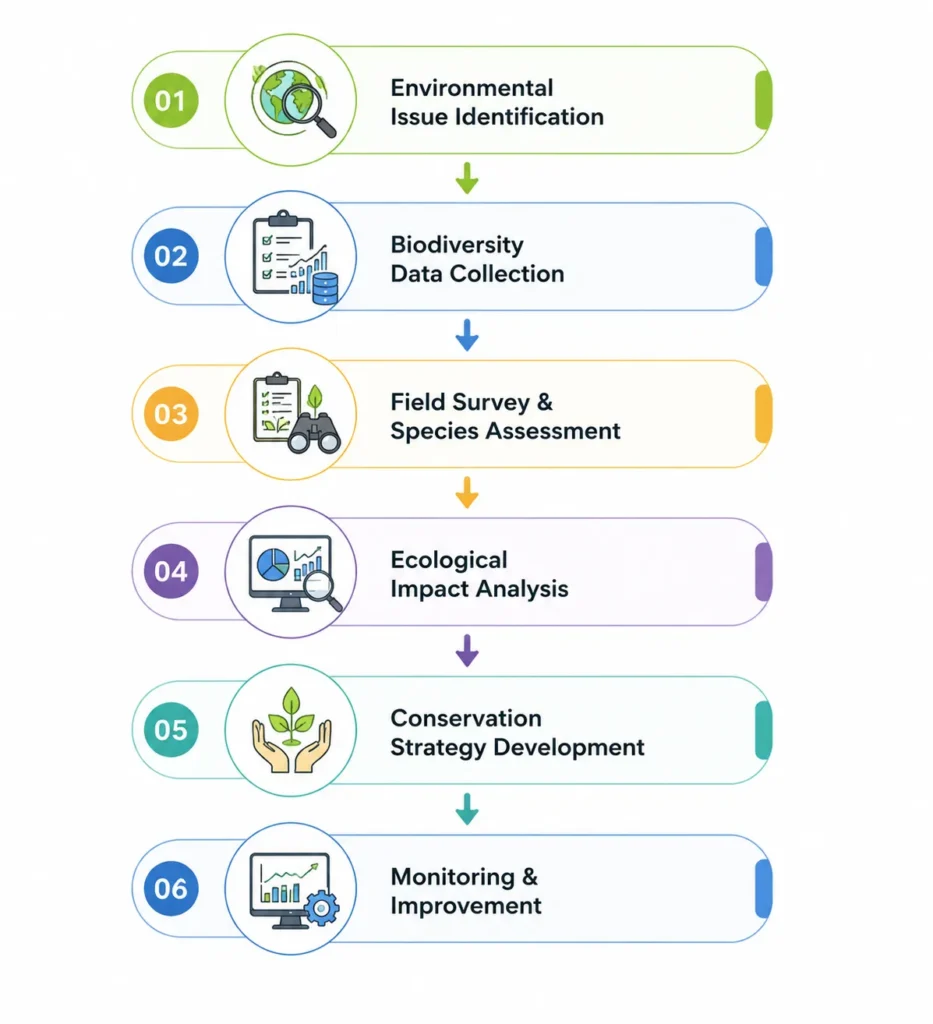
Typical Biodiversity Specialist Workflow
Environmental Issue Identification
Identify biodiversity concerns, ecosystem threats, and conservation needs.
↓
Biodiversity Data Collection
Gather ecological information about species, habitats, and environmental conditions.
↓
Field Survey and Species Assessment
Conduct field studies to observe, record, and evaluate biodiversity.
↓
Ecological Impact Analysis
Assess environmental impacts and identify risks to ecosystems and species.
↓
Conservation Strategy Development
Create plans and solutions to protect biodiversity and restore habitats.
↓
Monitoring and Improvement
Track conservation progress and improve strategies based on results.
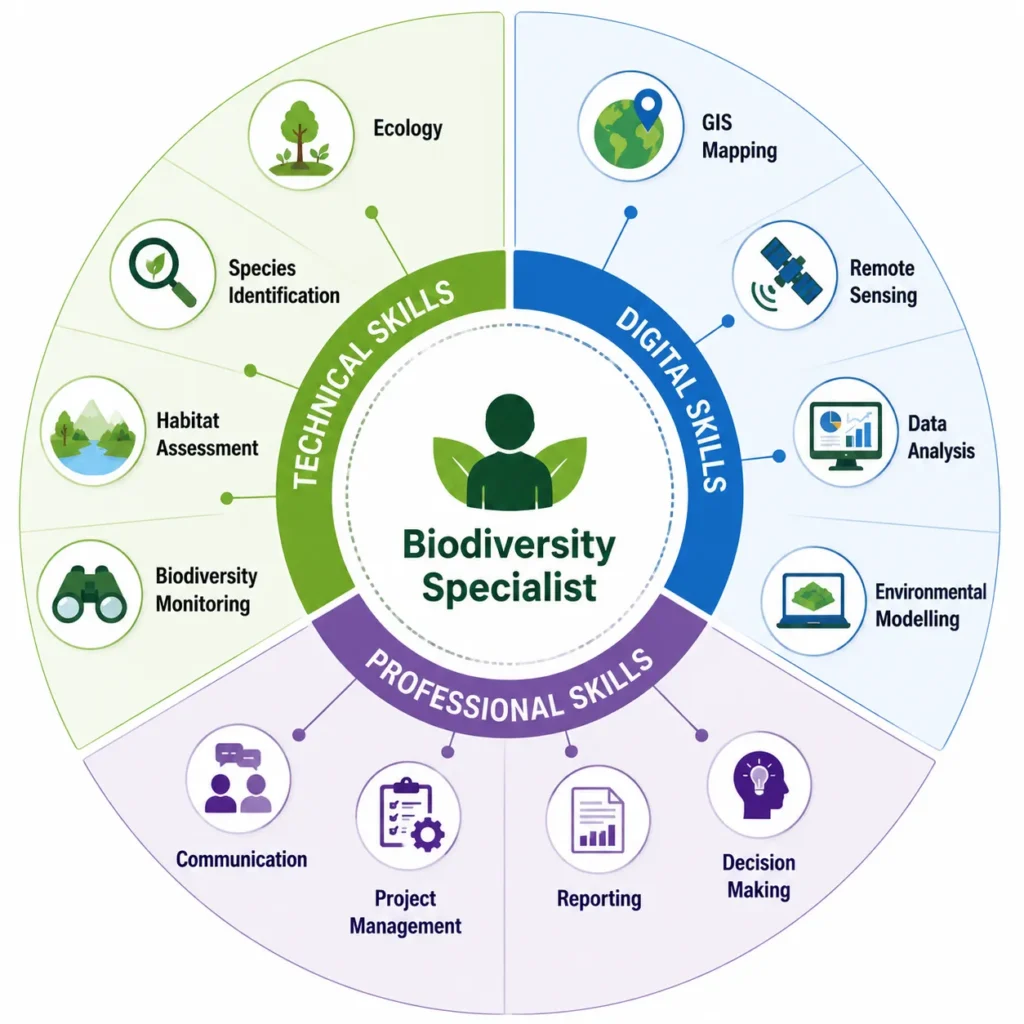
Essential Skills Required to Become a Biodiversity Specialist
Technical Skills
Biodiversity Specialists require strong technical knowledge to assess ecosystems, monitor species, and develop effective conservation solutions. Key technical skills include:
- Ecology and Conservation Biology
- Species Identification
- Habitat Assessment
- Biodiversity Monitoring
- Environmental Impact Assessment
- GIS Mapping
- Remote Sensing
- Ecological Data Analysis
- Conservation Planning
- Environmental Reporting
Digital and Research Skills
Modern biodiversity work requires the ability to collect, analyse, and manage environmental data using advanced tools and research methods. Important skills include:
- Geographic Information Systems (GIS)
- Biodiversity Database Management
- Environmental Modelling
- Spatial Data Analysis
- Scientific Research Methods
Management Skills
Biodiversity Specialists also need strong professional skills to manage projects, communicate findings, and work with different stakeholders. Essential skills include:
- Project Management
- Communication Skills
- Stakeholder Engagement
- Report Writing
- Problem Solving
- Environmental Decision-Making
- Team Collaboration
Educational Requirements and Qualifications
To become a Biodiversity Specialist, professionals typically need an academic background in environmental and biological sciences. Relevant qualifications help develop the knowledge required for ecosystem assessment, species conservation, and environmental management.
Common educational pathways include:
- Environmental Science degree
- Ecology and Conservation Biology
- Biology or Wildlife Science
- Natural Resource Management
- Environmental Management qualifications
- Geography and Earth Sciences
- Sustainability studies
- GIS and environmental data training
🎓 Bachelor Degree
↓
🌱 Environmental Science / Ecology / Biology
↓
🔍 Field Experience
↓
📜 Professional Certifications
↓
🌍 Biodiversity Specialist Role
↓
🏆 Advanced Conservation Career
Certifications for Biodiversity Specialists
Professional certifications can help Biodiversity Specialists strengthen their technical knowledge, improve career opportunities, and demonstrate expertise in conservation, environmental management, and ecological assessment.
Common certifications and training areas include:
- Biodiversity Conservation Certification – Develops knowledge of species protection, habitat management, and conservation planning.
- Environmental Impact Assessment (EIA) Certification – Builds skills in assessing and managing environmental risks from development projects.
- GIS and Remote Sensing Certification – Enhances abilities in habitat mapping, spatial analysis, and environmental data management.
- Ecological Survey and Field Skills Training – Improves practical skills in species identification, habitat surveys, and biodiversity monitoring.
- Environmental Management Certification – Provides knowledge of sustainability practices, environmental policies, and resource management.
- Sustainability and ESG Certifications – Supports understanding of biodiversity reporting, corporate sustainability, and nature-related risks.
- Conservation Biology and Wildlife Management Training – Develops expertise in ecosystem protection and wildlife conservation strategies.
Relevant professional experience combined with recognised certifications can help professionals progress from entry-level ecological roles to senior Biodiversity Specialist and conservation management positions.
Biodiversity Specialist Salary and Career Opportunities
The salary of a Biodiversity Specialist depends on experience, location, employer type, technical skills, and professional specialisation. Specialists with expertise in biodiversity assessments, GIS mapping, ecological research, and environmental impact assessments often have better career growth opportunities.
Average Biodiversity Specialist Salary by Country
| Country | Average Annual Salary (Approx.) | Career Opportunities |
|---|---|---|
| United States | $60,000 – $90,000 | Opportunities in environmental consultancies, government agencies, conservation organisations, and sustainability teams |
| United Kingdom | £30,000 – £55,000 | Roles in ecological consulting, biodiversity assessments, environmental planning, and conservation projects |
| Canada | CAD 55,000 – CAD 85,000 | Demand in wildlife management, natural resource conservation, and environmental research |
| Australia | AUD 70,000 – AUD 110,000 | Opportunities in biodiversity conservation, environmental assessments, and ecosystem restoration |
| Germany | €45,000 – €75,000 | Career options in environmental management, ecological monitoring, and sustainability projects |
| Pakistan | PKR 800,000 – PKR 2,500,000 | Opportunities in NGOs, environmental consultancies, government projects, and conservation programmes |

Biodiversity Specialist Career Roadmap
Environmental Science Student
⬇️
Environmental Intern
⬇️
Junior Ecologist
⬇️
Biodiversity Assistant
⬇️
Biodiversity Specialist
⬇️
Senior Biodiversity Specialist
⬇️
Biodiversity Manager
⬇️
Conservation Director
⬇️
Environmental Sustainability Leader
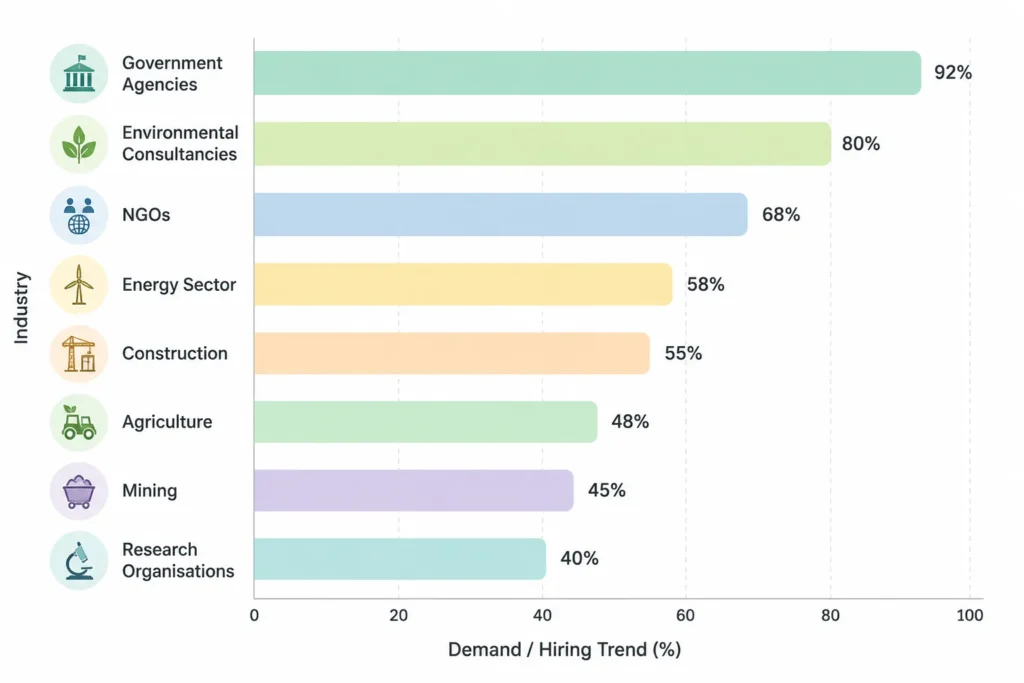
Industries Hiring Biodiversity Specialists
Biodiversity Specialists are needed across various sectors where organisations focus on environmental protection, conservation, and sustainable development. They support projects by assessing ecological impacts, protecting natural resources, and developing strategies to maintain biodiversity.
Government Agencies
Government organisations hire Biodiversity Specialists to support environmental protection and conservation programmes.
Key roles include:
- Managing wildlife conservation initiatives.
- Supporting national parks and protected areas.
- Conducting biodiversity assessments.
- Developing natural resource management strategies.
- Ensuring compliance with environmental policies.
Environmental Consultancies
Environmental consulting companies employ Biodiversity Specialists for ecological assessments and sustainability projects.
Key responsibilities include:
- Conducting biodiversity surveys.
- Preparing environmental impact assessments.
- Developing conservation management plans.
- Advising organisations on ecological risks.
NGOs and Conservation Organisations
Conservation organisations rely on Biodiversity Specialists to protect ecosystems and endangered species.
Work areas include:
- Wildlife protection programmes.
- Habitat restoration projects.
- Community-based conservation initiatives.
- Ecosystem monitoring and research.
Construction and Infrastructure Companies
Large development projects require biodiversity expertise to reduce environmental impacts.
Biodiversity Specialists help with:
- Sustainable development planning.
- Environmental risk management.
- Biodiversity impact assessments.
- Habitat protection strategies.
Energy Industry
The energy sector hires biodiversity professionals to manage environmental impacts of energy projects.
Key activities include:
- Supporting renewable energy developments.
- Ensuring environmental compliance.
- Protecting ecosystems around project sites.
- Planning biodiversity conservation measures.
Agriculture and Forestry Sector
Biodiversity Specialists support sustainable use of natural resources in agriculture and forestry.
Their work includes:
- Sustainable land management.
- Ecosystem conservation.
- Protecting natural habitats.
- Promoting environmentally responsible practices.
Mining Industry
Mining companies employ biodiversity experts to minimise ecological damage and restore affected areas.
Responsibilities include:
- Biodiversity impact management.
- Land restoration planning.
- Environmental rehabilitation.
- Monitoring ecosystem recovery.
Research Organisations and Universities
Research institutions hire Biodiversity Specialists for scientific studies and conservation research.
Areas of work include:
- Ecological research.
- Species monitoring.
- Biodiversity data analysis.
- Conservation studies.
Role of Biodiversity Specialists in Sustainability
Biodiversity Specialists play an important role in achieving environmental sustainability by protecting ecosystems, supporting conservation efforts, and helping organisations make responsible decisions.
Their contributions include:
- Protecting ecosystems and natural resources.
- Supporting Sustainable Development Goals (SDGs), especially environmental protection goals.
- Helping communities and organisations adapt to climate change impacts.
- Protecting endangered species and threatened habitats.
- Promoting nature-positive development practices.
- Supporting responsible business and sustainability strategies.
- Integrating biodiversity considerations into environmental planning and decision-making.
Biodiversity Assessment Tools and Technologies
Modern Biodiversity Specialists use advanced tools and technologies to collect environmental data, analyse ecosystems, and develop effective conservation strategies. These technologies improve biodiversity monitoring, decision-making, and environmental planning.
| Tool/Technology | Purpose |
|---|---|
| GIS Software | Mapping habitats, ecosystems, and species distribution |
| Remote Sensing | Monitoring ecosystem changes using satellite and aerial data |
| Biodiversity Databases | Recording, managing, and analysing species information |
| Environmental Modelling | Predicting ecological impacts and ecosystem changes |
| Field Survey Equipment | Collecting biodiversity data during ecological studies |
| Camera Traps | Monitoring wildlife behaviour and population changes |
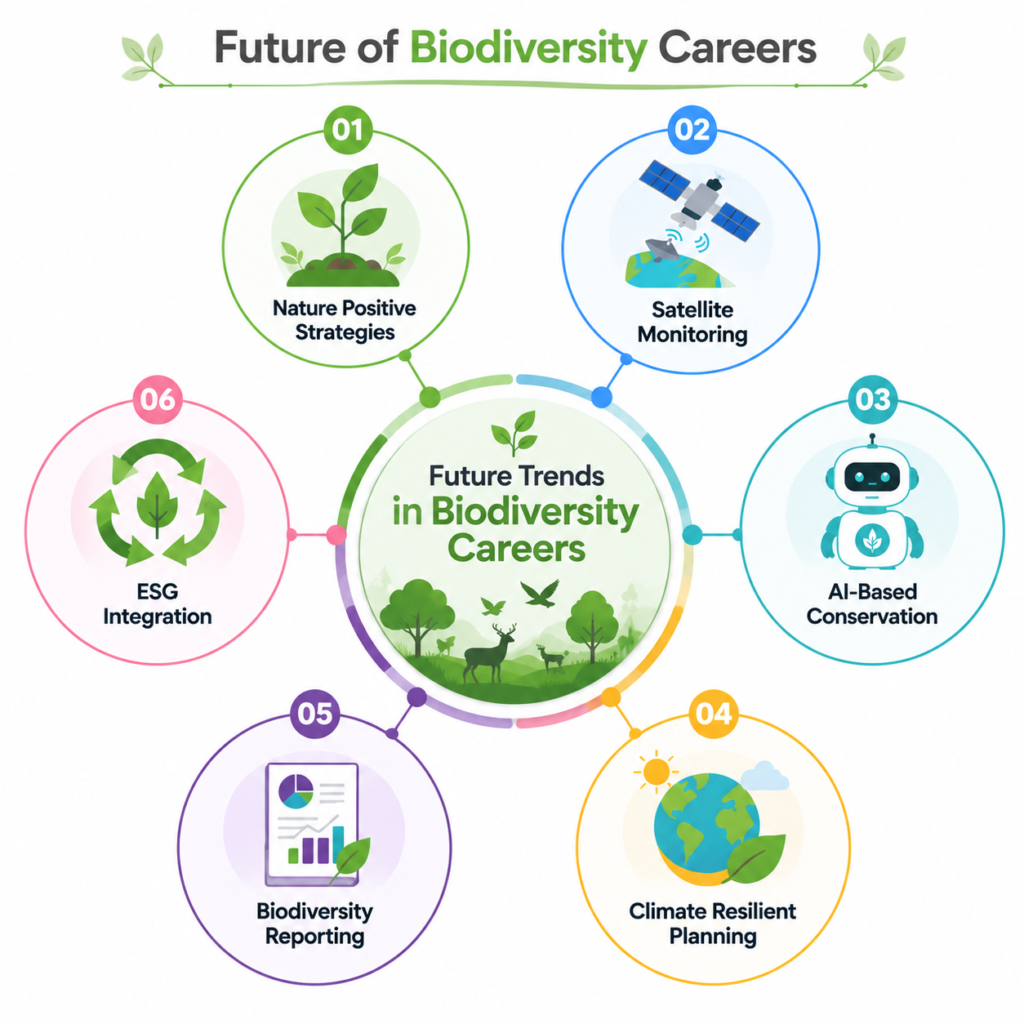
Future of Biodiversity Specialist Careers
The future demand for Biodiversity Specialists is increasing due to growing environmental challenges, sustainability requirements, and the need for better ecosystem protection. New technologies and global conservation goals are creating more opportunities in biodiversity management.
Nature-Positive Business Strategies
Businesses are increasingly focusing on reducing their impact on nature and protecting biodiversity.
Key developments include:
- Growing demand for companies to reduce biodiversity impacts.
- Increased focus on sustainable supply chains.
- Integration of biodiversity goals into corporate sustainability strategies.
Advanced Biodiversity Monitoring Technologies
New technologies are improving how biodiversity is measured and managed.
Future trends include:
- Satellite-based ecosystem monitoring.
- Digital biodiversity mapping.
- Automated species identification tools.
- AI-supported ecological analysis.
Artificial Intelligence in Biodiversity Management
Artificial Intelligence is becoming an important tool for improving conservation decisions.
Applications include:
- Predicting species distribution patterns.
- Analysing large environmental datasets.
- Identifying ecosystem risks.
- Supporting faster and more accurate conservation planning.
Climate-Resilient Conservation Planning
Biodiversity Specialists are increasingly involved in preparing ecosystems for climate challenges.
Key activities include:
- Protecting ecosystems from climate impacts.
- Developing climate adaptation strategies.
- Supporting habitat restoration projects.
Biodiversity Reporting and ESG Requirements
Organisations are focusing more on measuring and reporting their impact on nature.
Biodiversity Specialists support:
- Biodiversity disclosure requirements.
- Sustainability reporting frameworks.
- Assessment of nature-related risks and impacts.
Common Challenges Faced by Biodiversity Specialists
Biodiversity Specialists work on complex environmental issues that require scientific knowledge, planning, and innovative solutions.
| Challenge | Impact |
|---|---|
| Habitat Loss | Reduction of species populations and ecosystem damage |
| Climate Change | Changes in species distribution and ecosystem stability |
| Pollution | Threats to wildlife and natural habitats |
| Limited Biodiversity Data | Difficulties in conservation planning and decision-making |
| Human Development Pressure | Conflicts between development projects and conservation needs |
| Invasive Species | Disruption of native ecosystems |
Conclusion
Biodiversity Specialists play an important role in protecting ecosystems, conserving species, and supporting sustainable development. They combine environmental knowledge, research skills, and modern technologies to assess biodiversity challenges and create effective conservation solutions.
With increasing focus on climate change, sustainability, and nature protection, the demand for Biodiversity Specialists is growing worldwide. A career in biodiversity offers opportunities to work in conservation, environmental management, research, and sustainability projects while making a positive impact on the natural world.