
What is a Fire Protection Specialist? Roles, Responsibilities, Skills and Career Guide (2026)
As industries continue to prioritise workplace safety, regulatory compliance, and risk management, the role of a Fire Protection Specialist has become increasingly important. From commercial buildings and manufacturing facilities to hospitals, airports, oil and gas plants, and large infrastructure projects, organisations rely on fire protection professionals to prevent fires, protect lives, safeguard valuable assets, and ensure compliance with national and international fire safety standards.
Modern Fire Protection Specialists do far more than respond to emergencies. They assess fire risks, design and evaluate fire protection strategies, inspect fire safety systems, oversee regulatory compliance, and ensure that fire detection, suppression, and emergency response systems operate effectively. Their expertise helps organisations reduce the likelihood of fire incidents while ensuring business continuity and protecting employees, visitors, and property.
What is a Fire Protection Specialist?
A Fire Protection Specialist is a safety professional responsible for protecting people, buildings, equipment, and critical infrastructure from fire-related hazards. Their primary role is to identify potential fire risks, implement preventive measures, ensure compliance with fire safety regulations, and verify that fire protection systems function effectively throughout a building’s lifecycle.
Unlike firefighters, whose primary responsibility is emergency response, Fire Protection Specialists focus on preventing fires before they occur. They work proactively by assessing hazards, reviewing building designs, inspecting fire protection equipment, developing emergency plans, conducting fire safety training, and ensuring compliance with recognised fire safety standards.
Fire Protection Specialists work closely with architects, engineers, project managers, contractors, facility managers, health and safety professionals, insurers, and regulatory authorities. Their recommendations influence building design, operational safety, emergency preparedness, and long-term asset protection.
Today’s professionals also use advanced digital technologies such as Building Information Modelling (BIM), smart fire detection systems, cloud-based inspection software, and AI-powered monitoring tools to improve fire safety management and streamline compliance processes.
As fire safety regulations become more demanding and buildings become increasingly complex, Fire Protection Specialists play an essential role in ensuring organisations maintain safe working environments while protecting lives, property, and business operations.
What is Fire Protection?
Fire protection is the combination of engineering principles, preventive measures, safety procedures, and specialised systems designed to minimise the risk of fire, reduce its impact, and protect people, property, and the environment.
A comprehensive fire protection programme typically includes:
- Fire risk assessments
- Fire prevention strategies
- Fire detection systems
- Fire alarm systems
- Automatic sprinkler systems
- Fire suppression systems
- Smoke management systems
- Emergency lighting
- Fire-resistant building materials
- Emergency evacuation planning
- Fire safety inspections
- Regular maintenance and testing
Together, these measures help organisations prevent fire incidents, detect fires quickly, control fire spread, and support safe evacuation during emergencies.
Fire Protection vs Fire Prevention
Although the terms are closely related, they have different meanings.
| Fire Prevention | Fire Protection |
|---|---|
| Focuses on preventing fires from starting | Focuses on detecting, controlling, and limiting the impact of fires |
| Eliminates ignition sources and fire hazards | Uses systems and equipment to protect life and property |
| Includes risk assessments and safe work practices | Includes alarms, sprinklers, suppression systems, and emergency response |
| Reduces the likelihood of fire incidents | Minimises damage if a fire occurs |
| Proactive approach | Protective and responsive approach |
Why Are Fire Protection Specialists Important?
Every year, fire incidents cause significant loss of life, property damage, environmental harm, and financial disruption worldwide. Behind every well-protected facility is a carefully planned fire protection strategy managed by skilled professionals.
Fire Protection Specialists help organisations identify hazards before they become emergencies. Through inspections, risk assessments, system evaluations, maintenance planning, and regulatory compliance, they ensure that fire protection measures remain effective throughout a building’s operational life.
Without effective fire protection management, organisations may experience:
- Increased fire risks
- Serious injuries or fatalities
- Property damage
- Regulatory penalties
- Insurance complications
- Business interruptions
- Equipment losses
- Legal liabilities
- Environmental damage
- Reputational harm
By implementing proactive fire protection measures, specialists significantly reduce these risks while helping organisations maintain safe, compliant, and resilient operations.
Protecting Lives and Property
The primary objective of every Fire Protection Specialist is safeguarding human life.
This includes ensuring:
- Occupants can evacuate safely.
- Fire alarms activate quickly.
- Fire suppression systems operate correctly.
- Emergency exits remain accessible.
- Fire risks are identified before incidents occur.
Their work protects not only employees but also customers, visitors, contractors, emergency responders, and surrounding communities.
Supporting Regulatory Compliance
Most countries have strict fire safety regulations that organisations must follow.
Fire Protection Specialists help ensure compliance with:
- Fire safety legislation
- Building regulations
- Occupational safety requirements
- Insurance standards
- Industry-specific fire codes
- Organisational fire safety policies
Regular inspections and documentation also help organisations prepare for audits, certifications, and regulatory inspections.
Supporting Modern Smart Buildings
Today’s buildings increasingly incorporate intelligent fire protection technologies, including:
- AI-powered smoke detection
- IoT fire sensors
- Smart alarm systems
- Cloud-based monitoring platforms
- Building Information Modelling (BIM)
- Predictive maintenance systems
Fire Protection Specialists are responsible for understanding and managing these advanced technologies to ensure buildings remain safe, compliant, and operational.
What Does a Fire Protection Specialist Do?
A Fire Protection Specialist is responsible for developing, implementing, inspecting, and maintaining fire protection measures that minimise fire risks and protect people, property, and business operations. Their work extends far beyond responding to emergencies—they proactively identify hazards, ensure compliance with fire safety regulations, evaluate fire protection systems, and help organisations create safer working environments.
Whether working on a high-rise building, manufacturing plant, hospital, airport, data centre, warehouse, or oil and gas facility, Fire Protection Specialists play a critical role throughout the entire lifecycle of a building or industrial project. They collaborate with architects, engineers, contractors, facility managers, insurers, and regulatory authorities to ensure that every fire protection measure meets the required safety standards.
Modern Fire Protection Specialists also utilise advanced technologies such as smart fire detection systems, Building Information Modelling (BIM), digital inspection software, cloud-based reporting tools, and AI-assisted monitoring platforms to improve fire safety performance and operational efficiency.
Core Responsibilities of a Fire Protection Specialist
Although responsibilities vary depending on the industry and employer, Fire Protection Specialists typically perform the following key duties.
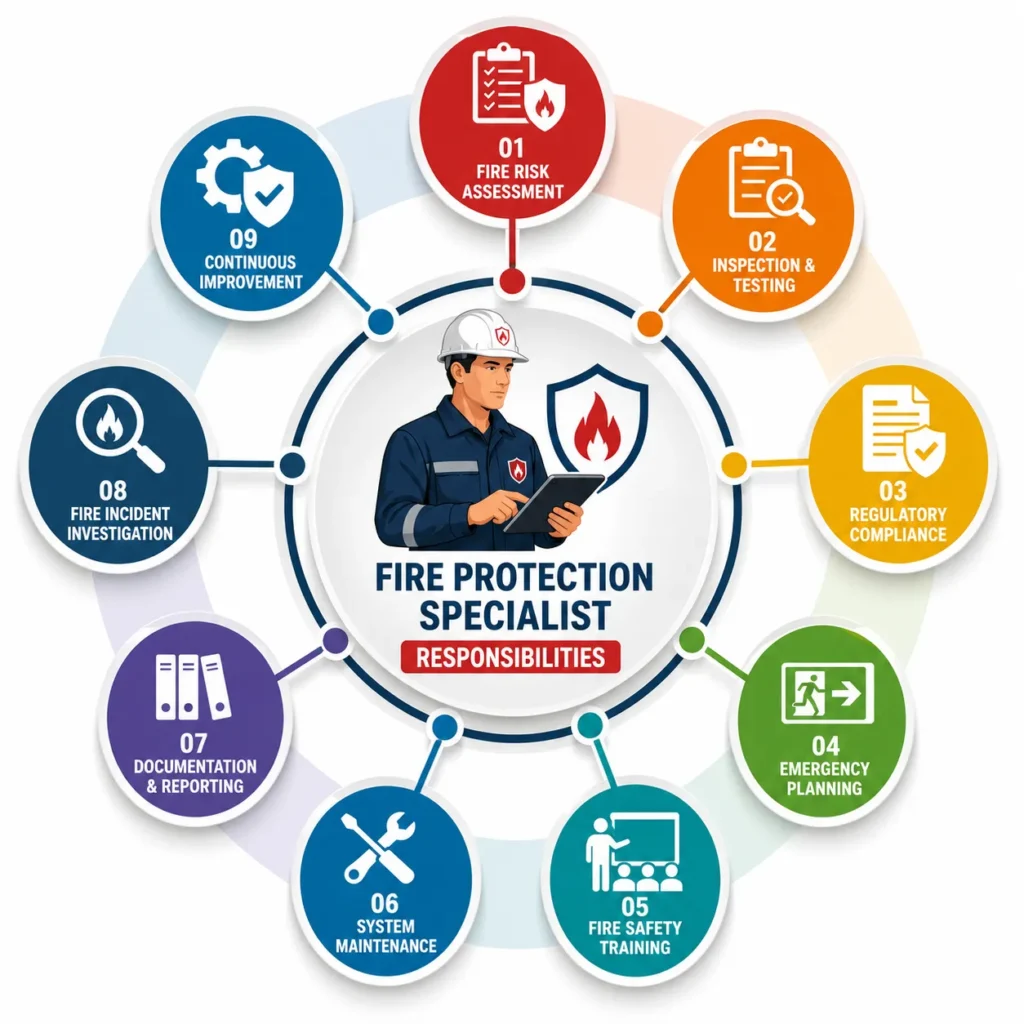
Conducting Fire Risk Assessments
One of the most important responsibilities is identifying potential fire hazards before they become serious risks.
Fire risk assessments typically include:
- Identifying ignition sources
- Evaluating combustible materials
- Assessing occupancy risks
- Reviewing escape routes
- Evaluating fire protection systems
- Analysing emergency procedures
- Recommending corrective actions
A thorough fire risk assessment forms the foundation of every effective fire protection programme.
Example
Before a new shopping centre opens, the Fire Protection Specialist conducts a comprehensive fire risk assessment, identifying potential hazards such as electrical equipment rooms, commercial kitchens, storage areas, and emergency exit accessibility. Their recommendations help eliminate fire risks before the building is occupied.
Inspecting Fire Protection Systems
Fire protection equipment must be regularly inspected to ensure it operates correctly during an emergency.
Typical inspections include:
- Fire alarm systems
- Automatic sprinkler systems
- Fire extinguishers
- Fire hydrants
- Hose reels
- Smoke detection systems
- Fire pumps
- Emergency lighting
- Fire doors
- Exit signage
Inspections help identify faults before they compromise life safety.
Ensuring Compliance with Fire Codes and Standards
Fire Protection Specialists verify that buildings comply with national and international fire safety regulations.
This includes reviewing compliance with:
- Building fire codes
- Occupational safety regulations
- Fire safety legislation
- Insurance requirements
- Organisational fire safety policies
- Industry-specific standards
Maintaining compliance reduces legal risks and improves overall workplace safety.
Reviewing Building Designs
Fire safety begins long before construction starts.
Fire Protection Specialists review architectural and engineering drawings to ensure fire safety has been incorporated into the building design.
This may involve evaluating:
- Fire compartmentation
- Means of escape
- Fire-resistant construction
- Smoke control systems
- Sprinkler layouts
- Emergency access routes
- Fire alarm zoning
Early involvement helps prevent costly design changes later in the project.
Developing Emergency Response Plans
Every organisation should have a documented emergency response plan.
Fire Protection Specialists help develop procedures covering:
- Fire evacuation
- Emergency communication
- Assembly points
- Emergency contacts
- Fire warden responsibilities
- Incident reporting
- Business continuity planning
Well-developed emergency plans improve preparedness and reduce confusion during emergencies.
Conducting Fire Safety Training
People are the first line of defence during a fire emergency.
Fire Protection Specialists organise and deliver training programmes covering:
- Fire awareness
- Fire extinguisher use
- Emergency evacuation
- Fire prevention practices
- Hazard reporting
- Emergency response procedures
Regular training helps create a strong fire safety culture throughout the organisation.
Investigating Fire Incidents
Following a fire event, specialists often assist with investigations to determine:
- Cause of the fire
- Fire spread
- Equipment performance
- Compliance issues
- Lessons learned
- Preventive improvements
These investigations help organisations strengthen future fire protection strategies.
Preparing Fire Safety Documentation
Documentation is essential for demonstrating compliance and supporting audits.
Fire Protection Specialists prepare and maintain:
- Fire risk assessments
- Inspection reports
- Maintenance records
- Fire safety policies
- Emergency procedures
- Compliance reports
- Equipment testing records
- Training records
- Incident reports
Accurate documentation supports regulatory inspections and continuous improvement.
Fire Protection Specialist Responsibilities Throughout a Project
The responsibilities of a Fire Protection Specialist evolve throughout the different stages of a project.
During Planning and Design
At the planning stage, specialists help ensure fire safety is integrated into the project from the beginning.
Typical activities include:
- Reviewing architectural designs
- Evaluating fire protection strategies
- Advising on fire-resistant construction
- Recommending fire detection systems
- Assessing evacuation routes
- Identifying regulatory requirements
Early planning significantly reduces future safety risks.
During Construction
During construction, Fire Protection Specialists monitor installation activities to ensure fire protection systems are installed correctly.
Responsibilities include:
- Inspecting sprinkler installations
- Reviewing fire alarm systems
- Verifying fire door installation
- Inspecting passive fire protection
- Monitoring contractor compliance
- Reviewing commissioning procedures
Regular inspections ensure systems meet design specifications.
During Commissioning
Before a building becomes operational, all fire protection systems must be tested.
Commissioning activities include:
- Functional testing
- Alarm verification
- Sprinkler testing
- Fire pump testing
- Emergency lighting tests
- Smoke control verification
- Integrated system testing
Only after successful commissioning should the building be occupied.
During Building Operations
Once occupied, buildings require ongoing fire safety management.
Fire Protection Specialists continue to:
- Schedule inspections
- Coordinate maintenance
- Review risk assessments
- Update emergency plans
- Deliver refresher training
- Monitor compliance
- Investigate incidents
Fire protection remains an ongoing responsibility throughout the building’s life.
The Complete Fire Protection Workflow Explained
Effective fire protection follows a structured process that begins with risk identification and continues throughout the operational life of a facility.
Step 1: Fire Risk Assessment
The process begins by identifying potential fire hazards.
Examples include:
- Electrical installations
- Flammable materials
- Hot work activities
- Cooking equipment
- Storage areas
- Machinery
The goal is to understand where fires are most likely to occur.
Step 2: Hazard Analysis
Once hazards have been identified, specialists evaluate:
- Probability of fire
- Potential consequences
- Occupancy levels
- Property value
- Environmental impact
This determines the level of protection required.
Step 3: Fire Protection System Design
Based on the assessment, suitable fire protection systems are selected.
These may include:
- Fire alarms
- Smoke detectors
- Automatic sprinklers
- Fire pumps
- Gas suppression systems
- Emergency lighting
- Smoke extraction systems
The design must comply with applicable fire codes and standards.
Step 4: Installation
Qualified contractors install the approved fire protection systems.
The Fire Protection Specialist monitors installation quality and verifies compliance with project specifications.
Step 5: Inspection and Testing
Before systems become operational, they undergo rigorous inspection and performance testing.
This ensures:
- Equipment functions correctly
- Alarms activate properly
- Sprinklers discharge as designed
- Pumps operate efficiently
- Emergency lighting performs correctly
Step 6: Commissioning
After successful testing, the complete fire protection system is formally commissioned and approved for operational use.
Step 7: Maintenance
Regular maintenance is essential to ensure continued reliability.
Maintenance includes:
- Scheduled inspections
- Functional testing
- Equipment servicing
- Component replacement
- Software updates
- Calibration
Step 8: Emergency Preparedness
Specialists continuously improve emergency readiness through:
- Fire drills
- Evacuation exercises
- Staff training
- Emergency planning
- Incident simulations
Prepared organisations respond more effectively during real emergencies.
Step 9: Compliance Audits
Routine audits verify ongoing compliance with legal requirements and organisational policies.
Audit activities include:
- Reviewing inspection records
- Verifying maintenance logs
- Assessing training records
- Evaluating emergency procedures
- Checking regulatory compliance
Step 10: Continuous Improvement
Fire protection is an ongoing process.
Following inspections, audits, or incidents, specialists analyse findings and implement improvements to strengthen fire safety performance and reduce future risks.
Fire Protection Workflow at a Glance
Fire Risk Assessment
│
▼
Hazard Analysis
│
▼
Fire Protection Design
│
▼
System Installation
│
▼
Inspection & Testing
│
▼
Commissioning
│
▼
Routine Maintenance
│
▼
Emergency Preparedness
│
▼
Compliance Audit
│
▼
Continuous Improvement
Real-World Example: Fire Protection in Action
Imagine a new 25-storey commercial office building preparing for occupancy. Before employees move in, the Fire Protection Specialist reviews the building’s fire strategy, verifies the installation of sprinkler systems, fire alarms, smoke detectors, emergency lighting, fire doors, and evacuation routes. They witness functional testing, confirm that all systems comply with applicable fire safety regulations, and coordinate a full evacuation drill with building management.
Several months later, during a routine inspection, a faulty smoke detector is identified on one floor. The specialist immediately arranges replacement, updates maintenance records, and verifies the system’s performance before returning it to service. This proactive approach prevents a potential failure during an emergency and demonstrates how continuous inspection and maintenance play a critical role in protecting lives and property.
Types of Fire Protection Systems
Fire protection systems are the backbone of every effective fire safety programme. They are designed to detect fires early, control their spread, suppress flames, protect building occupants, and minimise damage to property and critical infrastructure. A Fire Protection Specialist must understand how these systems work, where they should be installed, and how to inspect, test, and maintain them in accordance with applicable fire safety regulations.
Modern buildings rarely rely on a single fire protection solution. Instead, they integrate multiple active and passive fire protection systems to provide comprehensive protection throughout the facility.
Active Fire Protection Systems
Active Fire Protection (AFP) systems require manual or automatic activation to detect, control, or extinguish fires. These systems are designed to respond immediately when a fire occurs, helping to reduce damage and protect lives.
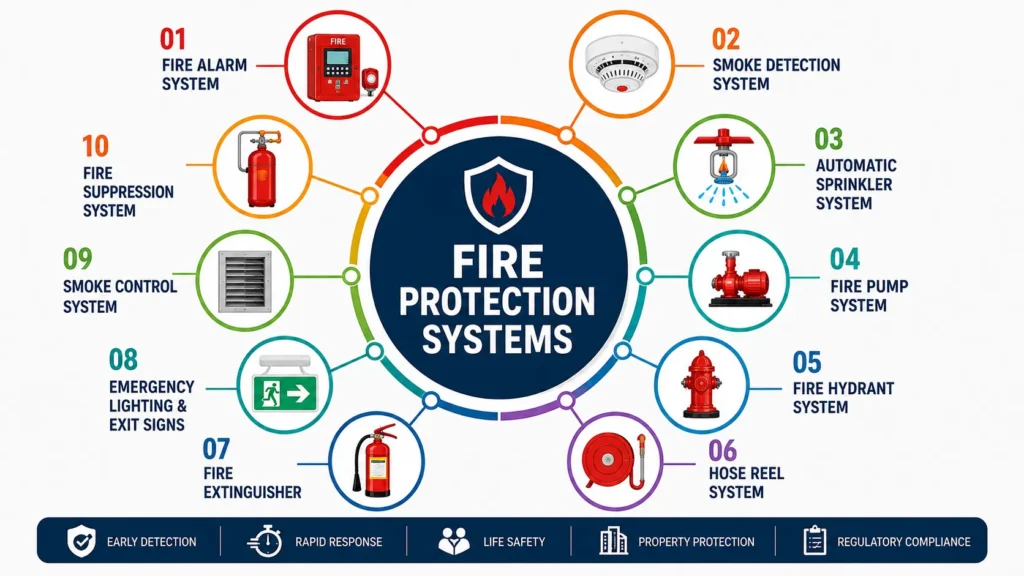
Fire Detection Systems
Early detection is essential for preventing small incidents from becoming major emergencies. Fire detection systems continuously monitor buildings for signs of smoke, heat, or flames and trigger alarms when abnormal conditions are detected.
Common fire detection devices include:
- Smoke Detectors
- Heat Detectors
- Flame Detectors
- Multi-Sensor Detectors
- Beam Smoke Detectors
- Aspirating Smoke Detection Systems
A Fire Protection Specialist ensures these devices are correctly installed, regularly tested, and functioning as intended.
Fire Alarm Systems
Fire alarm systems notify building occupants when a fire is detected and initiate emergency response procedures.
A typical fire alarm system includes:
- Fire Alarm Control Panel (FACP)
- Manual Call Points
- Smoke Detectors
- Heat Detectors
- Audible Alarms
- Visual Alarm Devices
- Emergency Voice Communication Systems
Regular inspection and testing are critical to ensure reliable operation during emergencies.
Automatic Fire Sprinkler Systems
Automatic sprinkler systems are among the most effective fire suppression technologies available. When exposed to high temperatures, individual sprinkler heads activate automatically to control or extinguish fires before they spread.
Common sprinkler systems include:
- Wet Pipe Systems
- Dry Pipe Systems
- Pre-Action Systems
- Deluge Systems
Fire Protection Specialists inspect sprinkler heads, valves, water supplies, and control equipment to ensure optimal performance.
Fire Suppression Systems
Certain environments require specialised suppression systems where water could damage equipment or prove ineffective.
Examples include:
- Clean Agent Gas Systems
- Carbon Dioxide (CO₂) Systems
- Foam Suppression Systems
- Water Mist Systems
- Dry Chemical Systems
- Kitchen Fire Suppression Systems
These systems are commonly installed in:
- Data Centres
- Electrical Rooms
- Laboratories
- Aircraft Hangars
- Commercial Kitchens
- Oil & Gas Facilities
Fire Hydrant Systems
Fire hydrants provide firefighters with immediate access to reliable water supplies during emergency response.
A typical hydrant system includes:
- Hydrants
- Underground Water Mains
- Isolation Valves
- Landing Valves
- Hose Connections
Routine inspections ensure hydrants remain operational and accessible.
Fire Pumps
Fire pumps maintain adequate water pressure for sprinkler and hydrant systems when municipal water supplies cannot provide sufficient pressure.
Common pump types include:
- Electric Fire Pumps
- Diesel Fire Pumps
- Jockey Pumps
Regular testing ensures pumps activate correctly during emergencies.
Smoke Control Systems
Smoke is responsible for many fire-related fatalities. Smoke control systems improve occupant safety by maintaining visibility and reducing smoke accumulation.
Examples include:
- Smoke Extraction Fans
- Pressurisation Systems
- Smoke Dampers
- Automatic Smoke Vents
These systems help occupants evacuate safely while assisting emergency responders.
Passive Fire Protection Systems
Unlike active systems, Passive Fire Protection (PFP) does not require activation. Instead, these measures are permanently incorporated into building design to slow fire spread and maintain structural integrity.
Common passive fire protection measures include:
- Fire-Resistant Walls
- Fire Doors
- Fire Dampers
- Fire-Rated Floors
- Fire Compartmentation
- Fire-Stopping Systems
- Fireproof Structural Steel
- Intumescent Coatings
Passive protection buys valuable time for evacuation and firefighting operations.
Industries That Employ Fire Protection Specialists
Fire Protection Specialists are employed across numerous industries where protecting people, assets, and operations from fire hazards is essential. As fire safety regulations become increasingly stringent, demand for qualified professionals continues to grow globally.
Construction
Construction remains one of the largest employers of Fire Protection Specialists.
Projects include:
- Residential Developments
- Commercial Buildings
- Shopping Centres
- Hospitals
- Schools
- High-Rise Buildings
- Industrial Facilities
Professionals ensure buildings comply with fire safety regulations from design through occupancy.
Oil and Gas
Oil and gas facilities present some of the highest fire risks due to flammable liquids, gases, and high-temperature processes.
Fire Protection Specialists oversee:
- Fire suppression systems
- Hazardous area assessments
- Emergency shutdown systems
- Explosion protection
- Firewater networks
Manufacturing
Factories often contain combustible materials, machinery, chemicals, and electrical equipment that require comprehensive fire protection programmes.
Responsibilities include:
- Risk assessments
- Equipment inspections
- Fire safety training
- Emergency planning
- Compliance monitoring
Healthcare
Hospitals and healthcare facilities require advanced fire protection due to vulnerable occupants and critical medical equipment.
Specialists manage:
- Fire compartmentation
- Emergency evacuation procedures
- Smoke management
- Fire alarm systems
- Emergency power integration
Aviation
Airports, aircraft maintenance facilities, and aviation terminals require specialised fire protection systems to manage unique operational risks.
Data Centres
As digital infrastructure expands, protecting data centres from fire has become increasingly important.
Specialists oversee:
- Clean agent suppression systems
- Smoke detection
- Environmental monitoring
- Emergency response procedures
Renewable Energy
Solar farms, wind farms, battery storage facilities, and hydrogen projects all require specialist fire protection strategies due to evolving technologies and energy storage risks.
Warehousing and Logistics
Large warehouses contain high-value inventory and extensive storage systems that increase fire loading.
Fire Protection Specialists ensure:
- Sprinkler coverage
- Smoke control
- Fire detection
- Emergency access
- Storage compliance
Government and Public Infrastructure
Government agencies employ Fire Protection Specialists to protect:
- Public buildings
- Defence facilities
- Transportation infrastructure
- Correctional institutions
- Water treatment plants
Essential Skills Every Fire Protection Specialist Needs
A successful Fire Protection Specialist combines engineering knowledge, regulatory expertise, technical competence, and strong interpersonal skills. Their ability to identify hazards, interpret regulations, and communicate effectively makes them invaluable to employers across multiple industries.
Technical Skills
Fire Risk Assessment
Professionals must be capable of identifying hazards, evaluating fire risks, and recommending practical mitigation measures.
Fire Protection System Knowledge
A comprehensive understanding of:
- Fire Detection
- Fire Alarms
- Sprinklers
- Suppression Systems
- Smoke Control
- Hydrants
- Fire Pumps
- Passive Fire Protection
is fundamental.
Building Codes and Fire Standards
Knowledge of recognised standards is essential.
Examples include:
- NFPA Standards
- OSHA Requirements
- Local Fire Codes
- Building Regulations
- ISO Standards
Understanding these requirements ensures legal compliance and safer building design.
Inspection and Testing
Fire Protection Specialists regularly inspect:
- Fire alarms
- Sprinklers
- Pumps
- Extinguishers
- Fire doors
- Emergency lighting
Accurate inspections reduce equipment failures during emergencies.
Report Writing
Clear technical reports are essential for:
- Risk assessments
- Compliance audits
- Inspection findings
- Incident investigations
- Maintenance recommendations
Essential Soft Skills
Attention to Detail
Even minor defects in fire protection systems can have serious consequences. Professionals must carefully inspect equipment, review documentation, and identify potential hazards.
Communication
Fire Protection Specialists interact daily with:
- Engineers
- Architects
- Contractors
- Building Owners
- Facility Managers
- Government Inspectors
- Emergency Services
Strong communication ensures effective implementation of fire safety measures.
Problem Solving
Unexpected site conditions, equipment failures, and regulatory challenges require practical solutions that maintain both safety and compliance.
Leadership
Many specialists supervise inspections, coordinate emergency drills, and lead fire safety improvement programmes.
Decision-Making
During inspections and emergencies, professionals must quickly evaluate situations and recommend appropriate corrective actions.
Fire Protection Equipment Every Specialist Should Understand
Fire Protection Specialists work with a wide range of specialised equipment.
Common equipment includes:
- Smoke Detectors
- Heat Detectors
- Flame Detectors
- Fire Alarm Panels
- Fire Extinguishers
- Sprinkler Heads
- Fire Pumps
- Fire Hydrants
- Hose Reels
- Emergency Lighting
- Fire Blankets
- Fire Doors
- Exit Signs
- Smoke Extraction Systems
- Fire Dampers
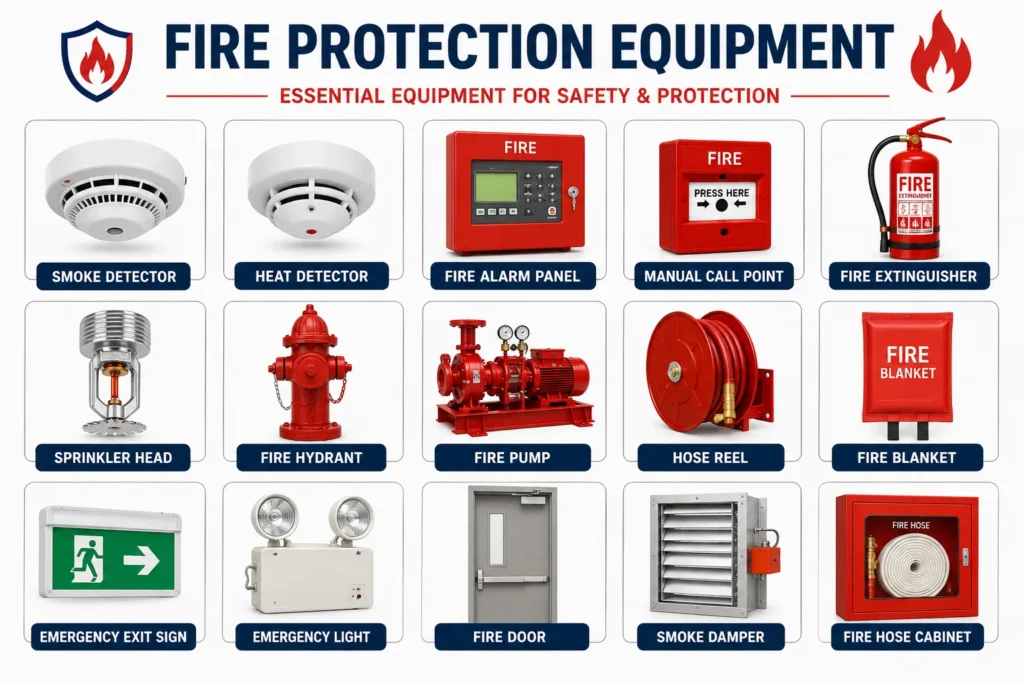
Understanding the design, operation, maintenance, and inspection requirements of this equipment is essential for effective fire protection management.
Professional Software Used by Fire Protection Specialists
Technology has transformed the fire protection industry, enabling professionals to design, inspect, monitor, and manage fire safety systems more efficiently than ever before.
Common software platforms include:
| Software | Primary Use |
|---|---|
| AutoCAD | Fire protection drawings |
| Autodesk Revit | BIM-based fire protection design |
| AutoSPRINK | Sprinkler system design |
| HydraCALC | Hydraulic calculations |
| Bluebeam Revu | Drawing review and collaboration |
| Navisworks | Design coordination |
| Microsoft Excel | Inspection logs and compliance tracking |
| Microsoft Project | Project scheduling |
| BIM 360 | Cloud-based collaboration |
| Inspection Management Software | Digital inspections and reporting |
Learning these tools enhances career opportunities and prepares professionals for increasingly digital fire protection environments.
Qualifications Required to Become a Fire Protection Specialist
A career as a Fire Protection Specialist offers excellent opportunities across construction, engineering, manufacturing, healthcare, energy, aviation, and government sectors. While entry requirements vary between employers and countries, most organisations seek candidates with a combination of formal education, technical knowledge, practical experience, and recognised professional certifications.
Unlike many highly specialised engineering professions, there are several pathways into fire protection. Whether you are a recent school leaver, engineering graduate, health and safety professional, military veteran, firefighter, or experienced technician, developing the right qualifications and practical skills can help you establish a successful career in fire protection.
Educational Qualifications
Many employers prefer candidates with qualifications in engineering, construction, occupational health and safety, or fire science.
Common educational backgrounds include:
- Fire Protection Engineering
- Mechanical Engineering
- Civil Engineering
- Electrical Engineering
- Construction Management
- Building Services Engineering
- Occupational Health and Safety
- Fire Science
- Industrial Safety
- Risk Management
However, many successful Fire Protection Specialists also begin their careers through vocational training, professional diplomas, or specialist fire protection certification programmes.
Professional Certifications
Professional certification demonstrates technical competence and commitment to industry best practices. It also enhances employability and career progression by validating your knowledge of fire protection principles, fire safety regulations, risk assessment, and fire protection systems.
Popular certifications include:
- Fire Protection Specialist Certification
- Fire Safety Management Certifications
- Fire Risk Assessment Training
- Fire Alarm System Inspection Training
- Fire Suppression System Training
- Occupational Health and Safety Certifications
- Emergency Response and Incident Management Programmes
Employers often value professionals who combine recognised certifications with practical industry experience.
Technical Knowledge Required
A competent Fire Protection Specialist should have a solid understanding of:
- Fire science and fire behaviour
- Fire chemistry
- Building construction principles
- Fire dynamics
- Fire protection engineering
- Fire detection systems
- Fire suppression systems
- Emergency planning
- Risk assessment methodologies
- Fire safety legislation
- Building regulations
- Inspection and testing procedures
The stronger your technical foundation, the more responsibilities you can undertake as your career progresses.
Practical Experience
Practical experience is one of the most valuable assets in the fire protection profession.
Experience may include:
- Fire safety inspections
- Construction projects
- Maintenance of fire protection systems
- Safety audits
- Emergency drills
- Fire risk assessments
- Building commissioning
- Compliance inspections
Many professionals gain experience through internships, apprenticeships, graduate programmes, or entry-level safety roles before progressing into specialist positions.
The Future of Fire Protection
The fire protection industry is evolving rapidly as digital technologies transform the way buildings are designed, monitored, and managed.
Key trends shaping the future include:
- Artificial Intelligence (AI) for early fire detection
- Internet of Things (IoT) fire monitoring systems
- Smart building integration
- Building Information Modelling (BIM)
- Predictive maintenance
- Cloud-based fire safety management platforms
- Drone-assisted fire inspections
- Digital compliance reporting
- Sustainable fire protection solutions
- Advanced simulation and modelling technologies
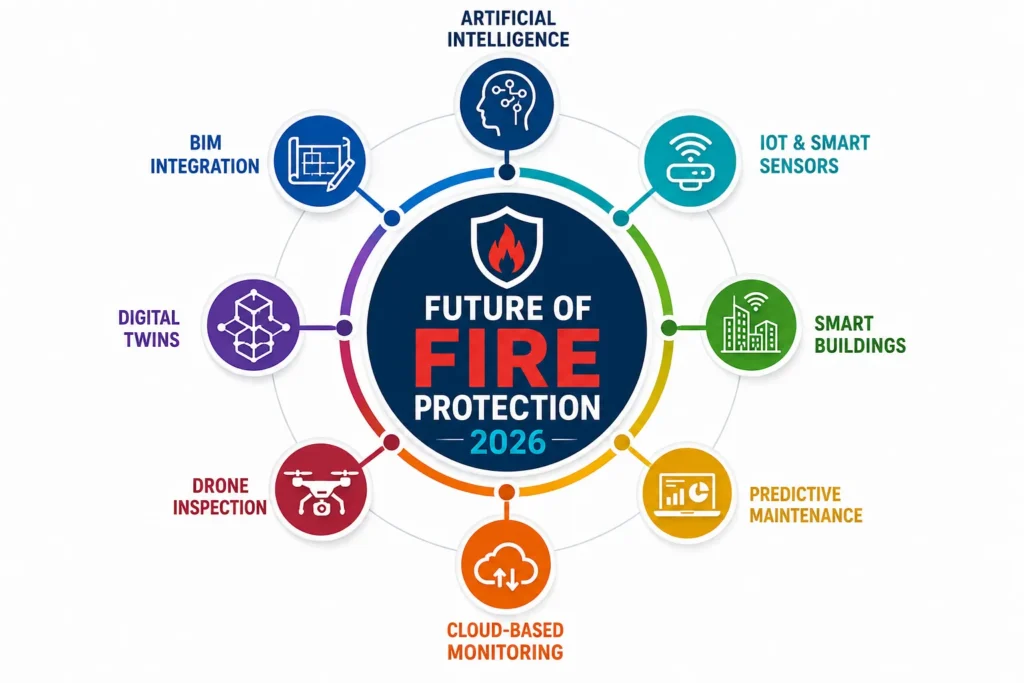
Rather than replacing Fire Protection Specialists, these innovations are enhancing their capabilities, enabling faster inspections, more accurate risk assessments, and better-informed decision-making.
Start Your Career with the OSHAA Certified Fire Protection Specialist (CFPS)
If you’re ready to build a career in one of the world’s most important safety professions, the OSHAA Certified Fire Protection Specialist (CFPS) programme provides a practical pathway to developing the knowledge and skills employers value.