
Common Workplace Hazards and How to Prevent Them (Complete Guide)
Common Workplace Hazards and How to Prevent Them
Workplace safety is more than just following rules or meeting legal requirements it plays a vital role in protecting employees and helping businesses run smoothly. When a workplace is safe, employees feel more confident, work more efficiently, and are less likely to get injured or fall sick. On the other hand, unsafe conditions can lead to accidents, lost productivity, increased costs, and even long-term damage to a company’s reputation.
Every year, millions of workers around the world experience injuries or health issues because of hazards in their work environment. The important thing to understand is that many of these incidents are preventable. With proper awareness, regular inspections, and effective safety measures, organizations can significantly reduce risks and create a safer workplace for everyone.
A workplace hazard is anything that has the potential to cause harm whether it affects a person’s physical health, mental well-being, or overall safety. These hazards can take many forms, including physical dangers like slippery floors, chemical risks like toxic substances, biological threats like viruses, or even psychological factors such as stress and workplace pressure.
No matter the industry whether it’s construction, healthcare, manufacturing, or office-based work hazards are always present in some form. That’s why identifying and managing these risks is essential for maintaining a safe, healthy, and productive work environment.
If you are planning to build a career in safety, understanding hazards is essential. You can also explore our detailed guide on How to Become a Safety Officer to learn the complete career path.
What Are Workplace Hazards?
Workplace hazards are any conditions, objects, or activities that have the potential to cause harm to employees, property, or the environment. This harm can come in many forms, including injuries, illnesses, or long-term health issues.
Some hazards are easy to identify, such as exposed electrical wires, slippery floors, or faulty machinery. However, others are not immediately visible and can be more dangerous over time like toxic fumes, excessive noise, poor ergonomics, or workplace stress.
Key Characteristics of Workplace Hazards:
- Immediate or Long-Term Impact:
Some hazards can cause instant injuries (like falls or burns), while others may lead to health problems over time (such as respiratory diseases or chronic stress). - Affect Physical and Mental Health:
Hazards don’t just harm the body they can also impact mental well-being, leading to issues like fatigue, anxiety, or burnout. - Present in Every Workplace:
Whether it’s a construction site, hospital, factory, or office, every workplace has its own set of risks that need to be managed properly.
Understanding workplace hazards is the first and most important step in creating a safe work environment. Once hazards are identified, appropriate measures can be taken to control or eliminate them, helping to protect employees and improve overall workplace safety.
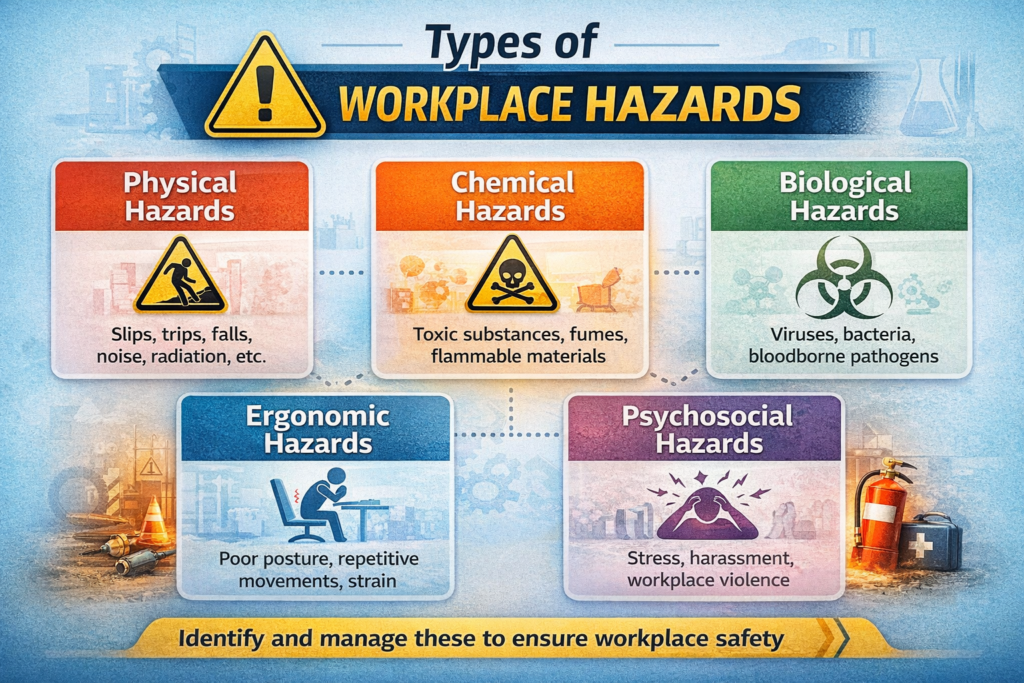
Types of Workplace Hazards
1. Physical Hazards
Physical hazards are the most common and visible risks found in workplaces.
Examples:
- Slips, trips, and falls due to wet or uneven surfaces
- Falling objects from heights
- Exposure to loud noise causing hearing loss
- Extreme temperatures (heat or cold stress)
- Poor lighting conditions
Real-Life Scenario:
A worker slips on an unmarked wet floor in a warehouse, resulting in a fractured leg and weeks of lost productivity.
Prevention Strategies:
- Implement strict housekeeping procedures
- Install anti-slip flooring and warning signs
- Use fall protection systems (guardrails, harnesses)
- Conduct routine inspections
- Provide proper lighting
2. Chemical Hazards
Chemical hazards arise from exposure to harmful substances that can cause burns, respiratory issues, or long-term diseases.
Examples:
- Toxic gases and vapors
- Flammable liquids
- Corrosive substances (acids, alkalis)
- Dust and fumes
Real-Life Scenario:
Improper storage of chemicals leads to a leak, exposing workers to toxic fumes and causing respiratory complications.
Prevention Strategies:
- Use appropriate Personal Protective Equipment (PPE)
- Maintain proper labeling and storage systems
- Ensure ventilation systems are in place
- Train workers on Safety Data Sheets (SDS)
- Conduct regular hazard assessments
3. Biological Hazards
Biological hazards involve exposure to living organisms or infectious materials.
Examples:
- Bacteria and viruses
- Bloodborne pathogens
- Mold and fungi
- Animal-related infections
Real-Life Scenario:
A healthcare worker contracts an infection due to improper handling of contaminated equipment.
Prevention Strategies:
- Follow strict hygiene and sanitation practices
- Use PPE such as gloves and masks
- Dispose of medical waste safely
- Provide vaccination where necessary
4. Ergonomic Hazards
Ergonomic hazards occur when work conditions strain the body over time.
Examples:
- Poor workstation design
- Repetitive movements
- Heavy lifting
- Awkward postures
Real-Life Scenario:
An office employee develops chronic back pain due to prolonged sitting in a poorly designed chair.
Prevention Strategies:
- Provide ergonomic furniture
- Train employees on proper posture
- Rotate tasks to avoid repetition
- Encourage regular breaks
5. Psychosocial Hazards
Psychosocial hazards affect mental health and emotional well-being.
Examples:
- Workplace stress
- Harassment or bullying
- Job insecurity
- Long working hours
Real-Life Scenario:
An overworked employee experiences burnout, leading to decreased performance and absenteeism.
Prevention Strategies:
- Promote work-life balance
- Encourage open communication
- Provide mental health support
- Implement anti-harassment policies
Top 10 Common Workplace Hazards (Expanded)
Workplace hazards can vary across industries, but some risks are consistently found in almost every work environment. Understanding these common hazards and how to prevent them can significantly reduce accidents and improve overall safety.
1. Slips, Trips, and Falls
These are among the most frequent causes of workplace injuries worldwide and can occur in any setting.
Common Causes:
- Wet or uneven floors
- Loose cables or clutter
- Poor lighting
Prevention:
- Keep walkways clean and dry
- Use anti-slip mats
- Place clear warning signs
- Ensure proper lighting
2. Fire Hazards
Fires can start quickly and spread rapidly, causing serious damage and risk to life.
Common Causes:
- Faulty electrical systems
- Flammable materials
- Negligence or human error
Prevention:
- Install fire alarms and detection systems
- Conduct regular fire drills
- Maintain fire extinguishers
- Store flammable materials safely
3. Electrical Hazards
Electrical risks can lead to shocks, burns, or even fatal accidents.
Common Causes:
- Exposed wiring
- Overloaded circuits
- Faulty equipment
Prevention:
- Regular inspections and maintenance
- Proper insulation of wires
- Use of lockout/tagout procedures
4. Manual Handling Injuries
Improper lifting or handling of heavy objects can cause serious musculoskeletal injuries.
Common Causes:
- Lifting heavy loads incorrectly
- Repetitive movements
- Lack of training
Prevention:
- Provide manual handling training
- Use lifting equipment
- Encourage proper techniques
5. Chemical Exposure
Exposure to harmful substances can lead to both immediate and long-term health issues.
Common Causes:
- Toxic fumes or gases
- Chemical spills
- Improper storage
Prevention:
- Use PPE (gloves, masks, goggles)
- Ensure proper labeling
- Maintain ventilation systems
6. Machinery Accidents
Unsafe use of machinery can result in severe injuries.
Common Causes:
- Lack of training
- Missing safety guards
- Poor maintenance
Prevention:
- Install machine guards
- Train employees properly
- Perform regular maintenance
7. Noise Hazards
Excessive noise can damage hearing over time and reduce concentration.
Common Causes:
- Loud machinery
- Continuous exposure to high noise levels
Prevention:
- Provide hearing protection
- Implement noise control measures
- Limit exposure time
8. Poor Ergonomics
Bad posture and poorly designed workstations can lead to long-term health problems.
Common Causes:
- Improper seating
- Repetitive tasks
- Poor workstation setup
Prevention:
- Use ergonomic furniture
- Adjust workstations
- Encourage regular breaks
9. Workplace Violence
Violence or conflicts in the workplace can impact both safety and mental well-being.
Common Causes:
- Poor communication
- Stressful environments
- Lack of policies
Prevention:
- Implement clear workplace policies
- Provide conflict resolution training
- Encourage respectful communication
10. Fatigue and Stress
Mental and physical exhaustion can reduce focus and increase the risk of accidents.
Common Causes:
- Long working hours
- High workload
- Lack of rest
Prevention:
- Promote work-life balance
- Schedule regular breaks
- Provide mental health support
| Hazard | Common Cause | Prevention |
|---|---|---|
| Slips & Falls | Wet floors | Anti-slip mats |
| Fire | Faulty wiring | Fire drills |
| Electrical | Exposed wires | Inspections |
| Manual Handling | Heavy lifting | Training |
| Chemical | Toxic exposure | PPE |
| Machinery | Unsafe use | Guards |
| Noise | Loud machines | Ear protection |
| Ergonomic | Poor posture | Ergonomic setup |
| Violence | Conflict | Policies |
| Stress | Overwork | Breaks |
Industry-Specific Workplace Hazards
Different industries face different types of workplace hazards depending on the nature of their work. Understanding these industry-specific risks helps organizations implement more targeted and effective safety measures.
Construction Industry
The construction sector is considered one of the most high-risk industries due to the physical nature of the work and constantly changing environments.
Common Hazards:
- Falls from heights such as scaffolding or ladders
- Accidents involving heavy machinery and equipment
- Exposure to dust and airborne particles
Healthcare Industry
Healthcare workers are frequently exposed to biological and physical risks while caring for patients.
Common Hazards:
- Exposure to infections, viruses, and diseases
- Needle-stick and sharp object injuries
- Injuries from lifting or handling patients
Office Environment
Although offices are generally considered low-risk, they still present several hazards that can affect long-term health and productivity.
Common Hazards:
- Eye strain from prolonged screen use
- Poor posture leading to back and neck pain
- Work-related stress and burnout
Oil & Gas Industry
This industry involves high-risk operations and hazardous environments, making safety a top priority.
Common Hazards:
- Explosions and fire incidents
- Exposure to toxic gases and chemicals
- Working in extreme and high-risk conditions
Understanding these industry-specific hazards allows employers and employees to take proactive steps to reduce risks and maintain a safer workplace.
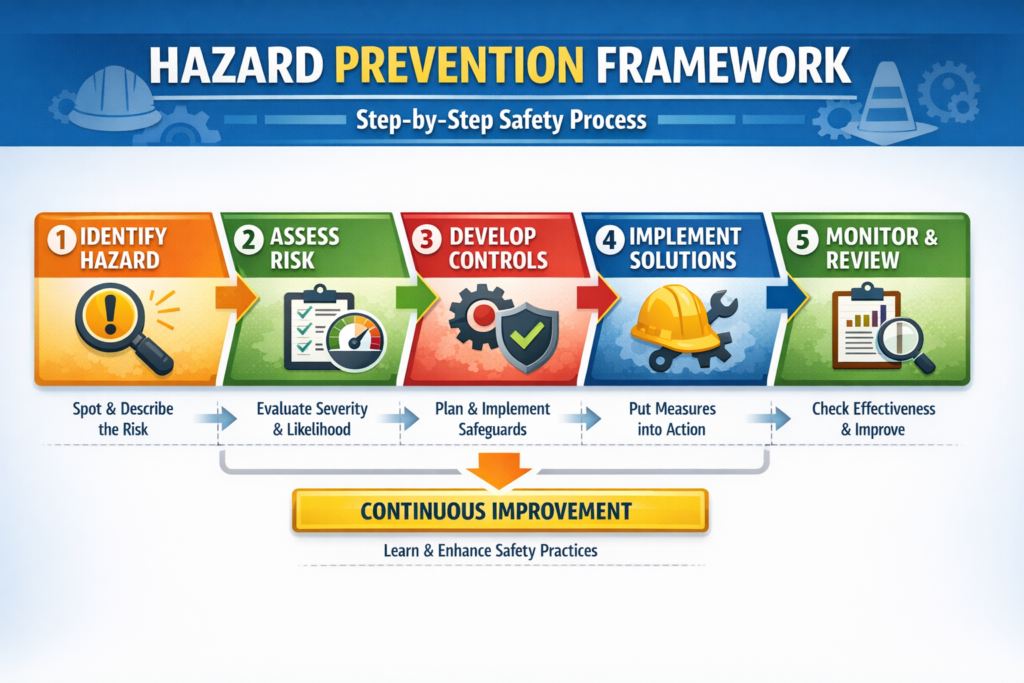
Step-by-Step Hazard Prevention Framework
Creating a safe workplace requires more than just identifying risks it involves a structured and continuous process to control and minimize hazards effectively. The following step-by-step framework is widely used in health and safety management to prevent accidents and protect employees.
Identify Hazards
The first and most important step is to recognize potential hazards in the workplace. If hazards are not identified, they cannot be controlled.
How to Identify Hazards:
- Conduct regular workplace inspections and walkthroughs
- Review past incident and accident reports
- Observe daily work activities and processes
- Gather feedback from employees (they often notice risks first)
- Check equipment, tools, and materials for potential dangers
Goal:
To create a clear list of all possible risks present in the work environment.
Assess Risks
Once hazards are identified, the next step is to evaluate how serious those risks are. This helps prioritize which hazards need immediate attention.
Key Factors to Consider:
- Likelihood: How likely is the hazard to cause harm? (e.g., frequent, occasional, rare)
- Severity: How serious could the impact be? (e.g., minor injury, major injury, fatality)
Why This Matters:
Not all hazards carry the same level of risk. Risk assessment helps organizations focus on high-risk hazards first and allocate resources effectively.To understand documentation and assessment requirements, check out our guide on NVQ Level 6 Portfolio Requirements: Complete Guide for Health and Safety Professionals.
Control Hazards (Hierarchy of Control)
After assessing risks, appropriate measures must be taken to eliminate or reduce the hazards. The most effective way to do this is by following the Hierarchy of Control, which prioritizes solutions from most effective to least effective.
Levels of Control:
- Elimination:
Completely remove the hazard from the workplace (e.g., stop using a dangerous chemical). - Substitution:
Replace the hazard with a safer alternative (e.g., use less toxic materials). - Engineering Controls:
Isolate people from the hazard through physical changes (e.g., machine guards, ventilation systems). - Administrative Controls:
Change the way people work (e.g., safety procedures, training, shift rotation). - Personal Protective Equipment (PPE):
Provide protective gear such as helmets, gloves, and masks. This is the last line of defense.
Goal:
To reduce risk to the lowest possible level using the most effective control measures.
Monitor and Review
Workplace safety is not a one-time task it requires continuous monitoring and improvement.
How to Monitor and Improve:
- Conduct regular safety audits and inspections
- Review incident reports and near-miss cases
- Update safety policies and procedures regularly
- Provide ongoing training and awareness programs
- Encourage employee feedback and reporting
Why It’s Important:
Work environments, equipment, and processes change over time. Regular monitoring ensures that safety measures remain effective and up to date.
Implementing hazard control measures requires professional training. Read our detailed guide on How to Become a Health and Safety Officer in Construction.
Importance of Workplace Hazard Prevention
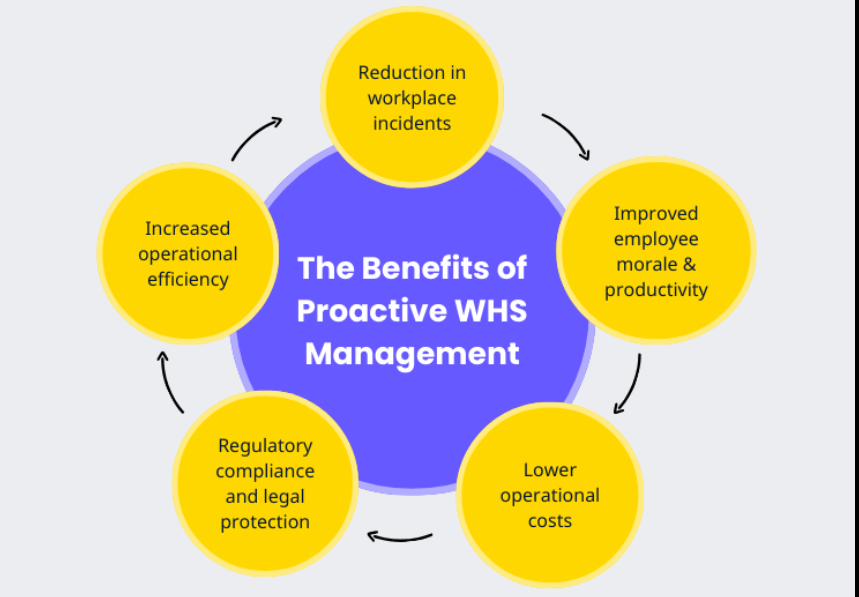
Preventing workplace hazards is not just about avoiding accidents it plays a key role in building a strong, efficient, and responsible organization. When proper safety measures are in place, businesses experience both short-term and long-term benefits.
Key Benefits:
✔ Reduced Accidents and Injuries:
Proactive hazard control significantly lowers the chances of workplace incidents, keeping employees safe and healthy.
✔ Improved Employee Morale:
When workers feel safe and protected, their confidence and job satisfaction increase, leading to a more positive work environment.
✔ Increased Productivity:
Fewer accidents mean less downtime, allowing employees to focus on their tasks and perform more efficiently.
✔ Compliance with Safety Regulations:
Following safety standards helps organizations meet legal requirements and avoid penalties or legal issues.
✔ Reduced Financial Losses:
Preventing incidents minimizes costs related to medical expenses, compensation claims, equipment damage, and operational disruptions.
Proper hazard prevention is a key responsibility of safety professionals. Learn more about roles and responsibilities in our guide on Health and Safety Manager: Roles, Responsibilities, Skills and Career Guide.
Conclusion
Workplace hazards are a reality in every organization, regardless of industry. However, with the right awareness, planning, and preventive measures, these risks can be effectively managed and controlled.
Creating a safe workplace goes beyond simply following rules it’s about fostering a culture where employees feel secure, respected, and supported in their roles. When safety becomes a priority, it not only protects people but also strengthens the overall success of the organization.
Remember: Prevention is always better than cure taking action today can prevent serious problems tomorrow.