
Environmental Management vs Sustainability: What’s the Difference?
As environmental concerns, climate change, resource scarcity, and corporate responsibility continue to dominate global discussions, the terms environmental management and sustainability are becoming increasingly important. Businesses, governments, educational institutions, and individuals are investing significant resources into reducing environmental impacts and creating a more sustainable future.
However, many people use the terms environmental management and sustainability interchangeably, assuming they mean the same thing. While they are closely related and often work together, they have distinct purposes, objectives, and applications.
Understanding the difference between environmental management and sustainability is essential for business leaders, environmental professionals, students, policymakers, and organisations seeking to improve their environmental performance and achieve long-term success.
What is Environmental Management?
Environmental management is the process of planning, organising, monitoring, and improving the way an organisation interacts with the environment. It involves taking practical steps to reduce negative environmental impacts while ensuring that business operations remain efficient, compliant, and sustainable.
In simple terms, environmental management is about making sure that an organisation uses natural resources responsibly, minimises pollution, reduces waste, and protects the environment for future generations.
Every organisation, whether it is a manufacturing company, construction firm, hospital, university, retail business, or government agency, has some impact on the environment. These impacts may include energy consumption, water usage, waste generation, carbon emissions, noise pollution, or the use of natural resources. Environmental management helps organisations understand these impacts and develop strategies to control and reduce them.
Rather than treating environmental protection as a one-time activity, environmental management is an ongoing process of continuous improvement. Organisations regularly assess their environmental performance, identify areas for improvement, implement corrective actions, and monitor results to ensure they are achieving their environmental objectives.
Why is Environmental Management Important?
Environmental management has become increasingly important as governments, customers, investors, and communities expect organisations to operate responsibly and minimise environmental harm.
Without proper environmental management, organisations may face:
- Increased operating costs
- Environmental accidents and incidents
- Legal penalties and fines
- Damage to reputation
- Loss of customers and business opportunities
- Difficulty meeting sustainability goals
Effective environmental management helps organisations balance economic growth with environmental responsibility, creating benefits for both the business and society.
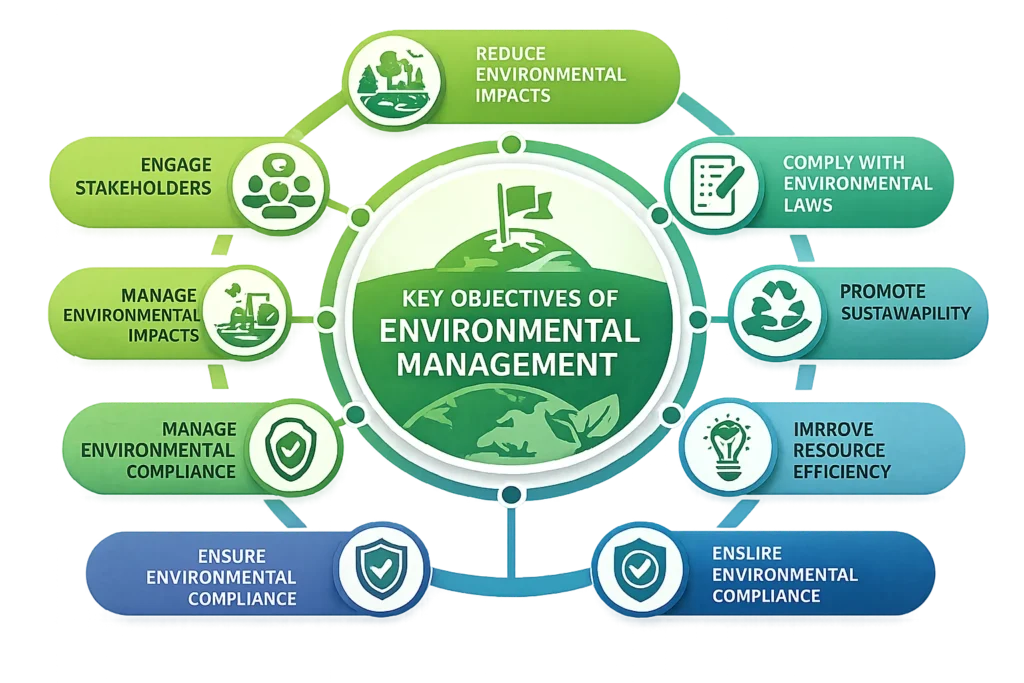
Key Objectives of Environmental Management
The primary goal of environmental management is to reduce an organisation’s environmental footprint while supporting long-term business success.
Some of the main objectives include:
Reduce Pollution
Environmental management helps organisations identify sources of pollution and implement measures to reduce harmful emissions, wastewater discharge, and contamination of air, land, and water.
Minimise Waste
Businesses are encouraged to reduce waste generation, improve recycling practices, and adopt more efficient production methods that use fewer resources.
Improve Energy Efficiency
Environmental management promotes the efficient use of energy through technologies, equipment upgrades, and operational improvements that reduce energy consumption and carbon emissions.
Conserve Natural Resources
Natural resources such as water, minerals, forests, and fossil fuels are limited. Environmental management encourages responsible use of these resources to ensure they remain available for future generations.
Ensure Legal Compliance
Organisations must comply with environmental laws, regulations, and industry standards. Environmental management helps businesses stay compliant and avoid legal penalties.
Manage Environmental Risks
Environmental risks such as chemical spills, pollution incidents, resource shortages, and climate-related disruptions can significantly affect organisations. Environmental management helps identify and control these risks before they become major problems.
Support Sustainability Goals
Environmental management plays a crucial role in helping organisations achieve broader sustainability objectives, including carbon reduction targets, Net Zero commitments, and ESG (Environmental, Social, and Governance) goals.
How Environmental Management Works
Environmental management follows a structured approach that enables organisations to continuously improve their environmental performance.
The process typically includes:
Step 1: Identify Environmental Impacts
Organisations assess how their activities affect the environment. This may include examining:
- Energy consumption
- Water usage
- Waste generation
- Carbon emissions
- Resource consumption
- Pollution risks
Step 2: Set Environmental Objectives
After identifying impacts, organisations establish environmental goals such as:
- Reducing carbon emissions by 20%
- Cutting energy consumption
- Increasing recycling rates
- Reducing water usage
Step 3: Implement Environmental Controls
Policies, procedures, training programmes, and operational controls are introduced to achieve environmental objectives.
Step 4: Monitor Performance
Environmental performance is measured using key performance indicators (KPIs) such as:
- Energy usage
- Waste volumes
- Carbon emissions
- Water consumption
- Recycling rates
Step 5: Review and Improve
Organisations regularly review their environmental performance and make improvements where necessary. This process of continuous improvement is a fundamental principle of effective environmental management.
Key Components of Environmental Management
Environmental Policy
An environmental policy outlines an organisation’s commitment to environmental protection and sustainability.
Environmental Planning
Organisations identify environmental risks and establish objectives to reduce their impact.
Implementation
Environmental initiatives are put into practice through procedures, training, and operational controls.
Monitoring and Evaluation
Environmental performance is measured using indicators such as:
- Carbon emissions
- Water consumption
- Energy usage
- Waste generation
- Recycling rates
Continuous Improvement
Organisations continuously improve their environmental performance through regular audits and reviews.
Environmental Management Systems (EMS)
Many organisations implement an Environmental Management System (EMS) to manage environmental responsibilities effectively.
An EMS provides a structured framework that helps organisations:
- Identify environmental impacts
- Set environmental objectives
- Monitor progress
- Improve performance
The most widely recognised standard for environmental management is:
ISO 14001 Environmental Management System
ISO 14001 provides organisations with internationally recognised guidelines for environmental management and continuous improvement.
What is Sustainability?
Sustainability is the practice of meeting our present needs without reducing the ability of future generations to meet their own needs. It is a long-term approach to development and decision-making that aims to create a balance between environmental protection, social wellbeing, and economic prosperity.
In simple terms, sustainability means using resources responsibly today so that people in the future can enjoy the same opportunities, resources, and quality of life that we have now.
As the world’s population grows and environmental challenges such as climate change, pollution, deforestation, and resource depletion become more serious, sustainability has become a key priority for governments, businesses, communities, and individuals worldwide.
Sustainability is not only about protecting the environment. It is a broader concept that recognises that a healthy planet, a strong economy, and a fair society are all interconnected. Long-term success can only be achieved when these three areas work together in balance.
Why is Sustainability Important?
The world faces many challenges that threaten future generations, including:
- Climate change and global warming
- Loss of biodiversity and ecosystems
- Water scarcity
- Pollution and waste
- Overconsumption of natural resources
- Social inequality
- Economic instability
Sustainability provides a framework for addressing these challenges by encouraging responsible decisions that deliver benefits today while protecting resources and opportunities for the future.
Without sustainability, future generations may face shortages of essential resources, greater environmental damage, poorer living conditions, and increased economic and social challenges.
The Three Pillars of Sustainability
Sustainability is often described through three interconnected pillars known as the Triple Bottom Line.
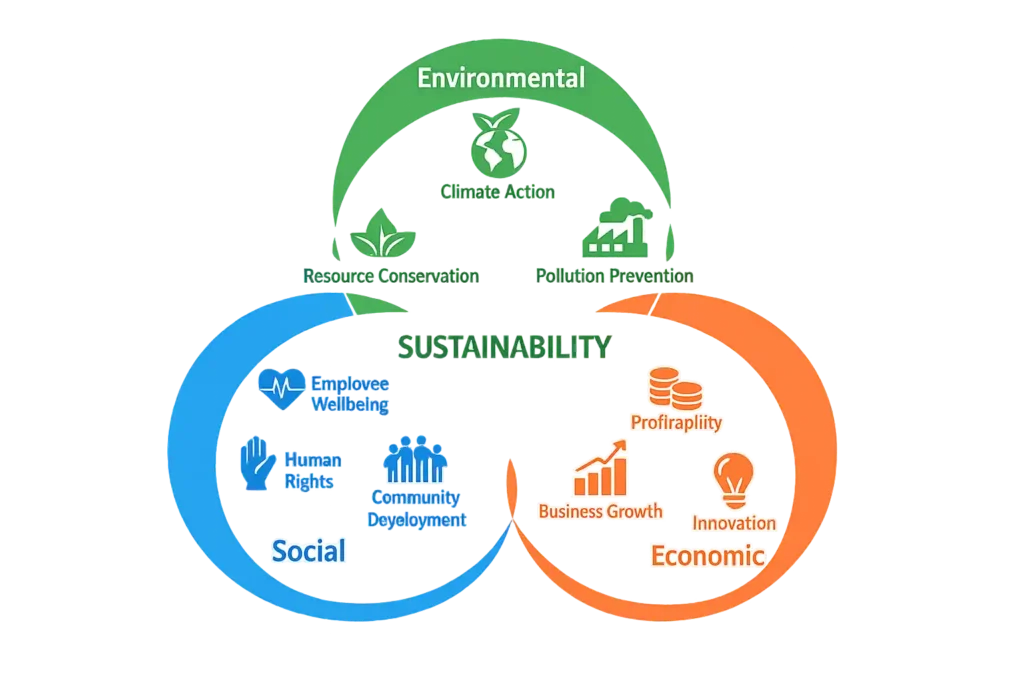
1. Environmental Sustainability
Environmental sustainability focuses on protecting the natural environment and ensuring that natural resources are used responsibly.
The objective is to minimise environmental damage and preserve ecosystems for future generations.
Examples of Environmental Sustainability
- Reducing carbon emissions
- Using renewable energy sources
- Conserving water resources
- Protecting biodiversity
- Reducing waste and pollution
- Promoting recycling and reuse
- Sustainable land management
Practical Example
A company may install solar panels, switch to energy-efficient equipment, and reduce plastic packaging to lower its environmental impact.
2. Social Sustainability
Social sustainability focuses on improving the quality of life for people, employees, customers, and communities.
It aims to create fair, safe, inclusive, and healthy environments where people can thrive.
Examples of Social Sustainability
- Employee health and safety programmes
- Fair wages and ethical labour practices
- Diversity, equity, and inclusion initiatives
- Community development projects
- Access to education and training
- Human rights protection
- Employee wellbeing and mental health support
Practical Example
A business may invest in employee training, promote workplace diversity, and support local community projects to strengthen its social impact.
3. Economic Sustainability
Economic sustainability focuses on maintaining long-term financial stability and growth without harming environmental or social wellbeing.
The goal is to ensure that organisations remain profitable while operating responsibly.
Examples of Economic Sustainability
- Sustainable business growth
- Responsible investment strategies
- Efficient resource management
- Innovation and technological development
- Long-term financial planning
- Ethical supply chain management
Practical Example
A company may invest in energy-efficient technologies that reduce operating costs while also lowering carbon emissions.
Environmental Management vs Sustainability: Key Differences
Although both concepts aim to improve environmental outcomes, they differ significantly in scope, focus, and objectives.
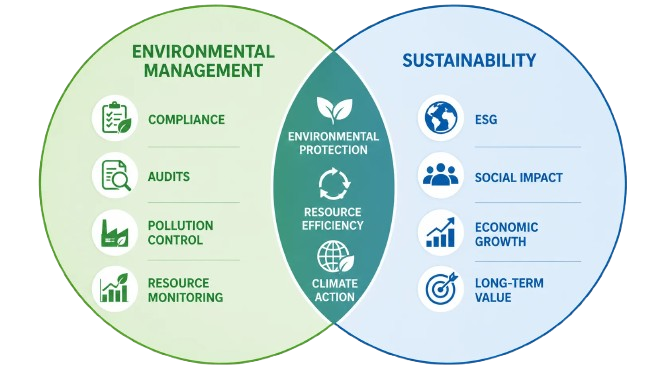
Comparison Table
| Aspect | Environmental Management | Sustainability |
|---|---|---|
| Definition | Managing environmental impacts of activities | Creating long-term environmental, social, and economic balance |
| Primary Focus | Environmental performance | Long-term sustainability |
| Scope | Narrower | Broader |
| Objective | Reduce environmental harm | Create sustainable development |
| Compliance | Strong focus | Less compliance-focused |
| Timeframe | Operational and short to medium term | Strategic and long-term |
| Measurement | Environmental KPIs | ESG and sustainability metrics |
| Examples | ISO 14001, waste management, emissions reduction | Net Zero strategies, sustainable development goals |
How Environmental Management and Sustainability Work Together
One of the biggest misconceptions is that environmental management and sustainability are competing concepts.
In reality, environmental management is often the foundation upon which sustainability is built.
Think of it this way:
Environmental Management = The Process
Environmental management provides the tools, systems, and controls needed to reduce environmental impacts.
Sustainability = The Goal
Sustainability focuses on achieving long-term environmental, social, and economic success.
Practical Example
A manufacturing company may:
- Implement an EMS
- Reduce carbon emissions
- Improve energy efficiency
- Minimise waste
These environmental management actions contribute directly to the company’s broader sustainability goals.
Environmental Management vs Sustainability in Business
Modern businesses are increasingly integrating both environmental management and sustainability into their operations.
This shift is driven by:
- Regulatory requirements
- Investor expectations
- Consumer demand
- ESG reporting requirements
- Climate change commitments
Role in ESG Strategies
Environmental, Social, and Governance (ESG) frameworks have become a key component of corporate decision-making.
Environmental Management Supports ESG Through:
- Emissions reduction
- Environmental compliance
- Resource efficiency
- Environmental reporting
Sustainability Supports ESG Through:
- Long-term business resilience
- Stakeholder value creation
- Social responsibility
- Ethical governance
Role in Net Zero Strategies
Many organisations have committed to achieving Net Zero emissions.
Environmental management helps organisations:
- Measure carbon emissions
- Improve operational efficiency
- Reduce energy consumption
Sustainability ensures these efforts align with long-term organisational goals.
Benefits of Environmental Management
For Organisations
Regulatory Compliance
Helps organisations comply with environmental legislation and avoid penalties.
Cost Savings
Improves efficiency and reduces waste.
Risk Reduction
Reduces environmental liabilities and operational risks.
Enhanced Reputation
Demonstrates environmental responsibility to stakeholders.
For the Environment
Reduced Pollution
Minimises harmful emissions and waste.
Resource Conservation
Encourages efficient use of natural resources.
Climate Change Mitigation
Supports efforts to reduce greenhouse gas emissions.
Benefits of Sustainability
For Organisations
Long-Term Profitability
Supports sustainable growth and resilience.
Improved Brand Reputation
Consumers increasingly favour sustainable businesses.
Investor Confidence
Many investors prioritise companies with strong sustainability performance.
For Society
Better Quality of Life
Supports healthier communities and workplaces.
Economic Stability
Encourages responsible economic growth.
Environmental Protection
Promotes responsible resource management for future generations.
Career Opportunities in Environmental Management and Sustainability
As organisations continue to prioritise environmental performance and sustainability, demand for qualified professionals is growing rapidly.
Popular Career Paths
| Job Role | Average UK Salary |
|---|---|
| Environmental Officer | £28,000 – £40,000 |
| Environmental Advisor | £35,000 – £50,000 |
| Environmental Manager | £40,000 – £65,000 |
| Sustainability Manager | £45,000 – £75,000 |
| ESG Consultant | £50,000 – £85,000 |
| Sustainability Director | £80,000+ |
Skills Employers Look For
- Environmental auditing
- Risk assessment
- Sustainability reporting
- Carbon management
- Environmental legislation knowledge
- Stakeholder engagement
- Strategic planning
- ESG reporting
Which Qualification is Right for a Career in Environmental Management and Sustainability?
Choosing the right qualification depends on your career goals and level of experience. Whether you want to develop practical environmental management skills, progress into leadership roles, or improve organisational environmental performance, there are qualifications and certifications to support your journey.
Available Environmental Management Qualifications
ProQual Level 6 Diploma in Environmental and Sustainability Management
Ideal for professionals looking to build advanced knowledge in environmental and sustainability management and progress into management roles.
Explore ProQual Level 6 Diploma in Environmental and Sustainability Management
ProQual Level 7 Diploma in Environmental Management
Designed for experienced professionals seeking strategic-level expertise in environmental leadership, compliance, and environmental performance management.
OTHM Level 7 Diploma in Environmental Management and Sustainability
A postgraduate-level qualification focused on environmental management, sustainability strategy, ESG frameworks, and organisational sustainability leadership.
Explore OTHM Level 7 Diploma in Environmental Management and Sustainability
ISO 14001:2015 Environmental Management System (EMS) Certification
An internationally recognised certification that helps organisations improve environmental performance, achieve compliance, and implement effective environmental management systems.
Explore ISO 14001:2015 Environmental Management System (EMS) Certification
Which One Should You Choose?
| Goal | Recommended Qualification |
|---|---|
| Build environmental management skills | ProQual Level 6 Diploma |
| Progress into senior environmental roles | ProQual Level 7 Diploma |
| Lead sustainability and ESG initiatives | OTHM Level 7 Diploma |
| Improve organisational environmental performance | ISO 14001:2015 Certification |
These qualifications and certifications can help professionals and organisations strengthen their environmental credentials, improve sustainability performance, and meet the growing demand for environmental leadership.
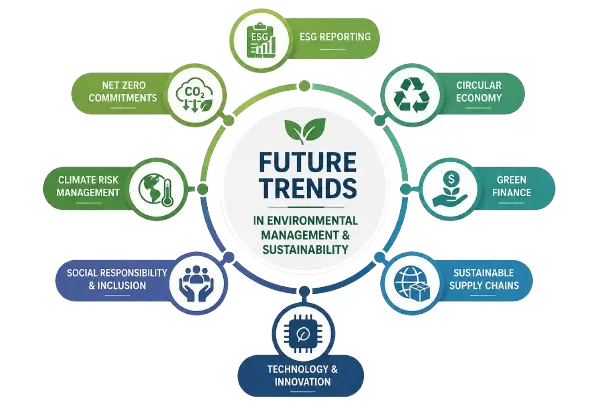
Future Trends in Environmental Management and Sustainability
As environmental regulations become stricter and organisations place greater emphasis on sustainability, several key trends are shaping the future of environmental management and sustainable development.
ESG Reporting and Corporate Transparency
Environmental, Social, and Governance (ESG) reporting is becoming a critical requirement for organisations worldwide.
Key Developments:
- Increased demand for transparency from investors and stakeholders
- Mandatory sustainability disclosures in many regions
- Greater focus on environmental performance metrics
- Enhanced corporate accountability and governance
- Improved stakeholder trust through transparent reporting
Net Zero and Carbon Reduction Strategies
Many organisations are committing to achieving Net Zero emissions and reducing their carbon footprint.
Key Developments:
- Adoption of renewable energy sources
- Carbon footprint measurement and reporting
- Energy efficiency improvement programmes
- Investment in low-carbon technologies
- Climate action plans and emission reduction targets
Growth of the Circular Economy
Businesses are moving away from traditional “take, make, dispose” models towards more sustainable resource management practices.
Key Developments:
- Increased recycling and reuse initiatives
- Product lifecycle extension strategies
- Waste reduction programmes
- Sustainable product design
- Improved resource efficiency and conservation
Expansion of Green Finance and Sustainable Investment
Investors are increasingly supporting organisations that demonstrate strong environmental and sustainability performance.
Key Developments:
- Growth of green bonds and sustainable finance products
- Increased ESG-focused investments
- Funding for renewable energy projects
- Greater emphasis on sustainable business models
- Enhanced investor scrutiny of environmental performance
Sustainable Supply Chain Management
Organisations are extending sustainability practices throughout their supply chains.
Key Developments:
- Responsible sourcing of materials
- Supplier sustainability assessments
- Ethical procurement practices
- Reduced environmental impacts across supply chains
- Increased supply chain transparency and accountability
Climate Risk Management and Environmental Resilience
Businesses are becoming more proactive in managing climate-related risks and environmental challenges.
Key Developments:
- Climate risk assessments and planning
- Disaster preparedness strategies
- Environmental resilience programmes
- Adaptation to changing environmental conditions
- Long-term business continuity planning
Digital Technologies and Sustainability Innovation
Technology is transforming how organisations manage environmental performance and sustainability initiatives.
Key Developments:
- Artificial Intelligence (AI) for environmental monitoring
- Internet of Things (IoT) for resource management
- Real-time environmental data analytics
- Smart energy management systems
- Automated sustainability reporting tools
Increased Focus on Biodiversity and Natural Capital
Organisations are recognising the importance of protecting ecosystems and natural resources.
Key Developments:
- Biodiversity conservation initiatives
- Sustainable land and water management
- Nature-positive business strategies
- Ecosystem restoration projects
- Protection of natural habitats and wildlife
Growing Demand for Sustainability Professionals
The transition towards sustainable business practices is creating significant career opportunities.
Key Developments:
- Increased demand for Environmental Managers
- Growth in Sustainability and ESG roles
- Expansion of climate change advisory positions
- Higher demand for environmental compliance specialists
- Greater need for qualified sustainability leaders
Career Development Opportunity:
Professionals seeking senior leadership roles in this field often pursue advanced qualifications such as the OTHM Level 7 Diploma in Environmental Management and Sustainability, which develops expertise in environmental strategy, sustainability leadership, ESG frameworks, environmental risk management, and sustainable business practices.
Conclusion
Although environmental management and sustainability are closely connected, they are not the same thing.
Environmental management focuses on controlling and reducing an organisation’s environmental impact through structured systems, policies, and practices.
Sustainability, on the other hand, takes a broader view by balancing environmental, social, and economic considerations to create long-term value and resilience.
The most successful organisations understand that environmental management is not an alternative to sustainability it is a critical component of achieving sustainability goals.
As businesses continue to face increasing environmental challenges, regulatory pressures, and stakeholder expectations, professionals with expertise in environmental management and sustainability will play an increasingly important role in shaping a more sustainable future.