
Professional Diploma in Paediatric First Aid (PFA): Course Overview, Learning Outcomes and Career Benefits
Every year, children experience unexpected emergencies including choking, allergic reactions, falls, burns, injuries, breathing difficulties, and sudden illnesses. In these situations, immediate and appropriate first aid response can significantly reduce risks and provide essential support until professional medical assistance arrives.
The Professional Diploma in Paediatric First Aid (PFA) is designed to develop essential knowledge and practical skills required to respond effectively to emergencies involving babies, infants, and children. The qualification supports childcare professionals, educators, healthcare assistants, parents, and anyone responsible for children’s safety.
Unlike general first aid training, paediatric first aid focuses specifically on the unique physical, emotional, and medical needs of children.
What Is the Professional Diploma in Paediatric First Aid (PFA)?
The Professional Diploma in Paediatric First Aid (PFA) is a specialised qualification designed to develop the knowledge and practical skills required to respond effectively to medical emergencies involving babies, infants, and children. The course focuses on understanding child-specific health risks, recognising emergency situations, and applying appropriate first aid procedures to provide immediate support before professional medical assistance arrives.
Unlike general first aid training, paediatric first aid focuses specifically on the unique needs of children, including differences in anatomy, physiology, communication, and emergency response requirements. It prepares learners to handle a wide range of situations that may occur in childcare, education, healthcare, and everyday environments.
The course develops essential understanding of:
- Child and infant emergency response procedures.
- Infant and child CPR techniques.
- Choking prevention and airway obstruction management.
- Management of common childhood injuries such as burns, cuts, fractures, and head injuries.
- Recognition and response to childhood illnesses and medical emergencies.
- Emergency communication and reporting procedures.
- Risk prevention strategies to create safer environments for children.
By completing the Professional Diploma in Paediatric First Aid (PFA), learners gain the confidence to assess emergency situations, make informed decisions, and provide safe and effective first aid support when a child’s health and wellbeing are at risk. The qualification is valuable for childcare professionals, educators, healthcare support workers, parents, and anyone responsible for the safety of children.
Why Is Paediatric First Aid Different from Adult First Aid?
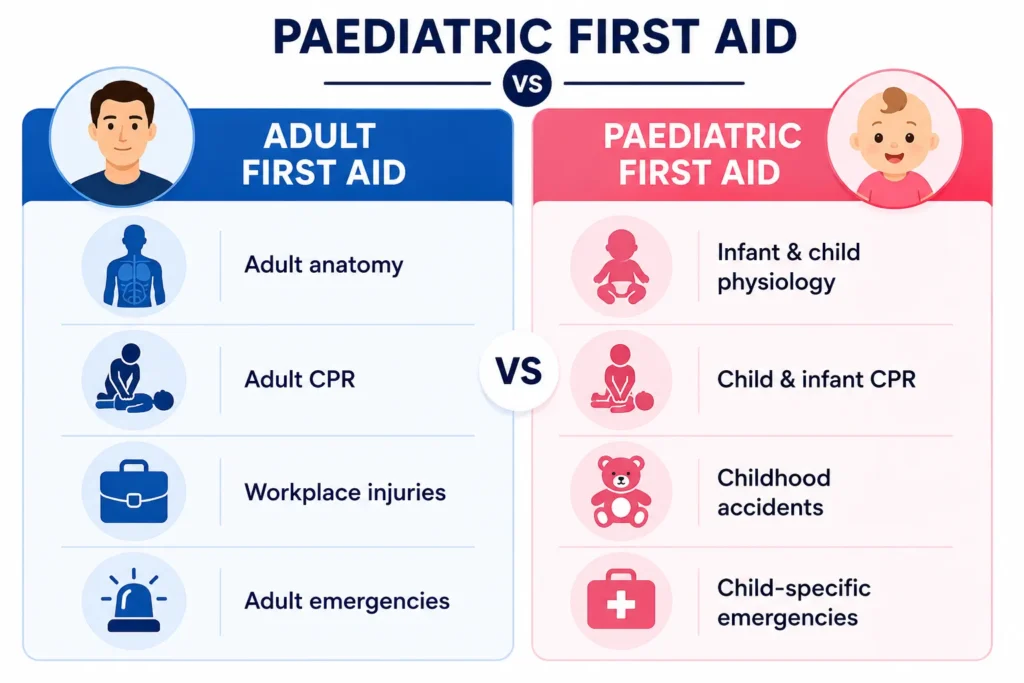
Paediatric first aid is different from adult first aid because children and infants have unique physical, developmental, and medical needs. Babies and children are not simply smaller versions of adults; their body systems, injury patterns, communication abilities, and responses to illness can vary significantly.
When responding to emergencies involving children, first aid providers must understand age-specific considerations such as smaller airways, different breathing patterns, limited ability to explain symptoms, and different causes of injuries. This specialised knowledge enables a more appropriate and effective emergency response.
The key differences between adult first aid and paediatric first aid include:
| Adult First Aid | Paediatric First Aid |
|---|---|
| Focuses on adult anatomy, health conditions, and emergency responses | Focuses on the physiology and development of infants and children |
| Uses adult CPR procedures and techniques | Includes age-appropriate CPR methods for infants and children |
| Commonly addresses workplace injuries and adult-related incidents | Focuses on childhood accidents such as falls, choking, burns, and playground injuries |
| Covers adult medical emergencies such as heart-related conditions | Addresses child-specific emergencies including seizures, allergic reactions, and breathing difficulties |
| Relies on adults communicating symptoms and concerns | Considers situations where young children may be unable to describe pain or symptoms clearly |
Understanding these differences helps first aid providers deliver safer, faster, and more effective support during emergencies involving children. Professional paediatric first aid training ensures learners can adapt their response according to the child’s age, condition, and specific emergency situation.
Professional Diploma in Paediatric First Aid Course Overview
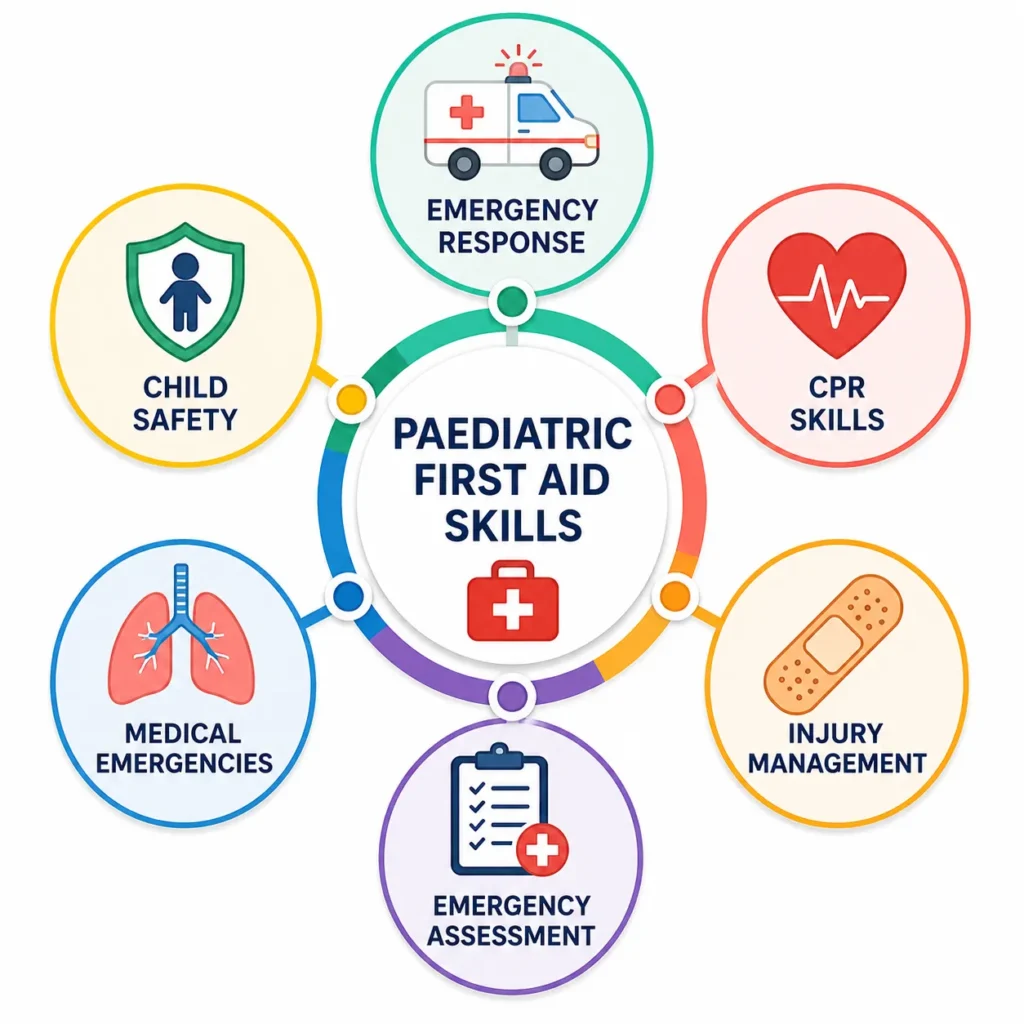
The Professional Diploma in Paediatric First Aid (PFA) provides comprehensive knowledge and practical skills required to respond effectively to emergencies involving infants and children. The course covers essential first aid principles, life-saving techniques, emergency assessment, and child-specific response procedures.
Learners develop the ability to identify potential risks, assess emergency situations, provide immediate first aid support, and take appropriate actions while waiting for professional medical assistance.
| Course Area | Skills Developed |
|---|---|
| First Aid Principles | Understanding the foundations of paediatric emergency care, including how to assess situations, prioritise actions, and apply safe first aid procedures. |
| Infant and Child CPR | Developing the ability to perform age-appropriate CPR techniques for infants and children during life-threatening emergencies. |
| Choking Response | Learning how to recognise airway obstruction and apply suitable choking management techniques for different age groups. |
| Childhood Injuries | Understanding how to provide first aid support for common childhood injuries, including burns, fractures, cuts, bleeding, sprains, and falls. |
| Medical Emergencies | Developing skills to respond appropriately to childhood medical conditions such as asthma attacks, seizures, allergic reactions, shock, and breathing difficulties. |
| Emergency Assessment | Building decision-making skills to evaluate emergency situations, identify severity, provide immediate support, and determine when further medical assistance is required. |
Through these learning areas, the Professional Diploma in Paediatric First Aid (PFA) equips learners with the confidence and competence needed to support children’s health and safety across childcare, education, healthcare, and community environments.
Professional Diploma in Paediatric First Aid Learning Outcomes
After completing the Professional Diploma in Paediatric First Aid (PFA), learners will develop the knowledge, practical skills, and confidence required to respond effectively to emergencies involving infants and children. The course enables learners to understand child-specific emergency situations, apply appropriate first aid procedures, and support children’s health and safety in childcare, education, healthcare, and community environments.
Understand Paediatric Emergency Care Principles
Learners develop a strong understanding of the fundamental principles of paediatric emergency care and the importance of providing immediate and appropriate support during critical situations. They learn how to assess emergencies, recognise warning signs, and follow structured response procedures to protect a child’s wellbeing.
Key learning areas include:
- Understanding the principles of paediatric first aid response.
- Recognising common signs of illness, injury, and medical emergencies.
- Assessing emergency situations and prioritising actions.
- Understanding the importance of rapid and effective intervention.
Apply CPR and Life-Saving Techniques
Learners gain the confidence and competence required to perform essential life-saving procedures for infants and children. The course develops practical awareness of CPR techniques and emergency actions needed during situations where a child’s breathing or circulation is affected.
Key learning areas include:
- Understanding infant and child CPR procedures.
- Applying appropriate emergency response techniques.
- Supporting children during life-threatening situations.
- Recognising when emergency medical assistance is required.
Manage Common Childhood Emergencies
The course prepares learners to respond effectively to a wide range of childhood emergencies that may occur at home, in schools, nurseries, or community settings. Learners develop the ability to identify risks and provide suitable first aid support until further medical help is available.
Learners develop knowledge of responding to:
- Choking incidents and airway obstruction.
- Burns and scalds caused by accidents.
- Allergic reactions and anaphylactic emergencies.
- Seizures and sudden medical conditions.
- Bleeding injuries, cuts, and wounds.
- Breathing difficulties and respiratory emergencies.
Promote Child Safety
Learners develop awareness of prevention strategies and the importance of creating safer environments for infants and children. The course encourages proactive approaches to reducing risks and improving child protection practices.
Key learning areas include:
- Identifying potential hazards affecting children.
- Applying safety measures to prevent avoidable injuries.
- Supporting safer childcare and learning environments.
- Promoting responsible emergency preparedness.
By achieving these learning outcomes, learners completing the Professional Diploma in Paediatric First Aid (PFA) become better prepared to respond confidently, make informed decisions, and contribute to improved safety and wellbeing for children.
Understand Emergency Care
↓
Apply CPR & Life Support
↓
Manage Childhood Emergencies
↓
Promote Child Safety
↓
Become Emergency Ready
Key Skills Developed Through Paediatric First Aid Training
The Professional Diploma in Paediatric First Aid (PFA) helps learners develop essential practical and professional skills required to respond effectively during childhood emergencies. These skills support safer childcare practices and improve confidence when managing unexpected situations.
Emergency Response Skills
Learners develop the ability to recognise emergencies, assess situations quickly, and provide appropriate first aid support for infants and children.
CPR and Life Support Skills
Learners gain knowledge of child and infant CPR procedures and understand how to respond during life-threatening emergencies.
Risk Assessment Skills
The training helps learners identify potential hazards, reduce risks, and promote safer environments for children.
Communication Skills
Learners develop effective communication skills to support children, parents, carers, and emergency responders during stressful situations.
Confidence in Emergency Situations
The course builds confidence and calm decision-making skills, enabling learners to respond appropriately during childhood emergencies.
Career Benefits of Professional Diploma in Paediatric First Aid (PFA)
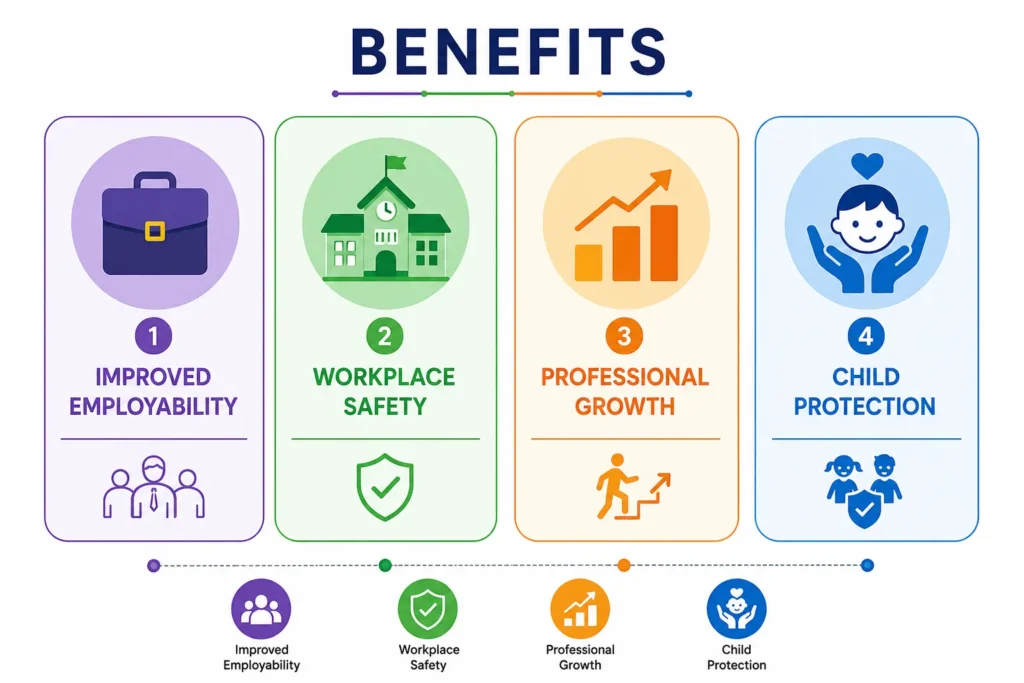
The Professional Diploma in Paediatric First Aid (PFA) provides valuable skills that support career development across childcare, education, healthcare support, and community-based roles. By developing practical emergency response abilities and child safety awareness, the qualification helps learners become more confident professionals who can contribute to safer environments for infants and children.
1. Improved Career Opportunities
A recognised paediatric first aid qualification can strengthen a learner’s professional profile and improve opportunities in roles where child safety and emergency preparedness are essential. Many organisations value employees who can respond effectively during medical emergencies involving children.
The qualification supports individuals working in:
- Nurseries and early years settings.
- Schools and educational environments.
- Childcare centres and child development facilities.
- Healthcare support environments.
- Community organisations and family support services.
2. Increased Professional Confidence
Paediatric first aid training helps professionals develop the confidence to remain calm, assess situations, and take appropriate action during unexpected emergencies. Understanding emergency procedures reduces uncertainty and enables learners to provide timely support when children require immediate assistance.
Learners develop the ability to:
- Respond confidently during childhood emergencies.
- Make quick and informed decisions.
- Apply appropriate first aid procedures.
- Communicate effectively with parents, carers, and emergency services.
3. Enhanced Workplace Safety Responsibilities
Professionals with paediatric first aid knowledge play an important role in creating safer environments where children can learn, develop, and participate in activities with reduced risks. Their skills support effective emergency preparedness and contribute to improved safety practices within organisations.
Qualified individuals can contribute by:
- Identifying potential hazards affecting children.
- Supporting workplace emergency procedures.
- Promoting safer childcare practices.
- Assisting in the development of child safety awareness.
4. Professional Development and Career Progression
The Professional Diploma in Paediatric First Aid (PFA) supports continuous professional development by adding specialist child emergency care skills to an individual’s professional portfolio. It can complement existing childcare, education, healthcare, and safety-related qualifications.
The qualification supports progression into roles involving:
- Childcare leadership and supervisory responsibilities.
- Health and safety responsibilities.
- Early years education support.
- Community care and support services.
- Child wellbeing and safeguarding-related roles.
By combining practical first aid skills with child safety knowledge, the Professional Diploma in Paediatric First Aid (PFA) helps learners enhance their employability, workplace contribution, and professional confidence in environments where children’s health and safety are priorities.
Who Should Enrol in Professional Diploma in Paediatric First Aid?
The Professional Diploma in Paediatric First Aid (PFA) is suitable for individuals who are responsible for the care, supervision, and safety of infants and children. It helps learners develop essential emergency response skills and confidence to manage paediatric situations effectively.
Suitable learners include:
- Childcare professionals
- Teachers and teaching assistants
- Nursery workers and early years staff
- Parents and guardians
- Healthcare assistants
- Sports coaches working with children
- Community workers and support staff
This qualification is valuable for anyone who wants to improve child safety awareness and gain practical skills for responding to childhood emergencies.
Common Paediatric Emergencies Covered
The Professional Diploma in Paediatric First Aid (PFA) prepares learners to recognise and respond effectively to common emergencies involving infants and children. The course develops essential skills to provide immediate support and take appropriate action until further medical assistance is available.
Learners gain knowledge of responding to:
- Choking incidents
- Cardiac emergencies
- Burns and scalds
- Cuts and bleeding injuries
- Falls and accidents
- Head injuries
- Allergic reactions
- Asthma attacks and breathing difficulties
- Seizures
- Poisoning incidents
Professional Diploma in Paediatric First Aid Career Pathway
The Professional Diploma in Paediatric First Aid (PFA) provides a structured pathway for learners to develop essential emergency care skills and progress towards greater professional responsibilities in childcare, education, healthcare, and child safety environments.
Starting Point
Beginner / New Learner
↓
Professional Diploma in Paediatric First Aid (PFA)
Develop essential knowledge and practical skills in child emergency response, CPR, and first aid procedures.
↓
Childcare, Education & Healthcare Support Roles
Apply paediatric first aid skills in nurseries, schools, childcare settings, and healthcare environments.
↓
Advanced Child Safety & Professional Training
Build further expertise in child wellbeing, safety practices, and specialist care areas.
↓
Leadership & Specialist Responsibilities
Progress towards supervisory, safety-focused, and specialist roles involving child protection and emergency preparedness.
Conclusion
The Professional Diploma in Paediatric First Aid (PFA) helps learners develop essential skills to respond confidently to childhood emergencies and promote safer environments for children. The qualification supports personal growth, professional development, and career opportunities in childcare, education, healthcare, and community settings.