
What Is a Sustainability Reporting Specialist? Roles, Responsibilities, Skills, Tools, and Career Path
A Sustainability Reporting Specialist is a professional who helps organisations measure, analyse, and report their sustainability performance. They collect ESG (Environmental, Social, and Governance) data, prepare sustainability reports, and ensure businesses communicate their environmental and social impacts clearly and transparently.
As companies focus more on climate action, net zero goals, and responsible business practices, the demand for sustainability reporting professionals is increasing. These specialists help organisations track carbon emissions, improve sustainability performance, meet reporting requirements, and build trust with investors, customers, and stakeholders.
Sustainability Reporting Specialists work with global reporting frameworks such as GRI, ISSB, SASB, and TCFD to create reliable sustainability disclosures. Their role connects sustainability data with business decisions, helping organisations manage risks, improve transparency, and achieve long-term sustainability goals.
What Is a Sustainability Reporting Specialist?
A Sustainability Reporting Specialist is a professional who collects, analyses, and prepares reports about an organisation’s sustainability performance. They manage information related to carbon emissions, energy use, waste, social responsibility, and governance to show how a company is achieving its ESG goals.
Their main purpose is to make sustainability information clear, accurate, and transparent. They help businesses understand their performance, find areas for improvement, and demonstrate their commitment to responsible practices.
Sustainability Reporting Specialists also support ESG reporting by ensuring data is properly collected, checked, and presented according to recognised standards. They help organisations communicate sustainability progress, manage climate risks, and achieve long-term sustainability goals.
Key responsibilities and importance of a Sustainability Reporting Specialist include:
- Collecting and analysing ESG data from different business departments
- Preparing sustainability and ESG reports for stakeholders
- Tracking carbon emissions, energy consumption, waste, and resource usage
- Supporting compliance with sustainability reporting standards such as GRI, ISSB, SASB, and TCFD
- Ensuring accuracy and reliability of sustainability information
- Identifying sustainability risks and improvement opportunities
- Helping organisations measure progress toward net zero and climate targets
- Improving corporate transparency and stakeholder trust
- Supporting decision-making through sustainability insights
- Working with sustainability, finance, compliance, and management teams
As businesses increasingly focus on climate responsibility and sustainable growth, Sustainability Reporting Specialists have become essential professionals in modern organisations. Their expertise helps companies communicate their environmental and social performance while building stronger relationships with investors, customers, regulators, and other stakeholders.
Why Sustainability Reporting Is Important?
Sustainability reporting has become an essential business practice as organisations face growing expectations to demonstrate their environmental, social, and governance (ESG) performance. It allows companies to measure their sustainability progress, communicate their impact, and show how they are managing risks related to climate change, resources, and social responsibility. Sustainability reports provide stakeholders with clear information about a company’s actions, achievements, and future sustainability goals.
The importance of sustainability reporting is increasing due to several key factors:
- Investor expectations: Investors use ESG information to understand a company’s sustainability performance, climate risks, and long-term value.
- Regulatory requirements: New sustainability rules require businesses to provide accurate ESG information and improve transparency.
- Climate commitments: Sustainability reporting helps companies track carbon reduction, renewable energy, and net zero progress.
- Corporate accountability: Transparent reporting shows responsibility for environmental and social impacts and builds stakeholder trust.
- Better decision-making: ESG data helps organisations identify risks and improve sustainability strategies.
- Improved reputation: Clear sustainability reports strengthen brand image and demonstrate responsible business practices.
- Performance measurement: Regular reporting helps businesses track progress and identify areas for improvement.
Sustainability reporting has become an important part of modern business. Sustainability Reporting Specialists help organisations create accurate reports that support compliance, transparency, and long-term sustainability goals.
What Does a Sustainability Reporting Specialist Do?
A Sustainability Reporting Specialist collects, analyses, and reports an organisation’s sustainability information. They ensure ESG data is accurate, transparent, and follows recognised reporting standards. They work with different teams to prepare reports, track sustainability progress, and support climate and sustainability goals.
They also turn complex sustainability data into clear insights, helping organisations improve performance and communicate their ESG commitments to stakeholders.
Key responsibilities of a Sustainability Reporting Specialist include:
- Collect sustainability data from internal departments such as operations, energy, finance, HR, and environmental teams
- Manage ESG information by organising, analysing, and maintaining sustainability-related records
- Prepare sustainability reports based on recognised frameworks such as GRI, ISSB, SASB, and TCFD
- Coordinate with different departments to ensure accurate and complete sustainability information
- Ensure reporting accuracy by reviewing data quality, calculations, and supporting evidence
- Monitor sustainability performance by tracking key indicators such as carbon emissions, energy use, waste reduction, and social impacts
- Support audits and assurance processes by preparing documentation and responding to verification requirements
- Identify gaps in sustainability performance and recommend improvement actions
- Assist in developing ESG strategies and sustainability improvement plans
- Communicate sustainability results to management, investors, customers, and other stakeholders
A Sustainability Reporting Specialist also plays an important role in improving corporate transparency and accountability. By ensuring that sustainability information is reliable and consistent, they help organisations demonstrate progress toward climate commitments, meet reporting expectations, and build stakeholder trust. As ESG reporting continues to grow globally, these specialists are becoming valuable professionals in sustainability, environmental management, and corporate responsibility teams.
Role of Sustainability Reporting Specialists in ESG Management
Sustainability Reporting Specialists play an important role in ESG management by helping organisations measure, organise, and communicate their environmental, social, and governance performance. They ensure that sustainability information is accurate, transparent, and aligned with business goals and reporting requirements.
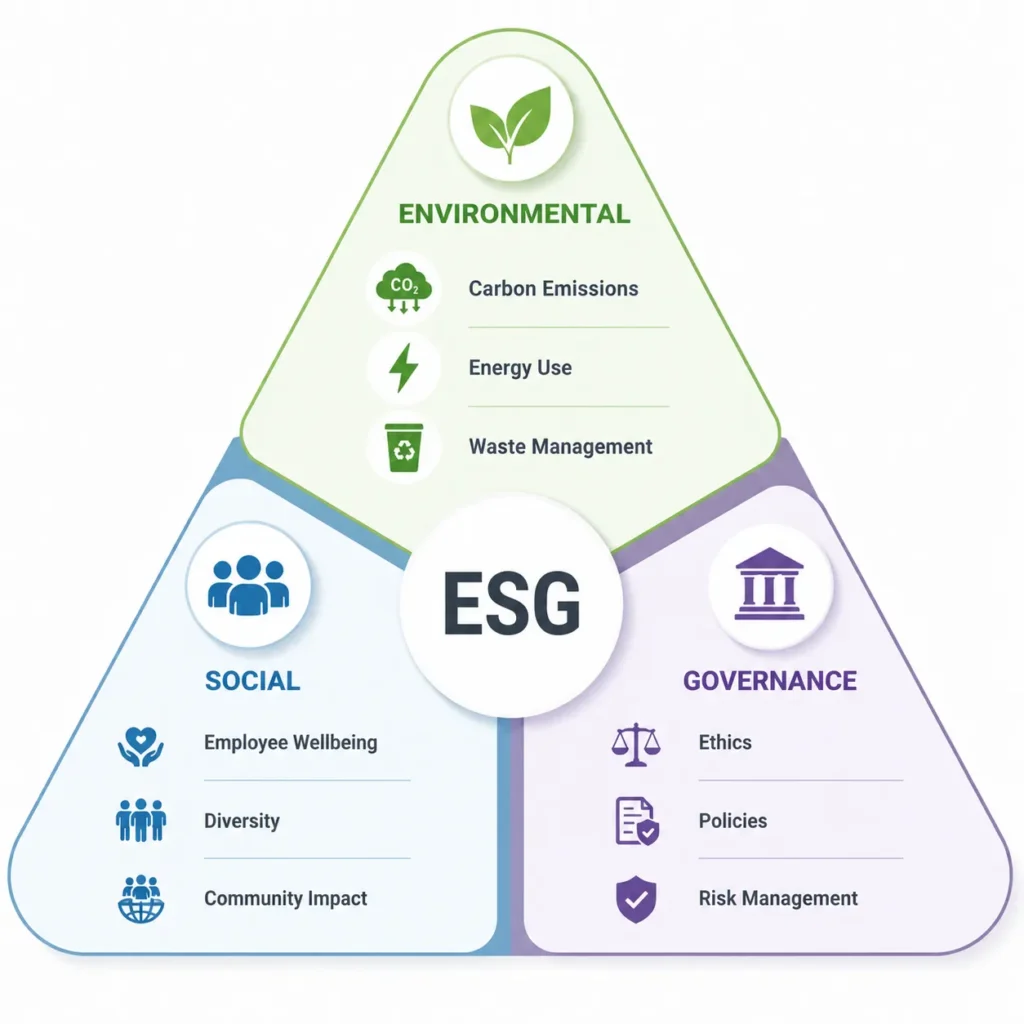
Environmental Reporting
Sustainability Reporting Specialists collect and analyse environmental data such as carbon emissions, energy use, waste management, and resource consumption. They help organisations track environmental performance and report progress toward climate goals, including emission reduction and net zero commitments.
Social Impact Reporting
They support social reporting by collecting information related to employee wellbeing, diversity, health and safety, community impact, and responsible business practices. This helps organisations demonstrate their commitment to positive social outcomes.
Governance Disclosures
Sustainability Reporting Specialists help report governance-related information, including ethical practices, risk management, corporate policies, and sustainability decision-making processes. They ensure organisations communicate how sustainability is managed at leadership level.
Compliance Requirements
They help businesses meet sustainability reporting requirements by following recognised frameworks and standards such as GRI, ISSB, SASB, and TCFD. They ensure ESG information is properly documented, verified, and prepared for stakeholder review.
Through these activities, Sustainability Reporting Specialists support better ESG management, improve transparency, and help organisations build trust with investors, customers, regulators, and other stakeholders.
Where Sustainability Reporting Specialists Fit Within ESG Teams
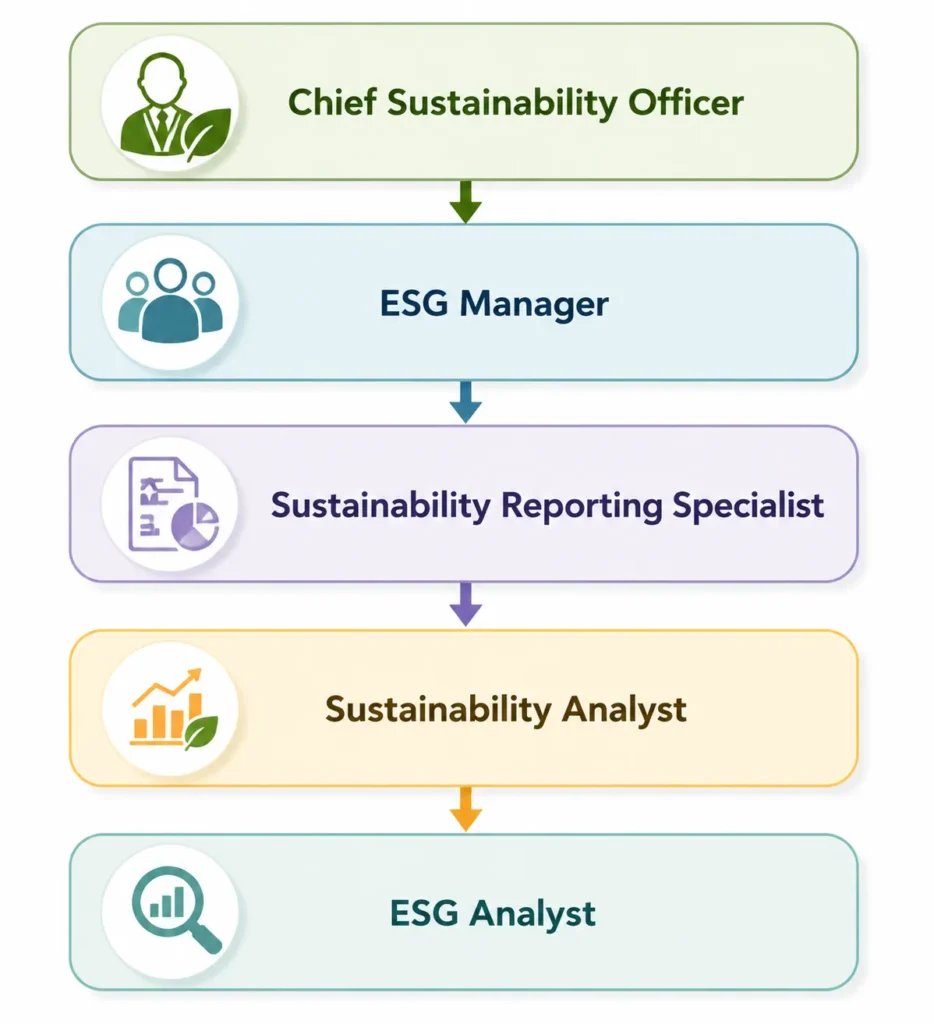
Sustainability Reporting Specialists are an important part of ESG teams. They work with different sustainability professionals to collect data, prepare reports, track performance, and support business sustainability goals. Each ESG role has a different responsibility, but they work together to improve an organisation’s environmental, social, and governance performance.
ESG Analyst
An ESG Analyst collects and analyses ESG data to understand a company’s sustainability performance. They review environmental, social, and governance factors and support decision-making with data insights.
Sustainability Analyst
A Sustainability Analyst focuses on improving sustainability practices within an organisation. They analyse environmental impacts, support sustainability projects, and help develop strategies for reducing environmental risks.
Sustainability Reporting Specialist
A Sustainability Reporting Specialist manages sustainability reporting activities. They collect ESG information, prepare sustainability reports, ensure data accuracy, and make sure reports follow recognised standards such as GRI, ISSB, and SASB.
ESG Manager
An ESG Manager leads ESG activities and strategies within an organisation. They manage sustainability projects, coordinate teams, monitor ESG performance, and ensure the company meets sustainability objectives.
Chief Sustainability Officer
A Chief Sustainability Officer (CSO) is a senior leader responsible for the overall sustainability direction of an organisation. They develop long-term sustainability strategies, guide ESG decisions, and ensure sustainability goals align with business objectives.
Together, these roles create an effective ESG team where data collection, reporting, strategy development, and sustainability leadership work together to support responsible business growth.data collection and strategic decision-making, helping ESG teams communicate accurate sustainability performance to stakeholders.
Sustainability Analyst vs Sustainability Reporting Specialist
Both Sustainability Analysts and Sustainability Reporting Specialists work in the sustainability field, but their main responsibilities are different. A Sustainability Analyst focuses on analysing sustainability performance and supporting improvement strategies, while a Sustainability Reporting Specialist focuses on collecting ESG data and preparing sustainability reports.
| Area | Sustainability Analyst | Sustainability Reporting Specialist |
|---|---|---|
| Main Focus | Analyses sustainability performance and develops improvement ideas | Manages ESG data and prepares sustainability reports |
| Key Role | Supports sustainability strategies and projects | Ensures accurate sustainability disclosures |
| Main Activities | Research, impact analysis, sustainability planning | Data collection, report preparation, framework compliance |
| Data Responsibility | Reviews and interprets sustainability data | Collects, verifies, and manages reporting data |
| Reporting Work | Provides insights for sustainability reports | Creates and manages ESG reports |
| Skills Required | Sustainability knowledge, research, analysis, strategy | ESG reporting, data management, report writing |
| Standards Used | Uses sustainability principles and business goals | Works with frameworks such as GRI, ISSB, SASB, and TCFD |
| Main Goal | Improve organisational sustainability performance | Communicate sustainability performance clearly and transparently |
| Career Path | Sustainability Analyst → Sustainability Manager | Sustainability Reporting Specialist → ESG Manager |
Sustainability Reporting Process Explained
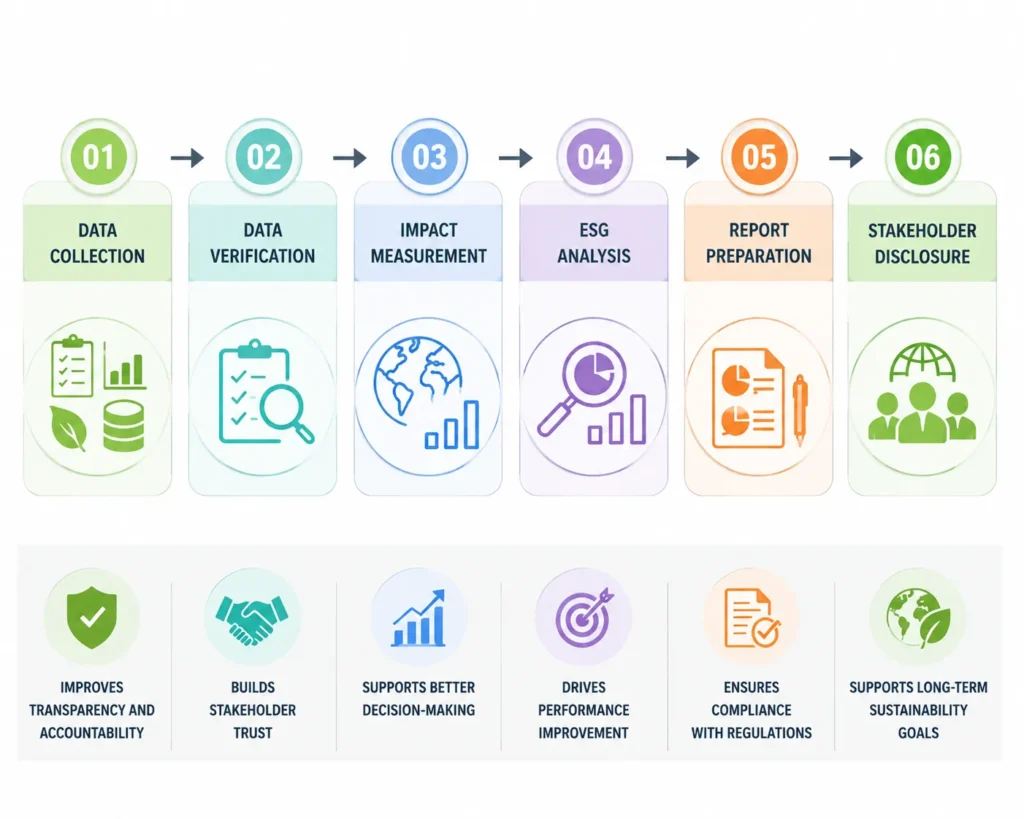
The sustainability reporting process is a systematic approach that helps organisations collect, evaluate, and communicate their environmental, social, and governance (ESG) performance. A Sustainability Reporting Specialist manages each stage to ensure that sustainability information is accurate, reliable, and useful for stakeholders. This process helps businesses measure their impact, track sustainability progress, and demonstrate commitment to responsible business practices.
The main stages of the sustainability reporting process include:
Data Collection
The first step involves gathering sustainability-related information from different areas of the organisation. This may include carbon emissions, energy consumption, water usage, waste generation, employee data, and governance activities.
Data Verification
Collected information is reviewed and checked to ensure accuracy, consistency, and reliability. Sustainability specialists verify data sources, calculations, and supporting documents before using them in reports.
Impact Measurement
Organisations measure their environmental and social impacts by analysing key sustainability indicators. This helps identify performance levels, risks, and areas where improvements are needed.
ESG Analysis
The collected and verified data is analysed against ESG goals and reporting requirements. Specialists evaluate sustainability performance, compare results with targets, and identify opportunities for improvement.
Report Preparation
The analysed information is organised into a structured sustainability report. The report explains the organisation’s ESG performance, achievements, challenges, targets, and future sustainability plans.
Stakeholder Disclosure
The final sustainability report is shared with investors, customers, regulators, employees, and other stakeholders. Transparent disclosure helps build trust and demonstrates corporate accountability.
Key Sustainability Reporting Frameworks and Standards
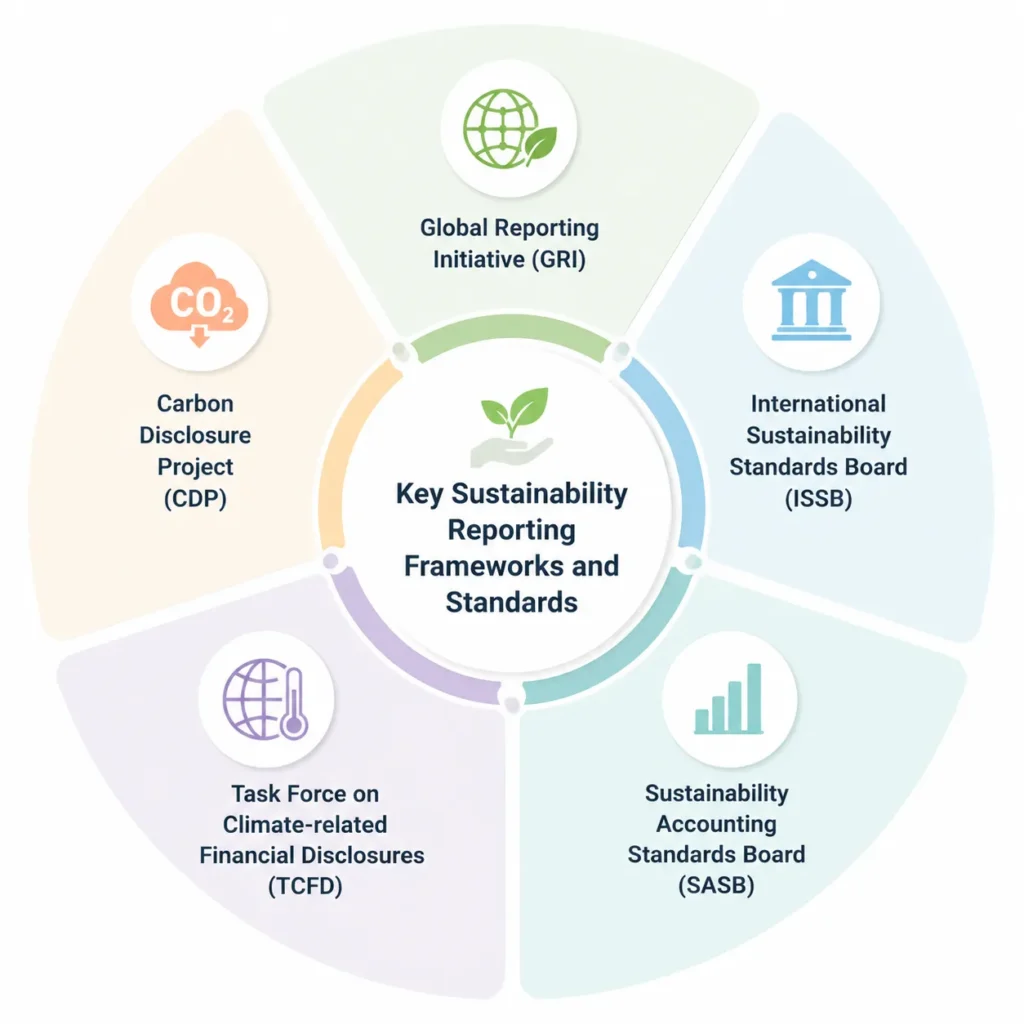
Sustainability reporting frameworks help organisations measure, manage, and share information about their environmental, social, and governance (ESG) performance. They improve transparency and help stakeholders understand an organisation’s sustainability progress.
1. Global Reporting Initiative (GRI)
GRI is one of the most widely used sustainability reporting frameworks. It helps organisations report their impacts on the environment, society, and economy.
Key Areas:
- Carbon emissions
- Energy and water use
- Waste management
- Employee wellbeing
- Human rights
GRI focuses on reporting how an organisation affects people and the planet.
2. International Sustainability Standards Board (ISSB)
ISSB develops global standards for sustainability-related financial reporting. It helps investors understand how sustainability risks and opportunities affect business performance.
Key Features:
- Investor-focused reporting
- Climate and sustainability risk disclosure
- Connection between sustainability and financial information
3. Sustainability Accounting Standards Board (SASB)
SASB provides industry-specific sustainability standards. It helps organisations report ESG issues that may affect financial performance.
Key Features:
- Industry-based reporting
- Focus on financially important ESG information
- Supports investor decision-making
4. Task Force on Climate-related Financial Disclosures (TCFD)
TCFD provides guidance for reporting climate-related risks and opportunities.
It focuses on four areas:
- Governance – How climate risks are managed
- Strategy – Climate impact on business plans
- Risk Management – Identifying and controlling climate risks
- Metrics and Targets – Measuring climate performance
5. Carbon Disclosure Project (CDP)
CDP is a global platform for reporting environmental information. It helps organisations disclose their impact on climate, water, and natural resources.
Key Areas:
- Greenhouse gas emissions
- Climate risks
- Energy use
- Environmental performance
Summary of Sustainability Reporting Frameworks
| Framework | Main Focus |
|---|---|
| GRI | Environmental and social impacts |
| ISSB | Sustainability information for investors |
| SASB | Industry-specific ESG reporting |
| TCFD | Climate risks and opportunities |
| CDP | Environmental impact disclosure |
These frameworks help organisations improve sustainability performance, increase transparency, and build trust with stakeholders.
Skills Required to Become a Sustainability Reporting Specialist
A successful Sustainability Reporting Specialist requires a combination of technical knowledge and professional abilities to collect sustainability data, prepare ESG reports, analyse performance, and communicate sustainability information effectively. These skills help professionals understand environmental impacts, manage reporting requirements, and support organisations in achieving their sustainability goals.
Technical Skills
- ESG Reporting
Understanding ESG frameworks and reporting requirements to prepare accurate sustainability disclosures. - Carbon Accounting
Measuring greenhouse gas emissions and supporting carbon reduction initiatives. - Data Analysis
Collecting, analysing, and interpreting sustainability data to identify trends and improvements. - Sustainability Metrics
Tracking indicators such as emissions, energy use, waste, and social performance. - Environmental Management
Understanding environmental impacts, regulations, and sustainability practices.
Professional Skills
- Communication
Explaining sustainability information clearly to stakeholders and management. - Research
Keeping updated with ESG trends, regulations, and reporting standards. - Report Writing
Preparing clear and structured sustainability reports. - Stakeholder Management
Working with teams and stakeholders to collect information and improve sustainability performance.
Tools Used by Sustainability Reporting Specialists
ESG Reporting Software
- Used for managing ESG data, disclosures, and sustainability reports.
Carbon Accounting Platforms
- Used for measuring greenhouse gas emissions and tracking carbon reduction targets.
Data Management Systems
- Used for collecting, organising, storing, and managing sustainability information.
Excel and Analytics Tools
- Used for data analysis, calculations, performance tracking, and reporting insights.
Sustainability Dashboards
- Used for monitoring ESG performance indicators and visualising sustainability progress.
Sustainability Reporting Specialist Career Path
Environmental Assistant
↓
Sustainability Coordinator
↓
Sustainability Analyst
↓
Sustainability Reporting Specialist
↓
ESG Manager
↓
Head of Sustainability
↓
Chief Sustainability Office
Sustainability Reporting Specialist vs ESG Specialist
| Area | Sustainability Reporting Specialist | ESG Specialist |
|---|---|---|
| Main Focus | Prepares and manages sustainability reports and disclosures | Manages broader ESG strategies and performance |
| Primary Role | Collects, analyses, and communicates sustainability data | Develops and implements ESG initiatives |
| Key Responsibility | Ensures accurate sustainability reporting | Improves overall environmental, social, and governance performance |
| Main Activities | Data collection, report preparation, framework compliance | ESG strategy development, risk management, sustainability planning |
| Reporting Frameworks | Focuses on GRI, ISSB, SASB, TCFD, and CDP requirements | Uses ESG frameworks to guide business decisions and strategies |
| Data Management | Manages sustainability metrics and reporting information | Reviews ESG performance data for strategic improvements |
| Skills Required | Reporting, data analysis, carbon accounting, report writing | Strategy, stakeholder management, risk assessment, ESG leadership |
| Business Interaction | Works mainly with sustainability, finance, compliance, and reporting teams | Collaborates with senior management and multiple business functions |
| Main Goal | Create transparent and accurate sustainability disclosures | Improve overall ESG performance and sustainability outcomes |
| Career Progression | Sustainability Reporting Specialist → ESG Manager → Head of Sustainability | ESG Specialist → ESG Manager → Chief Sustainability Officer |
Both roles support organisational sustainability goals, but a Sustainability Reporting Specialist focuses mainly on measuring and communicating ESG performance, while an ESG Specialist takes a broader approach by developing strategies, managing risks, and driving sustainability improvements across the organisation.
Future of Sustainability Reporting Careers
The future of sustainability reporting careers is growing as businesses focus more on climate action, ESG transparency, and responsible growth. Organisations need skilled professionals who can manage sustainability data, prepare reports, and support decision-making related to environmental and social impacts.
Net Zero Commitments
Companies worldwide are setting net zero targets to reduce greenhouse gas emissions and improve environmental performance. Sustainability Reporting Specialists help organisations measure emissions, track progress, and report their achievements toward climate goals.
Climate Disclosure Regulations
New climate disclosure requirements are increasing the need for accurate sustainability reporting. Businesses need specialists who can collect reliable data and prepare reports that meet regulatory and stakeholder expectations.
ESG Data Requirements
The demand for high-quality ESG data is increasing as investors and stakeholders expect transparent information about sustainability performance. Sustainability Reporting Specialists help manage, analyse, and communicate ESG data effectively.
AI in Sustainability Reporting
Artificial intelligence is transforming sustainability reporting by helping organisations analyse large amounts of data, automate reporting tasks, identify trends, and improve reporting accuracy. Professionals who understand both sustainability and digital tools will have strong career opportunities.
As sustainability becomes a key part of business strategy, Sustainability Reporting Specialists will continue to play an important role in helping organisations achieve climate targets, improve transparency, and build a more sustainable future.
Conclusion
Sustainability Reporting Specialists play an important role in helping organisations measure, manage, and communicate their sustainability performance. They collect ESG data, prepare reports, support climate goals, and improve transparency with stakeholders.
As businesses focus more on net zero targets, climate reporting, and responsible practices, the demand for sustainability reporting professionals continues to grow. Developing skills in ESG reporting, data analysis, and sustainability standards can create valuable career opportunities in this growing field.