
Water Resource Manager: Complete Career Guide, Responsibilities, Skills and Role in Sustainable Water Management
Water resources are facing increasing challenges due to climate change, population growth, pollution, and rising demand. Sustainable water planning helps protect water supplies and ensures their availability for future generations.
Water Resource Managers play an important role in monitoring, managing, and conserving water systems. They develop strategies to improve water security, protect ecosystems, and support sustainable development.
With growing environmental concerns, Water Resource Management offers diverse career opportunities in government, consulting, utilities, conservation, and sustainability sectors.
What Is a Water Resource Manager?
A Water Resource Manager is an environmental professional who plans, develops, and manages strategies to protect and maintain water resources for current and future needs. They are responsible for ensuring the sustainable use of water systems, including rivers, lakes, reservoirs, groundwater sources, and municipal water supplies.
Water Resource Managers combine knowledge of environmental science, hydrology, sustainability, and resource planning to assess water availability, identify risks, and develop effective management solutions. Their work involves monitoring water quality, analysing environmental impacts, managing conservation projects, and supporting policies that promote responsible water use.
They play a vital role in addressing modern water challenges such as climate change, droughts, pollution, increasing water demand, and ecosystem degradation. By developing sustainable water management plans, they help communities, industries, and governments maintain reliable water supplies while protecting natural ecosystems.
Why are Water Resource Managers important?
Water Resource Managers are important because they help protect, manage, and conserve essential water resources for communities, industries, and ecosystems. They develop sustainable strategies to ensure safe and reliable water supplies while addressing challenges such as water scarcity, pollution, climate change, and increasing demand.
Their work supports environmental protection, improves water efficiency, and helps organisations make responsible decisions about water use. By planning for future challenges and implementing sustainable solutions, Water Resource Managers play a vital role in creating resilient water systems and protecting water resources for future generations.
What Does a Water Resource Manager Do?
A Water Resource Manager is responsible for planning, protecting, and managing water resources to ensure they are used safely and sustainably. They study water availability, monitor water quality, and develop strategies to prevent water shortages and pollution.
Their work includes managing rivers, lakes, groundwater, and water supply systems, as well as supporting water conservation projects. They work with governments, environmental teams, engineers, and communities to improve water use and protect natural water sources.
Water Resource Managers also help address challenges such as climate change, droughts, flooding, and increasing water demand by creating effective plans for long-term water security.
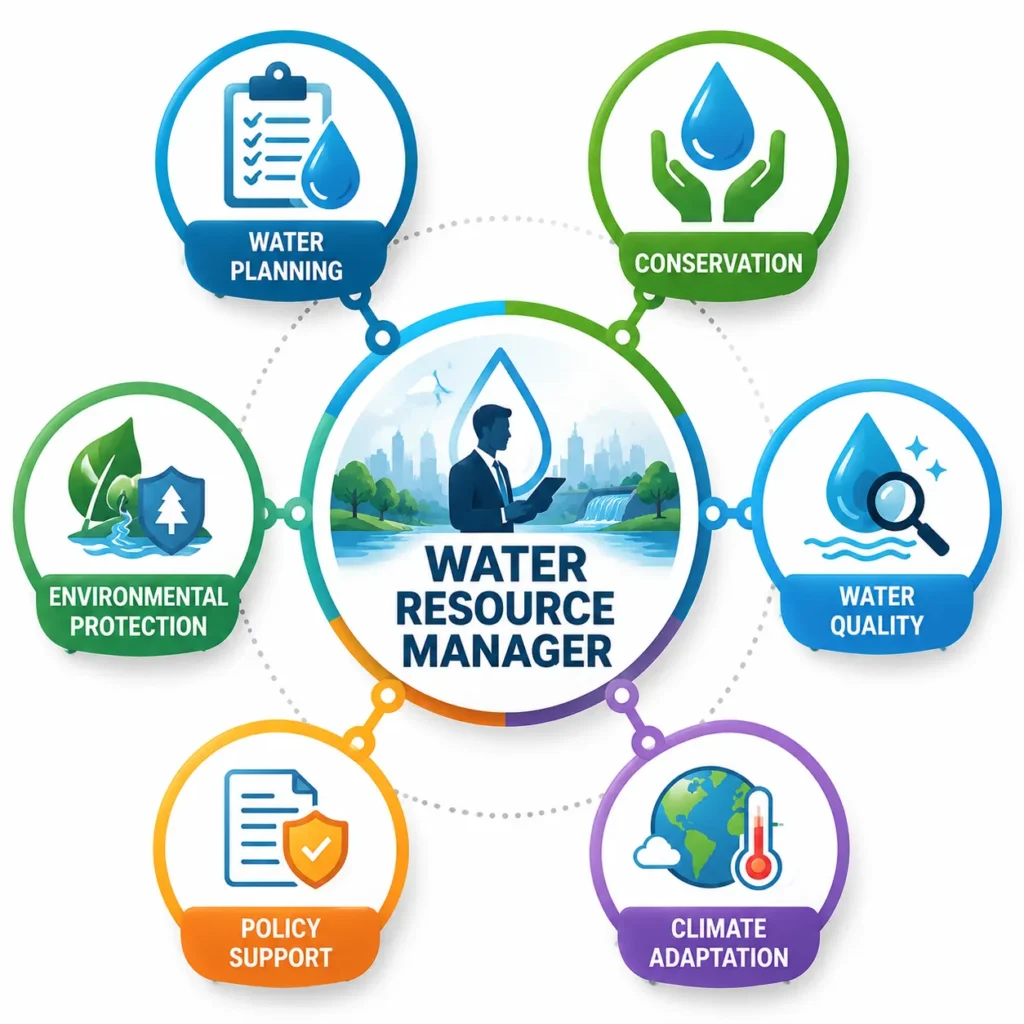
Key Responsibilities of a Water Resource Manager
Water Resource Planning
Water Resource Managers assess the availability of water resources and develop effective plans to ensure sustainable water use. They create long-term strategies that help balance water demand, protect resources, and support proper water allocation.
Water Conservation Management
They develop and manage water conservation programmes to reduce waste and improve water efficiency. Their work helps organisations and communities use water responsibly while protecting limited water supplies.
Environmental Monitoring
Water Resource Managers monitor water quality, assess environmental impacts, and identify potential risks affecting water systems. They collect and analyse data to support better decision-making and resource protection.
Climate Change Adaptation
They develop strategies to manage the impacts of climate change, such as droughts, floods, and changing water availability. They help improve water system resilience and support sustainable climate adaptation plans.
Policy and Regulatory Compliance
Water Resource Managers ensure that water management activities follow environmental laws and regulations. They work with government agencies and stakeholders to support effective water policies and responsible resource management.
Typical Water Resource Manager Workflow
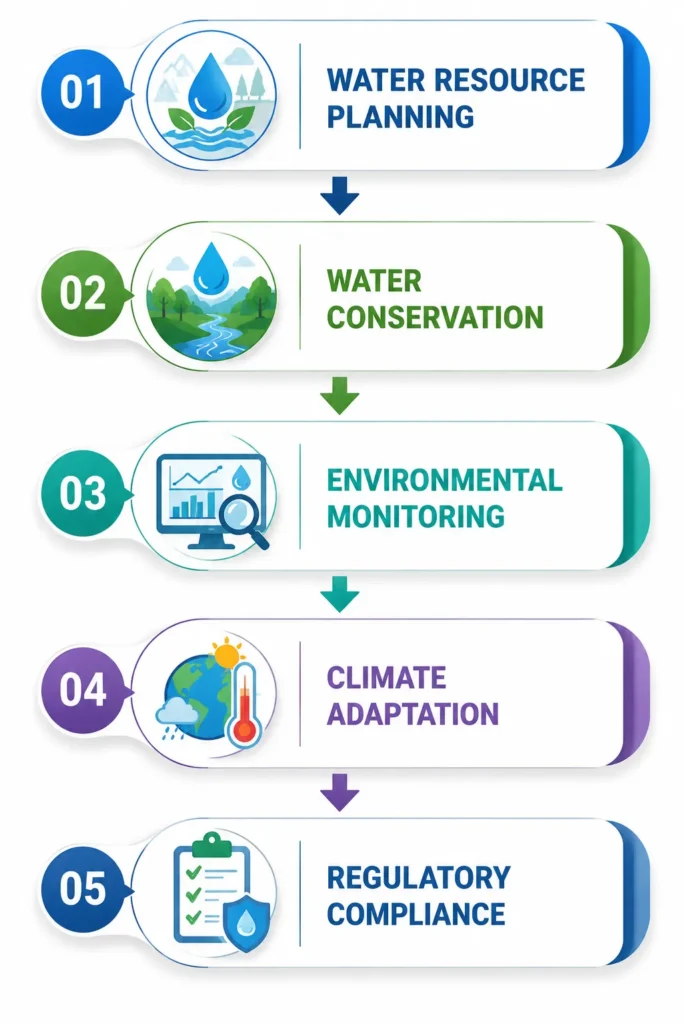
A Water Resource Manager follows a structured process to understand water challenges, develop solutions, and ensure sustainable water management.
Problem Identification
Identify water-related issues such as scarcity, pollution, flooding, or inefficient water use.
↓
Water Data Collection
Collect and analyse information about water availability, quality, usage, and environmental conditions.
↓
Environmental Assessment
Evaluate the impact of water issues on ecosystems, communities, and future water supplies.
↓
Water Planning Strategy
Develop sustainable plans and strategies to improve water management, conservation, and resource protection.
↓
Implementation
Apply water management solutions, conservation programmes, and improvement measures.
↓
Monitoring and Improvement
Monitor results, measure effectiveness, and update strategies to ensure continuous improvement and long-term water security.
Essential Skills Required to Become a Water Resource Manager
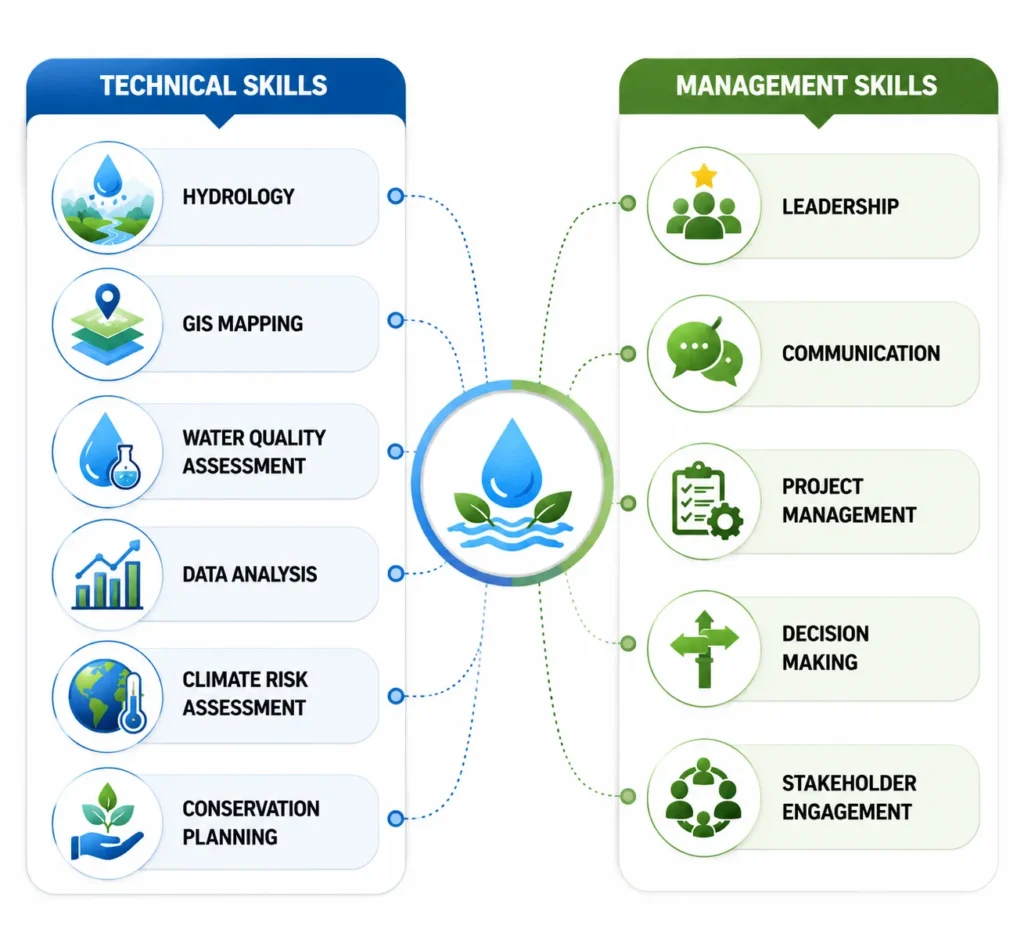
A successful Water Resource Manager needs a combination of technical knowledge and management abilities to effectively protect, plan, and manage water resources.
Technical Skills
Hydrology
Understanding water cycles, groundwater systems, rivers, and surface water movement to support effective resource planning.
Water Quality Assessment
Ability to evaluate water conditions, identify contamination issues, and recommend solutions to maintain safe water resources.
Environmental Monitoring
Skills in collecting and analysing environmental data to track changes in water systems and identify potential risks.
GIS Mapping
Using Geographic Information Systems (GIS) to analyse water resources, map locations, and support environmental planning decisions.
Data Analysis
Interpreting water-related data and using findings to develop effective management strategies.
Climate Risk Assessment
Assessing the impacts of climate change, droughts, floods, and other risks on water availability and security.
Water Conservation Planning
Developing strategies to reduce water waste, improve efficiency, and promote sustainable water use.
Management Skills
Project Management
Planning, coordinating, and managing water-related projects from development to completion.
Leadership
Guiding teams, making informed decisions, and managing environmental initiatives effectively.
Communication
Explaining technical information clearly to governments, organisations, communities, and stakeholders.
Stakeholder Engagement
Working with different groups to develop practical solutions and achieve shared water management goals.
Decision Making
Evaluating information, identifying challenges, and making effective decisions to protect water resources.
Educational Requirements and Qualifications
To become a Water Resource Manager, professionals usually need a background in environmental, scientific, or engineering disciplines. Common educational pathways include:
- Environmental Science Degree – Provides knowledge of ecosystems, environmental protection, and resource management.
- Water Management Qualifications – Develops specialised skills in water planning, conservation, and sustainable resource use.
- Civil Engineering Background – Helps with understanding water infrastructure, drainage systems, and water-related projects.
- Geography – Supports knowledge of land systems, climate patterns, and resource distribution.
- Hydrology – Builds expertise in water cycles, groundwater, and surface water management.
- Sustainability Studies – Focuses on sustainable practices and long-term environmental solutions.
Educational Pathway Timeline
Environmental Science / Engineering Degree
⬇️
Water Management Knowledge
⬇️
Practical Experience
⬇️
Professional Development
⬇️
Water Resource Manager Role
Certifications for Water Resource Managers
Professional certifications can help Water Resource Managers improve their technical knowledge, demonstrate expertise, and advance their careers in water management, sustainability, and environmental protection. Common certifications include:
1. Certified Water Resources Engineer (CWRE)
A professional certification focused on advanced water resource engineering, including hydrology, water systems, and resource planning.
2. Certified Environmental Professional (CEP)
Provides recognition for professionals working in environmental management, sustainability, compliance, and resource protection.
3. Water Quality Certification
Focuses on water testing, monitoring techniques, pollution control, and maintaining safe water standards.
4. GIS Certification
Develops expertise in Geographic Information Systems (GIS), which are widely used for mapping water resources, analysing environmental data, and supporting planning decisions.
5. Project Management Certification
Certifications such as project management qualifications help Water Resource Managers manage environmental projects, budgets, teams, and stakeholder requirements.
6. Sustainability Certifications
Sustainability-focused certifications improve knowledge of environmental responsibility, climate adaptation, resource efficiency, and sustainable development practices.
7. Hydrology and Water Management Certifications
Specialised training in hydrology, groundwater management, water conservation, and watershed planning helps professionals develop technical expertise.
8. Climate Risk and Adaptation Certifications
These certifications focus on climate change impacts, resilience planning, drought management, and sustainable water strategies.
9. Environmental Management System (EMS) Certification
Training related to environmental management systems helps professionals understand environmental policies, compliance requirements, and continuous improvement practices.
10. ISO 14001 Environmental Management Certification
Provides knowledge of environmental management systems and supports professionals involved in sustainability, compliance, and environmental improvement programmes.
Water Resource Manager Career Roadmap
A Water Resource Manager career develops through different stages of education, experience, and leadership. The typical progression is:
Student
⬇️
Environmental Graduate
⬇️
Water Resources Assistant
⬇️
Water Resource Specialist
⬇️
Water Resource Manager
⬇️
Senior Water Resource Manager
⬇️
Water Sustainability Director
⬇️
Environmental Management Leader
Water Resource Manager Salary Comparison by Country
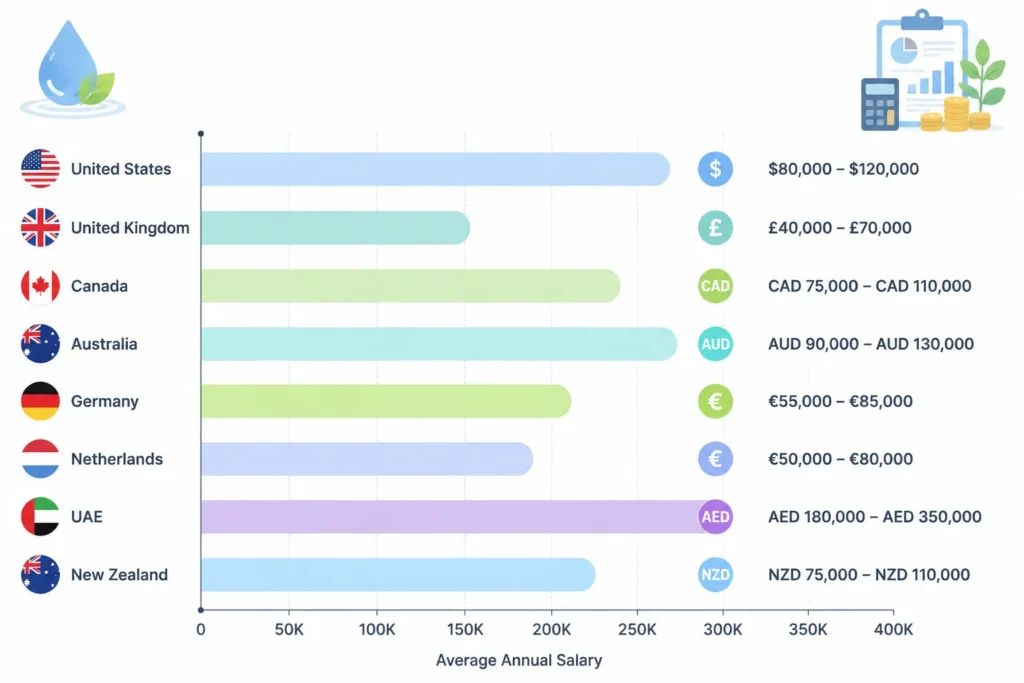
The salary of a Water Resource Manager varies depending on experience, qualifications, location, industry, and the organisation they work for. Professionals with strong technical skills, project management experience, and expertise in sustainability or climate adaptation often have better career opportunities.
| Country | Average Annual Salary Range |
|---|---|
| United States | $80,000 – $120,000 |
| United Kingdom | £40,000 – £70,000 |
| Canada | CAD 75,000 – CAD 110,000 |
| Australia | AUD 90,000 – AUD 130,000 |
| Germany | €55,000 – €85,000 |
| Netherlands | €50,000 – €80,000 |
| UAE | AED 180,000 – AED 350,000 |
| New Zealand | NZD 75,000 – NZD 110,000 |
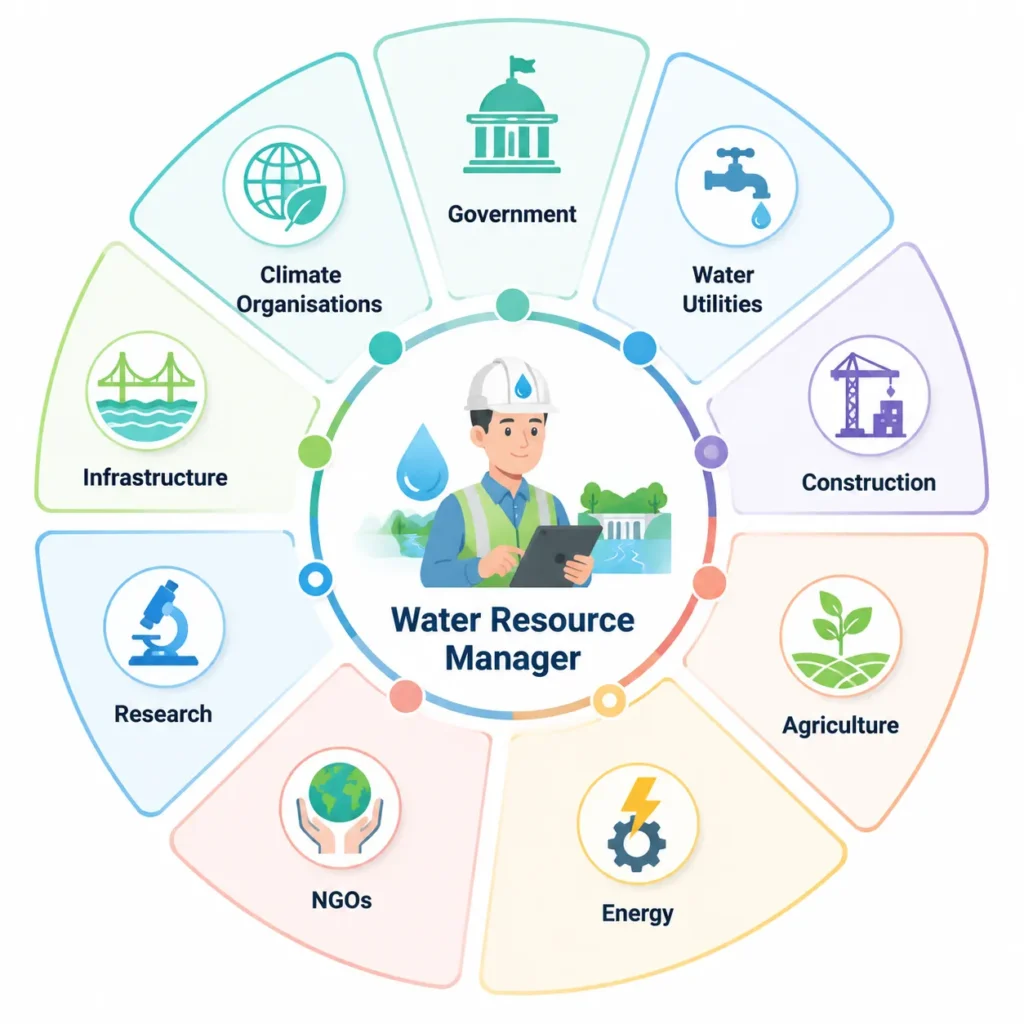
Industries Hiring Water Resource Managers
Water Resource Managers are needed across various sectors where sustainable water planning, conservation, and environmental protection are important. Common industries hiring these professionals include:
- Government Agencies
- Water Utilities
- Environmental Consultancies
- Construction Companies
- Agriculture Sector
- Energy Industry
- NGOs
- Research Organisations
- Infrastructure Companies
- Climate Organisations
Role of Water Resource Managers in Sustainability
Water Resource Managers play a key role in creating sustainable solutions for managing and protecting water resources. Their work supports communities, industries, and ecosystems by ensuring water is available, used efficiently, and protected from environmental threats. They help organisations achieve long-term water security by combining scientific knowledge, planning strategies, and conservation practices.
Supporting Sustainable Development Goals (SDG 6)
Water Resource Managers contribute to Sustainable Development Goal 6: Clean Water and Sanitation by improving access to safe water, promoting efficient water use, and supporting responsible water management practices.
Their activities include:
- Developing strategies for sustainable water supply.
- Improving water quality monitoring.
- Supporting safe and efficient water usage.
- Helping communities access reliable water resources.
Building Climate Resilience
Climate change creates challenges such as droughts, floods, and changing rainfall patterns. Water Resource Managers help develop solutions that make water systems more adaptable and prepared for future risks.
Their responsibilities include:
- Creating drought and flood management plans.
- Assessing climate-related water risks.
- Developing resilient water infrastructure.
- Supporting climate adaptation strategies.
Promoting Water Conservation
Water Resource Managers encourage efficient water use and reduce unnecessary water loss through conservation programmes and improved management practices.
Key actions include:
- Implementing water-saving initiatives.
- Improving water efficiency in industries and communities.
- Reducing water waste and overuse.
- Supporting sustainable water planning.
Protecting Ecosystems
Healthy water systems are essential for maintaining biodiversity and natural ecosystems. Water Resource Managers work to balance human water needs with environmental protection.
They support:
- Protection of rivers, wetlands, and groundwater sources.
- Monitoring impacts on aquatic ecosystems.
- Maintaining natural water cycles.
- Reducing pollution risks.
Responsible Resource Management
Water Resource Managers ensure that water resources are managed responsibly through effective planning, monitoring, and collaboration with stakeholders.
Their work involves:
- Following environmental regulations and policies.
- Supporting sustainable development projects.
- Working with governments, communities, and organisations.
- Making informed decisions based on water data and research.
Future of Water Resource Management
The future of Water Resource Management is being shaped by advanced technologies, data-driven decision-making, and sustainable solutions. As water challenges increase due to climate change, population growth, and environmental pressures, Water Resource Managers are adopting innovative approaches to improve water security and protect natural resources.
Smart Water Technologies
Modern water management is becoming more efficient through the use of digital tools and connected systems. These technologies help professionals monitor water resources, identify problems quickly, and improve decision-making.
Key developments include:
- IoT Monitoring Systems – Using connected sensors to track water levels, quality, usage, and system performance in real time.
- Digital Water Networks – Applying smart systems to improve water distribution, reduce losses, and optimise resource management.
- Remote Sensing – Using satellite data and advanced monitoring tools to assess water availability, environmental changes, and ecosystem conditions.
Artificial Intelligence in Water Management
Artificial Intelligence (AI) is transforming how water data is analysed and used. AI-based solutions help Water Resource Managers predict challenges, improve planning, and make faster decisions.
Applications include:
- Predicting Water Demand – Analysing data to forecast future water needs and improve supply planning.
- Flood Forecasting – Using predictive models to identify flood risks and support early warning systems.
- Risk Analysis – Detecting potential water shortages, pollution risks, and climate-related threats.
Climate-Resilient Water Planning
Future water management will focus on creating systems that can adapt to changing climate conditions. Water Resource Managers are developing strategies that protect communities and ecosystems from extreme weather events.
Important approaches include:
- Drought Adaptation – Creating plans to manage water shortages and maintain reliable supplies.
- Sustainable Infrastructure – Designing water systems that are efficient, durable, and environmentally responsible.
- Nature-Based Solutions – Using natural approaches such as wetlands restoration and green infrastructure to manage water sustainably.
Traditional Water Management
⬇️
Smart Water Technologies
⬇️
Digital Water Networks
⬇️
Remote Sensing & Data Analytics
⬇️
Artificial Intelligence in Water Management
⬇️
Climate-Resilient Water Planning
⬇️
Sustainable Infrastructure Development
⬇️
Nature-Based Water Solutions
⬇️
Future Water Sustainability Leadership
Common Challenges Faced by Water Resource Managers
Water Resource Managers face several challenges while protecting and managing water resources. Increasing demand, environmental changes, and human activities create complex problems that require effective planning, innovation, and sustainable solutions.
Water Scarcity
Limited water availability is one of the biggest challenges due to population growth, droughts, and increased consumption. Water Resource Managers develop strategies to improve efficiency, conserve resources, and ensure reliable water supplies.
Key challenges include:
- Declining freshwater availability.
- Increased competition for water resources.
- Managing water supplies during drought conditions.
Climate Change
Changing climate patterns affect rainfall, water availability, and the frequency of extreme events such as floods and droughts. Managers must develop adaptable strategies to protect water systems from climate impacts.
Key challenges include:
- Unpredictable rainfall patterns.
- Increased drought and flood risks.
- Need for climate-resilient water planning.
Population Growth
Growing populations increase demand for drinking water, agriculture, and industrial use. Water Resource Managers must balance increasing needs while maintaining sustainable resource use.
Key challenges include:
- Rising water consumption.
- Pressure on existing water supplies.
- Planning for future water demands.
Pollution
Water pollution from industries, agriculture, and urban activities threatens water quality and ecosystems. Managers work to identify pollution sources and implement protection measures.
Key challenges include:
- Contaminated water sources.
- Impact of chemicals and waste.
- Maintaining safe water quality standards.
Conflicting Water Demands
Different sectors such as agriculture, industries, communities, and ecosystems often compete for limited water resources. Water Resource Managers must create balanced solutions that meet various needs.
Key challenges include:
- Managing competing stakeholder requirements.
- Allocating water fairly.
- Balancing economic development with environmental protection.
Aging Infrastructure
Old water systems can lead to leaks, inefficiency, and reduced reliability. Water Resource Managers help improve infrastructure through upgrades, maintenance, and modern technologies.
Key challenges include:
- Deteriorating water networks.
- High maintenance requirements.
- Need for investment in sustainable infrastructure.
Challenges vs Solutions in Water Resource Management
| Challenge | Water Resource Management Solution |
|---|---|
| Water Scarcity | Conservation Planning |
| Climate Change | Adaptation Strategies |
| Pollution | Water Quality Management |
| Population Growth | Demand Planning |
| Aging Infrastructure | Smart Upgrades |
Conclusion
Water Resource Managers play an important role in protecting and managing water resources for a sustainable future. They help address challenges such as water scarcity, pollution, climate change, and increasing demand by developing effective planning and conservation strategies.
With the growing need for sustainable water solutions, this career offers strong opportunities in environmental management, government, engineering, and sustainability sectors. By combining technical knowledge, management skills, and environmental awareness, Water Resource Managers contribute to creating safer and more resilient water systems for future generations.