
What is a Carbon Manager? Roles, Responsibilities, Skills & Career Guide (2026)
As climate change and sustainability become global priorities, organizations are placing greater focus on reducing their carbon emissions and achieving net zero goals. To support these efforts, the demand for skilled Carbon Managers is increasing across industries such as construction, manufacturing, energy, transportation, finance, and healthcare.
A Carbon Manager helps organizations measure, manage, and reduce their greenhouse gas emissions while ensuring compliance with environmental regulations and sustainability commitments. By developing carbon reduction strategies, improving energy efficiency, and monitoring emissions data, they play a vital role in helping businesses operate more sustainably and responsibly.
What Is a Carbon Manager?
A Carbon Manager is a professional who helps organizations measure, manage, and reduce their carbon emissions. They work to identify where greenhouse gases are produced, develop strategies to lower emissions, and ensure the organization meets environmental regulations and sustainability goals.
Carbon Managers also monitor carbon data, prepare emissions reports, improve energy efficiency, and support net zero and ESG initiatives. They work in many industries, including construction, manufacturing, energy, transportation, healthcare, and finance, helping businesses reduce their environmental impact while improving operational performance.
What Does a Carbon Manager Do?
The responsibilities of a Carbon Manager extend far beyond calculating emissions. They contribute to strategic planning, operational improvements, regulatory compliance, stakeholder engagement, and continuous environmental performance improvement.
Typical activities include:
- Measuring organizational carbon footprints.
- Collecting greenhouse gas emissions data.
- Managing Scope 1, Scope 2, and Scope 3 emissions.
- Conducting carbon accounting and emissions reporting.
- Developing carbon reduction strategies.
- Supporting net zero planning.
- Monitoring environmental performance indicators.
- Identifying opportunities for energy efficiency.
- Advising senior management on climate-related risks.
- Supporting ESG reporting initiatives.
- Coordinating environmental audits.
- Evaluating renewable energy opportunities.
- Promoting sustainable business practices.
- Collaborating with suppliers to reduce supply chain emissions.
- Preparing sustainability reports for stakeholders.
These activities enable organizations to make informed decisions that reduce environmental impact while supporting operational efficiency and long-term business resilience.
Carbon Manager vs Sustainability Manager
Although both roles support an organization’s environmental goals, their responsibilities and areas of focus are different.
A Carbon Manager specializes in measuring, managing, and reducing greenhouse gas emissions. Their work focuses on carbon accounting, emissions reporting, net zero planning, and developing strategies to reduce an organization’s carbon footprint.
A Sustainability Manager has a broader role that covers environmental, social, and governance (ESG) initiatives. In addition to reducing environmental impacts, they oversee areas such as waste management, resource efficiency, ethical sourcing, employee wellbeing, community engagement, and sustainability reporting.
The table below highlights the key differences between the two roles.
| Feature | Carbon Manager | Sustainability Manager |
|---|---|---|
| Primary Focus | Greenhouse gas emissions and carbon reduction | Overall sustainability and ESG performance |
| Main Responsibility | Measure, manage, and reduce carbon emissions | Develop and manage organization-wide sustainability strategies |
| Key Activities | Carbon accounting, emissions reporting, carbon footprint assessment, net zero planning | Sustainability planning, ESG reporting, waste reduction, resource management, stakeholder engagement |
| Scope | Carbon and climate-related activities | Environmental, social, and governance initiatives |
| Standards Used | GHG Protocol, ISO 14064, ISO 14067, ISO 14068 | ESG frameworks, ISO 14001, sustainability standards, corporate policies |
| Main Objective | Reduce greenhouse gas emissions | Improve overall sustainability performance and business responsibility |
| Career Progression | Senior Carbon Manager, Climate Manager, Net Zero Manager | Senior Sustainability Manager, ESG Manager, Sustainability Director, Chief Sustainability Officer |
Carbon Manager vs Environmental Manager
Carbon Managers and Environmental Managers both help organizations improve their environmental performance, but their roles are different.
A Carbon Manager focuses specifically on measuring, managing, and reducing greenhouse gas (GHG) emissions. Their main goal is to help organizations achieve carbon reduction and net zero targets through carbon accounting, emissions reporting, and climate strategies.
An Environmental Manager has a broader role that covers all aspects of environmental management. They ensure the organization complies with environmental laws and manages issues such as waste, pollution, water, air quality, biodiversity, and resource conservation.
The table below highlights the key differences between the two roles.
| Feature | Carbon Manager | Environmental Manager |
|---|---|---|
| Primary Focus | Carbon emissions and climate action | Overall environmental management and compliance |
| Main Responsibility | Measure, manage, and reduce greenhouse gas emissions | Manage environmental policies, compliance, and environmental protection |
| Key Activities | Carbon accounting, emissions reporting, carbon footprint assessment, net zero planning | Environmental audits, waste management, pollution control, water management, environmental impact assessments |
| Scope | Carbon and climate-related activities | Air, water, waste, land, biodiversity, and environmental compliance |
| Standards Used | GHG Protocol, ISO 14064, ISO 14067, ISO 14068 | ISO 14001, environmental regulations, environmental management systems |
| Main Objective | Reduce carbon emissions and achieve net zero goals | Minimize environmental impacts and ensure legal compliance |
| Career Progression | Senior Carbon Manager, Climate Manager, Net Zero Manager | Senior Environmental Manager, Environmental Director, Head of Environment |
Why the Carbon Manager Role Matters
Climate change has become one of the defining challenges of the modern business environment. Governments, investors, customers, and communities increasingly expect organizations to demonstrate measurable progress toward reducing greenhouse gas emissions and supporting sustainable development.
As a result, Carbon Managers have become essential contributors to organizational success. They provide the expertise needed to transform environmental commitments into practical actions that deliver measurable outcomes.
Supporting Net Zero Commitments
Many organizations have publicly committed to achieving net zero emissions over the coming decades. Achieving these commitments requires detailed planning, accurate emissions measurement, continuous monitoring, and long-term improvement strategies.
Carbon Managers coordinate these activities by developing practical roadmaps that help organizations reduce emissions while maintaining operational performance.
Ensuring Regulatory Compliance
Environmental legislation continues to evolve across many countries. Carbon Managers help organizations understand applicable regulations, reporting obligations, and industry standards, reducing the risk of legal penalties and reputational damage.
By maintaining accurate emissions records and supporting transparent reporting, they ensure that organizations remain prepared for both current and future regulatory requirements.
Improving Business Performance
Reducing carbon emissions often leads to greater operational efficiency. Carbon Managers identify opportunities to minimize energy consumption, reduce waste, optimize resource use, and improve production processes.
These improvements frequently result in:
- Lower operating costs.
- Reduced energy expenditure.
- Improved resource efficiency.
- Better supply chain performance.
- Increased competitiveness.
Carbon management therefore contributes not only to environmental sustainability but also to long-term financial performance.
Strengthening ESG Performance
- Environmental performance is now a major component of Environmental, Social, and Governance (ESG) reporting.
- Investors increasingly evaluate organizations based on their sustainability performance, climate risk management, and emissions reduction progress.
- Carbon Managers help organizations produce reliable ESG disclosures supported by accurate carbon data and measurable improvement initiatives.
Enhancing Corporate Reputation
- Customers increasingly prefer organizations that demonstrate genuine environmental responsibility.
- Transparent carbon management builds trust among customers, investors, employees, regulators, and local communities.
- Organizations with strong carbon management programs are often viewed as industry leaders committed to responsible business practices.
Managing Climate-Related Risks
Climate change creates both physical and financial risks for businesses.
Carbon Managers help organizations identify climate-related risks associated with:
- Energy costs.
- Carbon pricing.
- Supply chain disruptions.
- Regulatory changes.
- Resource scarcity.
- Extreme weather events.
- Investor expectations.
Managing these risks improves long-term organizational resilience.
Driving Innovation
Carbon reduction often encourages innovation.
Organizations invest in:
- Cleaner technologies.
- Renewable energy.
- Energy-efficient equipment.
- Sustainable product design.
- Circular economy initiatives.
- Low-carbon transportation.
- Green construction methods.
Carbon Managers evaluate these opportunities and help prioritize investments that deliver measurable environmental and business benefits.
Key Responsibilities of a Carbon Manager
Although responsibilities vary by industry and organization, most Carbon Managers perform a combination of strategic, technical, and operational activities.
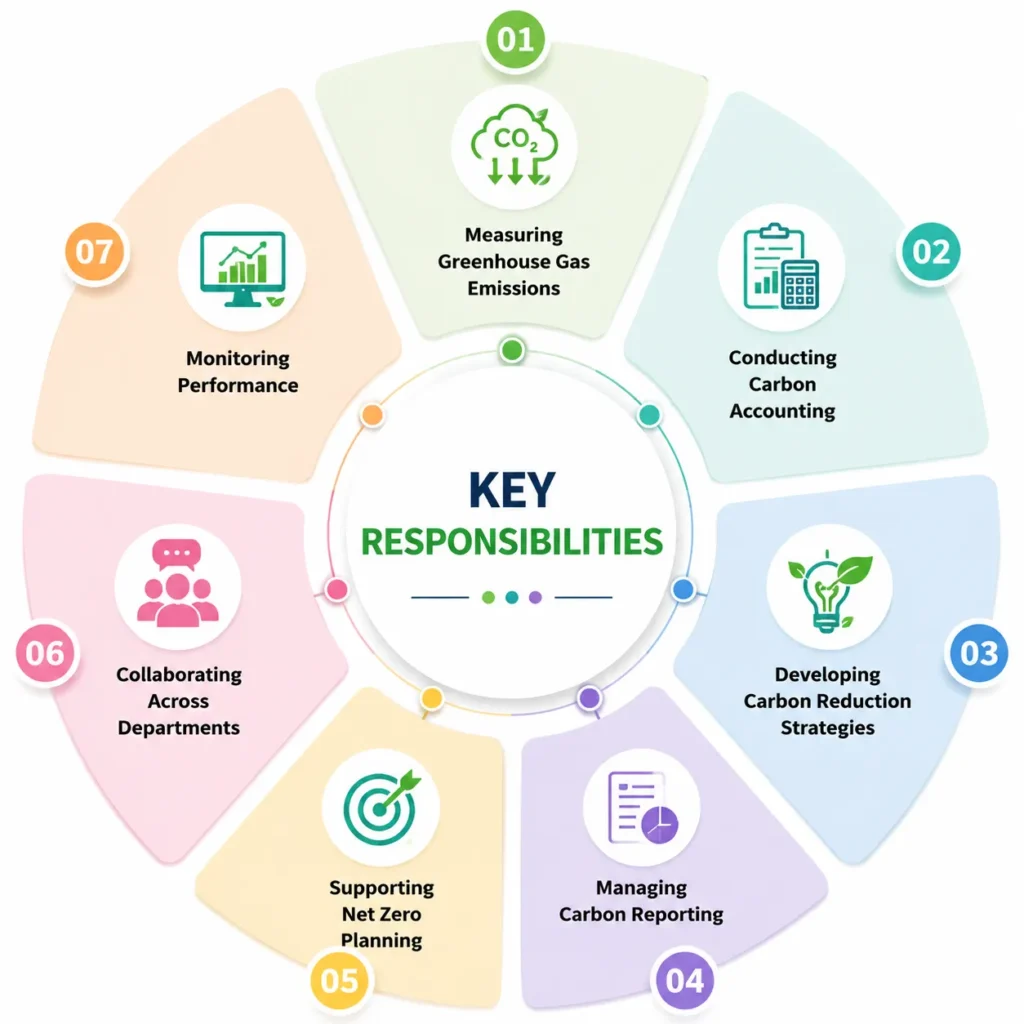
Measuring Greenhouse Gas Emissions
One of the primary responsibilities is accurately measuring greenhouse gas emissions generated by organizational activities.
This includes collecting data from:
- Fuel consumption
- Electricity usage
- Manufacturing processes
- Transportation
- Business travel
- Waste management
- Water consumption
- Supply chains
Reliable emissions data forms the foundation of every carbon reduction strategy.
Conducting Carbon Accounting
Carbon accounting involves calculating greenhouse gas emissions using internationally recognized methodologies.
Carbon Managers ensure that emissions inventories are:
- Accurate
- Consistent
- Transparent
- Verifiable
- Comparable
- Complete
These inventories support sustainability reporting, regulatory compliance, and informed decision-making.
Developing Carbon Reduction Strategies
After identifying emission sources, Carbon Managers develop practical plans to reduce organizational emissions.
Strategies may include:
- Improving energy efficiency.
- Transitioning to renewable energy.
- Reducing waste generation.
- Optimizing logistics.
- Encouraging sustainable procurement.
- Upgrading equipment.
- Supporting low-carbon innovation.
- Engaging suppliers in emissions reduction.
Managing Carbon Reporting
Organizations increasingly publish sustainability and ESG reports that include greenhouse gas performance.
Carbon Managers prepare reports that communicate:
- Annual emissions
- Reduction targets
- Progress against goals
- Improvement initiatives
- Carbon intensity metrics
- Future action plans
These reports help stakeholders evaluate organizational environmental performance.
Supporting Net Zero Planning
Achieving net zero requires long-term strategic planning.
Carbon Managers:
- Establish emissions baselines.
- Set reduction targets.
- Prioritize reduction projects.
- Monitor implementation.
- Evaluate progress.
- Recommend continuous improvements.
Collaborating Across Departments
Effective carbon management requires cooperation across multiple business functions.
Carbon Managers work closely with:
- Executive leadership
- Operations teams
- Facilities management
- Procurement
- Finance
- Engineering
- Human resources
- Marketing
- Sustainability teams
- External consultants
Cross-functional collaboration ensures carbon reduction initiatives are integrated into organizational decision-making.
Monitoring Performance
Continuous monitoring helps organizations evaluate whether carbon reduction strategies are delivering expected outcomes.
Carbon Managers regularly review:
- Energy consumption
- Fuel usage
- Emissions intensity
- Operational efficiency
- Renewable energy adoption
- Waste reduction
- Supplier performance
Performance data supports continuous improvement.
Core Skills Every Carbon Manager Needs
Successful Carbon Managers combine technical expertise, analytical thinking, communication abilities, and strategic leadership. As organizations increasingly integrate sustainability into their business strategies, professionals in this role must be capable of interpreting complex environmental data while collaborating effectively with stakeholders across all levels.
Carbon Accounting and Greenhouse Gas Knowledge
A strong understanding of carbon accounting is fundamental. Carbon Managers must know how to quantify greenhouse gas emissions accurately, classify emission sources, and prepare reliable emissions inventories using internationally recognized methodologies.
This expertise enables organizations to monitor emissions, set realistic reduction targets, and report environmental performance with confidence.
Environmental and Sustainability Knowledge
Carbon Managers need a broad understanding of environmental science and sustainability principles. This includes climate change, resource efficiency, energy management, circular economy concepts, biodiversity considerations, and sustainable business practices.
A holistic perspective helps them develop strategies that balance environmental responsibility with operational and financial objectives.
Data Analysis and Interpretation
Carbon management relies heavily on data. Professionals must be able to collect, organize, analyze, and interpret emissions data from multiple sources to identify trends, evaluate performance, and support evidence-based decision-making.
Strong analytical skills also help uncover opportunities for emissions reduction and operational improvement.
Strategic Planning
Carbon Managers are responsible for developing long-term carbon reduction roadmaps aligned with organizational goals. This requires the ability to assess current performance, define measurable objectives, prioritize initiatives, allocate resources effectively, and monitor progress over time.
Strategic thinking ensures that carbon management contributes to both sustainability outcomes and business success.
Project Management
Implementing carbon reduction initiatives often involves coordinating multiple projects across different departments. Effective project management skills help Carbon Managers plan activities, manage timelines, oversee budgets, engage stakeholders, and ensure successful delivery of environmental objectives.
Communication Skills
Clear communication is essential when presenting technical information to non-technical audiences. Carbon Managers must explain emissions data, sustainability strategies, and regulatory requirements in a way that supports informed decision-making by executives, employees, investors, and external stakeholders.
They also prepare reports, deliver presentations, and facilitate collaboration across teams.
Leadership and Collaboration
Driving meaningful emissions reductions requires influencing people throughout an organization. Carbon Managers often lead cross-functional initiatives, encourage sustainable practices, and build partnerships with suppliers, consultants, regulators, and internal departments.
Strong leadership and collaboration skills help create a culture of environmental responsibility.
Problem-Solving and Innovation
Every organization faces unique sustainability challenges. Carbon Managers must evaluate complex issues, identify practical solutions, and recommend innovative approaches that reduce emissions while maintaining operational efficiency.
Creative problem-solving is particularly valuable when balancing environmental objectives with business priorities.
Digital and Technology Skills
Modern carbon management increasingly relies on digital tools for data collection, emissions monitoring, reporting, and performance analysis. Familiarity with carbon management software, data visualization platforms, and spreadsheet analysis enhances efficiency and improves the quality of decision-making.
Continuous Learning
Climate science, environmental regulations, reporting frameworks, and sustainability standards continue to evolve. Successful Carbon Managers remain up to date with industry developments, emerging technologies, and best practices through ongoing professional development, ensuring they can respond effectively to changing business and regulatory expectations.
Carbon Accounting
Carbon accounting is the process of measuring and recording the greenhouse gas (GHG) emissions produced by an organization, project, product, or activity. It helps businesses understand their environmental impact, identify the main sources of emissions, and track progress toward carbon reduction goals.
By collecting accurate emissions data, organizations can set realistic reduction targets, improve energy efficiency, comply with environmental regulations, and prepare reliable sustainability and ESG reports.
The main greenhouse gases measured in carbon accounting include:
- Carbon dioxide (CO₂)
- Methane (CH₄)
- Nitrous oxide (N₂O)
- Fluorinated gases (F-gases)
Carbon accounting is an essential part of effective carbon management and supports organizations in making informed decisions to reduce their carbon footprint.
Scope 1, Scope 2, and Scope 3 Emissions
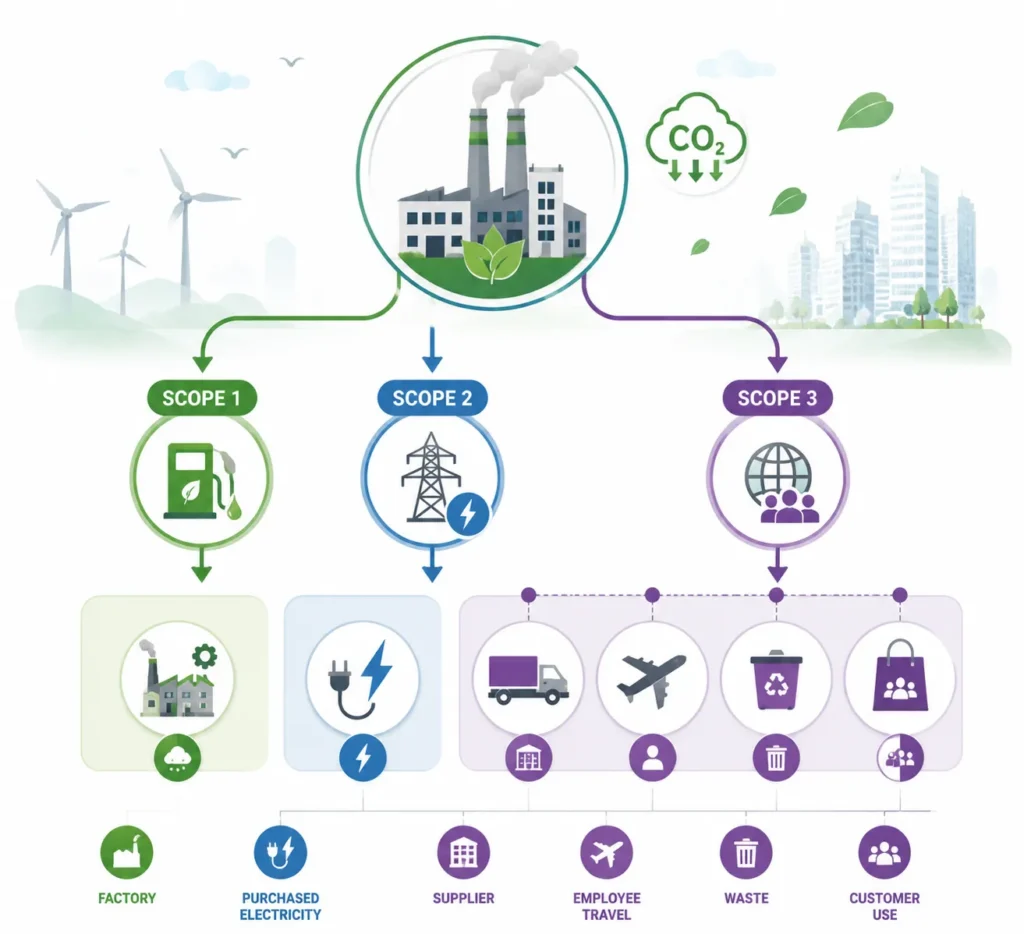
Greenhouse gas emissions are grouped into three categories known as Scope 1, Scope 2, and Scope 3. These categories help organizations identify where emissions come from and where improvements can be made.
Scope 1 Emissions
Scope 1 emissions are direct emissions from sources that are owned or controlled by the organization.
Examples include:
- Fuel used in company vehicles
- Natural gas used in boilers
- Emissions from manufacturing processes
- Fuel used in backup generators
These emissions are directly under the organization’s control.
Scope 2 Emissions
Scope 2 emissions are indirect emissions from the electricity, heating, cooling, or steam purchased by the organization.
Examples include:
- Electricity used in offices
- Power consumed in factories
- Purchased heating and cooling systems
Although these emissions are generated by the energy supplier, they occur because the organization uses that energy.
Scope 3 Emissions
Scope 3 emissions are all other indirect emissions that occur throughout the organization’s value chain. They are usually the largest and most difficult to measure.
Examples include:
- Business travel
- Employee commuting
- Purchased goods and services
- Transportation and distribution
- Waste disposal
- Supplier activities
- Product use by customers
- End-of-life product disposal
Managing Scope 3 emissions often requires working closely with suppliers, contractors, and business partners.
Scope 1 vs Scope 2 vs Scope 3 Emissions
| Scope | Description | Examples |
| Scope 1 | Direct emissions from owned or controlled sources | Company vehicles, boilers, generators, manufacturing processes |
| Scope 2 | Indirect emissions from purchased energy | Electricity, heating, cooling, and steam |
| Scope 3 | Other indirect emissions across the value chain | Business travel, suppliers, transportation, waste, employee commuting, product use |
Carbon Footprinting
A carbon footprint measures the total greenhouse gas emissions produced by an individual, organization, product, event, or activity. It is usually expressed as tonnes of carbon dioxide equivalent (tCO₂e).
Calculating a carbon footprint helps organizations understand where emissions are generated and identify opportunities to reduce them.
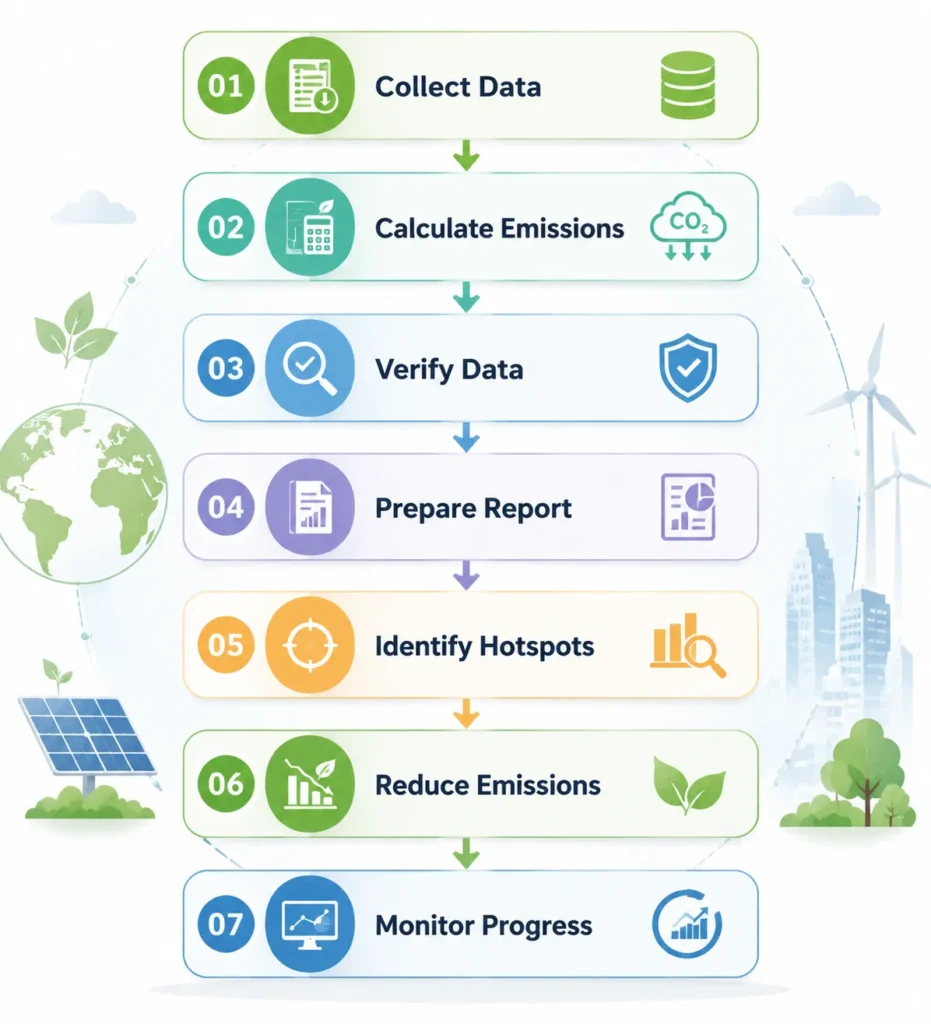
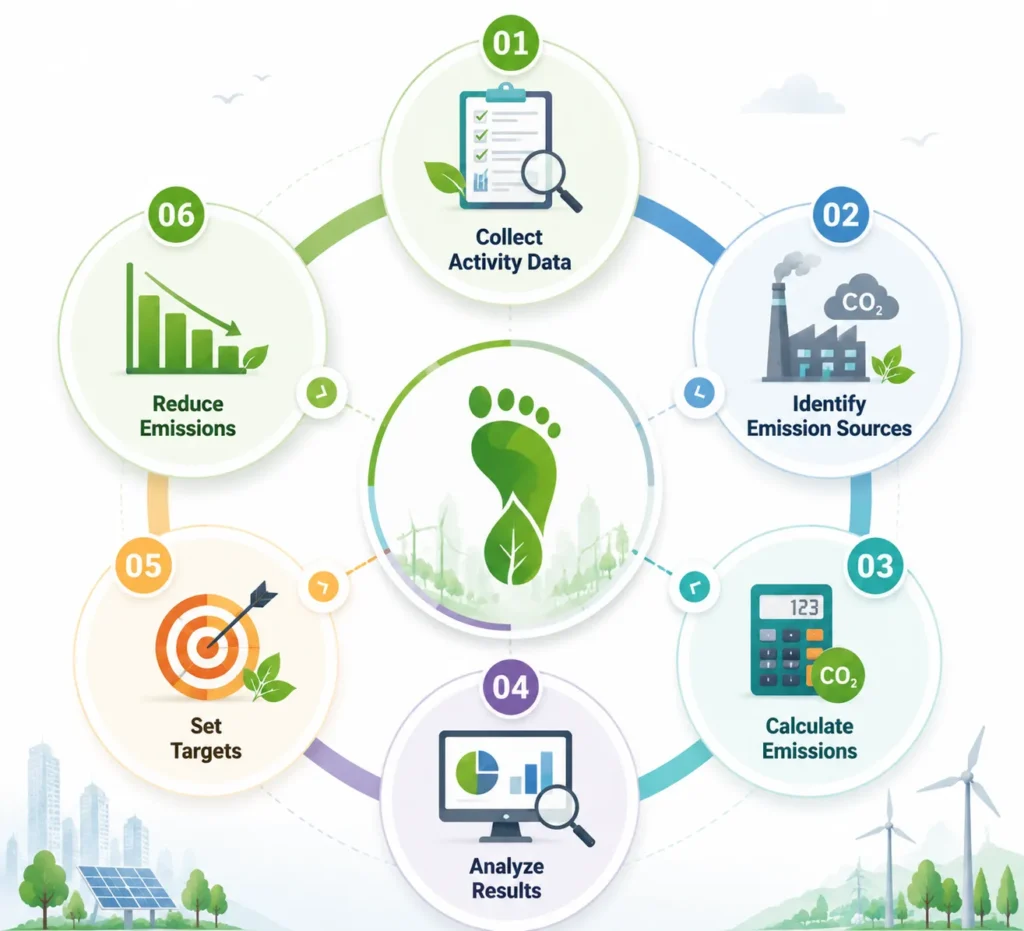
The basic steps in a carbon footprint assessment are:
- Define what will be measured (organization, product, or project).
- Collect data on fuel, electricity, transport, waste, and other activities.
- Calculate greenhouse gas emissions using approved emission factors.
- Identify the largest emission sources.
- Develop and implement carbon reduction actions.
- Monitor progress and update the assessment regularly.
Regular carbon footprint assessments enable organizations to measure improvement and demonstrate progress toward sustainability goals.
Carbon Management Standards and Frameworks
Carbon Managers use internationally recognized standards and frameworks to measure, report, and reduce greenhouse gas emissions. These provide a consistent approach for carbon accounting, reporting, and climate action.
Greenhouse Gas (GHG) Protocol
The Greenhouse Gas Protocol is the world’s most widely used framework for measuring and reporting greenhouse gas emissions. It provides guidance on calculating Scope 1, Scope 2, and Scope 3 emissions and is used by businesses, governments, and organizations worldwide.
ISO 14064
ISO 14064 provides guidelines for quantifying, monitoring, reporting, and verifying greenhouse gas emissions. It helps organizations establish accurate and credible carbon inventories.
ISO 14067
ISO 14067 focuses on calculating the carbon footprint of products throughout their life cycle, from raw materials to disposal. It helps organizations understand and reduce product-related emissions.
ISO 14068
ISO 14068 provides guidance for achieving carbon neutrality through accurate measurement, emissions reduction, and the responsible use of carbon offsets where appropriate.
Science Based Targets Initiative (SBTi)
The Science Based Targets initiative (SBTi) helps organizations set emissions reduction targets that align with the latest climate science and global efforts to limit temperature rise.
ESG Reporting Frameworks
Many organizations include carbon emissions data in their Environmental, Social, and Governance (ESG) reports. These reports demonstrate environmental performance, support transparency, and provide stakeholders with information about climate-related actions and progress.
Why These Standards Matter
Using recognized carbon management standards helps organizations:
- Measure emissions accurately.
- Improve the quality of carbon reporting.
- Meet regulatory and stakeholder expectations.
- Track progress toward carbon reduction goals.
- Support net zero and sustainability strategies.
- Build trust with customers, investors, and regulators.
Following these standards also ensures that carbon management practices are consistent, reliable, and aligned with international best practices.
Industries That Hire Carbon Managers
As organizations focus more on sustainability and reducing carbon emissions, the demand for Carbon Managers continues to grow across many sectors. These professionals help businesses improve environmental performance, comply with regulations, and achieve net zero goals.
Some of the major industries that employ Carbon Managers include:
- Construction
- Manufacturing
- Oil and Gas
- Energy and Utilities
- Transportation and Logistics
- Aviation
- Government and Public Sector
- Healthcare
- Finance and Banking
- Retail
- Agriculture
- Technology and Data Centres
- Waste Management
- Consulting Firms
- Environmental and Sustainability Organizations
Regardless of the industry, Carbon Managers play an important role in developing carbon reduction strategies and supporting sustainable business practices.
Carbon Manager Career Path
A career in carbon management offers excellent opportunities for professional growth. Many professionals begin in environmental or sustainability roles before progressing into more senior positions.
A typicmental Officer
Environmental / Sustainability Assistant
↓
Environmental Officer
↓
Sustainability Officer
↓
Carbon Analyst
↓
Carbon Manager
↓
Senior Carbon Manager
↓
Sustainability Manager
↓
ESG Manager
↓
Head of Sustainability
↓
Sustainability Director /
Chief Sustainability Officer (CSO)
With experience and continuous learning, Carbon Managers can move into leadership roles where they help shape an organization’s long-term sustainability strategy.
Future Trends in Carbon Management
Carbon management is one of the fastest-growing career fields as organizations continue to invest in sustainability and climate action.
Some of the key trends shaping the future of the profession include:
Growing Demand for Carbon Managers
More businesses are setting carbon reduction and net zero targets, creating increasing demand for qualified professionals.
Expansion of ESG Reporting
Investors, customers, and regulators expect greater transparency on environmental performance, making carbon reporting an essential business activity.
Increased Focus on Net Zero
Organizations are developing long-term strategies to reduce emissions, creating new opportunities for Carbon Managers to lead sustainability initiatives.
Digital Carbon Management
Businesses are adopting advanced software, data analytics, and artificial intelligence (AI) to monitor and manage carbon emissions more efficiently.
Stronger Environmental Regulations
Governments around the world continue to introduce stricter climate policies and reporting requirements, increasing the need for professionals who understand carbon compliance.
Sustainable Supply Chains
Companies are working more closely with suppliers to reduce emissions throughout the entire value chain, especially Scope 3 emissions.
Green Jobs Growth
The transition to a low-carbon economy is creating thousands of new sustainability and environmental careers, making Carbon Management an attractive long-term profession.
Carbon Management Tools
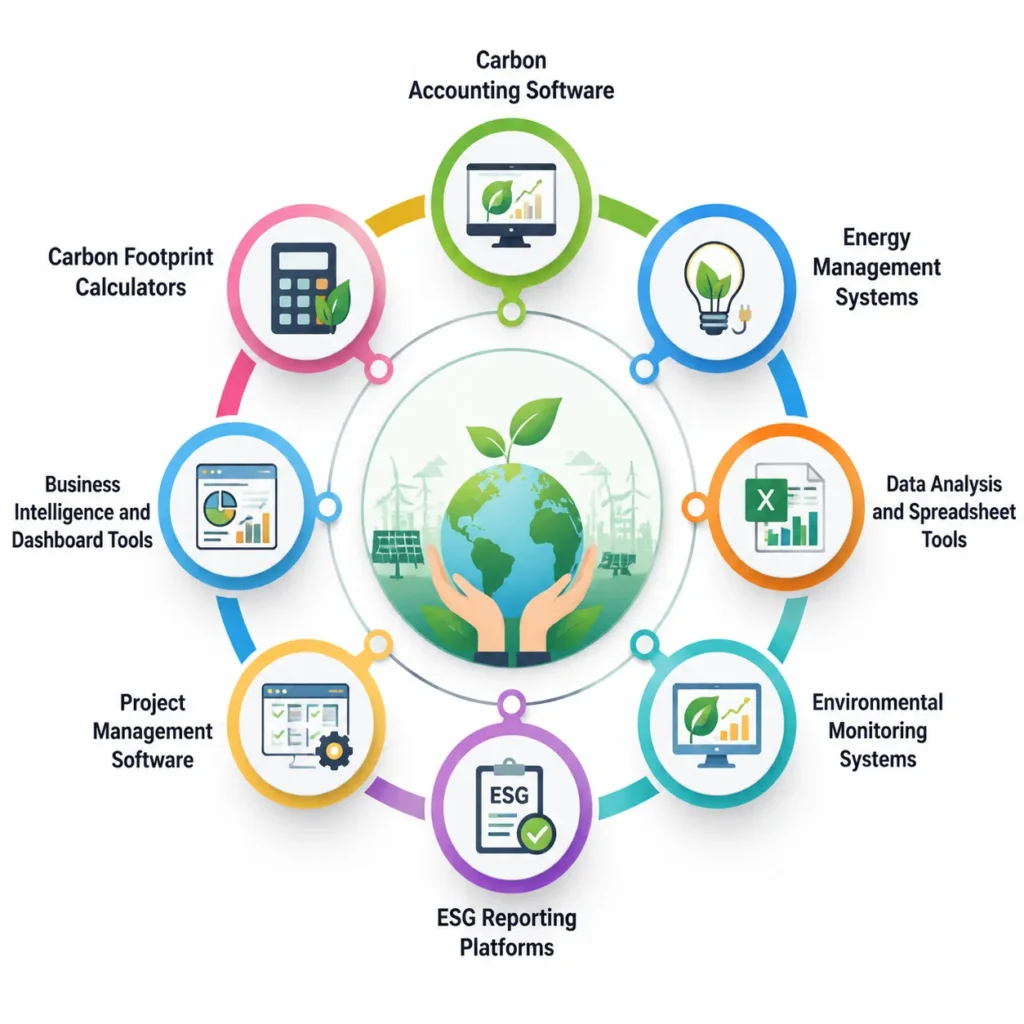
Carbon Managers use a variety of software and digital tools to measure, monitor, analyze, and report greenhouse gas (GHG) emissions. These tools help organizations track their carbon footprint, identify opportunities for emissions reduction, and prepare accurate sustainability reports.
Carbon Accounting Software
Carbon accounting software collects and calculates emissions data from different business activities, making it easier to monitor carbon performance and generate reports.
Common features include:
- Greenhouse gas emissions calculations
- Scope 1, Scope 2, and Scope 3 tracking
- Carbon footprint reporting
- Data dashboards
- ESG reporting support
- Performance monitoring
Energy Management Systems
Energy management tools monitor electricity, gas, fuel, and water consumption. They help organizations identify areas where energy can be used more efficiently, reducing both costs and carbon emissions.
Typical functions include:
- Energy usage monitoring
- Utility consumption analysis
- Energy efficiency reporting
- Performance benchmarking
Data Analysis and Spreadsheet Tools
Many Carbon Managers use spreadsheet and data analysis software to organize emissions data, perform calculations, create charts, and prepare reports.
These tools are useful for:
- Data collection
- Emissions calculations
- Trend analysis
- Performance tracking
- Report preparation
Environmental Monitoring Systems
Environmental monitoring tools collect real-time information on energy use, air quality, fuel consumption, and industrial processes. This data helps organizations improve environmental performance and identify opportunities for carbon reduction.
ESG Reporting Platforms
ESG reporting platforms help organizations prepare sustainability reports by combining environmental, social, and governance data in one place. These platforms simplify reporting and improve transparency for investors, regulators, and other stakeholders.
Project Management Software
Carbon reduction initiatives often involve multiple departments and long-term projects. Project management tools help Carbon Managers plan activities, assign responsibilities, monitor progress, and ensure projects are completed on time.
These tools support:
- Task management
- Project scheduling
- Team collaboration
- Progress tracking
- Document sharing
Business Intelligence and Dashboard Tools
Business intelligence tools transform complex carbon data into easy-to-understand dashboards and visual reports. This allows management teams to monitor emissions performance and make informed decisions quickly.
Carbon Footprint Calculators
Carbon footprint calculators estimate greenhouse gas emissions from activities such as electricity consumption, transportation, fuel use, and waste generation. They provide a quick way to identify major emission sources and prioritize reduction efforts.
Features to Look for in a Carbon Management Tool
When selecting a carbon management tool, organizations should consider features such as:
- Accurate greenhouse gas calculations
- Scope 1, Scope 2, and Scope 3 emissions tracking
- Automated data collection
- Real-time dashboards
- Carbon footprint analysis
- ESG and sustainability reporting
- Regulatory compliance support
- Data security
- Easy integration with existing business systems
- User-friendly interface
Choosing the right tool depends on the organization’s size, industry, reporting requirements, and sustainability objectives.
Benefits of Using Carbon Management Tools
Using dedicated carbon management tools helps organizations:
- Measure emissions more accurately
- Save time through automation
- Improve data quality
- Identify carbon reduction opportunities
- Support regulatory compliance
- Enhance ESG reporting
- Monitor progress toward net zero goals
- Make informed sustainability decisions
By combining the right technology with effective carbon management practices, organizations can reduce their environmental impact while improving operational efficiency and supporting long-term sustainability.
Challenges Faced by Carbon Managers
Carbon Managers play a key role in helping organizations reduce greenhouse gas emissions and achieve sustainability goals. However, they often face several challenges when implementing carbon management strategies.
Collecting Accurate Data
One of the biggest challenges is gathering accurate emissions data from different departments, facilities, and suppliers. Incomplete or incorrect data can affect carbon calculations and reporting.
Managing Scope 3 Emissions
Scope 3 emissions come from the organization’s value chain, including suppliers, transportation, business travel, and product use. These emissions are often difficult to measure because they rely on information from external partners.
Keeping Up with Regulations
Environmental laws and carbon reporting requirements continue to change. Carbon Managers must stay informed about new regulations and ensure their organization remains compliant.
Balancing Sustainability and Business Goals
Reducing carbon emissions often requires investment in new technologies, equipment, or processes. Carbon Managers must find practical solutions that support sustainability while remaining cost-effective and aligned with business objectives.
Engaging Employees
Successful carbon management requires support from employees across the organization. Encouraging staff to adopt sustainable practices and participate in carbon reduction initiatives can be challenging.
Limited Resources
Some organizations have limited budgets, staff, or technology for sustainability projects. Carbon Managers must prioritize initiatives that deliver the greatest environmental and business benefits.
Meeting Net Zero Targets
Achieving net zero is a long-term commitment that requires continuous planning, monitoring, and improvement. Carbon Managers must regularly evaluate progress and adjust strategies to stay on track.
Adapting to New Technologies
Carbon management is evolving rapidly, with new software, reporting tools, and digital technologies becoming available. Staying updated and implementing these solutions requires continuous learning.
Conclusion
Carbon Managers help organizations reduce emissions, improve sustainability, and meet net zero goals. As environmental regulations grow, demand for this role is increasing across industries.
This career offers a chance to make a real impact while building a strong professional path. With skills in carbon accounting, reporting, and reduction strategies, you can support a more sustainable future.
As climate action becomes a global priority, Carbon Management will remain a valuable and growing career field.