
What is a CSR Manager? Career Guide, Roles, Skills, Responsibilities & Future Opportunities
A CSR Manager (Corporate Social Responsibility Manager) helps organizations create positive social, environmental, and ethical impacts while achieving business goals. They develop and manage CSR strategies, coordinate community projects, support sustainability initiatives, and ensure responsible business practices.
As companies focus more on sustainability, ESG (Environmental, Social, and Governance), and ethical operations, the demand for skilled CSR Managers is increasing. This guide explains the role, responsibilities, skills, qualifications, career path, and future opportunities for becoming a successful CSR Manager.
What is a CSR Manager?
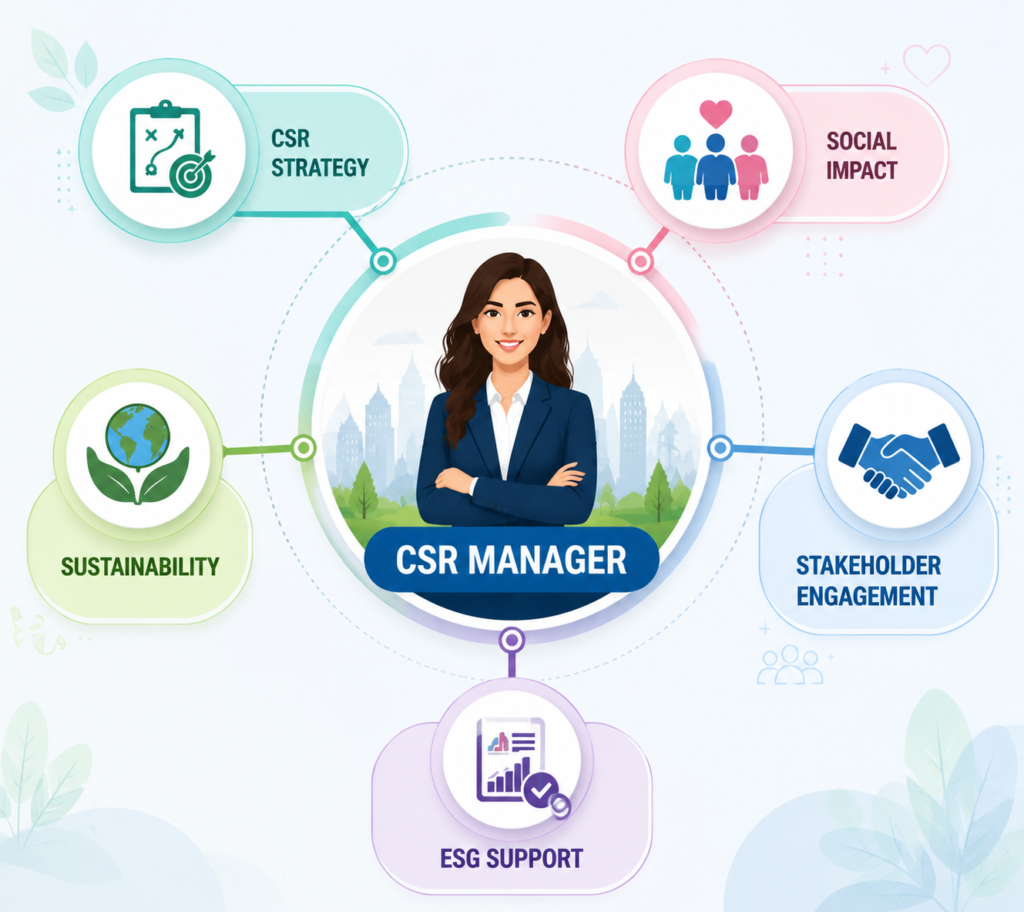
A CSR Manager (Corporate Social Responsibility Manager) is a professional who develops, manages, and improves an organisation’s social, environmental, and ethical responsibility programs. Their main role is to ensure that a company operates responsibly while creating positive impacts for employees, communities, customers, and the environment.
A CSR Manager works closely with different departments to design CSR strategies, manage community initiatives, support sustainability goals, and promote ethical business practices. They help organisations balance business growth with their responsibility towards society and the planet.
In modern businesses, a CSR Manager plays an important role in connecting corporate values with real-world actions. They may manage projects related to community development, employee volunteering, environmental protection, diversity and inclusion, ethical supply chains, and sustainability reporting.
The Role of CSR in Modern Business
CSR is no longer limited to charitable activities. Today, it is an important part of business strategy. Companies use CSR programs to improve their reputation, build customer trust, strengthen stakeholder relationships, and create long-term value.
A CSR Manager helps organisations align their social responsibility goals with broader frameworks such as:
- CSR (Corporate Social Responsibility): Focuses on voluntary actions that create positive social and environmental impact.
- ESG (Environmental, Social, and Governance): Provides measurable standards for evaluating a company’s responsible performance.
- Sustainability: Focuses on long-term practices that protect resources, support communities, and ensure future business resilience.
Why is a CSR Manager Important for Modern Businesses?
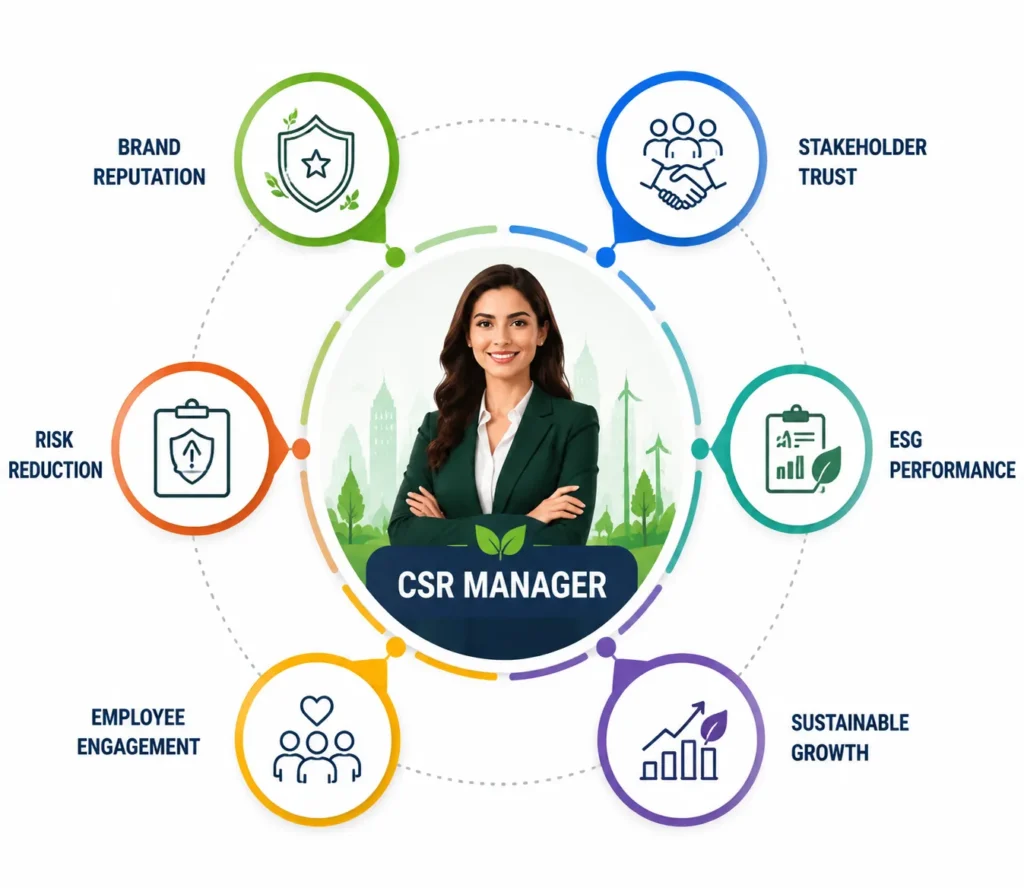
A CSR Manager has become an essential role in modern businesses because organisations are now expected to create value not only through profits but also through positive social, environmental, and ethical contributions. Customers, employees, investors, and communities increasingly prefer companies that demonstrate responsible and sustainable practices.
CSR Managers help businesses develop strategies that connect corporate goals with social responsibility. They ensure that company activities support community development, environmental protection, ethical operations, and stakeholder trust.
1. Builds a Positive Corporate Reputation
A CSR Manager helps organisations create and maintain a strong public image by developing meaningful social and environmental initiatives. Effective CSR programs improve customer confidence, strengthen brand loyalty, and show that the company is committed to making a positive difference.
2. Supports Sustainability and ESG Goals
Modern companies are focusing on sustainability and ESG (Environmental, Social, and Governance) performance. CSR Managers help businesses implement responsible practices, track progress, and support sustainability reporting requirements.
They contribute to areas such as:
- Reducing environmental impact
- Improving workplace responsibility
- Supporting ethical governance
- Promoting sustainable business practices
3. Improves Stakeholder Relationships
CSR Managers act as a bridge between businesses and their stakeholders, including employees, customers, communities, investors, and government organisations. They create engagement programs that build trust and encourage collaboration.
Strong stakeholder relationships help companies understand social expectations and respond effectively to community needs.
4. Attracts and Retains Employees
Employees increasingly want to work for organisations that have clear values and social responsibility commitments. CSR initiatives can improve employee engagement, workplace culture, and job satisfaction.
CSR Managers support programs related to:
- Employee volunteering
- Diversity and inclusion
- Workplace wellbeing
- Community involvement
5. Reduces Business Risks
Responsible business practices help companies identify and manage social, environmental, and ethical risks. CSR Managers help organisations prevent issues related to:
- Poor community relationships
- Environmental damage
- Unethical supply chains
- Reputation loss
By addressing these risks early, businesses can improve resilience and long-term stability.
6. Creates Competitive Advantage
Companies with strong CSR strategies can differentiate themselves in competitive markets. A well-managed CSR approach can attract customers, investors, and business partners who value responsible practices.
7. Supports Long-Term Business Growth
CSR Managers help organisations integrate responsibility into their business strategy. By balancing financial performance with social and environmental goals, companies can achieve sustainable growth and create long-term value.
CSR Manager Roles and Responsibilities
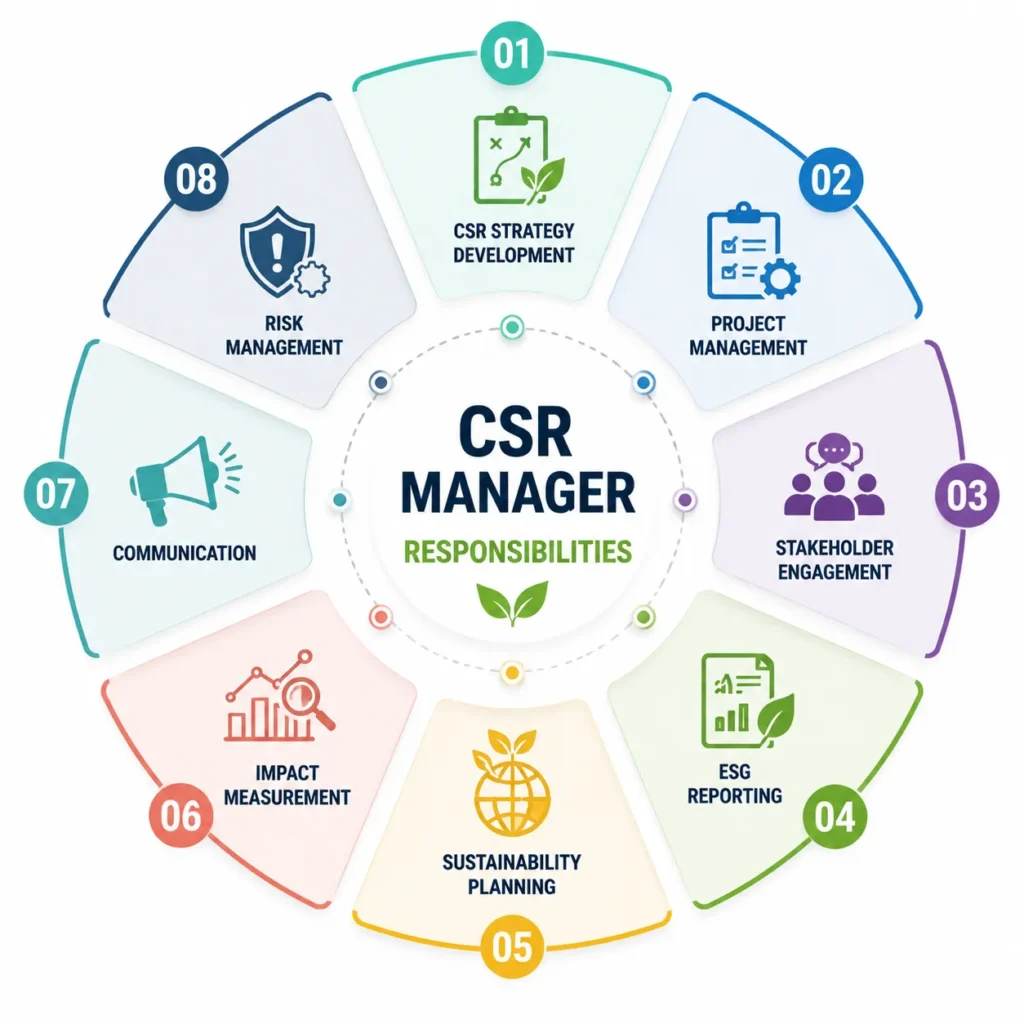
A CSR Manager (Corporate Social Responsibility Manager) is responsible for developing, implementing, and managing initiatives that improve a company’s social, environmental, and ethical performance. They ensure that business activities align with responsible practices while creating value for communities, employees, stakeholders, and the organisation.
The role of a CSR Manager combines strategy development, project management, stakeholder engagement, sustainability planning, and impact measurement to help businesses achieve their CSR and sustainability goals.
1. Developing CSR Strategies and Policies
One of the primary responsibilities of a CSR Manager is creating effective CSR strategies that align with the company’s mission, values, and business objectives.
Key activities include:
- Identifying social and environmental priorities
- Developing CSR policies and action plans
- Setting short-term and long-term responsibility goals
- Aligning CSR initiatives with ESG and sustainability objectives
- Ensuring CSR activities support business strategy
2. Managing CSR Projects and Initiatives
CSR Managers plan and oversee projects that create positive social and environmental impacts.
Examples of CSR initiatives include:
- Community development programs
- Education and skill development projects
- Environmental conservation activities
- Employee volunteering programs
- Charity and social impact campaigns
- Diversity and inclusion initiatives
They manage project timelines, budgets, resources, and outcomes to ensure successful delivery.
3. Stakeholder Engagement and Communication
A CSR Manager builds strong relationships with internal and external stakeholders, including:
- Employees
- Local communities
- Non-governmental organisations (NGOs)
- Customers
- Investors
- Government bodies
- Business partners
They collect stakeholder feedback, understand community needs, and communicate CSR achievements through reports, presentations, and campaigns.
4. Supporting ESG and Sustainability Goals
CSR Managers play an important role in helping organisations improve their ESG performance. They support initiatives related to:
- Environmental responsibility
- Social impact improvement
- Ethical governance practices
- Sustainable business operations
They may also assist with sustainability reports, ESG disclosures, and corporate responsibility assessments.
5. Measuring CSR Performance and Social Impact
A CSR Manager tracks and evaluates the effectiveness of CSR programs. They use key performance indicators (KPIs) to measure outcomes such as:
- Community benefits created
- Employee participation rates
- Environmental improvements
- Social investment outcomes
- Sustainability progress
Impact measurement helps companies understand whether their CSR initiatives are achieving their goals.
6. Managing CSR Reporting and Documentation
CSR Managers prepare reports and documents to demonstrate organisational responsibility and transparency.
Their responsibilities may include:
- Preparing CSR reports
- Collecting sustainability data
- Documenting community initiatives
- Supporting ESG reporting processes
- Communicating CSR achievements to stakeholders
7. Promoting Ethical Business Practices
CSR Managers encourage responsible decision-making across the organisation. They help businesses address ethical issues related to:
- Supply chain responsibility
- Fair workplace practices
- Human rights considerations
- Environmental protection
- Corporate governance
8. Collaborating with Internal Departments
CSR Managers work with different teams to integrate responsibility into everyday business operations.
They collaborate with:
- Human Resources for employee engagement programs
- Marketing teams for CSR communication
- Operations teams for sustainable practices
- Procurement teams for ethical sourcing
- Leadership teams for strategic planning
9. Managing CSR Budgets and Resources
CSR Managers are responsible for planning and managing financial resources allocated for CSR activities.
They ensure:
- Effective use of CSR funds
- Cost-efficient project implementation
- Proper resource allocation
- Financial transparency
10. Keeping Updated with CSR Trends and Regulations
CSR Managers continuously monitor changes in:
- Sustainability practices
- ESG expectations
- Social responsibility standards
- Environmental regulations
- Stakeholder expectations
This allows organisations to improve their CSR strategies and remain competitive.
A Day in the Life of a CSR Manager
A CSR Manager’s day involves planning, coordinating, monitoring, and improving corporate social responsibility activities that create positive impacts for society, the environment, and the organisation. Their work combines strategic planning, stakeholder communication, project management, reporting, and collaboration with different teams.
Unlike traditional administrative roles, a CSR Manager works across multiple areas of a business to ensure that responsible practices are integrated into daily operations.
Morning: Reviewing CSR Goals and Performance
A CSR Manager usually starts the day by reviewing ongoing CSR projects, sustainability updates, and performance data. They analyse whether current initiatives are meeting organisational goals and identify areas that require improvement.
Typical morning activities include:
- Reviewing CSR project progress reports
- Checking sustainability and ESG performance indicators
- Monitoring community project updates
- Responding to stakeholder feedback
- Prioritising tasks and meetings for the day
Midday: Managing Projects and Collaborating with Teams
During the day, CSR Managers spend time coordinating CSR initiatives with internal teams and external partners. They ensure that projects are delivered effectively, within budget, and according to planned objectives.
Activities may include:
- Meeting with project teams to discuss progress
- Coordinating community development programs
- Working with NGOs and social organisations
- Collaborating with HR on employee volunteering activities
- Supporting sustainability improvement projects
For example, a CSR Manager may coordinate a company-wide environmental campaign, employee volunteering event, or community education programme.
Afternoon: Stakeholder Engagement and Communication
A major part of a CSR Manager’s role is building relationships with stakeholders. They communicate with people inside and outside the organisation to understand expectations and share CSR achievements.
They may:
- Meet with community representatives
- Discuss partnerships with NGOs
- Present CSR updates to company leadership
- Prepare communication materials
- Collect feedback from employees and customers
Effective communication helps build trust and ensures that CSR activities create meaningful impact.
End of the Day: Reporting and Strategic Planning
Before completing the day, CSR Managers often focus on documentation, analysis, and future planning.
Their responsibilities may include:
- Preparing CSR progress reports
- Updating sustainability records
- Measuring project outcomes
- Reviewing CSR budgets
- Planning upcoming initiatives
- Identifying opportunities for improvement
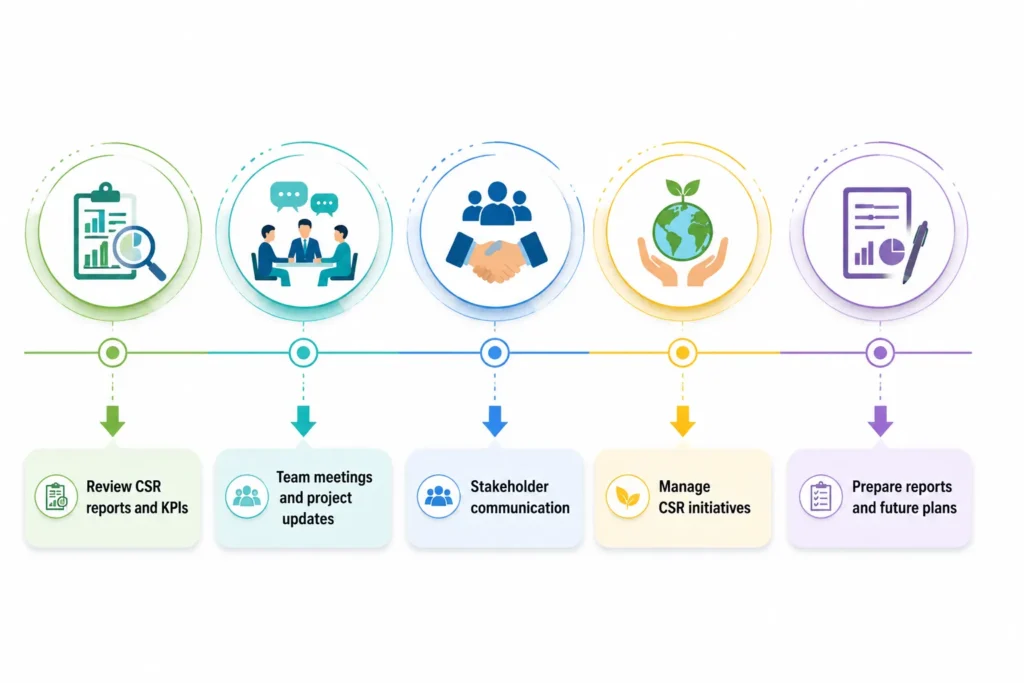
Key Activities in a CSR Manager’s Daily Routine
| Time | Typical Activities |
|---|---|
| Morning | Review CSR performance, reports, and project updates |
| Midday | Manage projects and coordinate with teams |
| Afternoon | Engage with stakeholders and partners |
| Evening | Prepare reports and plan future CSR activities |
Example of a CSR Manager’s Weekly Activities
A CSR Manager may work on:
- Monday: Reviewing CSR strategy and project performance
- Tuesday: Meeting community partners and NGOs
- Wednesday: Supporting sustainability initiatives
- Thursday: Preparing CSR reports and presentations
- Friday: Evaluating impact and planning future programs
Key Skills Required to Become a CSR Manager
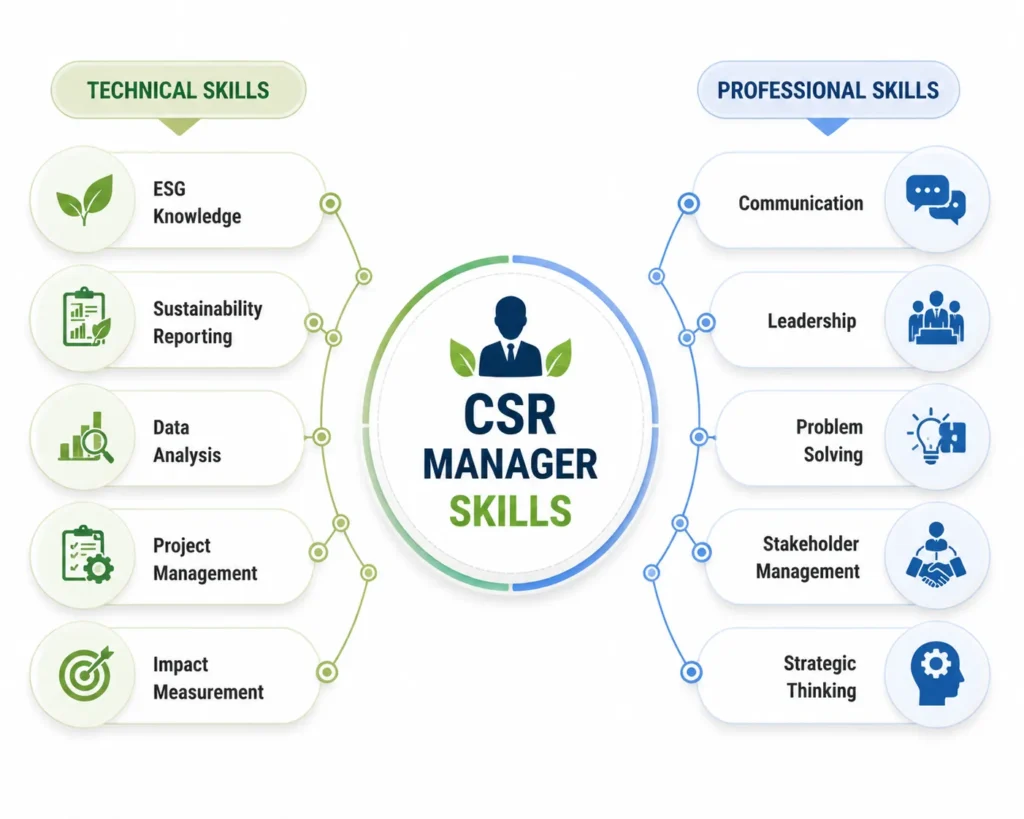
A CSR Manager needs a combination of business knowledge, communication skills, and sustainability understanding to manage social responsibility programs effectively. The following skills help professionals succeed in this role:
1. Communication Skills
CSR Managers must communicate clearly with employees, communities, NGOs, business leaders, and other stakeholders. Good communication helps build trust and support for CSR initiatives.
2. Leadership Skills
They need leadership skills to guide teams, manage projects, and motivate people to achieve CSR goals.
3. Project Management Skills
CSR Managers plan and manage different projects. They should know how to organise tasks, manage budgets, set timelines, and monitor project progress.
4. Sustainability Knowledge
Understanding sustainability, environmental issues, ESG, and responsible business practices helps CSR Managers create effective CSR strategies.
5. Stakeholder Management Skills
CSR Managers work with many groups, including communities, customers, employees, and partners. They need skills to build positive relationships and handle different expectations.
6. Problem-Solving Skills
They must identify social, environmental, and business challenges and develop practical solutions.
7. Strategic Thinking
CSR Managers need to connect CSR activities with business goals and create plans that support long-term organisational success.
8. Data Analysis and Reporting Skills
They should be able to collect data, measure CSR performance, track impact, and prepare reports for management and stakeholders.
9. Teamwork and Collaboration
CSR projects often involve multiple departments. The ability to work with different teams is essential for successful implementation.
10. Ethical Awareness
A CSR Manager should understand ethical business practices and promote responsible decisions within the organisation.
Educational Requirements and Qualifications for a CSR Manager
Becoming a CSR Manager usually requires a combination of education, professional knowledge, and practical experience in areas such as business management, sustainability, social responsibility, environmental studies, or related fields.
There is no single qualification pathway to become a CSR Manager, but a strong educational background helps professionals develop the skills needed to manage CSR strategies and social impact programs.
1. Bachelor’s Degree
Most CSR Managers begin their careers with a bachelor’s degree in a relevant field, such as:
- Business Management
- Sustainability Management
- Environmental Management
- Corporate Governance
- Social Sciences
- International Development
- Public Relations
- Marketing
- Human Resource Management
A degree helps develop knowledge of business operations, social issues, communication, and organisational strategy.
2. Master’s Degree (Optional but Beneficial)
A postgraduate qualification can improve career opportunities, especially for senior CSR roles. Relevant areas include:
- Sustainability Management
- Environmental Management
- Corporate Social Responsibility
- Business Administration
- Sustainable Development
- ESG Management
A master’s degree helps professionals understand advanced CSR strategies, sustainability reporting, and responsible business leadership.
3. Professional Certifications and Training
Professional certifications can strengthen a CSR Manager’s knowledge and demonstrate expertise in sustainability and responsible business practices.
Useful training areas include:
- Corporate Social Responsibility Management
- ESG Principles and Reporting
- Sustainability Management
- Environmental Management Systems
- Social Impact Assessment
- Sustainable Business Strategy
4. Knowledge of CSR and Sustainability Frameworks
CSR Managers should understand important concepts and frameworks, including:
- ESG (Environmental, Social, and Governance)
- Sustainability reporting principles
- Stakeholder engagement practices
- Ethical business standards
- Social impact measurement
This knowledge helps them design effective CSR programs and measure organisational performance.
5. Work Experience Requirements
Many CSR Managers develop their careers through experience in related roles such as:
- CSR Coordinator
- Sustainability Assistant
- Community Engagement Officer
- Environmental Officer
- ESG Analyst
- Project Coordinator
- Social Impact Specialist
Practical experience helps professionals understand project management, stakeholder relationships, and organisational operations.
6. Additional Skills That Support Career Growth
Along with qualifications, successful CSR Managers benefit from skills in:
- Communication and presentation
- Project management
- Data analysis
- Report writing
- Leadership
- Strategic planning
- Stakeholder management
How to Become a CSR Manager: Step-by-Step Career Path
Becoming a CSR Manager requires a combination of education, practical experience, sustainability knowledge, and strong communication skills. Professionals usually progress through different roles while developing expertise in corporate responsibility, stakeholder management, and sustainability practices.
Step 1: Gain Relevant Education
The first step is to build a strong educational foundation in areas related to business, sustainability, or social responsibility.
Relevant study areas include:
- Business Management
- Sustainability Management
- Environmental Management
- Corporate Governance
- Social Sciences
- Public Relations
- International Development
A strong academic background helps you understand business operations, social issues, and responsible decision-making.
Step 2: Develop Knowledge of CSR and Sustainability
Learn the key concepts that shape modern CSR practices, including:
- Corporate Social Responsibility principles
- ESG (Environmental, Social, and Governance)
- Sustainability strategies
- Ethical business practices
- Social impact measurement
- Community development
Understanding these areas helps you design and manage effective CSR initiatives.
Step 3: Gain Entry-Level Experience
Start your career by working in roles that provide exposure to CSR-related activities.
Common entry-level positions include:
- CSR Assistant
- Sustainability Assistant
- Community Engagement Officer
- ESG Analyst
- Project Coordinator
- Environmental Officer
These roles help you develop practical skills in project coordination, reporting, and stakeholder communication.
Step 4: Develop Essential CSR Skills
Build the professional skills required to manage CSR programs successfully.
Focus on improving:
- Communication skills
- Leadership abilities
- Project management
- Data analysis
- Report writing
- Stakeholder engagement
- Strategic planning
These skills are essential for managing CSR projects and working with different stakeholders.
Step 5: Participate in CSR Projects
Practical experience is important for career growth. Get involved in projects such as:
- Community development programs
- Environmental initiatives
- Employee volunteering campaigns
- Sustainability improvement projects
- Social impact programs
Managing real projects helps you understand how CSR strategies are implemented in organisations.
Step 6: Earn Professional Certifications
Professional training can improve your knowledge and career opportunities.
Consider certifications in:
- CSR Management
- Sustainability Management
- ESG Reporting
- Environmental Management
- Social Impact Assessment
Certifications demonstrate your commitment to responsible business practices.
Step 7: Progress into CSR Specialist or Coordinator Roles
After gaining experience, professionals can move into intermediate positions such as:
- CSR Specialist
- CSR Coordinator
- Sustainability Specialist
- ESG Consultant
These roles involve greater responsibility for planning, reporting, and managing CSR activities.
Step 8: Become a CSR Manager
With sufficient experience and skills, professionals can progress into a CSR Manager position.
A CSR Manager typically:
- Develops CSR strategies
- Leads CSR projects
- Manages stakeholder relationships
- Measures social impact
- Supports ESG goals
- Reports CSR performance to leadership teams
Step 9: Advance into Senior Leadership Roles
Experienced CSR Managers can progress into higher-level positions such as:
- Senior CSR Manager
- Head of CSR
- Sustainability Director
- ESG Manager
- Chief Sustainability Officer
These roles involve strategic decision-making and organisation-wide sustainability leadership.
CSR Career Pathway
Student / Graduate
↓
CSR Assistant / Sustainability Assistant
↓
CSR Coordinator / ESG Analyst
↓
CSR Specialist
↓
CSR Manager
↓
Senior CSR Manager
↓
Head of CSR / Sustainability Director
↓
Chief Sustainability Officer
Industries Hiring CSR Managers
CSR Managers are needed across many industries because organisations are focusing more on responsible business practices, sustainability, and social impact.
Major Industries Hiring CSR Professionals
1. Technology Companies
Technology companies hire CSR Managers to manage digital responsibility, community programs, ethical technology use, and sustainability initiatives.
2. Banking and Financial Services
Banks use CSR professionals to manage social investment programs, financial inclusion projects, and responsible investment strategies.
3. Manufacturing Industry
Manufacturing companies need CSR Managers to support ethical production, employee welfare, environmental protection, and sustainable supply chains.
4. Energy and Utilities
CSR Managers in the energy sector focus on community engagement, environmental initiatives, and responsible resource management.
5. Construction and Infrastructure
They manage community relationships, environmental responsibility, and sustainable construction practices.
6. Healthcare Industry
Healthcare organisations use CSR professionals to manage public health programs, community support initiatives, and ethical practices.
7. Retail and Consumer Brands
CSR Managers help companies improve ethical sourcing, responsible production, and customer-focused sustainability programs.
8. Food and Agriculture
They support sustainable farming, responsible supply chains, and community development projects.
9. NGOs and Social Organisations
CSR professionals manage partnerships between businesses and social organisations.
10. Government and Public Sector Organisations
They support social development programs, sustainability initiatives, and community engagement projects.
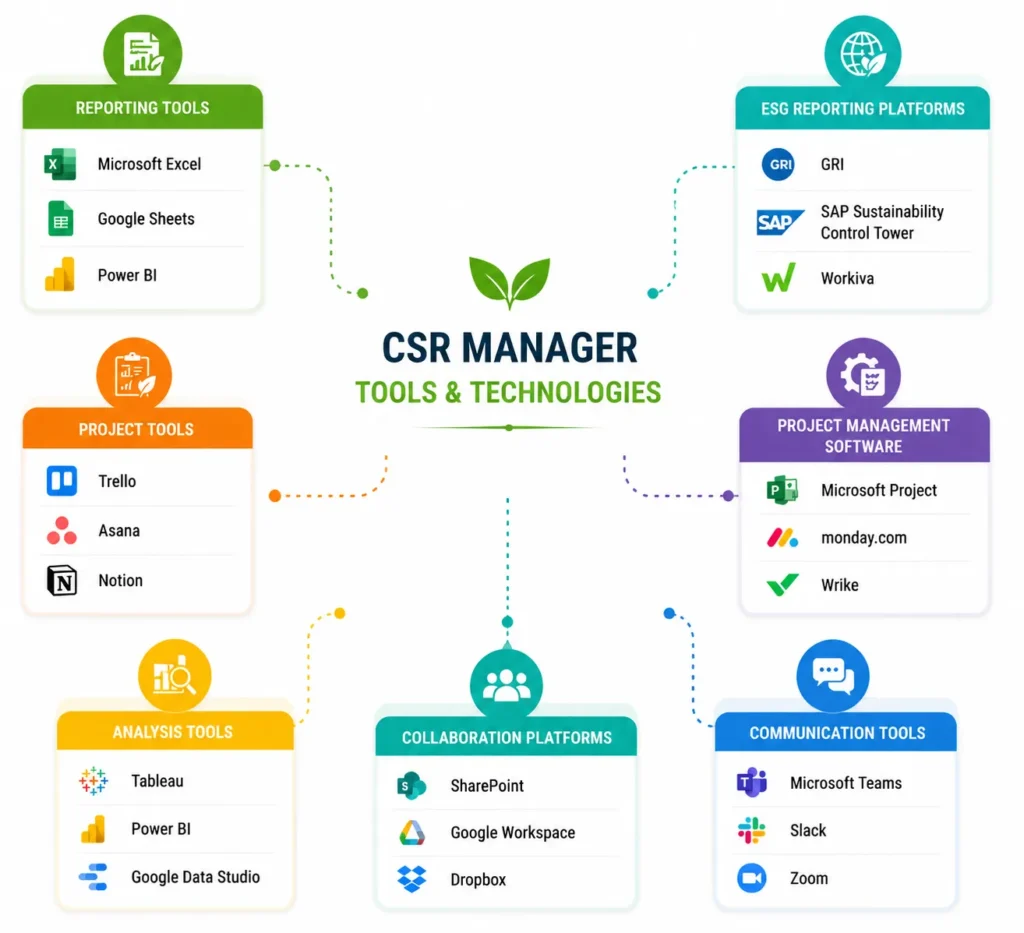
CSR Manager Tools and Technologies
Modern CSR Managers use different tools to plan, manage, measure, and report social responsibility activities.
1. ESG Reporting Platforms
Used for collecting and managing sustainability data, preparing reports, and tracking ESG performance.
Examples of activities:
- Sustainability reporting
- ESG data management
- Compliance tracking
2. Project Management Tools
Help CSR Managers organise projects, manage deadlines, and coordinate teams.
Common uses:
- Project planning
- Task management
- Team collaboration
3. Data Analysis Tools
Used to measure CSR performance and evaluate social impact.
Examples:
- Data dashboards
- Performance analysis
- Impact measurement
4. Sustainability Management Software
Helps organisations track:
- Carbon emissions
- Environmental performance
- Social initiatives
- Sustainability targets
5. Communication and Collaboration Platforms
Used for:
- Stakeholder communication
- Team meetings
- Project coordination
- Reporting updates
6. Survey and Feedback Tools
Help CSR Managers collect opinions from:
- Employees
- Customers
- Communities
- Stakeholders
CSR Manager KPIs and Success Metrics
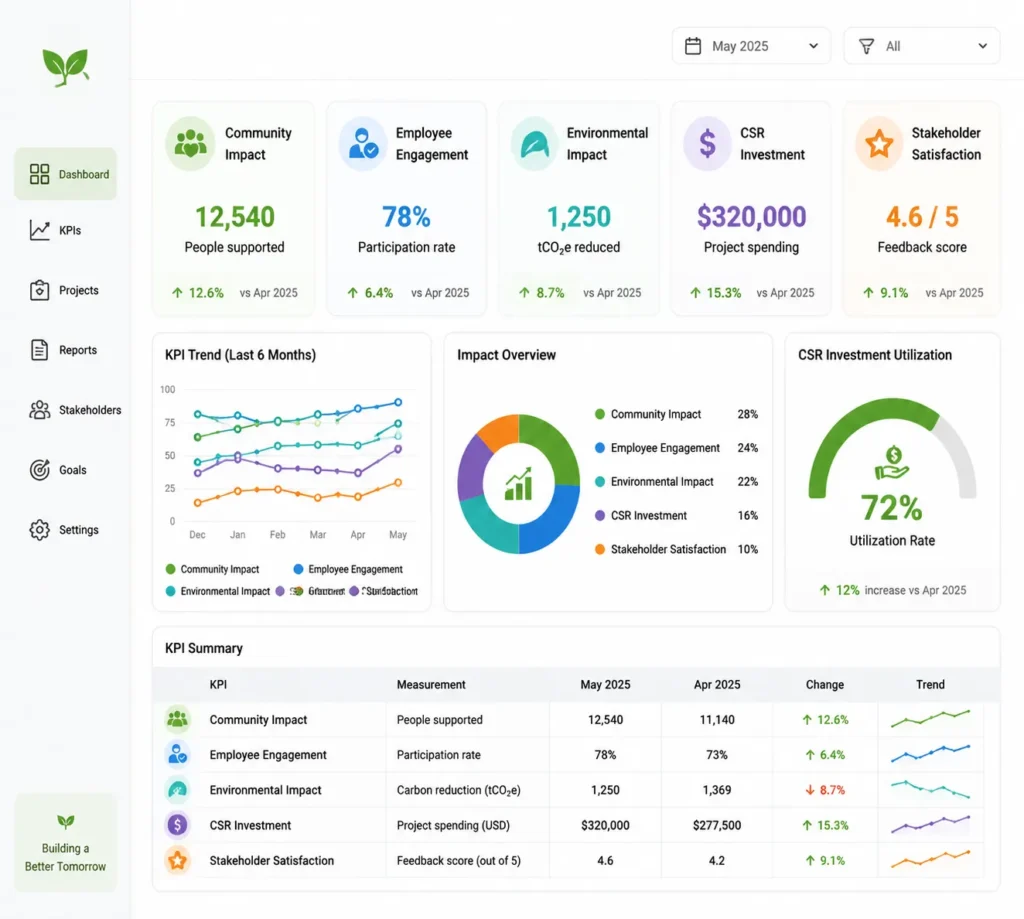
A CSR Manager uses Key Performance Indicators (KPIs) to measure the success of corporate social responsibility initiatives and track their social, environmental, and business impact.
| KPI Area | Measurement |
|---|---|
| Community Impact | People supported, communities reached, social projects completed |
| Employee Engagement | Employee participation rate, volunteer involvement, satisfaction levels |
| Environmental Impact | Carbon reduction, waste reduction, energy efficiency improvements |
| CSR Investment | Budget allocation, project spending, return on social investment |
| Stakeholder Satisfaction | Feedback scores, stakeholder trust, relationship quality |
| CSR Project Performance | Project completion rate, goals achieved, impact results |
| ESG Performance | Sustainability targets achieved, ESG reporting progress |
Difference Between CSR Manager and Sustainability Manager
Although CSR Managers and Sustainability Managers both focus on responsible business practices, their main areas of focus are different.
| Area | CSR Manager | Sustainability Manager |
|---|---|---|
| Main Focus | Social responsibility and community impact | Environmental and long-term sustainability strategies |
| Primary Goal | Create positive social and ethical impact | Improve sustainable business operations |
| Key Activities | Community programs, employee engagement, social initiatives | Carbon reduction, resource efficiency, sustainability planning |
| Stakeholders | Communities, employees, NGOs, customers | Operations teams, environmental teams, regulators |
| Reporting Focus | CSR reports and social impact results | Sustainability reports and ESG performance |
| Skills Required | Communication, social impact, stakeholder management | Environmental knowledge, data analysis, sustainability strategy |
Difference Between CSR and ESG
| Comparison Area | CSR (Corporate Social Responsibility) | ESG (Environmental, Social, and Governance) |
|---|---|---|
| Main Focus | Focuses on a company’s social and ethical responsibilities | Focuses on measuring a company’s environmental, social, and governance performance |
| Purpose | Create positive impact through responsible actions and community initiatives | Evaluate business performance based on sustainability and responsible practices |
| Approach | Often based on voluntary programs and company values | Uses structured frameworks, metrics, and reporting standards |
| Key Areas | Community support, employee wellbeing, charity programs, ethical practices | Environmental impact, social responsibility, governance, risk management |
| Measurement | Measures social impact and community benefits | Uses data, indicators, and performance metrics to assess sustainability |
| Business Role | Supports company reputation and stakeholder relationships | Helps investors, leaders, and stakeholders evaluate business performance |
| Examples | Employee volunteering, education programs, donations, community development | Carbon reporting, ESG ratings, diversity metrics, corporate governance reviews |
| Reporting Focus | CSR reports highlight company initiatives and social contributions | ESG reports provide measurable sustainability and governance performance data |
CSR Manager Salary Range
CSR Manager salaries vary depending on location, industry, organisation size, qualifications, and professional expertise. The following table shows the general salary progression for CSR professionals.
| Career Level | Job Role | Estimated Salary Range (Annual) |
|---|---|---|
| Entry Level | CSR Assistant / CSR Coordinator | $35,000 – $55,000 |
| Junior Level | CSR Specialist / Sustainability Associate | $50,000 – $75,000 |
| Mid Level | CSR Manager | $70,000 – $110,000 |
| Senior Level | Senior CSR Manager / Head of CSR | $100,000 – $150,000 |
| Executive Level | Sustainability Director / Chief Sustainability Officer | $150,000+ |
CSR Career Growth Opportunities
CSR Managers have strong opportunities for career advancement as organisations continue to prioritise sustainability and ethical practices.
A typical career progression includes:
CSR Assistant
↓
CSR Coordinator
↓
CSR Specialist
↓
CSR Manager
↓
Senior CSR Manager
↓
Head of CSR / Sustainability Director
↓
Chief Sustainability Officer
Future Career Opportunities
CSR professionals can move into related roles such as:
- ESG Manager
- Sustainability Consultant
- Social Impact Manager
- Corporate Responsibility Director
- Sustainability Strategy Manager
- Environmental, Social and Governance Advisor
As businesses integrate CSR and ESG into their core strategies, skilled professionals with sustainability knowledge are expected to have increasing career opportunities.
Challenges Faced by CSR Managers
Although CSR management is a rewarding career, professionals also face several challenges while developing and implementing responsible business initiatives.
1. Balancing Business Goals with Social Impact
CSR Managers must find a balance between achieving business objectives and creating positive social and environmental outcomes. They need to design initiatives that provide value for both the company and society.
2. Measuring CSR Impact
Unlike financial results, social impact can be difficult to measure. CSR Managers need effective methods to evaluate outcomes and demonstrate the value of CSR programs.
Challenges include:
- Measuring community benefits
- Tracking long-term impact
- Collecting reliable data
3. Managing Stakeholder Expectations
CSR Managers work with different groups that may have different priorities, including:
- Employees
- Customers
- Communities
- Investors
- Government organisations
Managing these expectations requires strong communication and negotiation skills.
4. Securing Resources and Budget
CSR projects require financial and organisational support. CSR Managers may need to justify investments and demonstrate how initiatives contribute to business value.
5. Avoiding Greenwashing Risks
Companies must ensure that CSR claims are genuine and supported by real actions. CSR Managers help organisations maintain transparency and avoid misleading sustainability statements.
6. Keeping Up with Changing Standards
CSR and sustainability practices continue to evolve. CSR Managers must stay updated with:
- ESG expectations
- Sustainability reporting practices
- Environmental requirements
- Social responsibility trends
Future Trends in CSR Management
The role of CSR Managers is changing as businesses move towards more sustainable, transparent, and responsible operations. Future CSR professionals will play a greater role in shaping business strategies.
1. Increased Focus on ESG Integration
CSR is becoming more connected with ESG strategies. Companies are increasingly measuring environmental, social, and governance performance to improve accountability and transparency.
2. Use of Artificial Intelligence and Data Analytics
Technology will help CSR Managers analyse data, measure impact, and improve decision-making.
Future applications include:
- AI-powered sustainability reporting
- Automated impact analysis
- Data-driven CSR planning
- Predictive risk assessment
3. Greater Focus on Climate Responsibility
CSR Managers will increasingly support organisations in addressing environmental challenges through:
- Carbon reduction initiatives
- Sustainable resource management
- Climate action programs
- Environmental awareness campaigns
4. Growth of Social Impact Measurement
Companies will focus more on proving the real impact of their CSR activities. CSR Managers will use advanced measurement methods to evaluate social outcomes.
5. Stronger Ethical Supply Chain Management
Businesses will need greater transparency in their supply chains. CSR Managers will support:
- Responsible sourcing
- Fair labour practices
- Supplier sustainability assessments
6. Employee-Centred CSR Programs
Future CSR strategies will focus more on employees through:
- Workplace wellbeing programs
- Diversity and inclusion initiatives
- Employee volunteering
- Purpose-driven workplace culture
7. CSR Becoming Part of Business Strategy
CSR is moving from a separate department activity to a core business function. Future CSR Managers will work closely with senior leaders to integrate responsibility into decision-making.
Conclusion
A CSR Manager plays an important role in helping businesses create positive social, environmental, and ethical impacts. They manage CSR projects, support sustainability goals, build stakeholder relationships, and ensure responsible business practices.
With growing focus on ESG, sustainability, and responsible business growth, CSR management offers excellent career opportunities. By developing the right skills, gaining experience, and understanding sustainability practices, professionals can build a successful career as a CSR Manager and contribute to a better future.