
What Is a Sustainability Manager? Complete Career Guide 2026
The demand for sustainability professionals is increasing as organisations worldwide focus on reducing environmental impacts, achieving ESG goals, and adopting responsible business practices. A Sustainability Manager plays a key role in helping organisations develop sustainability strategies, improve environmental performance, manage resources efficiently, and create long-term value.
As businesses face challenges such as climate change, resource shortages, and evolving environmental regulations, Sustainability Managers help implement practical solutions that support climate action, reduce risks, and promote sustainable growth. Their expertise enables organisations to balance business success with environmental and social responsibility.
What Is a Sustainability Manager?
A Sustainability Manager is a professional who helps organisations develop and implement strategies that reduce environmental impact, improve social responsibility, and support long-term business sustainability. They work to balance business growth with environmental protection and responsible practices.
Sustainability Managers are responsible for managing sustainability goals, improving resource efficiency, reducing carbon emissions, supporting ESG initiatives, and ensuring organisations meet environmental and social expectations.
Why Sustainability Managers Matter
Sustainability Managers help organisations respond to environmental challenges, meet sustainability goals, and build responsible business practices. Their role is becoming more important as companies face increasing pressure from governments, customers, and investors.
Key Reasons They Matter
- Climate Change Challenges – Help organisations reduce emissions and take action against climate change.
- ESG Requirements – Support businesses in improving Environmental, Social, and Governance performance.
- Customer Expectations – Help companies meet growing demand for sustainable and responsible products.
- Investor Pressure – Improve sustainability performance to attract investors and build trust.
- Regulatory Changes – Ensure organisations follow new environmental laws and sustainability requirements.
- Business Resilience – Help businesses reduce risks, improve efficiency, and prepare for future challenges.
Roles and Responsibilities of a Sustainability Manager
A Sustainability Manager is responsible for developing and managing strategies that help organisations improve their environmental and social performance. They work with different departments to reduce environmental impacts, meet sustainability targets, and support responsible business growth.
| Responsibility | Description |
|---|---|
| Sustainability Strategy | Develop sustainability goals, policies, and action plans. |
| ESG Reporting | Track, measure, and communicate sustainability performance. |
| Carbon Management | Monitor emissions and develop strategies to reduce greenhouse gases. |
| Resource Efficiency | Improve the use of energy, water, and materials. |
| Compliance | Support compliance with environmental laws, standards, and sustainability requirements. |
| Stakeholder Engagement | Work with employees, customers, investors, suppliers, and communities on sustainability goals. |
Additional Responsibilities
- Identify sustainability risks and improvement opportunities.
- Support renewable energy and waste reduction initiatives.
- Promote sustainable practices across the organisation.
- Monitor sustainability performance using key indicators.
- Provide training and awareness on sustainability practices.
- Stay updated with environmental trends and regulations.
Daily Tasks of a Sustainability Manager
A Sustainability Manager performs a variety of tasks to help organisations achieve their sustainability goals and improve environmental performance. Their daily activities involve monitoring progress, analysing data, managing sustainability projects, and working with teams to implement responsible practices.
Common Daily Tasks
- Reviewing Sustainability Data – Analyse environmental performance data, energy use, emissions, and resource consumption.
- Managing ESG Reports – Prepare and update sustainability reports for stakeholders and management.
- Conducting Sustainability Meetings – Collaborate with teams, suppliers, and stakeholders on sustainability initiatives.
- Monitoring Environmental Targets – Track progress against sustainability goals, carbon reduction targets, and performance indicators.
- Developing Improvement Strategies – Identify opportunities to reduce environmental impacts and improve sustainability performance.
- Supporting Compliance Activities – Ensure sustainability practices align with regulations and standards.
- Communicating Sustainability Goals – Promote awareness and encourage sustainable practices across the organisation.
Skills Every Sustainability Manager Needs
A successful Sustainability Manager requires a combination of technical knowledge and professional skills to develop sustainability strategies, manage environmental challenges, and work effectively with different stakeholders.
Technical Skills
- ESG Reporting – Track and communicate environmental, social, and governance performance.
- Carbon Accounting – Measure and manage greenhouse gas emissions.
- Sustainability Frameworks – Apply recognised sustainability principles and standards.
- Environmental Management – Manage environmental impacts and improvement initiatives.
- ISO 14001 – Understand Environmental Management Systems and compliance practices.
- Climate Risk Assessment – Identify and manage risks related to climate change.
- Data Analysis – Analyse sustainability data to support decision-making.
- Sustainability Reporting Standards – Prepare accurate sustainability and performance reports.
Soft Skills
- Leadership – Guide teams and drive sustainability initiatives.
- Communication – Explain sustainability goals clearly to different audiences.
- Strategic Thinking – Develop long-term sustainability plans.
- Problem-Solving – Find practical solutions to environmental challenges.
- Project Management – Plan and manage sustainability projects effectively.
- Stakeholder Management – Build relationships with employees, customers, investors, and partners.
Qualifications Required to Become a Sustainability Manager
Explain:
- Environmental Management qualifications
- Sustainability degrees
- Business management background
- Professional certifications
- ESG training
Naturally introduce:
OTHM Level 7 Diploma in Environmental Management and Sustainability
as a pathway for professionals who want advanced knowledge in sustainability leadership.
Sustainability Manager vs Environmental Manager
Although Sustainability Managers and Environmental Managers both support responsible business practices, their roles have different focuses. A Sustainability Manager mainly focuses on long-term sustainability strategies, ESG goals, and organisational improvement, while an Environmental Manager focuses more on environmental compliance, risk control, and environmental performance.
| Aspect | Sustainability Manager | Environmental Manager |
|---|---|---|
| Main Focus | Develops sustainability strategies and long-term goals | Ensures environmental protection and compliance |
| Scope | Covers environmental, social, and economic aspects | Mainly focuses on environmental impacts |
| Key Areas | ESG, sustainability reporting, climate strategy, responsible business practices | EMS, environmental audits, regulations, waste management, pollution control |
| Business Role | Strategic role focused on organisational sustainability direction | Operational role focused on environmental performance and compliance |
| Main Objective | Create long-term sustainable value for the organisation | Reduce environmental risks and ensure legal compliance |
| Common Tools | ESG frameworks, sustainability reports, carbon strategies | ISO 14001, environmental audits, risk assessments |
| Stakeholder Focus | Works with investors, customers, employees, and leadership teams | Works with regulators, operational teams, and environmental authorities |
Industries Hiring Sustainability Managers
Sustainability Managers are needed across many industries as organisations focus on reducing environmental impacts, improving ESG performance, and achieving long-term sustainability goals. Their expertise helps businesses create responsible strategies, improve efficiency, and meet changing environmental expectations.
| Industry | Why Sustainability Managers Are Needed |
|---|---|
| Construction | Develop sustainable building practices, reduce waste, and improve resource efficiency. |
| Energy | Support clean energy transition, emissions reduction, and sustainability strategies. |
| Manufacturing | Improve production efficiency, reduce waste, and manage environmental impacts. |
| Finance | Support ESG investments, sustainability reporting, and responsible business decisions. |
| Technology | Manage digital sustainability, energy use, and responsible innovation. |
| Healthcare | Reduce environmental impact while improving sustainable healthcare operations. |
| Retail | Improve sustainable supply chains, packaging, and responsible sourcing. |
| Government | Develop sustainability policies and support environmental programmes. |
| Transportation | Reduce emissions and promote sustainable transport solutions. |
| Hospitality | Improve energy efficiency, waste management, and sustainable tourism practices. |
| Oil and Gas | Manage environmental risks, emissions reduction, and sustainability improvements. |
| Renewable Energy | Support clean energy projects and environmental performance management. |
Sustainability Manager Salary
Sustainability Manager salaries vary depending on factors such as country, industry, professional experience, qualifications, and organisation size. Professionals with expertise in ESG, carbon management, sustainability reporting, and environmental strategy often have greater earning potential.
| Country | Average Annual Salary |
|---|---|
| United Kingdom (UK) | £45,000 – £80,000 |
| United States (USA) | $80,000 – $130,000 |
| Canada | CAD 70,000 – 120,000 |
| Australia | AUD 90,000 – 150,000 |
| United Arab Emirates (UAE) | AED 180,000 – 350,000 |
Career Path of a Sustainability Manager
A career in sustainability offers strong opportunities for growth as organisations increasingly focus on climate action, ESG goals, and responsible business practices. Professionals can progress from entry-level sustainability roles to senior leadership positions by gaining experience, developing technical skills, and obtaining relevant qualifications.
Sustainability Career Roadmap
Sustainability Assistant
↓
Supports sustainability activities, collects data, and assists with environmental projects.
Sustainability Coordinator
↓
Coordinates sustainability programmes, tracks performance, and supports reporting activities.
Sustainability Specialist
↓
Develops expertise in areas such as ESG, carbon management, sustainability reporting, or resource efficiency.
Sustainability Manager
↓
Leads sustainability strategies, manages projects, and helps organisations achieve sustainability targets.
Senior Sustainability Manager
↓
Oversees large-scale sustainability initiatives and guides teams across multiple departments.
Head of Sustainability
↓
Develops organisation-wide sustainability strategies and works with senior leadership.
Chief Sustainability Officer (CSO)
↓
Leads sustainability vision at executive level and integrates sustainability into overall business strategy.
Tools Used by Sustainability Managers
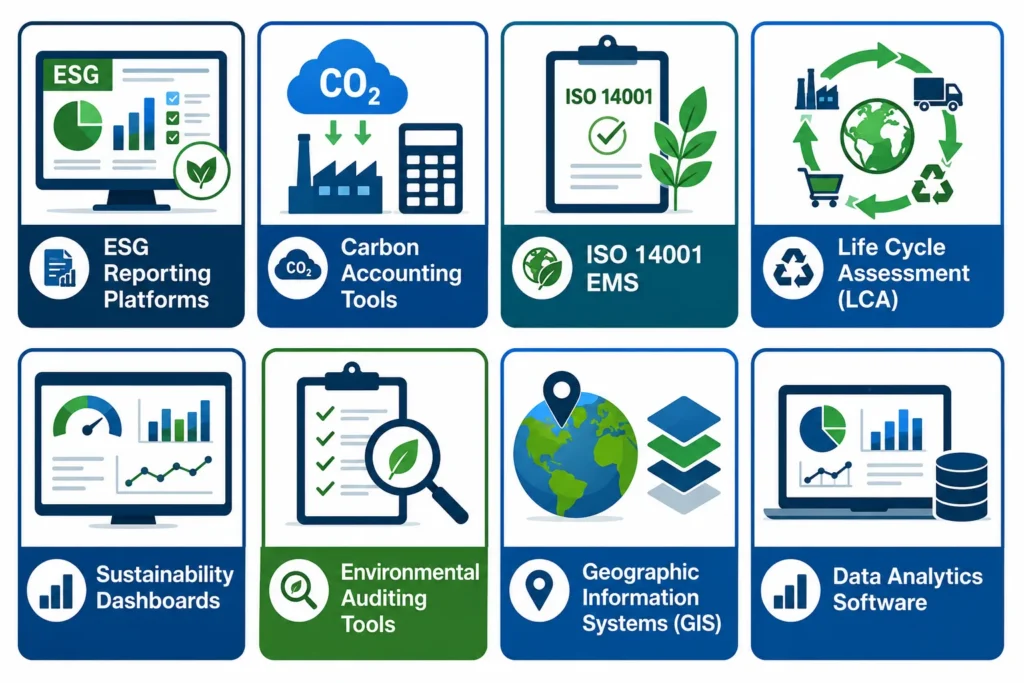
Sustainability Managers use various tools and frameworks to measure performance, manage environmental impacts, and support sustainability decision-making. These tools help organisations track progress, improve efficiency, and achieve sustainability goals.
| Tool | Purpose |
|---|---|
| ESG Reporting Platforms | Track and report Environmental, Social, and Governance performance. |
| Carbon Accounting Tools | Measure greenhouse gas emissions and manage carbon reduction targets. |
| ISO 14001 EMS | Provides a framework for managing environmental responsibilities and improving performance. |
| Life Cycle Assessment (LCA) | Evaluates the environmental impact of products and processes throughout their lifecycle. |
| Sustainability Dashboards | Monitor sustainability targets, key indicators, and performance data. |
| Environmental Auditing Tools | Assess compliance and identify opportunities for improvement. |
| Geographic Information Systems (GIS) | Analyse and visualise environmental data and location-based impacts. |
| Data Analytics Software | Analyse sustainability data to support better decision-making. |
Future of Sustainability Management Careers
The future of Sustainability Management is growing as organisations focus more on environmental responsibility, climate action, and sustainable business practices. Companies need skilled professionals who can help them achieve sustainability goals and respond to global challenges.
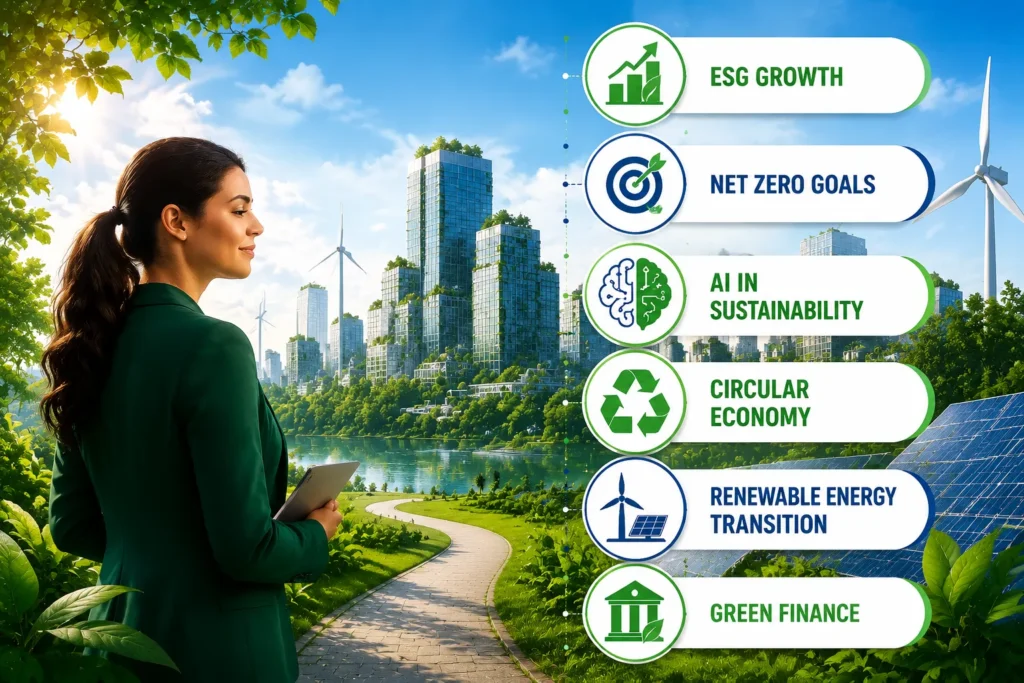
ESG Growth
More organisations are focusing on Environmental, Social, and Governance (ESG) performance. This is increasing the demand for professionals who can manage sustainability strategies, reporting, and responsible business practices.
Net Zero Goals
Companies worldwide are working towards reducing carbon emissions and achieving Net Zero targets. This creates more opportunities for sustainability professionals with skills in carbon management and emission reduction strategies.
AI in Sustainability
Artificial intelligence is helping organisations monitor environmental performance, analyse sustainability data, and improve decision-making. Sustainability Managers will increasingly use AI tools to develop smarter solutions.
Circular Economy
Businesses are adopting circular economy practices to reduce waste, reuse resources, and improve efficiency. Sustainability professionals help organisations create strategies that support resource conservation.
Renewable Energy Transition
The shift towards renewable energy is creating new sustainability roles in industries such as energy, construction, and technology. Sustainability Managers help organisations adopt cleaner energy solutions and reduce environmental impacts.
Green Finance
Investors are increasingly supporting sustainable businesses and projects. This creates a growing need for Sustainability Managers who can support ESG investments, sustainability reporting, and responsible financial decisions.
Challenges Sustainability Managers Face
Sustainability Managers play an important role in helping organisations achieve sustainability goals, but they often face complex challenges. Managing environmental targets, stakeholder expectations, and business priorities requires strong planning and problem-solving skills.
| Challenge | Description |
|---|---|
| Changing Regulations | Keeping up with new environmental laws, standards, and sustainability requirements. |
| Measuring Sustainability Performance | Tracking progress and measuring the impact of sustainability initiatives. |
| Reducing Emissions | Developing effective strategies to lower carbon emissions and achieve climate targets. |
| Stakeholder Expectations | Balancing the needs of customers, investors, employees, and communities. |
| Data Accuracy | Collecting reliable sustainability data for reporting and decision-making. |
| Budget Limitations | Implementing sustainability projects while managing financial constraints. |
| Supply Chain Sustainability | Ensuring suppliers follow responsible and sustainable practices |
How to Become a Sustainability Manager: Step-by-Step Guide
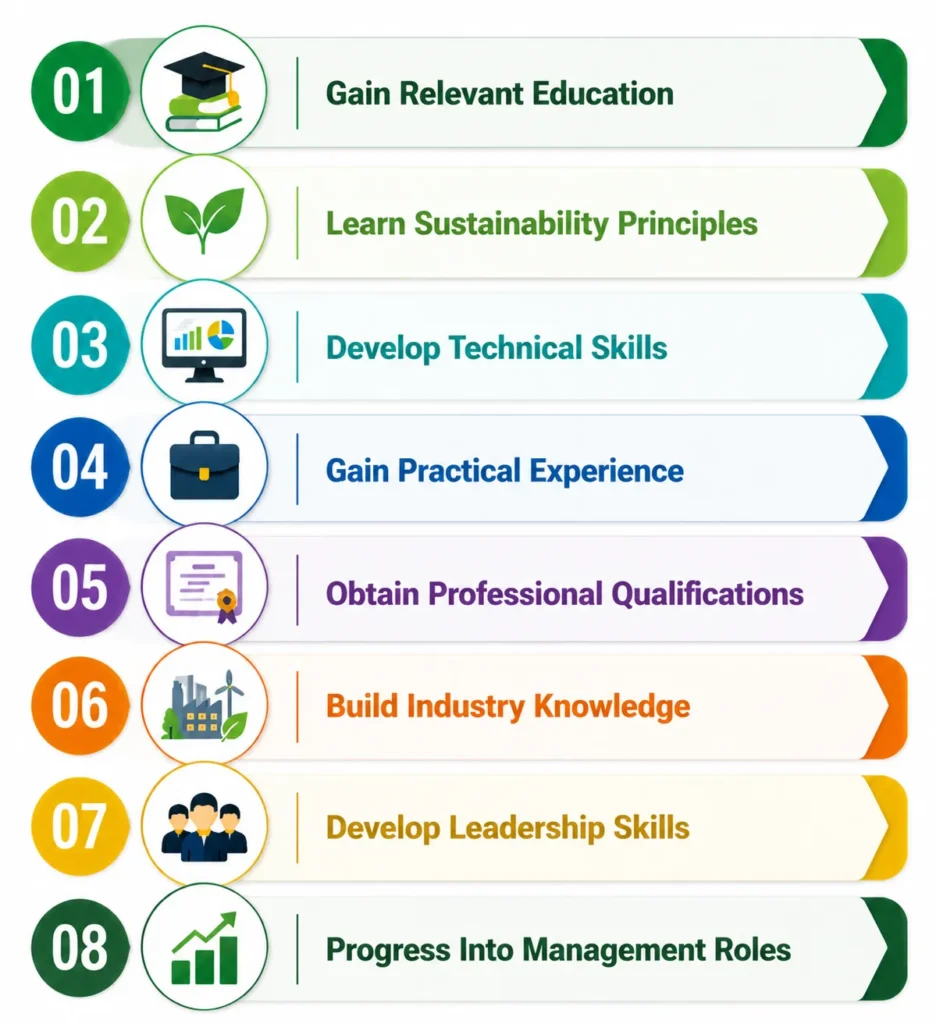
Becoming a Sustainability Manager requires a combination of education, practical experience, technical knowledge, and leadership skills. The following steps can help you build a successful career in sustainability management.
1. Gain Relevant Education
Start with a qualification in areas such as sustainability, environmental management, business, environmental science, or related fields to build a strong foundation.
2. Learn Sustainability Principles
Develop knowledge of key sustainability concepts, including ESG, climate action, resource efficiency, circular economy, and responsible business practices.
3. Develop Technical Skills
Build expertise in important areas such as ESG reporting, carbon accounting, environmental management systems, sustainability frameworks, and data analysis.
4. Gain Practical Experience
Work in entry-level roles such as sustainability assistant, environmental officer, or sustainability coordinator to gain real-world experience.
5. Obtain Professional Qualifications
Complete recognised sustainability, environmental management, or ESG qualifications to improve your knowledge and career opportunities.
6. Build Industry Knowledge
Gain experience in industries such as construction, energy, manufacturing, finance, healthcare, technology, or renewable energy to understand sector-specific sustainability challenges.
7. Develop Leadership Skills
Improve communication, project management, strategic thinking, and stakeholder management skills needed to lead sustainability initiatives.
8. Progress Into Management Roles
With experience and professional development, progress from sustainability specialist roles into Sustainability Manager, Senior Sustainability Manager, Head of Sustainability, and executive positions.
Benefits of Hiring a Sustainability Manager
Hiring a Sustainability Manager helps organisations improve environmental performance, manage sustainability goals, and create long-term business value. They support companies in reducing risks, improving efficiency, and building a stronger reputation through responsible practices.
| Benefit | Impact |
|---|---|
| Cost Reduction | Improves resource efficiency, reduces waste, and lowers operational costs. |
| Risk Management | Identifies and reduces environmental, climate, and sustainability risks. |
| Compliance | Helps organisations meet environmental regulations, standards, and reporting requirements. |
| Reputation | Builds trust with customers, investors, employees, and other stakeholders. |
| Innovation | Encourages sustainable solutions, new technologies, and improved business practices. |
Final Thoughts
Sustainability management is a growing career field as organisations focus more on climate action, ESG goals, and responsible business practices. This creates many opportunities for professionals across different industries.
Sustainability Managers help businesses reduce environmental impacts, manage risks, and achieve long-term sustainability goals. To succeed in this field, continuous learning, skill development, and knowledge of new sustainability trends are essential for career growth.