
What Is an Environmental Auditor?: Complete Guide to Roles, Responsibilities
Environmental sustainability is becoming increasingly important for organisations worldwide. Businesses need to follow environmental regulations, reduce their impact, and improve sustainable practices. An Environmental Auditor helps organisations assess their environmental performance, identify risks, and ensure compliance with required standards.
Environmental Auditors review environmental systems, processes, and practices to check whether they meet legal requirements, industry standards, and organisational goals. They support businesses in improving their Environmental Management Systems (EMS), reducing risks, and achieving sustainability objectives.
With growing focus on climate action, ESG reporting, and standards such as ISO 14001 Environmental Management Systems, the demand for skilled Environmental Auditors is increasing across industries including construction, manufacturing, energy, and corporate sectors.
What Is an Environmental Auditor?
An Environmental Auditor is a professional responsible for examining and evaluating an organisation’s environmental management practices to determine whether they comply with environmental laws, regulations, policies, and recognised standards.
Environmental Auditors review areas such as:
- Environmental Management Systems (EMS)
- Waste management practices
- Pollution prevention controls
- Energy and resource consumption
- Environmental risk management
- Regulatory compliance
- Sustainability performance
- Environmental policies and procedures
Unlike environmental consultants who mainly provide recommendations and solutions, Environmental Auditors focus on independent evaluation, verification, compliance assessment, and improvement opportunities.
The main purpose of environmental auditing is to ensure that organisations operate responsibly while reducing environmental impacts and meeting sustainability commitments.
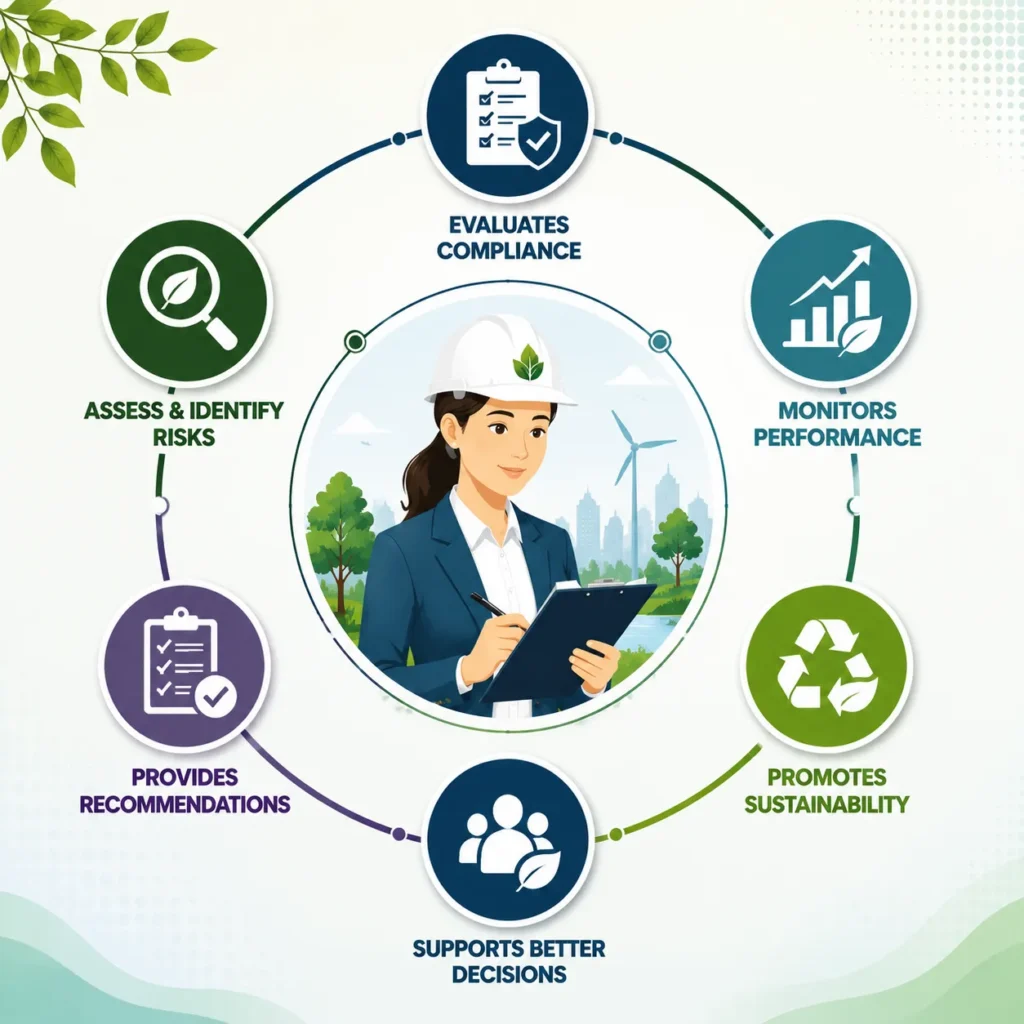
What Does an Environmental Auditor Do?
An Environmental Auditor evaluates an organisation’s environmental performance, compliance, and management practices. They review processes, identify environmental risks, check adherence to regulations and standards, and recommend improvements to support sustainable operations.
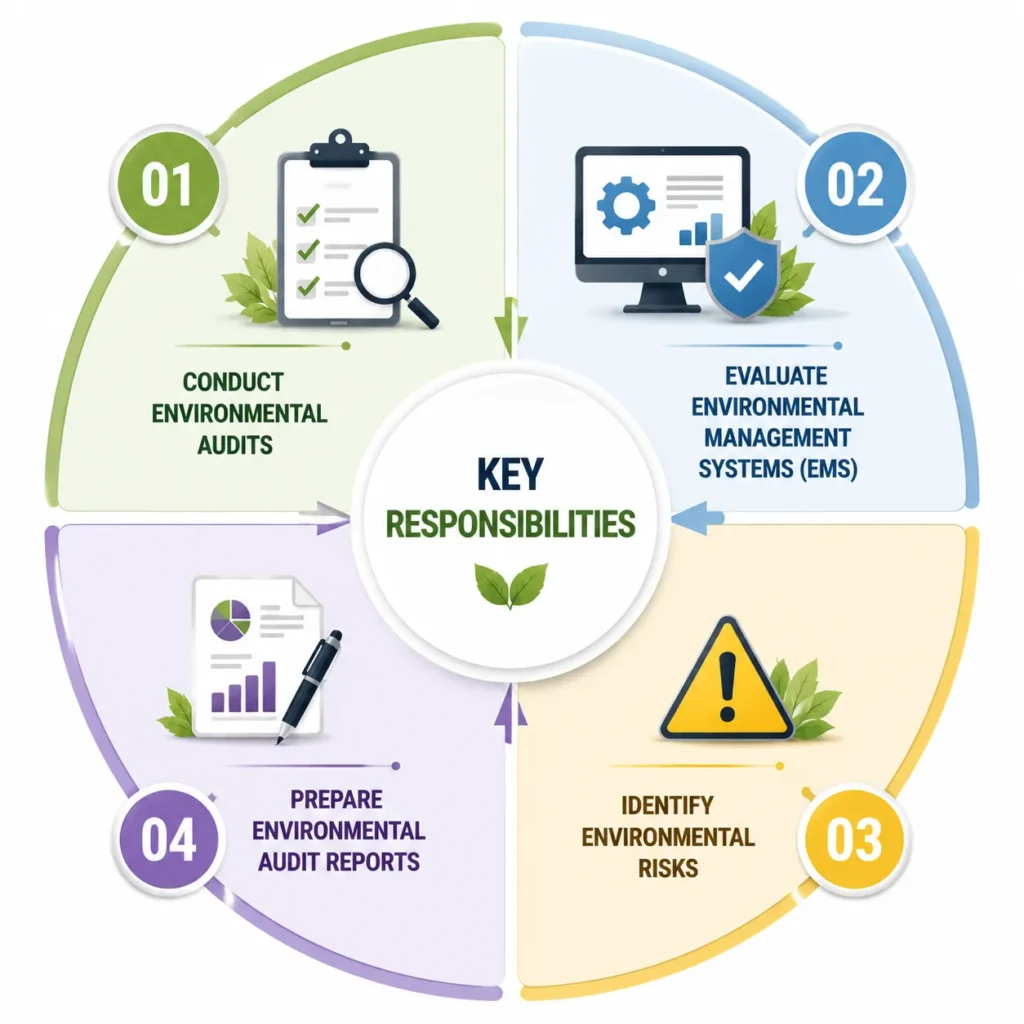
Key Responsibilities of an Environmental Auditor
1. Conduct Environmental Audits
Environmental Auditors plan and execute audits to assess whether environmental practices meet required standards and regulations.
Typical audit activities include:
- Reviewing environmental policies
- Examining operational processes
- Inspecting workplace conditions
- Evaluating environmental controls
- Collecting audit evidence
- Identifying non-conformities
2. Evaluate Environmental Management Systems (EMS)
Many Environmental Auditors assess Environmental Management Systems based on the requirements of ISO 14001.
They evaluate whether organisations have:
- Defined environmental objectives
- Effective operational controls
- Risk management procedures
- Compliance monitoring processes
- Continuous improvement systems
3. Identify Environmental Risks
Environmental Auditors help organisations identify potential environmental hazards, including:
- Pollution risks
- Waste management failures
- Regulatory compliance gaps
- Inefficient resource use
- Environmental incidents
They provide findings that support corrective actions and risk reduction.
4. Prepare Environmental Audit Reports
After completing an audit, Environmental Auditors prepare detailed reports containing:
- Audit scope
- Evidence collected
- Findings
- Non-conformities
- Recommendations
- Improvement actions
These reports support management decision-making and environmental improvement strategies.
Environmental Audit Process: Step-by-Step Guide
A professional environmental audit normally follows a structured process.
Step 1: Audit Planning
The auditor defines:
- Audit objectives
- Scope of assessment
- Applicable standards
- Audit criteria
- Required resources
Step 2: Document Review
The auditor reviews relevant documentation, including:
- Environmental policies
- EMS procedures
- Legal compliance records
- Previous audit reports
- Environmental performance data
Step 3: Site Inspection and Evidence Collection
The auditor visits operational areas and collects evidence through:
- Interviews
- Observation
- Record examination
- Process evaluation
Step 4: Audit Findings Evaluation
The auditor identifies:
- Compliance issues
- Environmental risks
- System weaknesses
- Opportunities for improvement
Step 5: Reporting and Follow-Up
The final audit report provides findings and recommendations. Organisations then implement corrective actions and monitor improvements.
Types of Environmental Audits
Environmental Auditors may conduct different types of audits depending on organisational requirements.
1. Environmental Compliance Audit
Evaluates whether an organisation complies with:
- Environmental legislation
- Government regulations
- Permit requirements
2. Environmental Management System Audit
Assesses whether an EMS meets recognised standards such as ISO 14001.
3. Sustainability Audit
Reviews sustainability performance, including:
- Carbon reduction
- Resource efficiency
- Climate strategies
4. Waste Management Audit
Examines:
- Waste generation
- Storage practices
- Recycling processes
- Disposal methods
ISO 14001 Environmental Auditor: Understanding the Connection
ISO 14001 is one of the most recognised international standards for Environmental Management Systems.
An ISO 14001 Environmental Auditor evaluates whether an organisation’s EMS:
- Meets ISO 14001 requirements
- Controls environmental risks
- Improves environmental performance
- Supports continual improvement
ISO 14001 auditing involves assessing areas such as:
| ISO 14001 Area | Auditor Evaluation |
|---|---|
| Environmental Policy | Commitment and objectives |
| Planning | Environmental risks and opportunities |
| Operational Control | Environmental procedures |
| Performance Evaluation | Monitoring and measurement |
| Improvement | Corrective actions |
Professionals who want to work as Environmental Auditors often pursue ISO 14001 Lead Auditor training to develop auditing competence.
Updated 2026 Environmental Auditor Examples and Regulations
Environmental auditing is rapidly evolving due to stricter environmental regulations, sustainability reporting requirements, climate commitments, and increased demand for transparent environmental performance. In 2026, Environmental Auditors are playing a more important role in helping organisations demonstrate compliance, reduce environmental risks, and improve sustainability outcomes
Environmental Auditing Examples in 2026
1. ISO 14001:2026 Environmental Management System Audits
The updated ISO 14001:2026 Environmental Management Systems standard has strengthened the importance of measurable environmental performance, climate-related risks, biodiversity considerations, resource efficiency, leadership involvement, and continual improvement. Environmental Auditors are increasingly required to assess whether organisations have effective systems to manage environmental impacts and achieve measurable improvements.
Example:
A manufacturing company implementing ISO 14001:2026 may require an Environmental Auditor to review:
- Emergency response procedures
- Energy consumption reduction targets
- Carbon emission management
- Waste reduction programmes
- Supplier environmental controls
- Environmental risk assessment processes
2. Environmental Auditing in Construction Projects
Construction organisations are facing increased pressure to reduce environmental impacts throughout project lifecycles. Environmental Auditors help evaluate:
- Construction waste management
- Dust and noise control
- Sustainable material usage
- Water consumption
- Carbon emissions from construction activities
- Compliance with environmental permits
Example:
During a large infrastructure project, an Environmental Auditor may inspect whether contractors are following approved environmental management plans and implementing pollution prevention measures.
3. ESG and Sustainability Reporting Audits
The growth of Environmental, Social and Governance (ESG) reporting has increased the need for reliable environmental data verification. Environmental Auditors help organisations ensure that sustainability information is accurate, transparent, and supported by evidence.
Auditors may review:
- Greenhouse gas emission data
- Energy consumption records
- Waste reduction statistics
- Climate-related risks
- Environmental performance indicators
The European Sustainability Reporting Standards (ESRS) continue to influence how organisations measure and disclose sustainability impacts, including climate change, biodiversity, and environmental risks.
4. Carbon Emission and Climate Risk Audits
Many organisations are now conducting environmental audits specifically focused on carbon reduction and climate resilience.
Environmental Auditors may evaluate:
- Scope 1, Scope 2, and Scope 3 emissions
- Carbon reduction strategies
- Renewable energy adoption
- Climate-related operational risks
- Carbon reporting accuracy
Example:
An Environmental Auditor reviewing a logistics company may assess vehicle emissions, fuel efficiency programmes, and carbon reduction targets.
Key Environmental Regulations and Standards Relevant to Auditors in 2026
1. ISO 14001:2026 Environmental Management Systems
ISO 14001 remains the leading international framework for Environmental Management Systems. The 2026 edition places greater emphasis on achieving measurable environmental results and integrating environmental considerations into organisational decision-making.
Environmental Auditors use ISO 14001 to evaluate:
- Environmental policy effectiveness
- Environmental objectives
- Operational controls
- Compliance evaluation
- Improvement actions
2. Environmental Protection Regulations
Environmental Auditors must understand applicable environmental laws related to:
- Air emissions
- Water pollution
- Waste management
- Hazardous substances
- Resource protection
- Environmental permits
Requirements vary by country and industry, meaning auditors must assess compliance based on local legislation and operational activities.
3. Corporate Sustainability Reporting Requirements
Sustainability reporting requirements are expanding globally. Organisations are increasingly expected to provide reliable environmental information to investors, regulators, customers, and stakeholders.
Environmental Auditors support reporting processes by verifying:
- Environmental data accuracy
- Evidence supporting sustainability claims
- Compliance with reporting frameworks
- Environmental performance indicators
The EU continues to develop sustainability reporting requirements through frameworks such as the Corporate Sustainability Reporting Directive (CSRD) and European Sustainability Reporting Standards (ESRS).
4. Waste Management and Circular Economy Requirements
Environmental Auditors increasingly assess whether organisations are improving resource efficiency and reducing waste.
Audit areas include:
- Waste segregation
- Recycling performance
- Hazardous waste handling
- Circular economy practices
- Material efficiency
5. Climate Change and Carbon Reduction Regulations
Climate-related regulations are increasing the demand for environmental verification and auditing. Organisations are required to demonstrate progress in reducing emissions and managing climate risks.
Environmental Auditors help businesses evaluate:
- Carbon reduction plans
- Energy efficiency measures
- Climate adaptation strategies
- Environmental improvement programmes
Future Trends for Environmental Auditors in 2026 and Beyond
Environmental auditing is moving beyond traditional compliance checking toward strategic sustainability improvement.
Future Environmental Auditors will increasingly need knowledge of:
- ESG auditing
- Carbon accounting
- Digital environmental monitoring
- Supply chain sustainability
- Climate risk assessment
- Biodiversity protection
- Sustainability reporting frameworks
As environmental expectations increase, Environmental Auditors will become essential professionals helping organisations achieve compliance, improve environmental performance, and build sustainable operations.
Skills Required to Become an Environmental Auditor
Successful Environmental Auditors require a combination of technical knowledge, auditing skills, and professional abilities.
Technical Skills
- Environmental legislation knowledge
- ISO 14001 understanding
- Environmental risk assessment
- Sustainability principles
- Pollution prevention methods
Auditing Skills
- Audit planning
- Evidence evaluation
- Interview techniques
- Report writing
- Corrective action assessment
Professional Skills
- Communication
- Critical thinking
- Problem-solving
- Attention to detail
- Independent judgement
| Skill Category | Examples |
|---|---|
| Technical Skills | ISO 14001, environmental regulations, risk assessment |
| Audit Skills | Evidence collection, audit reporting, interviews |
| Professional Skills | Communication, analysis, decision-making |
Qualifications and Certification Required for Environmental Auditors
There is no single mandatory qualification for every Environmental Auditor role; however, professional certifications significantly improve career opportunities.
Common qualifications include:
- Environmental Management qualifications
- ISO 14001 Environmental Management Systems training
- ISO 14001 Lead Auditor certification
- ISO 19011 Auditing Guidelines training
- Sustainability and ESG auditing qualifications
A recognised Environmental Auditor certification demonstrates competence in:
- Audit principles
- Environmental standards
- Risk evaluation
- Compliance assessment
- Audit reporting
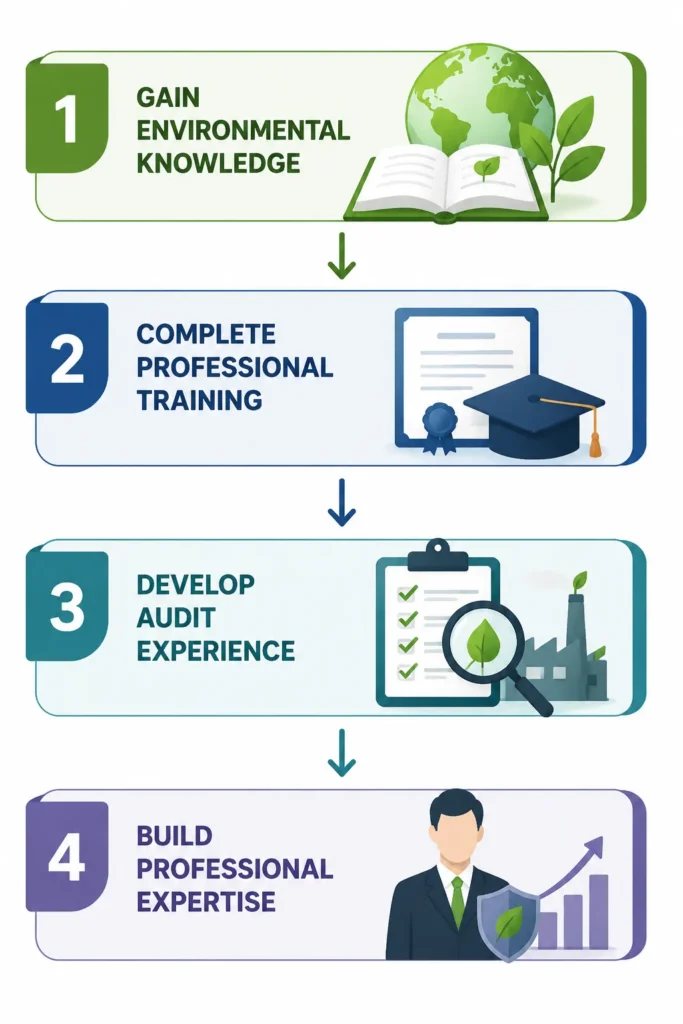
How to Become an Environmental Auditor?
A typical career pathway to become an Environmental Auditor involves developing environmental knowledge, gaining professional training, and building practical audit experience.
Career Flowchart
ISO 14001 Auditor vs Environmental Auditor: Key Differences
| Comparison Area | ISO 14001 Auditor | Environmental Auditor |
|---|---|---|
| Main Focus | Audits an organisation’s Environmental Management System (EMS) against ISO 14001 requirements | Evaluates overall environmental performance, compliance, and environmental risks |
| Primary Objective | To verify whether an EMS meets ISO 14001 standards and supports continual improvement | To identify environmental impacts, risks, legal compliance issues, and improvement opportunities |
| Audit Scope | Focuses mainly on EMS policies, procedures, controls, objectives, and ISO 14001 clauses | Covers wider environmental areas such as pollution control, waste management, energy use, emissions, and sustainability practices |
| Standards Used | Mainly ISO 14001 and ISO 19011 auditing guidelines | Environmental laws, regulations, permits, company policies, ISO standards, and sustainability frameworks |
| Key Activities | Reviews EMS documentation, conducts audits, checks conformity, and reports non-conformities | Assesses environmental performance, investigates risks, evaluates compliance, and recommends improvements |
| Required Knowledge | ISO 14001 requirements, EMS structure, audit principles, and certification processes | Environmental legislation, sustainability, environmental impacts, risk management, and audit practices |
| Typical Workplace | Certification bodies, consulting organisations, internal audit departments, and companies seeking ISO certification | Industries, government organisations, environmental consultancies, manufacturing, construction, and energy sectors |
| Audit Outcome | Determines whether an organisation’s EMS conforms to ISO 14001 requirements | Provides an evaluation of environmental performance and identifies areas for improvement |
| Certification Pathway | Often requires ISO 14001 Lead Auditor or Internal Auditor training | May require environmental management qualifications, auditing training, and industry experience |
| Career Roles | ISO 14001 Lead Auditor, EMS Auditor, Certification Auditor | Environmental Auditor, Environmental Compliance Auditor, Sustainability Auditor |
| Main Benefit to Organisations | Helps achieve and maintain ISO 14001 certification | Helps reduce environmental risks, improve compliance, and enhance sustainability performance |
| Relationship Between Roles | A specialised role within environmental auditing focused on ISO 14001 compliance | A broader role that may include ISO 14001 auditing as part of environmental assessments |
Environmental Auditor Career Opportunities
Environmental Auditors work across multiple industries, including:
- Construction
- Manufacturing
- Energy
- Oil and gas
- Transportation
- Government organisations
- Environmental consultancy firms
- Corporate sustainability departments
Construction ████████████████████ 90%
Energy ██████████████████ 85%
Manufacturing ████████████████ 80%
Oil & Gas ███████████████ 75%
Healthcare ████████████ 65%
Government ███████████ 60%
Transportation ██████████ 55%
Common job titles include:
- Environmental Auditor
- ISO 14001 Lead Auditor
- EMS Auditor
- Environmental Compliance Auditor
- Sustainability Auditor
Environmental Auditor Salary and Career Growth
Environmental Auditor salaries vary depending on:
- Experience level
- Location
- Industry sector
- Professional certification
- Audit responsibilities
Professionals with ISO 14001 Lead Auditor certification and extensive auditing experience generally have stronger career opportunities.
The increasing focus on:
- Climate change management
- ESG reporting
- Carbon reduction
- Environmental compliance
is expected to continue driving demand for Environmental Auditing professionals.
Environmental Auditor vs Environmental Consultant
| Environmental Auditor | Environmental Consultant |
|---|---|
| Evaluates compliance | Provides solutions |
| Conducts audits | Advises organisations |
| Reviews evidence | Develops strategies |
| Identifies gaps | Implements improvements |
| Focuses on verification | Focuses on recommendations |
Both roles contribute to environmental improvement but have different responsibilities.
Environmental Audit Checklist
A basic Environmental Auditor checklist may include:
☑ Environmental policy review
☑ Legal compliance evaluation
☑ Waste management assessment
☑ Pollution control review
☑ Energy efficiency evaluation
☑ Environmental objectives assessment
☑ EMS documentation review
☑ Corrective action verification
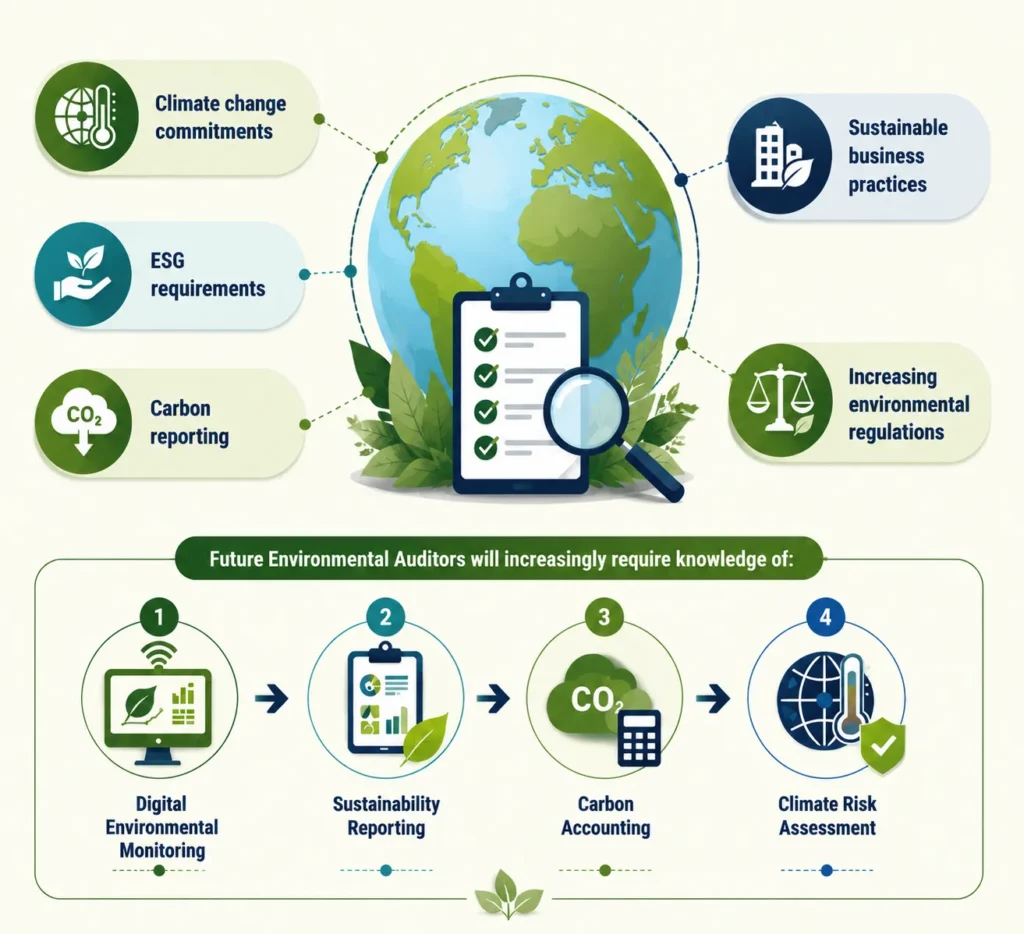
Future of Environmental Auditing
Environmental auditing is evolving due to:
- Climate change commitments
- ESG requirements
- Carbon reporting
- Sustainable business practices
- Increasing environmental regulations
Future Environmental Auditors will increasingly require knowledge of:
- Digital environmental monitoring
- Sustainability reporting
- Carbon accounting
- Climate risk assessment
Conclusion
Environmental Auditors play an essential role in helping organisations achieve environmental compliance, sustainability objectives, and responsible business practices. By assessing environmental systems, identifying risks, and supporting continual improvement, they contribute significantly to protecting the environment while improving organisational performance.
Professionals who develop expertise in environmental management, ISO 14001 auditing, and sustainability practices can access growing career opportunities across global industries. As environmental responsibility becomes a priority worldwide, skilled Environmental Auditors will remain valuable contributors to sustainable development.