
What Is ISO 21001:2025? Complete Guide to Educational Organizations Management System Certification
The quality of education has become a critical factor in the success of schools, colleges, universities, training centres, and other learning providers. Learners, employers, regulatory bodies, and stakeholders increasingly expect educational organizations to deliver consistent, effective, inclusive, and learner-focused educational services. To meet these expectations, organizations need a structured framework that ensures continuous improvement and educational excellence.
ISO 21001:2025 Educational Organizations Management System (EOMS) is the internationally recognized standard designed specifically for educational organizations. It provides a comprehensive management system framework that helps institutions improve educational processes, enhance learner satisfaction, and demonstrate their commitment to quality education.
Whether you operate a school, university, vocational training centre, corporate training department, or online learning platform, ISO 21001:2025 can help improve organizational performance, increase stakeholder confidence, and support better learning outcomes.
In this complete guide, we explore everything you need to know about ISO 21001:2025 certification, including its purpose, requirements, benefits, implementation process, and how it differs from other management system standards.
What Is ISO 21001:2025?
ISO 21001:2025 is an international management system standard developed specifically for educational organizations. The standard establishes requirements for an Educational Organizations Management System (EOMS) that enables institutions to consistently provide educational products and services that meet learner and stakeholder needs.
The standard focuses on improving educational quality through a structured management approach that emphasizes:
- Learner satisfaction
- Educational effectiveness
- Inclusive and equitable learning
- Continuous improvement
- Strategic planning
- Risk-based thinking
- Stakeholder engagement
Unlike generic quality management standards, ISO 21001 is tailored specifically to the education sector, making it highly relevant for organizations involved in teaching, training, assessment, and learning support services.
| Feature | Details |
|---|
| Standard | ISO 21001:2025 |
| Full Name | Educational Organizations Management System (EOMS) |
| Purpose | Improve educational quality and learner satisfaction |
| Applicable To | Schools, Colleges, Universities, Training Providers |
| Certification Type | Management System Certification |
| Focus | Learner-Centred Education |
| International Recognition | Yes |
| Continuous Improvement | Required |
Why Was ISO 21001 Developed?
Educational institutions face unique challenges that differ from those of traditional businesses. These challenges include:
- Diverse learner needs
- Different learning styles
- Educational outcome measurement
- Curriculum management
- Accessibility requirements
- Stakeholder expectations
- Regulatory compliance
ISO 21001 was developed to provide educational organizations with a dedicated framework that addresses these challenges while promoting excellence in education.
The standard helps institutions align their objectives with learner expectations and societal needs while ensuring consistent delivery of educational services.
What Does EOMS Mean?
EOMS stands for Educational Organizations Management System. It is a structured management framework designed specifically for educational institutions to help them consistently deliver high-quality education and training services while meeting the needs and expectations of learners, educators, employers, regulatory bodies, and other stakeholders.
An Educational Organizations Management System provides a systematic approach to planning, implementing, monitoring, and continuously improving educational processes. It helps institutions establish clear objectives, manage resources effectively, measure performance, and ensure that educational services contribute to meaningful learning outcomes.
Unlike traditional management systems that focus primarily on business operations, an EOMS is specifically tailored to the unique needs of educational organizations. It places learners at the centre of all activities and promotes a culture of continuous improvement, inclusivity, accessibility, and educational excellence.
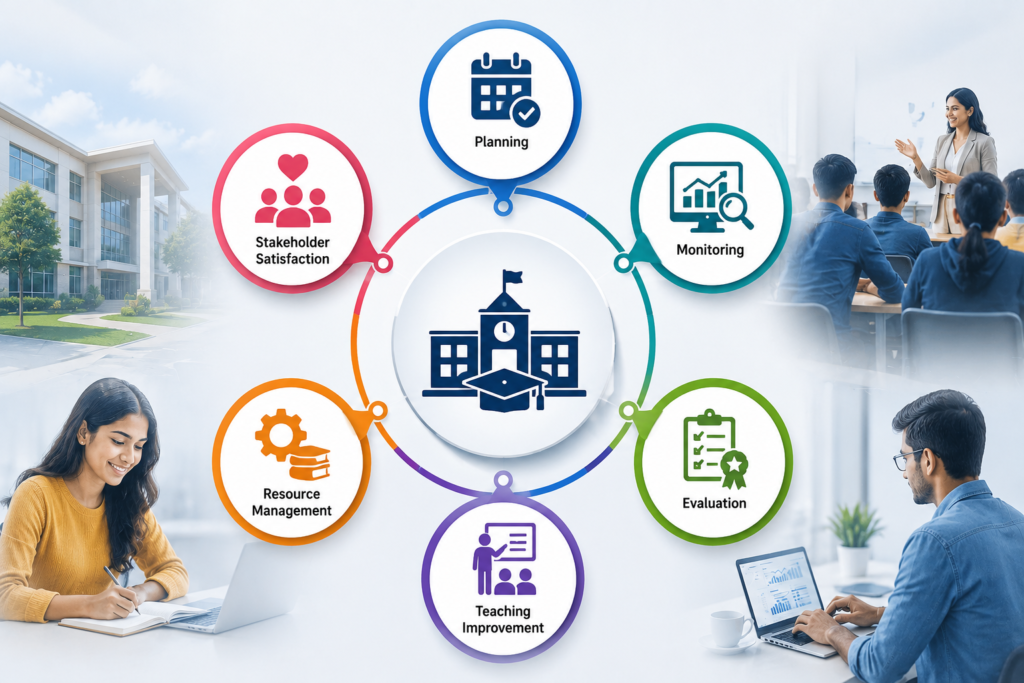
Key Functions of an Educational Organizations Management System (EOMS)
An effective EOMS enables educational institutions to:
Plan Educational Activities Effectively
Educational organizations can develop strategic plans, curricula, learning programmes, and teaching methodologies that align with institutional goals, learner needs, and stakeholder expectations.
Monitor Learning Performance
The system helps institutions track learner progress, academic achievement, attendance, assessment results, and overall educational effectiveness through measurable performance indicators.
Evaluate Educational Outcomes
An EOMS provides mechanisms for assessing whether learning objectives, programme goals, and institutional targets are being achieved, ensuring that educational services deliver real value to learners.
Improve Teaching and Learning Processes
By collecting feedback, analysing performance data, and reviewing educational practices, institutions can continuously enhance teaching methods, learning experiences, and programme delivery.
Manage Resources Efficiently
Educational organizations can optimize the use of human resources, infrastructure, technology, learning materials, and financial resources to support quality education and operational efficiency.
Enhance Stakeholder Satisfaction
An EOMS helps organizations understand and meet the expectations of learners, parents, employers, staff, accreditation bodies, and other stakeholders, leading to higher satisfaction and stronger trust.
How Does an EOMS Benefit Educational Organizations?
A well-implemented Educational Organizations Management System creates a clear framework for managing educational quality and organizational performance. It enables institutions to:
- Deliver consistent and high-quality educational services
- Improve learner engagement and satisfaction
- Support continuous professional development for educators
- Strengthen governance and leadership effectiveness
- Promote accessibility, equity, and inclusive learning
- Enhance institutional reputation and credibility
- Improve compliance with regulatory and accreditation requirements
- Foster a culture of innovation and continuous improvement
The Role of EOMS in ISO 21001:2025
Within ISO 21001:2025, the Educational Organizations Management System serves as the foundation for achieving educational excellence. The standard provides internationally recognized requirements and best practices that help educational institutions establish, implement, maintain, and continually improve their EOMS.
By integrating educational objectives with organizational strategies, an EOMS ensures that every process—from curriculum development and learner support to performance evaluation and stakeholder engagement—contributes to better learning outcomes and long-term institutional success.
In simple terms, an Educational Organizations Management System is the framework that helps schools, colleges, universities, training centres, and other learning providers deliver effective, learner-focused, and continuously improving education in a structured and measurable way. success.
Who Can Apply for ISO 21001:2025 Certification?
ISO 21001:2025 is suitable for organizations of all sizes that provide educational products or services.
Schools
Primary and secondary schools can use ISO 21001 to improve educational quality, learner engagement, and operational effectiveness.
Colleges
Further education institutions can implement ISO 21001 to enhance teaching quality and support learner achievement.
Universities
Higher education institutions can use the standard to strengthen governance, improve academic services, and support institutional excellence.
Training Providers
Professional training organizations can demonstrate their commitment to quality training and learner satisfaction.
Online Learning Platforms
E-learning providers can implement ISO 21001 to improve digital learning experiences and educational outcomes.
Corporate Training Departments
Organizations that provide internal training and workforce development programs can benefit from adopting the standard.
Vocational Education Centres
Skills development and technical training institutions can improve programme effectiveness and industry relevance.
Key Objectives of ISO 21001:2025
The primary objectives of ISO 21001:2025 include:
- Enhancing learner satisfaction
- Improving educational quality
- Supporting learner success
- Promoting accessibility and inclusivity
- Strengthening organizational governance
- Increasing stakeholder confidence
- Encouraging innovation in education
- Supporting continuous improvement
These objectives help educational organizations deliver better learning experiences while achieving strategic goals.
While ISO 21001 is specifically designed for educational organizations, many institutions also consider ISO 9001. Read our detailed guide on ISO 21001 vs ISO 9001: Which Standard Is Better for Educational Organizations? to understand the key differences and benefits of each standard.
Core Principles of ISO 21001:2025
The success of an Educational Organizations Management System (EOMS) depends on a set of fundamental principles that guide educational institutions toward excellence, continuous improvement, and learner satisfaction. ISO 21001:2025 is built upon these core principles to help schools, colleges, universities, training providers, and other educational organizations deliver high-quality educational services while meeting the evolving needs of learners and stakeholders.
By implementing these principles, educational institutions can create a learner-centred environment, improve educational outcomes, strengthen organizational performance, and build long-term trust with stakeholders.
Learner Focus
At the heart of ISO 21001:2025 is a strong commitment to learners. Educational organizations must understand the needs, expectations, abilities, and aspirations of their learners and design educational services that support their success.
A learner-focused approach involves:
- Understanding learner requirements and expectations
- Providing high-quality learning experiences
- Supporting diverse learning styles and needs
- Measuring learner satisfaction and feedback
- Promoting learner engagement and achievement
- Continuously improving educational services based on learner outcomes
When learners are placed at the centre of decision-making, institutions can deliver more relevant, effective, and meaningful educational experiences.
Visionary Leadership
Strong leadership is essential for creating a culture of quality, accountability, and continuous improvement. Leaders must establish a clear vision, strategic direction, and organizational objectives that align with the institution’s educational mission.
Visionary leadership includes:
- Defining educational goals and priorities
- Promoting a culture of excellence
- Supporting innovation and improvement
- Allocating resources effectively
- Encouraging collaboration and teamwork
- Demonstrating commitment to educational quality
Effective leaders inspire staff, learners, and stakeholders to work together toward achieving educational success and organizational growth.
Engagement of People
People are one of the most valuable assets within any educational organization. ISO 21001 emphasizes the active involvement of educators, administrators, support staff, and other personnel in achieving organizational objectives.
Engaging people means:
- Encouraging participation in decision-making
- Recognizing employee contributions
- Supporting professional development
- Enhancing communication and collaboration
- Creating a positive working environment
- Empowering staff to contribute to improvement initiatives
When employees are engaged and motivated, they are more likely to contribute to better educational outcomes and organizational performance.
Process Approach
Educational organizations consist of numerous interconnected activities, including curriculum development, teaching, assessment, learner support, and administrative operations. The process approach ensures these activities are managed systematically and efficiently.
This principle involves:
- Identifying key educational and operational processes
- Understanding how processes interact
- Defining responsibilities and accountabilities
- Monitoring process performance
- Managing risks and opportunities
- Improving process effectiveness
By treating activities as interconnected processes rather than isolated tasks, institutions can achieve greater consistency, efficiency, and quality.
Continuous Improvement
Continuous improvement is a central principle of ISO 21001:2025. Educational organizations should continually evaluate their performance and seek opportunities to enhance educational services, processes, and outcomes.
Continuous improvement can be achieved through:
- Regular performance reviews
- Internal audits
- Learner and stakeholder feedback
- Corrective and preventive actions
- Innovation and best practices
- Strategic improvement initiatives
Organizations that embrace continuous improvement remain adaptable, competitive, and capable of meeting changing educational needs.
Evidence-Based Decision Making
Effective decisions should be based on accurate information rather than assumptions or opinions. ISO 21001 encourages educational institutions to collect, analyse, and use reliable data when making decisions.
Examples of evidence-based decision making include:
- Analysing learner performance data
- Reviewing attendance and completion rates
- Evaluating assessment results
- Monitoring stakeholder feedback
- Measuring organizational performance indicators
- Assessing risks and opportunities
Using factual evidence helps organizations make informed decisions that improve educational quality and support long-term success.
Social Responsibility
Educational organizations play a vital role in shaping individuals, communities, and society as a whole. ISO 21001 promotes socially responsible practices that contribute positively to economic, social, and environmental development.
Social responsibility includes:
- Promoting ethical behaviour and integrity
- Supporting community development initiatives
- Encouraging lifelong learning
- Respecting diversity and inclusion
- Maintaining transparency and accountability
- Contributing to sustainable development goals
Educational institutions that demonstrate social responsibility enhance their reputation and create positive impacts beyond the classroom.
Accessibility and Equity
Quality education should be available to everyone regardless of their background, abilities, gender, ethnicity, economic status, or geographical location. ISO 21001 emphasizes the importance of creating inclusive and equitable learning environments.
This principle involves:
- Providing equal learning opportunities
- Removing barriers to education
- Supporting learners with diverse needs
- Promoting inclusive teaching practices
- Ensuring accessibility of learning resources
- Respecting cultural and social diversity
Accessibility and equity help educational organizations create environments where all learners can participate, succeed, and reach their full potential.
Relationship Management and Stakeholder Engagement
Educational institutions interact with a wide range of stakeholders, including learners, parents, employers, regulatory authorities, accreditation bodies, partners, and communities. Maintaining strong relationships with these stakeholders is essential for long-term success.
Effective stakeholder engagement includes:
- Understanding stakeholder expectations
- Maintaining open communication channels
- Gathering feedback and insights
- Building trust and collaboration
- Responding to stakeholder concerns
- Supporting mutually beneficial relationships
Strong stakeholder relationships contribute to improved educational quality, institutional credibility, and sustainable growth.
Why These Principles Matter
The core principles of ISO 21001:2025 provide a foundation for educational excellence and organizational effectiveness. When applied consistently, they help institutions:
- Improve learner satisfaction and success
- Enhance educational quality and outcomes
- Strengthen leadership and governance
- Increase operational efficiency
- Promote innovation and continuous improvement
- Build stakeholder trust and confidence
- Support inclusivity and accessibility
- Achieve sustainable organizational growth
By embracing these principles, educational organizations can establish a robust Educational Organizations Management System that delivers value to learners, staff, stakeholders, and society while achieving internationally recognized standards of educational quality.
Benefits of ISO 21001:2025 Certification
Improved Learner Satisfaction
A learner-centred approach helps institutions better understand learner expectations and deliver higher-quality educational experiences.
Enhanced Educational Outcomes
Structured planning and performance monitoring contribute to improved academic achievement and learning effectiveness.
Increased Stakeholder Confidence
Parents, employers, regulators, and funding bodies gain confidence in the institution’s commitment to quality.
Better Organizational Performance
Clearly defined processes improve efficiency and reduce operational inconsistencies.
Stronger Governance
Leadership gains greater visibility into organizational performance and educational effectiveness.
Risk Management
The standard encourages proactive identification and management of risks affecting educational quality.
Global Recognition
ISO certification demonstrates international credibility and commitment to educational excellence.
Continuous Improvement Culture
Organizations develop a systematic approach to evaluating and improving educational services.
| Benefit | Impact |
|---|
| Improved Learner Satisfaction | Better learning experiences |
| Enhanced Educational Outcomes | Higher success rates |
| Stronger Governance | Better decision-making |
| Global Recognition | Increased credibility |
| Continuous Improvement | Sustainable growth |
| Risk Management | Reduced operational issues |
| Stakeholder Confidence | Increased trust |
| Better Resource Utilization | Greater efficiency |
SO 21001:2025 Requirements Explained
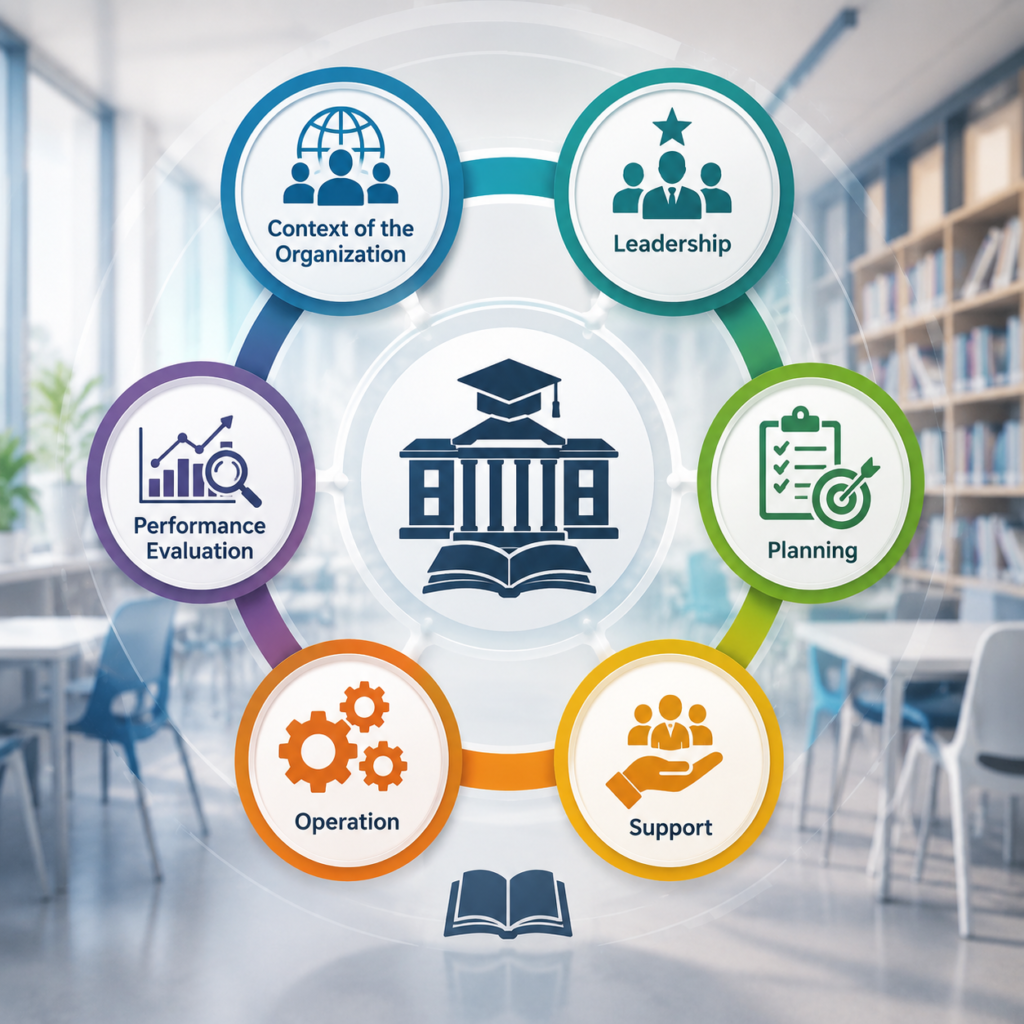
The standard follows the High-Level Structure used by many ISO management system standards.
Context of the Organization
Organizations must understand internal and external factors that influence educational performance.
Key activities include:
- Identifying stakeholders
- Understanding learner needs
- Defining organizational scope
- Establishing educational objectives
Leadership
Leadership plays a critical role in implementing and maintaining the EOMS.
Requirements include:
- Establishing policies
- Defining responsibilities
- Demonstrating commitment
- Supporting continuous improvement
Planning
Organizations must identify risks and opportunities while setting measurable objectives.
Planning activities include:
- Risk assessment
- Strategic planning
- Objective setting
- Improvement planning
Support
Institutions must ensure adequate resources are available.
Support requirements include:
- Competent personnel
- Infrastructure
- Learning resources
- Communication systems
- Documented information
Operation
Operational controls ensure educational services are delivered consistently and effectively.
This includes:
- Curriculum development
- Learning delivery
- Assessment processes
- Learner support services
- Educational programme management
Performance Evaluation
Organizations must monitor and measure performance to determine effectiveness.
Methods include:
- Internal audits
- Learner feedback
- Performance indicators
- Management reviews
Improvement
Institutions must continually improve educational processes and outcomes.
Activities include:
- Corrective actions
- Preventive measures
- Process optimization
- Innovation initiatives
ISO 21001:2025 Certification Process
Step 1: Gap Analysis
Review existing systems and identify areas requiring improvement.
Step 2: Develop the EOMS
Create policies, procedures, objectives, and documented information.
Step 3: Staff Training
Ensure employees understand their responsibilities and the requirements of the management system.
Step 4: Implement the System
Apply policies and procedures across educational operations.
Step 5: Internal Audit
Evaluate system effectiveness and identify improvement opportunities.
Step 6: Management Review
Leadership reviews performance and determines necessary actions.
Step 7: Certification Audit – Stage 1
Auditors assess documentation and readiness for certification.
Step 8: Certification Audit – Stage 2
Auditors evaluate implementation and operational effectiveness.
Step 9: Certification Decision
Successful organizations receive ISO 21001 certification.
Step 10: Surveillance Audits
Periodic audits verify ongoing compliance and improvement.
ISO 21001:2025 vs ISO 9001
| Feature | ISO 21001:2025 | ISO 9001 |
|---|---|---|
| Primary Focus | Educational Organizations | All Industries |
| Target Audience | Schools, Universities, Training Providers | Any Organization |
| Learner Focus | Strong Emphasis | General Customer Focus |
| Educational Outcomes | Core Requirement | Not Specific |
| Curriculum Management | Included | Not Included |
| Learning Services | Education-Specific | Generic Services |
| Accessibility and Inclusion | Strong Focus | Limited Reference |
| Educational Stakeholders | Specific Requirements | General Stakeholders |
While ISO 9001 supports quality management broadly, ISO 21001 is specifically designed for educational environments.
Key Advantages for Educational Institutions
Educational organizations implementing ISO 21001 often experience:
- Improved learner retention
- Enhanced reputation
- Better regulatory compliance
- Greater operational consistency
- Increased stakeholder trust
- Improved educational effectiveness
- Stronger competitive advantage
- Better resource management
These advantages contribute to long-term organizational success and sustainable growth.
Common Challenges During Implementation
Resistance to Change
Staff may initially resist new procedures and requirements.
Documentation Requirements
Developing and maintaining documented information can be time-consuming.
Resource Allocation
Implementation may require investment in training, technology, and process improvement.
Performance Measurement
Organizations may need to establish new methods for measuring educational outcomes.
Stakeholder Engagement
Ensuring active participation from learners, educators, and administrators can be challenging.
Proper planning and leadership support can help overcome these challenges.
How Long Does ISO 21001 Certification Take?
The implementation timeline varies depending on:
- Organizational size
- Complexity of operations
- Existing management systems
- Available resources
Typical implementation periods range from:
- Small organizations: 3–6 months
- Medium organizations: 6–9 months
- Large institutions: 9–12 months or longer
Organizations with existing ISO management systems may achieve certification more quickly.
How Much Does ISO 21001 Certification Cost?
Certification costs depend on several factors:
- Organization size
- Number of employees
- Number of locations
- Scope of certification
- Certification body selected
- Consultancy requirements
Costs generally include:
- Gap analysis
- Training
- Documentation development
- Internal audits
- Certification audits
- Surveillance audits
Institutions should obtain quotations from accredited certification bodies for accurate pricing.
Why ISO 21001:2025 Matters in Modern Education
The education sector is evolving rapidly due to technological advances, changing learner expectations, and increasing demands for accountability.
ISO 21001:2025 helps educational organizations:
- Adapt to digital transformation
- Improve learner engagement
- Strengthen governance
- Demonstrate educational quality
- Enhance institutional credibility
- Support sustainable growth
By implementing an Educational Organizations Management System, institutions can create a structured pathway toward educational excellence and continuous improvement.
Conclusion
ISO 21001:2025 is the leading international standard for Educational Organizations Management Systems, providing a comprehensive framework for delivering high-quality education and training services. Whether you are a school, university, training provider, vocational institution, or online learning platform, implementing ISO 21001 can help improve learner satisfaction, educational outcomes, operational performance, and stakeholder confidence.
As educational organizations continue to face increasing expectations from learners, regulators, employers, and society, ISO 21001:2025 offers a proven approach to achieving excellence, consistency, and continuous improvement in education. Organizations that embrace this internationally recognized standard position themselves as trusted providers of quality education in an increasingly competitive global learning environment.