
What Is Paediatric First Aid and Why Is It Important for Child Safety?
Children are naturally active and curious, which makes them more likely to experience accidents and medical emergencies at home, school, playgrounds, or childcare settings. Choking, burns, falls, cuts, allergic reactions, and sudden illnesses can happen unexpectedly, making a quick and appropriate response essential. The first few minutes of an emergency can make a significant difference to a child’s recovery.
Unintentional injuries are among the leading causes of death and disability in children worldwide, but many of these incidents can be managed more effectively with the right first aid knowledge. When parents, teachers, caregivers, and childcare professionals know how to respond, they can provide immediate care until emergency medical help arrives.
Paediatric first aid is a specialised form of first aid designed for infants and children. It includes essential life-saving skills such as CPR, choking management, bleeding control, burn treatment, and responding to common childhood emergencies. In this guide, you’ll learn what paediatric first aid is, why it is important for child safety, and how these essential skills can help protect young lives.
Why Is Paediatric First Aid Important?
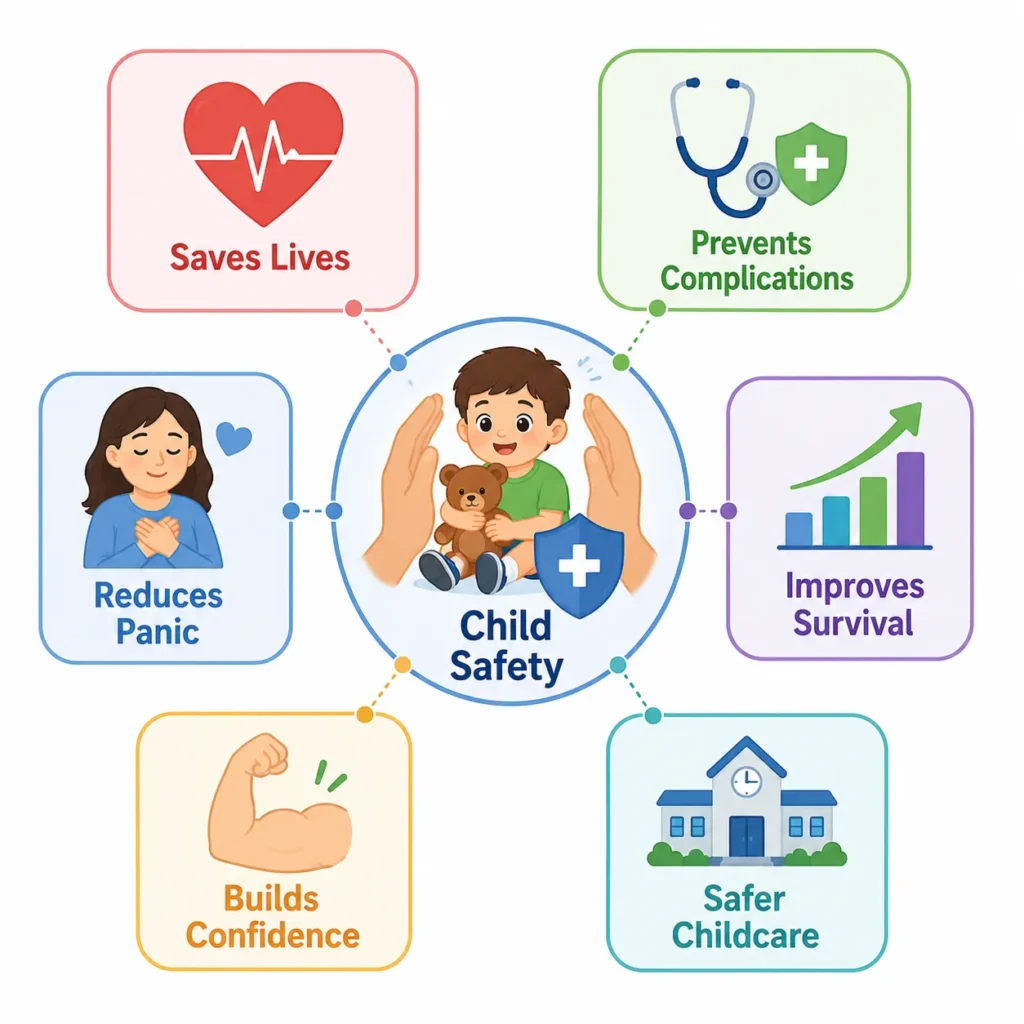
Paediatric first aid is an essential life skill that enables parents, caregivers, teachers, and childcare professionals to respond quickly and effectively when a child is injured or becomes seriously ill. Children can experience emergencies without warning, and knowing the correct first aid techniques can make a significant difference before medical help arrives.
Saves Lives
Prompt first aid can be lifesaving during emergencies such as choking, cardiac arrest, severe bleeding, or drowning. Immediate action helps maintain vital functions and increases the chances of a positive outcome until emergency services take over.
Prevents Complications
Providing the correct first aid at the right time can prevent an injury or illness from becoming more serious. Early treatment can reduce blood loss, minimise infection, ease pain, and lower the risk of long-term complications.
Reduces Panic
Emergencies can be stressful, especially when children are involved. First aid knowledge helps caregivers stay calm, assess the situation confidently, and make informed decisions instead of reacting in panic.
Improves Survival Rates
Quick recognition of a medical emergency and the immediate use of age-appropriate first aid techniques, such as CPR or choking management, can significantly improve a child’s chances of survival while waiting for professional medical assistance.
Builds Confidence During Emergencies
Paediatric first aid training gives people the confidence to act quickly and correctly. Rather than feeling helpless, trained individuals know how to assess the child, provide appropriate care, and seek additional help when needed.
Supports Safer Childcare Environments
Whether at home, in schools, nurseries, sports clubs, or childcare settings, having people trained in paediatric first aid creates a safer environment for children. It promotes a culture of preparedness and ensures that emergencies can be managed effectively until healthcare professionals arrive.
Common Childhood Emergencies You Should Know
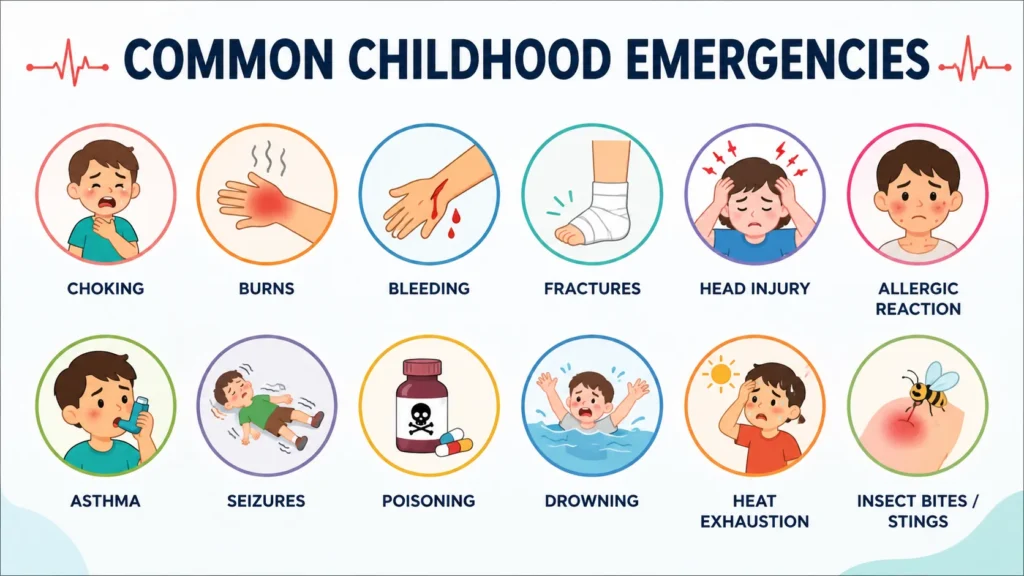
Children can experience a wide range of medical emergencies while playing, learning, or carrying out everyday activities. Knowing how to recognise these situations and provide appropriate first aid can help prevent complications until professional medical assistance is available.
Breathing and Medical Emergencies
- Allergic Reactions
- Symptoms may include a rash, swelling, itching, or difficulty breathing.
- Severe allergic reactions (anaphylaxis) require immediate emergency treatment.
- Asthma Attacks
- A child may experience wheezing, coughing, chest tightness, or shortness of breath.
- Help them use their prescribed reliever inhaler and seek medical help if symptoms do not improve.
- Seizures
- Protect the child from injury and avoid restraining their movements.
- Call emergency services if the seizure lasts longer than five minutes or if it is their first seizure.
- Febrile Convulsions
- These seizures can occur in young children with a high fever.
- Keep the child safe, monitor their breathing, and seek medical advice after the seizure.
Injuries and Accidents
Children are naturally active, making falls, bumps, and accidental injuries common. Prompt first aid can help reduce pain and prevent further harm.
- Head Injuries
- Watch for dizziness, vomiting, confusion, severe headache, or loss of consciousness.
- Serious head injuries require immediate medical assessment.
- Fractures
- Signs include pain, swelling, bruising, or difficulty moving a limb.
- Keep the injured area still and seek professional medical care.
- Nosebleeds
- Sit the child upright, lean them slightly forward, and pinch the soft part of the nose until the bleeding stops.
- Electric Shock
- Ensure the power source is switched off before touching the child.
- Even if there are no visible injuries, medical assessment is recommended.
Environmental and Other Emergencies
Some emergencies are caused by environmental hazards, harmful substances, or contact with animals and insects. Recognising these situations early can help prevent serious complications.
- Poisoning
- Can result from medicines, cleaning products, chemicals, or poisonous plants.
- Contact emergency services or a poison information centre immediately and avoid inducing vomiting unless advised.
- Drowning
- Remove the child from the water only if it is safe to do so.
- Begin CPR if the child is unresponsive and not breathing normally.
- Heat Exhaustion
- Symptoms include excessive sweating, tiredness, dizziness, headache, and nausea.
- Move the child to a cool place, provide fluids if appropriate, and seek medical advice if symptoms worsen.
- Animal Bites
- Wash the wound with clean water, control any bleeding, and seek medical attention to reduce the risk of infection.
- Insect Stings
- Remove the sting if present, clean the area, and apply a cold compress to reduce pain and swelling.
- Seek emergency help if the child develops signs of a severe allergic reaction.
Understanding these common childhood emergencies enables parents, caregivers, teachers, and childcare professionals to respond quickly and confidently. While first aid provides immediate care, serious injuries and medical conditions should always be assessed by a qualified healthcare professional.
How Is Paediatric First Aid Different from Adult First Aid?
Although the basic principles of first aid are the same, children are not simply smaller adults. Infants and children have smaller airways, more delicate bones, faster heart and breathing rates, and different physical and emotional needs. As a result, first aid techniques must be adapted to suit their age and size to ensure they are both safe and effective.
The table below highlights the key differences between adult and paediatric first aid.
| Aspect | Adult First Aid | Paediatric First Aid |
|---|---|---|
| CPR Technique | CPR is performed using standard adult techniques and compression force. | CPR is adapted according to the child’s age and size, using gentler techniques for infants and young children. |
| Airway Size | Adults have larger, more developed airways. | Infants and children have much smaller airways that can become blocked more easily, requiring extra care when opening the airway. |
| Chest Compression Depth | Chest compressions are deeper due to the adult chest size. | Compression depth is reduced and adjusted according to the child’s age and body size to avoid injury. |
| Rescue Breaths | Rescue breaths are delivered using adult-sized lung capacity. | Smaller, gentler rescue breaths are provided to match the child’s smaller lungs. |
| Choking Treatment | Different techniques are used for conscious and unconscious adults. | Choking treatment varies for infants and children and uses age-appropriate back blows and chest thrusts or abdominal thrusts where suitable. |
| Recovery Position | Adults are placed in the standard recovery position. | The recovery position may be modified to support the child’s smaller body and keep the airway open. |
| Emotional Reassurance | Communication focuses mainly on the injured adult. | Reassuring the child, keeping them calm, and communicating in an age-appropriate way are essential parts of paediatric first aid. |
Using the correct paediatric first aid techniques helps reduce the risk of further injury and improves the effectiveness of emergency care. Anyone responsible for children should understand these differences to respond safely and confidently during an emergency.
Why Do Children’s Bodies Need Different First Aid Treatment?
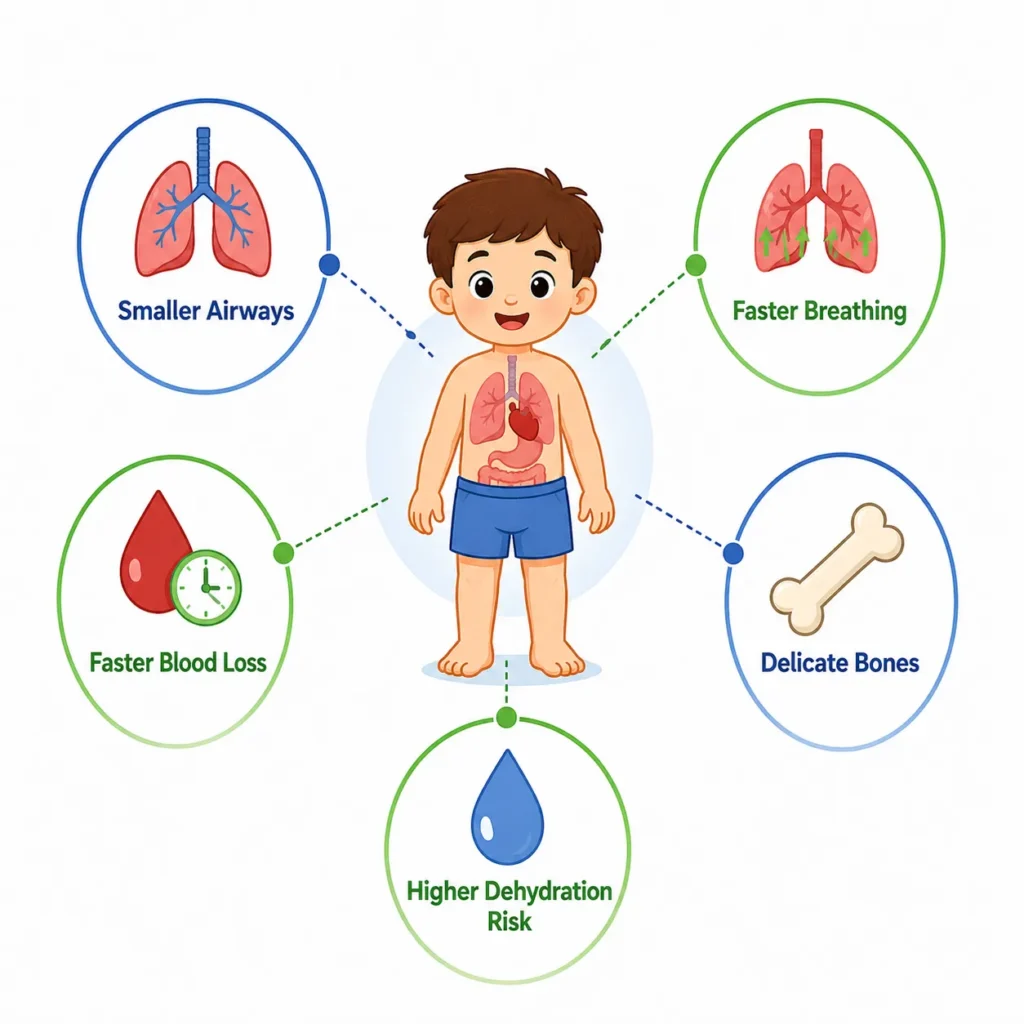
Children’s bodies are still developing, so they respond to injuries and medical emergencies differently from adults. Their smaller size, growing organs, and changing body systems mean that first aid techniques must be adapted to provide safe and effective care. Understanding these differences helps caregivers respond appropriately and avoid causing further harm.
Smaller Airways
Children, especially infants, have much narrower airways than adults. Even a small amount of swelling or a minor obstruction from food or a small object can make breathing difficult. This is why choking and breathing emergencies require age-specific first aid techniques.
Faster Breathing Rates
Infants and young children naturally breathe faster than adults because their bodies need more oxygen to support growth and development. During an illness or injury, breathing can become abnormal more quickly, making early assessment and prompt first aid especially important.
Faster Blood Loss
Children have a much smaller total blood volume than adults. As a result, even moderate bleeding can represent a significant loss of blood and may lead to serious complications if it is not controlled quickly. Applying pressure to stop bleeding and seeking medical help promptly are essential.
Delicate Bones and Soft Tissues
A child’s bones are still growing and are generally more flexible but also more vulnerable to certain injuries. Their muscles, joints, and soft tissues are also less developed, so first aid should be provided gently to avoid causing additional harm.
Higher Risk of Dehydration
Children lose fluids more quickly than adults through vomiting, diarrhoea, fever, or excessive heat. Because they have smaller fluid reserves, dehydration can develop rapidly and may become serious if not recognised and treated early.
Understanding these physical differences explains why paediatric first aid is not simply a smaller version of adult first aid. Using age-appropriate techniques helps protect children, reduces the risk of complications, and improves their chances of a safe recovery.
Age Categories in Paediatric First Aid
Paediatric first aid covers individuals from birth to 18 years of age. However, first aid techniques are not the same for every age group. As children grow, their body size, airway structure, bone development, and physical abilities change, so the way first aid is provided must also be adapted. Understanding these age categories helps ensure that the most appropriate and safest treatment is given during an emergency.
| Age | Category |
|---|---|
| Birth–1 year | Infant |
| 1–5 years | Young Child |
| 5–12 years | Child |
| 12–18 years | Adolescent |
Why Do First Aid Techniques Vary by Age?
The differences between these age groups affect how emergencies are assessed and treated. For example, CPR techniques, choking management, and the amount of force used during chest compressions vary depending on the child’s age and physical development.
Key reasons include:
- Body Size: Infants and young children require gentler first aid techniques than older children and adolescents.
- Airway Development: Younger children have smaller airways, making breathing emergencies and choking more likely.
- CPR Methods: The number of hands or fingers used for chest compressions and the compression depth are adjusted according to age and body size.
- Bone and Muscle Development: Children’s bones and joints are still growing, so injuries should be handled carefully to avoid further damage.
- Communication and Reassurance: Younger children may not be able to explain their symptoms clearly and often need additional reassurance to remain calm during treatment.
- Medical Assessment: Vital signs such as heart rate and breathing rate differ between infants, children, and adolescents, so first aid providers must assess each age group appropriately.
Recognising these age categories allows parents, caregivers, teachers, and childcare professionals to apply the correct first aid techniques and provide safer, more effective care for children of all ages.
When Should You Call Emergency Services?
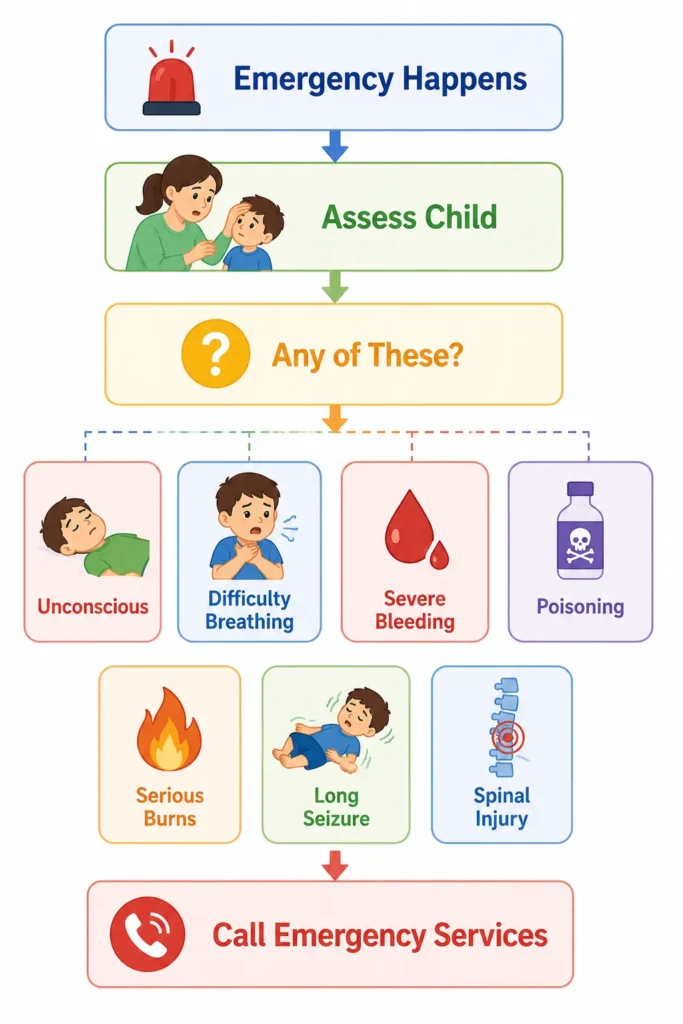
While many minor injuries can be treated with basic first aid, some situations require immediate medical attention. If a child has a serious injury or shows signs of a life-threatening condition, call your local emergency services without delay. Providing first aid while waiting for professional help can help stabilise the child and improve their chances of recovery.
You should call emergency services immediately if a child experiences any of the following:
- Unconsciousness: The child is unresponsive, difficult to wake, or loses consciousness.
- Difficulty Breathing: The child is struggling to breathe, breathing very rapidly, making unusual breathing sounds, or stops breathing.
- Severe Bleeding: Heavy bleeding that does not stop after applying direct pressure or bleeding caused by a serious injury.
- Poisoning: The child has swallowed medicines, household chemicals, poisonous plants, or other harmful substances.
- Serious Burns: Large burns, deep burns, chemical burns, electrical burns, or burns affecting the face, hands, feet, or airway.
- Seizures Lasting Several Minutes: A seizure that lasts longer than five minutes, repeated seizures, or a child who does not regain consciousness afterwards.
- Suspected Spinal Injury: Any injury involving the neck or back, especially after a fall, road traffic collision, or sports accident.
While Waiting for Emergency Services
If it is safe to do so, continue providing appropriate first aid until medical professionals arrive.
- Stay calm and reassure the child.
- Follow the emergency operator’s instructions.
- Monitor the child’s breathing and level of consciousness.
- Perform CPR if the child is unresponsive and not breathing normally.
- Do not move the child unless there is an immediate danger, particularly if a spinal injury is suspected.
Knowing when to call emergency services is just as important as knowing how to provide first aid. Acting quickly and seeking professional medical assistance at the right time can help prevent complications and protect a child’s life.
Paediatric First Aid Myths vs Facts
Misunderstandings about first aid can lead to delayed or incorrect treatment during a child’s emergency. Knowing the facts helps parents, caregivers, teachers, and childcare professionals respond safely and confidently when every second counts.
| Myth | Fact |
|---|---|
| Children are just small adults. | Children’s bodies develop differently, so they require age-appropriate first aid techniques. |
| CPR is the same for everyone. | Infant and child CPR differs from adult CPR, including chest compression techniques and rescue breaths. |
| Choking always involves coughing or making noise. | A child with a completely blocked airway may be unable to cough, cry, or speak, making silent choking particularly dangerous. |
| Burns should be treated with butter, toothpaste, or ice. | Burns should be cooled with cool running water for at least 20 minutes. Home remedies can worsen the injury. |
| If a child seems fine after a head injury, there is nothing to worry about. | Some symptoms of a serious head injury may appear later, so the child should be monitored closely and medical advice sought if warning signs develop. |
| Only healthcare professionals need paediatric first aid training. | Parents, teachers, babysitters, childminders, sports coaches, and anyone responsible for children can benefit from learning paediatric first aid. |
Understanding the difference between myths and facts helps ensure that children receive the correct care during an emergency. Relying on evidence-based first aid techniques rather than common misconceptions can reduce the risk of complications and improve a child’s chances of a safe recovery.
Tips to Prevent Common Childhood Accidents
While paediatric first aid is essential for responding to emergencies, preventing accidents is the best way to protect children. Simple safety measures at home, school, and outdoor environments can significantly reduce the risk of injuries.
- Home Safety
- Keep floors free from clutter to prevent trips and falls.
- Install safety gates, window locks, and corner protectors where needed.
- Kitchen Safety
- Keep hot drinks, sharp utensils, and cleaning products out of children’s reach.
- Turn saucepan handles towards the back of the cooker.
- Water Safety
- Never leave children unattended near baths, swimming pools, or open water.
- Ensure young children are always supervised around water.
- Playground Safety
- Check that play equipment is suitable for the child’s age.
- Supervise children and encourage safe play.
- Toy Safety
- Choose age-appropriate toys and inspect them regularly for broken parts.
- Keep small objects away from infants and toddlers to reduce choking risks.
- Car Safety
- Always use an age-appropriate child car seat and ensure seat belts are correctly fastened.
- Never leave a child unattended in a parked vehicle.
- Medicine Storage
- Store medicines, vitamins, and household chemicals in locked cupboards.
- Keep products in their original containers and out of sight of children.
- Fire Safety
- Install smoke alarms and test them regularly.
- Keep matches, lighters, and candles away from children and create a family fire escape plan.
Taking these preventive steps helps create a safer environment and reduces the likelihood of childhood accidents.
Essential First Aid Kit Checklist for Children
A well-stocked first aid kit allows you to respond quickly to minor injuries and provide immediate care while waiting for medical assistance if necessary.
Recommended First Aid Kit Items
- Adhesive plasters (various sizes)
- Sterile dressings
- Bandages and roller bandages
- Antiseptic wipes
- Disposable gloves
- Digital thermometer
- Safety scissors
- Tweezers
- Adhesive tape
- Instant cold pack
- Emergency contact list with important phone numbers
Check your first aid kit regularly and replace any expired or used items to ensure it is always ready for use.
What Will You Learn in a Paediatric First Aid Training Course?
Paediatric first aid training provides the practical knowledge and confidence needed to respond effectively to emergencies involving infants and children. Most courses combine classroom learning with hands-on practice to prepare learners for real-life situations.
Topics Typically Covered
- Infant and child CPR
- Choking management
- Bleeding control and wound care
- Burn treatment
- Fractures and sprains
- Managing seizures and unconsciousness
- Allergic reactions and anaphylaxis
- Poisoning and emergency response
- Recovery position and emergency assessment
Practical Assessments
Learners usually practise first aid skills using training manikins and realistic emergency scenarios to demonstrate that they can apply the correct techniques safely and confidently.
Course Duration
The length of a paediatric first aid course varies depending on the provider and qualification level. Courses may range from short emergency programmes to more comprehensive multi-day training.
Certification and Refresher Training
After successfully completing the course, participants are normally awarded a certificate. Regular refresher training is recommended to keep knowledge and practical skills up to date and ensure confidence during emergencies.
Skills You Will Gain
By completing a paediatric first aid course, learners develop the ability to:
- Assess emergency situations quickly.
- Provide safe and effective first aid to infants and children.
- Perform age-appropriate CPR.
- Manage choking and severe bleeding.
- Respond confidently until professional medical help arrives.
📚 Training
⬇
👶 Infant CPR
⬇
🫁 Choking
⬇
🩸 Bleeding
⬇
🔥 Burns
⬇
🦴 Fractures
⬇
⚡ Seizures
⬇
🚑 Emergency Assessment
⬇
🏆 Certification
Paediatric First Aid Certification
Completing a paediatric first aid course typically leads to a recognised certificate that confirms you have the knowledge and practical skills to respond to emergencies involving infants and children. Depending on the course provider and local requirements, certification may be suitable for parents, caregivers, teachers, nursery staff, childminders, and other childcare professionals.
Most certification programmes include:
- Theory and practical first aid training
- Infant and child CPR techniques
- Choking management
- Treatment for common childhood injuries and illnesses
- Emergency assessment and response
- Certificate issued upon successful completion
To keep your skills current and maintain confidence in responding to emergencies, refresher training is recommended at regular intervals in line with your training provider’s guidance.
Real-Life Example: How Paediatric First Aid Can Save a Life
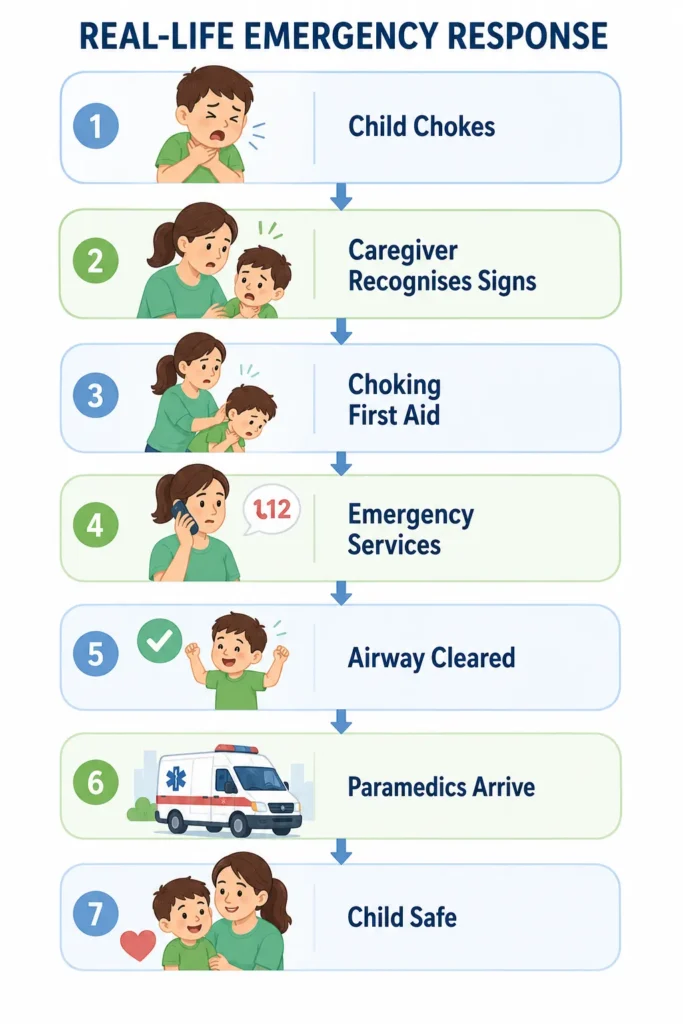
Imagine a two-year-old child who suddenly begins choking while eating lunch. The caregiver quickly recognises that the child is unable to cough or speak and immediately applies the correct age-appropriate choking first aid techniques while another adult calls emergency services. Within moments, the blockage is safely removed, allowing the child to breathe normally before paramedics arrive.
This example highlights how recognising an emergency, acting quickly, and applying the correct paediatric first aid techniques can prevent a life-threatening situation and significantly improve a child’s chances of a full recovery.
Conclusion
Paediatric first aid is an essential skill that helps parents, caregivers, teachers, and childcare professionals respond quickly and confidently during a child’s emergency. From choking and CPR to burns and allergic reactions, knowing the correct first aid techniques can help protect children and reduce the risk of serious complications.
Learning paediatric first aid not only prepares you for emergencies but also helps create a safer environment for children at home, school, and childcare settings. Investing in paediatric first aid training is a simple step that could one day save a child’s life.