
What is Rigging Safety?Complete Beginner Guide to Safe Lifting and Load Handling
What is Rigging Safety?
Introduction
In industries such as construction, oil and gas, manufacturing, shipping, and heavy engineering, moving large and heavy loads is a daily activity. These lifting operations require careful planning, specialized equipment, and trained professionals to ensure that loads are lifted safely without causing accidents or injuries.
This is where rigging safety becomes extremely important.
Rigging safety involves the correct use of rigging equipment, proper lifting techniques, and strict safety procedures to move heavy loads safely using cranes, hoists, and lifting devices. Without proper rigging safety practices, lifting operations can lead to serious workplace accidents, equipment damage, and even fatalities.
This beginner-friendly guide explains everything you need to know about rigging safety, its importance, equipment used, hazards involved, and best practices for safe lifting operations.
What is Rigging Safety?
Rigging safety refers to the set of procedures, techniques, equipment standards, and safety practices used to securely attach, lift, move, and position heavy loads using lifting equipment such as cranes, hoists, slings, chains, shackles, hooks, and wire ropes. It is a critical part of lifting operations in industries like construction, oil and gas, manufacturing, shipping, logistics, and heavy engineering.
In simple terms, rigging safety ensures that heavy objects are lifted and transported in a controlled, stable, and secure manner without causing harm to workers, equipment, or surrounding structures. Because lifting operations often involve extremely heavy loads—sometimes weighing several tons—even a small mistake in rigging can result in serious accidents, equipment damage, or workplace injuries.
Rigging safety focuses on ensuring that every lifting operation is properly planned, executed, and monitored so that the load remains stable and under control throughout the entire lifting process.
Effective rigging safety ensures that loads are:
- Properly secured using appropriate rigging equipment such as slings, shackles, and hooks
- Balanced correctly to prevent the load from tilting, swinging, or shifting during lifting
- Lifted within safe working load limits (SWL) of the equipment being used
- Handled with proper rigging techniques to maintain stability and control
- Moved safely without endangering workers, nearby equipment, or structures
Rigging safety procedures help reduce workplace hazards, prevent dropped loads, and ensure smooth lifting operations in industrial environments where heavy materials must be transported regularly.
A properly executed rigging operation requires several important elements, including:
- Careful lift planning and risk assessment
- The use of certified and inspected rigging equipment
- Trained and competent personnel, such as qualified riggers and crane operators
- Clear communication between lifting teams
- Strict adherence to industry safety standards and regulations
By following proper rigging safety practices, organizations can protect workers, prevent costly accidents, and maintain efficient lifting operations across a wide range of industrial activities.
What is Rigging in Lifting Operations?
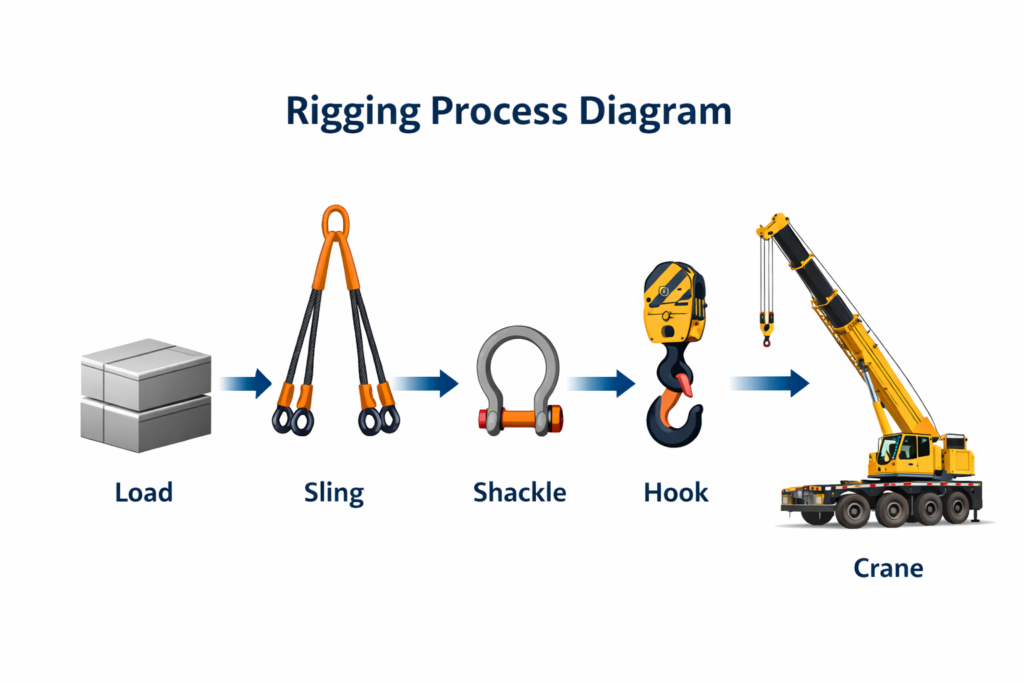
Rigging in lifting operations refers to the process of preparing, attaching, and securing a load to lifting equipment so that it can be safely lifted, moved, and positioned. It is a critical step in any lifting activity because improper rigging can cause the load to become unstable, shift unexpectedly, or fall during lifting.
The rigging process involves selecting the correct rigging equipment, assembling the components properly, and ensuring that the load is balanced and secured before the lift begins. Proper rigging ensures that the weight of the load is evenly distributed and that the lifting equipment operates within its safe working limits.
Rigging operations typically involve the use of various rigging components, including:
- Slings – flexible lifting devices used to support and secure loads
- Hooks – used to attach the load or rigging gear to cranes or lifting devices
- Shackles – connectors used to link slings, chains, and lifting equipment
- Chains – strong metal links used for heavy-duty lifting operations
- Wire ropes – durable steel cables used to support and lift heavy loads
- Lifting beams and spreader bars – devices used to distribute the weight of the load evenly
A trained professional known as a rigger is responsible for performing rigging tasks and ensuring that the load is properly attached and balanced before lifting begins. The rigger must evaluate the load weight, select the appropriate rigging equipment, and determine the safest lifting method.
During lifting operations, the rigger works closely with the crane operator and signal person to coordinate the movement of the load. Clear communication and proper signaling are essential to ensure that the lifting process is carried out safely and efficiently.
Proper rigging techniques play a vital role in preventing load instability, avoiding equipment damage, and ensuring the safety of all workers involved in lifting operations.
Why is Rigging Safety Important?
Rigging safety is extremely important because lifting operations often involve very heavy and complex loads that may weigh several tons. These loads are typically moved using cranes, hoists, and other lifting equipment in busy industrial environments. If proper rigging techniques are not followed, the load may become unstable, shift unexpectedly, or even fall during lifting, which can lead to serious workplace accidents.
Without proper rigging safety measures, lifting operations can pose significant risks to workers, equipment, and surrounding structures. For this reason, industries that rely on heavy lifting place strong emphasis on rigging safety procedures, equipment inspections, and professional training to ensure every lift is carried out safely and efficiently.
The importance of rigging safety can be understood through several key factors:
Preventing Workplace Accidents
One of the primary goals of rigging safety is to prevent accidents during lifting operations. Improper rigging practices can lead to dangerous situations such as dropped loads, equipment failure, or uncontrolled load movement. These incidents can cause severe injuries, fatalities, and major operational disruptions.
Protecting Workers
Rigging safety plays a vital role in protecting workers who are involved in or working near lifting operations. When loads are properly secured and balanced, the risk of falling objects or load shifts is significantly reduced. Following proper safety procedures ensures that workers remain safe while performing their duties.
Protecting Equipment and Materials
Incorrect rigging techniques or overloading lifting equipment can damage cranes, hoists, slings, and other rigging tools. Proper rigging safety helps protect valuable equipment and materials from damage, reducing maintenance costs and preventing operational delays.
Improving Operational Efficiency
When lifting operations are properly planned and executed using safe rigging practices, work can be completed more smoothly and efficiently. Safe rigging reduces downtime, prevents accidents, and allows projects to proceed without unnecessary interruptions.
Ensuring Compliance with Safety Regulations
Many industries must follow strict safety standards and regulations related to lifting and rigging operations. Organizations are required to comply with international safety guidelines such as those provided by OSHA and other occupational safety authorities. Following proper rigging safety procedures helps companies remain compliant with these regulations while maintaining a safe working environment.
In summary, rigging safety is essential for preventing accidents, protecting workers and equipment, maintaining productivity, and ensuring compliance with workplace safety standards in industries that rely on lifting and load handling operations.
Industries That Use Rigging Operations
Rigging operations are used in many industries where heavy loads must be lifted or moved.
Some of the most common industries include:
- Construction industry
- Oil and gas industry
- Shipbuilding and maritime operations
- Manufacturing plants
- Logistics and material handling
- Power plants and heavy engineering
In these industries, safe lifting operations are essential to maintain productivity and workplace safety.
Common Rigging Equipment
Rigging operations depend on a variety of specialized tools and lifting accessories that are designed to secure, support, and move heavy loads safely. These rigging components work together with cranes, hoists, and other lifting machines to ensure that loads are properly balanced and lifted without causing accidents or equipment failure.
Using the correct rigging equipment is essential for maintaining load stability, preventing overloading, and ensuring safe lifting operations in industrial environments such as construction sites, manufacturing plants, shipyards, and oil and gas facilities.
Below are some of the most commonly used rigging tools in lifting operations.
Slings
Slings are one of the most important rigging components used to support and lift heavy loads. They are flexible lifting devices that wrap around or attach to the load and connect it to the lifting equipment.
Slings are designed to distribute the weight of the load evenly and maintain stability during lifting. Different types of slings are used depending on the load weight, shape, and lifting conditions.
Common types of slings include:
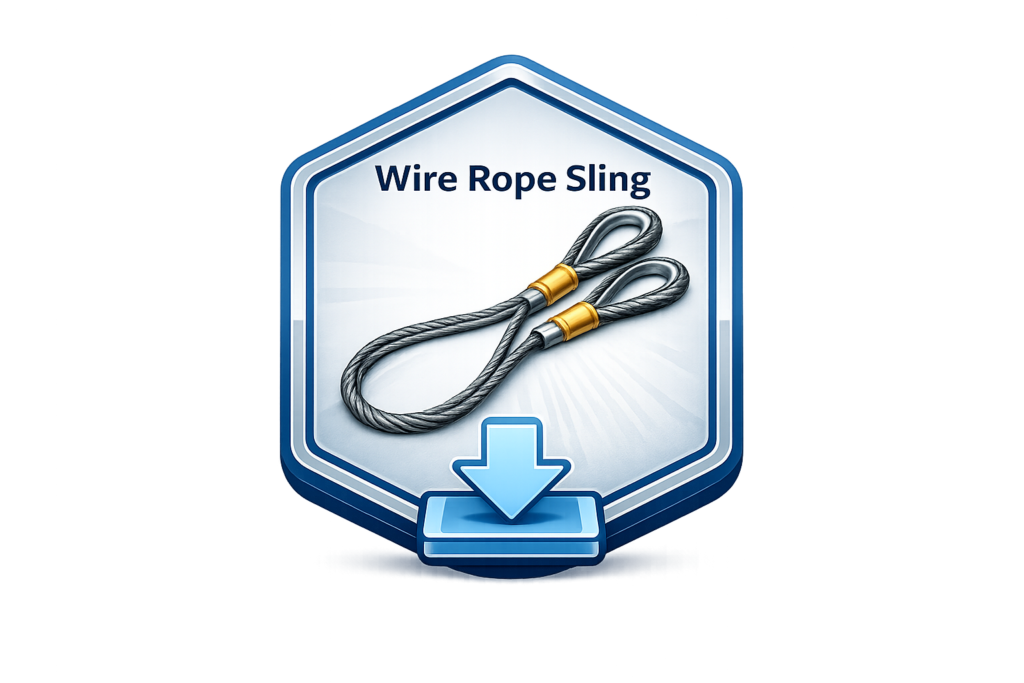
- Wire Rope Slings – Made from steel wire strands, these slings are extremely strong and commonly used for heavy-duty lifting operations.
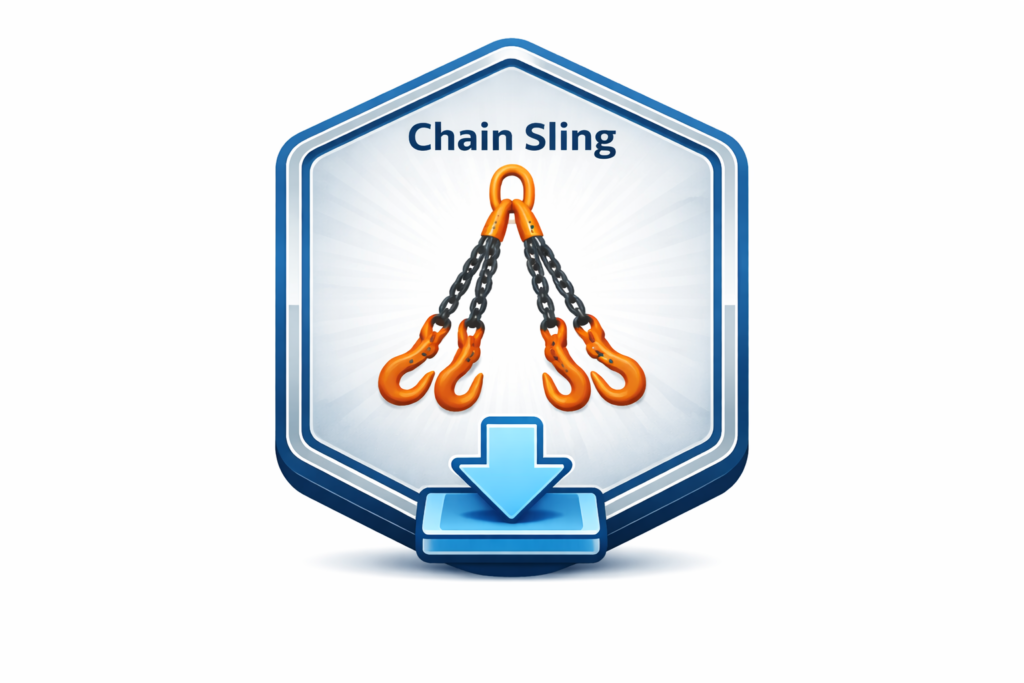
- Chain Slings – Durable and resistant to high temperatures, chain slings are widely used in rugged industrial environments.
- Synthetic Web Slings – Made from polyester or nylon materials, these slings are lightweight and ideal for lifting delicate or fragile loads.
Each type of sling is designed for specific lifting applications and load capaci
Shackles
Shackles are metal connectors used to join different rigging components together. They play a crucial role in linking slings, chains, and lifting equipment to the load.
Typically made from high-strength steel, shackles provide a secure connection point and help maintain the stability of the lifting setup. Common types include anchor shackles and chain shackles, each designed for different load directions and lifting conditions.

Hooks
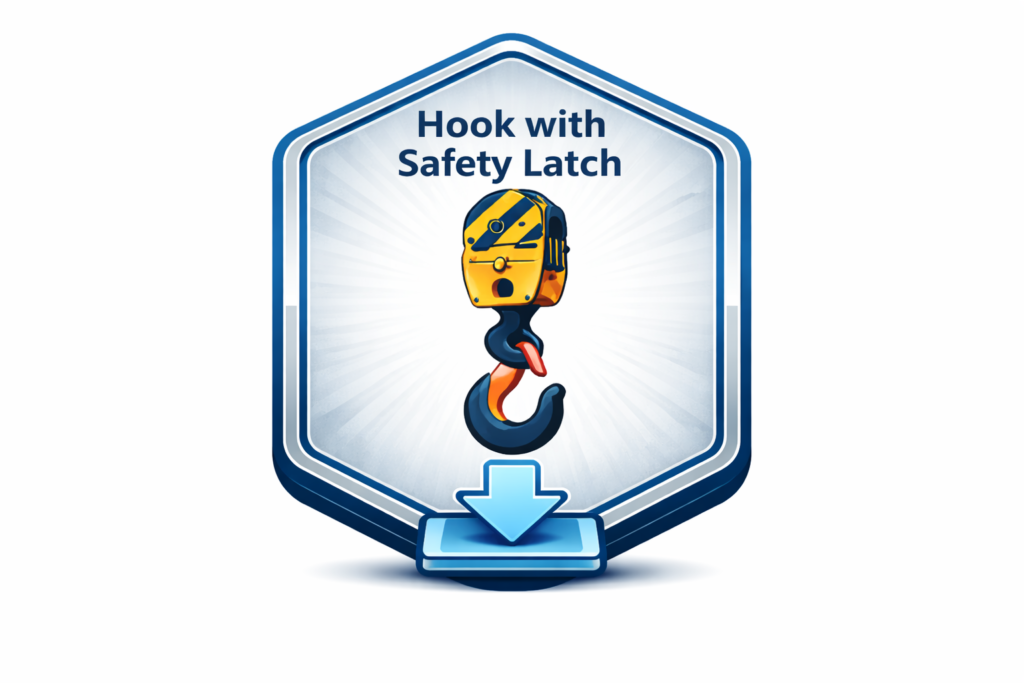
Hooks are essential rigging components used to attach lifting equipment to the load or rigging assembly. They are commonly connected to cranes, hoists, and lifting machines and serve as the primary point where the load is suspended during lifting.
Many lifting hooks are designed with safety latches to prevent slings or chains from accidentally slipping off during lifting operations.
Wire Ropes
Wire ropes are commonly used in cranes, hoists, and lifting systems where they support and move heavy loads safely.
Wire ropes are strong steel cables composed of multiple strands of wire twisted together. They are widely used in rigging and lifting operations because of their exceptional strength, durability, and flexibility.
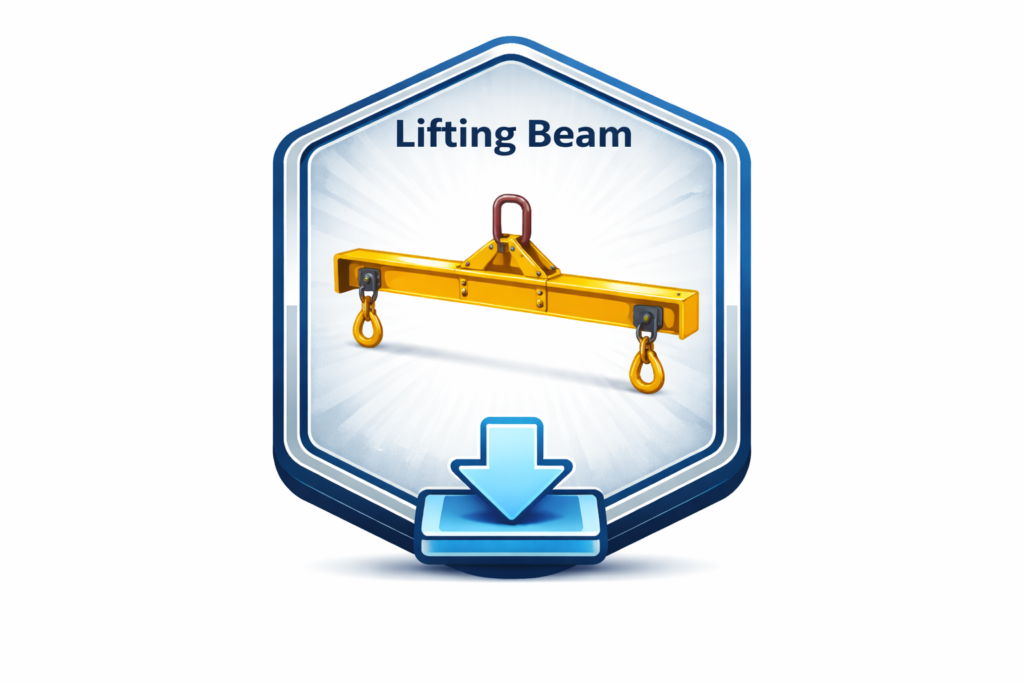
Lifting Beams and Spreader Beams
Lifting beams and spreader beams are specialized devices used to distribute the weight of a load evenly during lifting operations. They help reduce stress on slings and rigging equipment while maintaining load balance and stability.
These beams are especially useful when lifting large, long, or irregularly shaped loads, as they prevent the load from bending or becoming unstable during lifting.
Basic Rigging Safety Rules
Rigging operations involve lifting and moving heavy loads using cranes, hoists, and other lifting equipment. Because these loads can weigh several tons, even a small mistake during rigging can lead to serious accidents. For this reason, following proper rigging safety rules is essential to protect workers, equipment, and materials during lifting operations.
Below are seven essential rigging safety rules that should always be followed to ensure safe and efficient lifting.
1. Inspect Rigging Equipment Before Use
Before starting any lifting operation, all rigging equipment must be thoroughly inspected to ensure it is safe and suitable for use. Equipment such as slings, shackles, hooks, chains, and wire ropes should be checked for any signs of damage or defects.
During inspection, workers should look for:
- Cracks or fractures in metal components
- Corrosion or rust that weakens the equipment
- Excessive wear and tear on slings or ropes
- Bent or deformed hooks and shackles
- Broken wires in wire ropes
Using damaged rigging equipment can result in equipment failure and dropped loads. Therefore, any defective equipment must be removed from service immediately and replaced with properly certified gear.
| Equipment | What to Inspect | Possible Damage |
|---|---|---|
| Slings | fraying or cuts | sling failure |
| Shackles | cracks or deformation | connection failure |
| Hooks | bent hook or latch damage | load slip |
| Wire Rope | broken wires | rope breakage |
| Chains | corrosion or stretch | chain failure |
2. Know the Exact Load Weight
One of the most important rules in rigging safety is to accurately determine the weight of the load before lifting it. Every piece of lifting equipment has a Safe Working Load (SWL) or rated capacity that indicates the maximum weight it can safely handle.
If the load exceeds the equipment’s capacity, it can cause:
- Sling failure
- Crane overload
- Structural damage to lifting equipment
Riggers must always ensure that the lifting equipment and rigging components are rated for the load weight and that the lifting configuration can safely support the load.
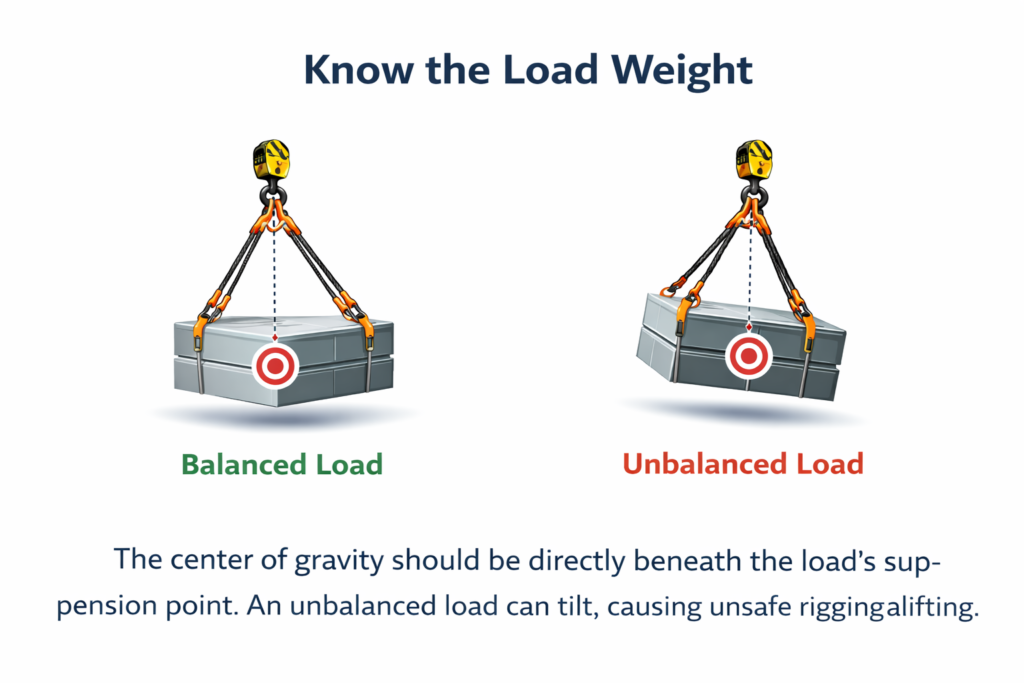
3. Use Correct Sling Angles and Rigging Configuration
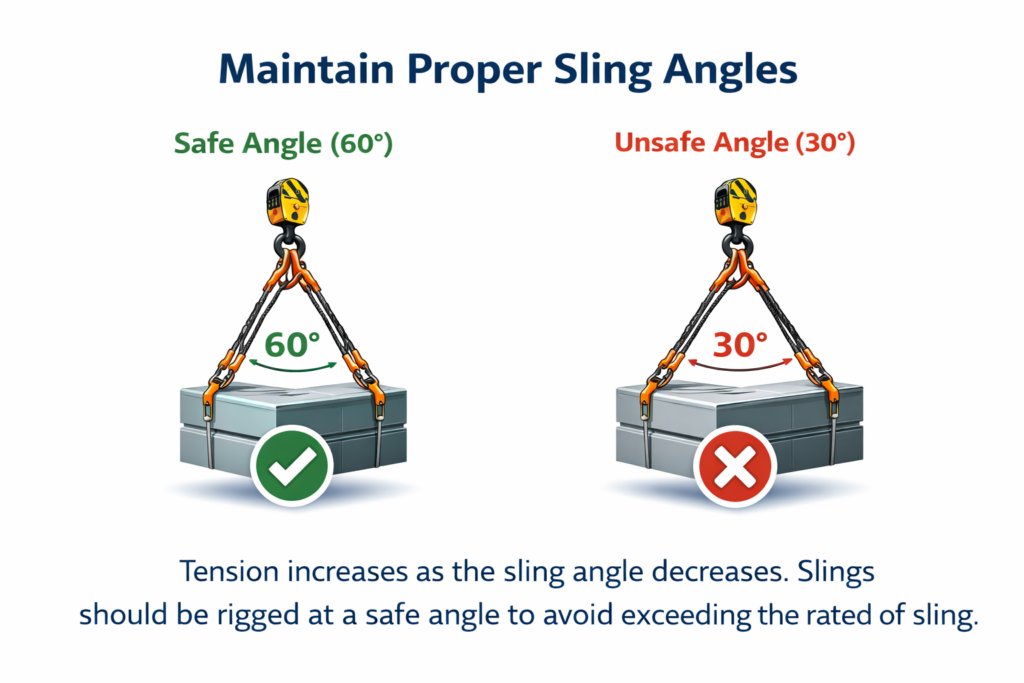
The angle at which slings are attached to a load plays a major role in lifting safety. Improper sling angles can significantly increase the tension on slings and rigging equipment, even if the load weight appears to be within limits.
For example, when sling angles become too shallow, the tension in the slings increases dramatically, which can lead to equipment failure.
To maintain safe lifting conditions:
- Use appropriate sling angles
- Ensure the load is balanced properly
- Select the correct rigging configuration for the load shape and weight
Proper sling setup helps maintain load stability and reduces stress on rigging components.
4. Ensure Clear Communication During Lifting
Effective communication between the rigger, signal person, and crane operator is essential during lifting operations. Miscommunication or lack of coordination can cause sudden load movements or unsafe lifting conditions.
Clear communication can be achieved through:
- Standard hand signals
- Two-way radios
- Designated signal persons responsible for guiding the lift
Only one signal person should give instructions to the crane operator to avoid confusion during lifting operations.
5. Keep Workers Away from Suspended Loads
A fundamental rule of rigging safety is that no one should ever stand or walk under a suspended load. If a rigging component fails or the load shifts unexpectedly, the falling load can cause severe injuries or fatalities.
To maintain a safe working environment:
- Establish exclusion zones around lifting operations
- Ensure workers stay clear of suspended loads
- Never allow personnel to pass beneath lifted materials
Maintaining safe distances significantly reduces the risk of accidents during lifting operations.
6. Wear Proper Personal Protective Equipment (PPE)
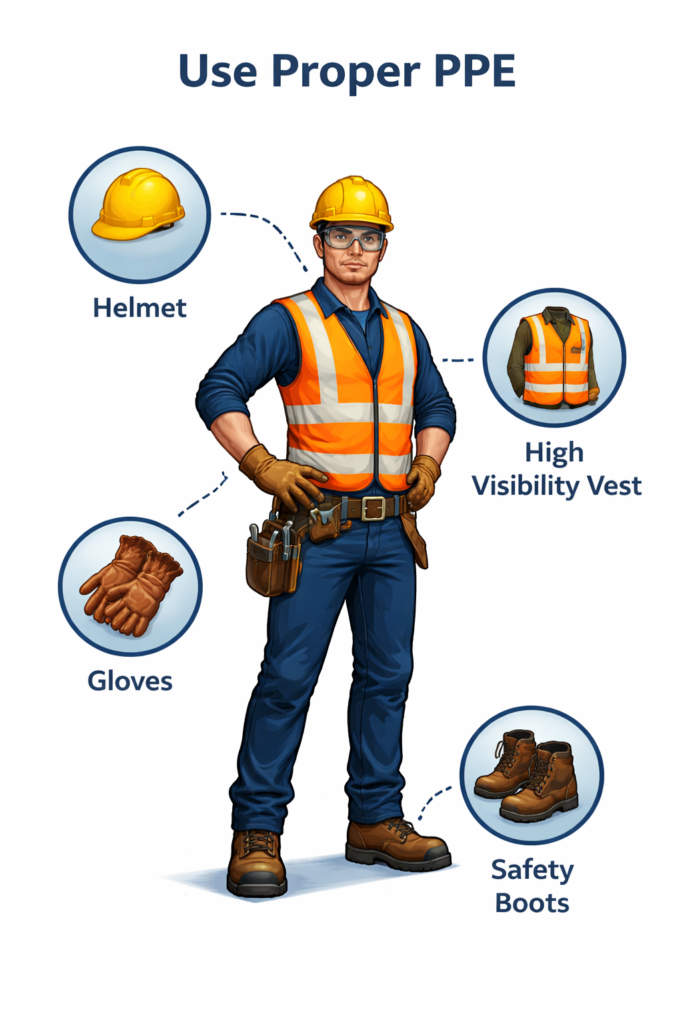
Workers involved in rigging operations should always wear appropriate personal protective equipment (PPE) to protect themselves from potential hazards.
Essential PPE for rigging operations typically includes:
- Safety helmets to protect against falling objects
- Protective gloves to handle rigging equipment safely
- Steel-toe safety boots to protect feet from heavy objects
- High-visibility clothing to improve visibility in busy work areas
Using proper PPE adds an additional layer of protection for workers during lifting operations.
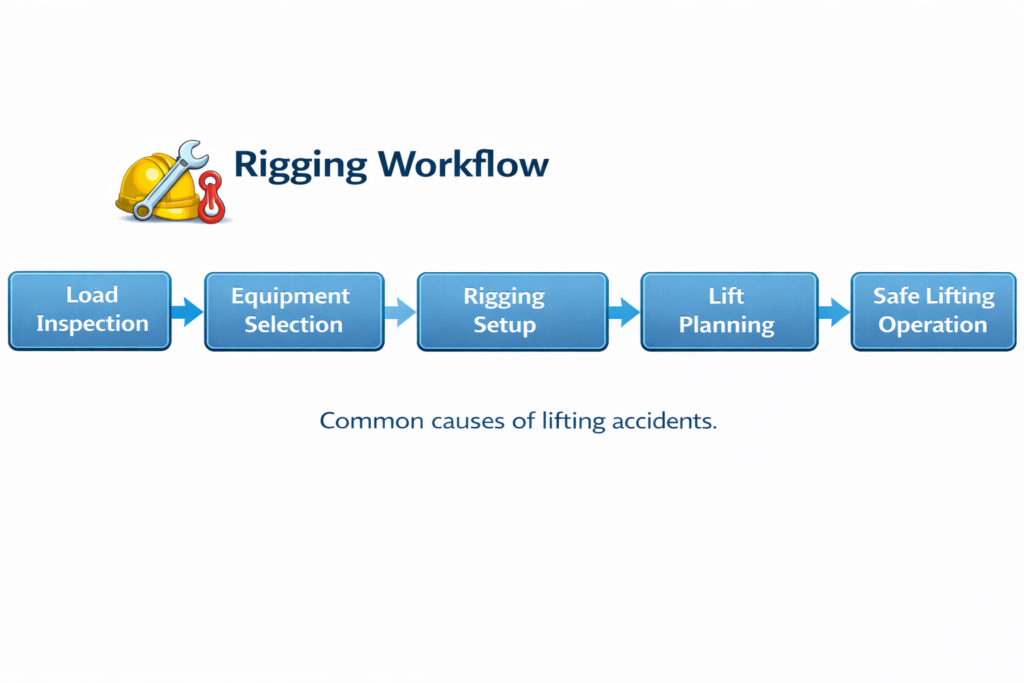
7. Plan the Lift and Assess Risks
Every lifting operation should begin with proper planning and risk assessment. This involves evaluating the lifting environment, load weight, lifting path, and potential hazards before starting the operation.
Key elements of lift planning include:
- Identifying the load weight and center of gravity
- Selecting appropriate rigging equipment
- Assessing environmental conditions such as wind or obstacles
- Ensuring all workers understand their roles during the lift
Proper lift planning helps prevent unexpected problems and ensures that the lifting operation is carried out safely, smoothly, and efficiently.
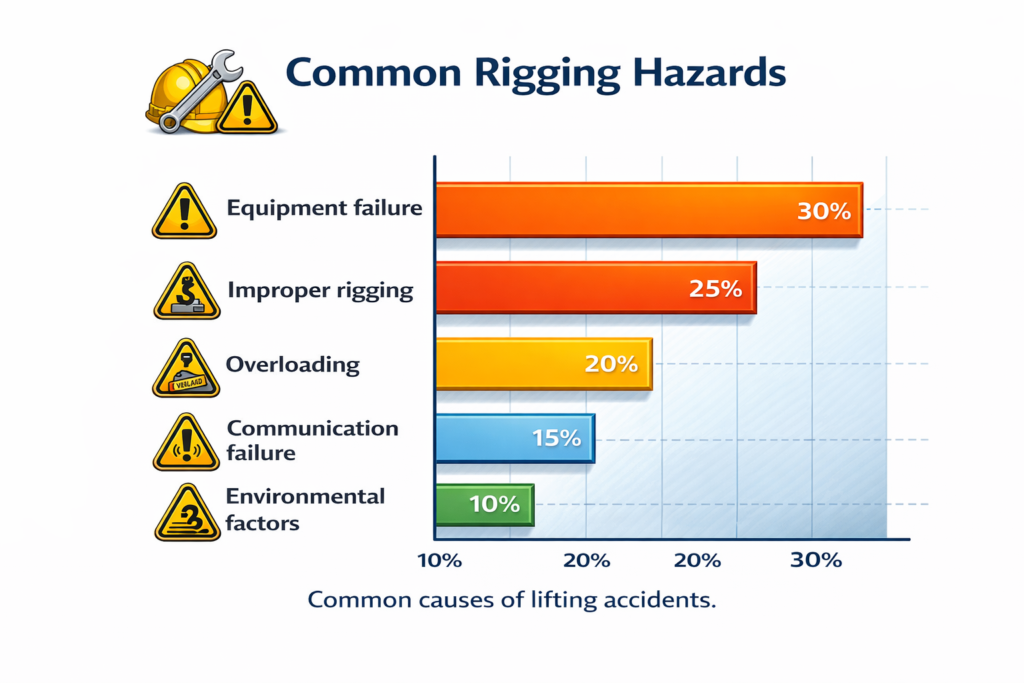
Common Rigging Hazards
Rigging operations involve several potential hazards that must be managed carefully.
Some of the most common hazards include:
Load Instability
Improper rigging can cause loads to shift or swing during lifting.
Equipment Failure
Damaged slings or shackles may break during lifting operations.
Overloading
Lifting loads beyond the equipment’s capacity can cause serious accidents.
Poor Communication
Lack of coordination between workers can lead to dangerous lifting situations.
Environmental Factors
Wind, weather conditions, and limited visibility can also affect lifting operations.
Understanding these hazards helps workers take preventive measures and improve workplace safety.
Who is a Rigger?
A rigger is a trained professional who specializes in safely preparing and securing heavy loads so they can be lifted, moved, or positioned using cranes, hoists, or other lifting equipment. In simple terms, the rigger is the person responsible for making sure that a load is properly attached, balanced, and safe to lift before the lifting operation begins.
Rigging is a highly skilled job because lifting operations often involve large, heavy, and expensive materials. If a load is not secured correctly, it can shift, fall, or become unstable, which may lead to serious accidents. For this reason, riggers must have proper training, technical knowledge, and practical experience in lifting and load handling.
A professional rigger performs several important tasks to ensure safe lifting operations, including:
- Selecting the correct rigging equipment such as slings, shackles, hooks, and chains based on the load type and weight
- Inspecting lifting gear and rigging tools to make sure they are in good condition and safe to use
- Estimating or calculating the load weight and center of gravity to maintain proper balance during lifting
- Attaching the load securely using the correct rigging methods and configurations
- Ensuring that all safety procedures are followed before and during the lifting process
- Communicating clearly with the crane operator and signal person to guide the movement of the load safely
In many lifting operations, the rigger acts as the key link between the load and the lifting equipment, making their role extremely important for workplace safety.
Riggers play a crucial role in industries such as construction, oil and gas, shipbuilding, manufacturing, and logistics, where heavy lifting is a regular part of daily operations. Their knowledge and expertise help ensure that lifting tasks are performed efficiently, safely, and without risk to workers or equipment.
Best Practices for Safe Rigging
To maintain safe lifting operations, workers should follow these best practices:
- Always plan lifting operations in advance
- Use certified and inspected rigging equipment
- Ensure loads are balanced properly
- Maintain clear communication during lifting
- Follow industry safety regulations
- Provide professional training to workers
These practices significantly reduce the risk of accidents.
Importance of Rigging Safety Training
Proper training is essential for workers involved in lifting operations.
Rigging safety training teaches workers how to:
- inspect rigging equipment
- calculate safe load limits
- select proper slings
- identify lifting hazards
- follow safe lifting procedures
Professional training programs help workers develop the skills required to perform safe and efficient rigging operations.
Many industries require workers to complete rigging safety and load handling training before participating in lifting operations.
Workers involved in lifting operations should receive proper training to understand load calculations, sling angles, and equipment inspection. A professional Rigging Safety and Load Handling certification course helps workers develop the essential skills required for safe lifting operations.
Conclusion
Rigging safety plays a vital role in ensuring that lifting operations are carried out safely, efficiently, and without risk to workers or equipment. In industries where heavy loads are moved regularly, following proper rigging procedures is essential to prevent accidents, equipment failures, and workplace injuries.
By using the correct rigging equipment, applying proper lifting techniques, and carefully planning each lifting operation, organizations can significantly reduce potential hazards associated with load handling. Safe rigging practices not only protect workers but also help maintain productivity and prevent costly delays caused by accidents or damaged equipment.
Understanding the fundamentals of rigging safety such as load balance, equipment inspection, communication, and risk assessment—allows workers to perform lifting operations with greater confidence and control.
Additionally, investing in professional rigging safety and load handling training ensures that workers gain the necessary knowledge, practical skills, and safety awareness required to handle lifting operations responsibly. Well-trained riggers and lifting teams play a key role in creating a safer work environment and improving overall operational efficiency in industrial workplaces.