ATTICS International
ATTICS International Welcome to ATTICS International
CoursesICTQualAB › ICTQual Certified LEEDS Green Building Associate

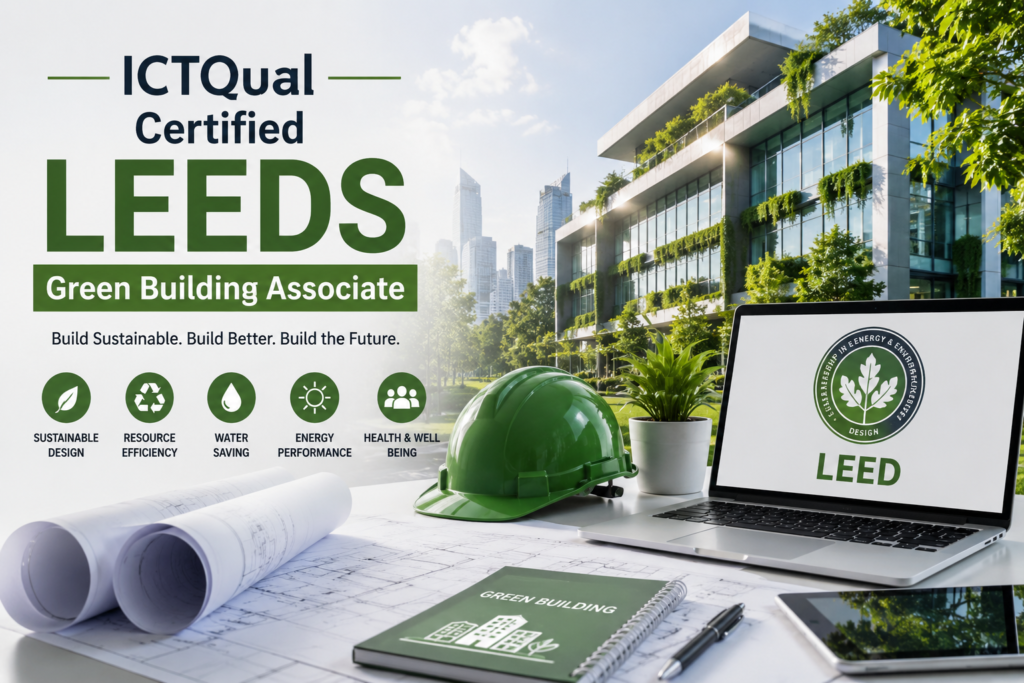
ICTQual Certified LEEDS Green Building Associate

The ICTQual Certified LEED Green Building Associate is a professional LMS-based certification designed to develop learners’ understanding of sustainable building practices, green construction principles, and the fundamentals of LEED (Leadership…

Beginner 10 lessons 10 quizzes
Overview
Curriculum 20
Instructor

What You Will Learn

The ICTQual AB Level 6 Diploma in Oral and Maxillofacial Surgery (Dip OMFS) equips learners with the advanced knowledge and practical skills needed to support diagnosis, treatment, and patient care in oral and maxillofacial surgery.

  • Understand the principles of oral and maxillofacial surgery.
  • Develop skills in patient assessment and clinical diagnosis.
  • Learn surgical procedures and treatment planning techniques.
  • Gain knowledge of oral pathology, trauma, and facial reconstruction.
  • Apply infection prevention, patient safety, and clinical best practices.
  • Enhance professional, ethical, and multidisciplinary healthcare skills.

The ICTQual Certified LEED Green Building Associate is a professional LMS-based certification designed to develop learners’ understanding of sustainable building practices, green construction principles, and the fundamentals of LEED (Leadership in Energy and Environmental Design). This certification introduces the key concepts required to understand how buildings can be designed, constructed, and operated with improved environmental performance, energy efficiency, and responsible resource management.

As the global construction industry continues to focus on sustainability, carbon reduction, and environmentally responsible development, knowledge of green building standards has become increasingly important for professionals involved in the built environment. The ICTQual Certified LEED Green Building Associate provides learners with essential awareness of green building strategies, sustainable design approaches, energy and water efficiency, material selection, indoor environmental quality, and the role of certification systems in supporting sustainable projects.

This certification is suitable for construction professionals, architects, engineers, facility managers, project coordinators, sustainability professionals, and individuals seeking to enhance their knowledge of sustainable construction and green building practices. It helps learners understand the principles behind LEED-certified buildings and how sustainability considerations are integrated into modern building projects.

Through this course, learners develop the knowledge needed to recognise green building opportunities, support sustainability initiatives, and contribute to environmentally responsible construction practices. The ICTQual Certified LEED Green Building Associate provides practical knowledge aligned with current sustainability trends, helping professionals understand the importance of efficient buildings, reduced environmental impact, and long-term sustainable development within the construction sector.

Requirements

The ICTQual AB Level 6 Diploma in Oral and Maxillofacial Surgery (Dip OMFS) is designed for healthcare professionals seeking advanced knowledge and practical skills in oral and maxillofacial surgery.

  • Age: 18 years or above.
  • Educational Background: A Level 5 qualification or equivalent in dentistry, dental technology, medicine, or a related healthcare field.
  • Experience: Relevant clinical or healthcare experience is recommended.
  • Language Proficiency: Good English reading, writing, and communication skills are required.
Section 1: Unit no 1 : Introduction to Green Building and Sustainability
4 items
This chapter introduces learners to the fundamental principles of green building, sustainability, and environmentally responsible construction practices. It explains the importance of sustainable development in the built environment and explores how green buildings are designed to reduce environmental impact, improve energy efficiency, conserve resources, and enhance occupant wellbeing. Learners will gain an understanding of key sustainability concepts, including efficient energy use, water conservation, sustainable materials, waste reduction, and improved indoor environmental quality.nnAs the foundation chapter of the ICTQual Certified LEEDS Green Building Associate course, it provides learners with essential knowledge of green building approaches and the role of sustainability in modern construction projects. The chapter also introduces green building rating systems and the importance of applying sustainable principles throughout the building lifecycle, preparing learners to understand advanced topics related to green design, environmental performance, and sustainable building practices.
Lesson 1 Understand the principles of green building and sustainability.
Quiz 1 Understand the principles of green building and sustainability.
Quiz
Lesson 2 Identify the benefits and challenges associated with sustainable construction.
Quiz 2 Identify the benefits and challenges associated with sustainable construction.
Quiz
Section 2: Unit no 2 : Environmental Impact and Building Performance
4 items
The Environmental Impact and Building Performance** chapter of the **ICTQual Certified LEEDS Green Building Associate** course introduces learners to the relationship between buildings, environmental sustainability, and overall building efficiency. This chapter explores how building design, construction, operation, and maintenance affect energy consumption, carbon emissions, water efficiency, waste management, and the use of sustainable materials. Learners will understand key principles of green building performance and the importance of reducing environmental impacts through sustainable practices.nnThis chapter also focuses on strategies for improving building performance through energy optimisation, resource conservation, indoor environmental quality, and sustainable building solutions. Learners will develop the ability to evaluate environmental impacts, identify performance improvement opportunities, and support the development of healthier, efficient, and environmentally responsible buildings aligned with global green building standards.
Lesson 1 Assess the environmental impacts of buildings throughout their lifecycle.
Quiz 1 Assess the environmental impacts of buildings throughout their lifecycle.
Quiz
Lesson 2 Understand how to evaluate a building’s performance in terms of energy and resource use
Quiz no 2 : Understand how to evaluate a building’s performance in terms of energy and resource use
Quiz
Section 3: Unit no 3 : Sustainable Site Development and Water Efficiency
4 items
The Sustainable Site Development and Water Efficiency chapter introduces the principles of developing environmentally responsible building sites while promoting the efficient use of water resources. Learners will explore sustainable site selection, ecosystem protection, pollution prevention, heat island reduction, sustainable landscaping, and strategies that minimise the environmental impact of construction activities.nnThe chapter also covers practical water efficiency measures, including water conservation, efficient irrigation systems, water reuse, rainwater harvesting, and water-saving technologies. By the end of this chapter, learners will understand how sustainable site planning and responsible water management contribute to green building performance, environmental protection, and compliance with internationally recognised green building standards.
Lesson 1 Identify strategies for sustainable site development and land use
Quiz no 1 Identify strategies for sustainable site development and land use
Quiz
Lesson 2 : Understand techniques for water efficiency and conservation in buildings.
Quiz no 2 Understand techniques for water efficiency and conservation in buildings.
Quiz
Section 4: Unit no 4 : Energy and Atmosphere in Green Buildings
4 items
The Energy and Atmosphere in Green Buildings chapter introduces learners to the key principles of energy efficiency, sustainable energy management, and environmental performance within green building design and operation. This chapter explores strategies for reducing energy consumption, improving building performance, integrating renewable energy solutions, and managing systems such as HVAC, lighting, and energy monitoring technologies to support sustainable development.nnLearners will understand the connection between building energy use, carbon emissions, and climate impact while exploring practical approaches for achieving energy optimisation and low-carbon building performance. The chapter develops the knowledge required to evaluate energy strategies, implement sustainable solutions, and contribute to the creation of efficient, environmentally responsible, and high-performance green buildings.
Lesson no 1 Learn about energy-efficient building practices and technologies.
Quiz no 1 Learn about energy-efficient building practices and technologies.
Quiz
Lesson no 2 Understand the importance of atmospheric considerations in building design and operation.
Quiz no 2 Understand the importance of atmospheric considerations in building design and operation.
Quiz
Section 5: Unit no 5 : Indoor Environmental Quality and Innovation
4 items
This chapter focuses on the importance of Indoor Environmental Quality (IEQ) in green building design and its impact on occupant health, comfort, wellbeing, and productivity. Learners will explore key factors including indoor air quality, ventilation, thermal comfort, lighting, acoustics, and the selection of sustainable materials that contribute to healthier and more efficient indoor environments.nnThe chapter also introduces innovative approaches and emerging technologies used to enhance green building performance, including smart building systems, environmental monitoring, and advanced design strategies. Learners will understand how IEQ principles and innovation support sustainable building outcomes, improve occupant experiences, and contribute to achieving green building certification objectives.
Lesson no 1 Recognize the key factors contributing to indoor environmental quality.
Quiz no 1 Recognize the key factors contributing to indoor environmental quality.
Quiz
Lesson no 2 Explore innovative strategies and technologies for improving building performance and occupant health.
Quiz no 2 Explore innovative strategies and technologies for improving building performance and occupant health.
Quiz

ictqualac@gmail.com

Administrator

ICTQual Certified LEEDS Green Building Associate
Free
  • 10 lessons
  • 10 quizzes
  • Certificate of completion
  • Lifetime access