
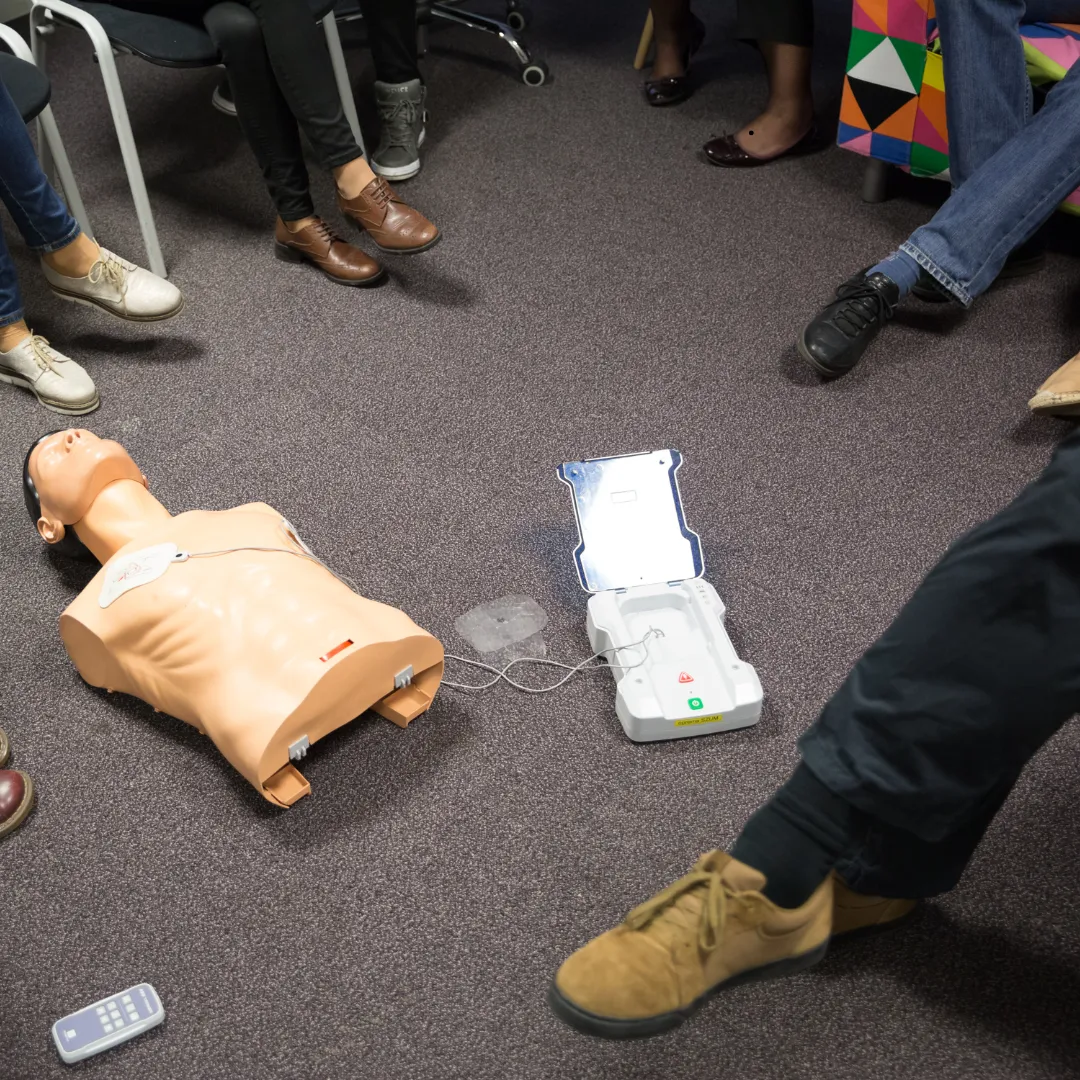
Course Overview
The OSHAA 30-Hours Professional Diploma in Automated External Defibrillator (AED) Programme is a specialised professional qualification designed to develop the knowledge, confidence, and practical competence required to respond effectively to sudden cardiac emergencies. Automated External Defibrillators (AEDs) play a vital role in increasing survival rates during cardiac arrest by delivering life-saving treatment before advanced medical assistance arrives.
This professional diploma is intended for individuals who wish to strengthen their emergency response capabilities and enhance their ability to provide immediate support during critical situations. The qualification promotes best practices in emergency preparedness, public safety, and life-saving intervention, helping learners understand the importance of rapid action when every second counts.
As organisations and communities place increasing emphasis on emergency readiness and health and safety standards, professionals with AED knowledge are becoming increasingly valuable across a wide range of sectors. The OSHAA 30-Hours Professional Diploma in Automated External Defibrillator (AED) Programme provides learners with a recognised pathway to develop essential life-saving skills, improve professional credibility, and contribute to safer workplaces, educational institutions, healthcare settings, sports facilities, and public environments.
Whether you work in healthcare, education, occupational health and safety, security, fitness, community services, or simply wish to enhance your emergency response knowledge, this diploma supports the development of practical skills that can make a meaningful difference during cardiac emergencies and potentially help save lives.
Course Structure
This qualification, the OSHAA 30-Hours Professional Diploma in Automated External Defibrillator (AED) Programme, consists of 9 units.
Study Units
Learning Outcomes
Here are the learning outcomes for each study unit:
Introduction to Cardiac Arrest and the Importance of Early Defibrillation (3 Hours)
- Understand the causes and impact of cardiac arrest
- Recognise the critical role of early defibrillation in improving survival rates
- Comprehend the chain of survival and how AED fits into emergency response
Anatomy and Physiology of the Heart and Circulatory System (3 Hours)
- Gain knowledge of heart structure and function
- Understand the basics of the circulatory system relevant to cardiac emergencies
- Identify how cardiac arrest affects heart and blood flow
Recognition of Sudden Cardiac Arrest and Emergency Response (4 Hours)
- Identify signs and symptoms of sudden cardiac arrest
- Learn appropriate steps to initiate emergency response
- Develop skills to assess and prioritise emergency situations
Fundamentals of Automated External Defibrillator (AED) Technology (3 Hours)
- Understand how AED devices work and their components
- Learn about different types of AEDs and their functions
- Recognise the limitations and capabilities of AED technology
Safe Operation and Application of AED Devices (5 Hours)
- Demonstrate correct use of AED devices following safety protocols
- Apply AED pads properly and operate the device confidently
- Manage safety for both casualty and responders during AED use
Integration of CPR and AED Use in Cardiac Emergencies (4 Hours)
- Understand how CPR complements AED use during cardiac arrest
- Perform coordinated CPR and AED procedures effectively
- Maintain high-quality chest compressions with minimal interruptions
Troubleshooting Common AED Issues and Device Maintenance (3 Hours)
- Identify and resolve common operational problems with AED devices
- Understand maintenance routines to ensure AED readiness
- Learn to check and replace AED batteries and pads appropriately
Legal and Ethical Considerations in AED Use (2 Hours)
- Understand legal responsibilities and protections for AED users
- Recognise ethical issues related to emergency care and AED application
- Learn about consent and liability in emergency situations
Emergency Scenario Simulations and Practical AED Training (3 Hours)
- Participate in realistic emergency simulations involving AED use
- Develop hands-on experience applying AED skills under pressure
- Build confidence and decision-making abilities for real-life emergencies
Certification Benefits
Earning the OSHAA 30-Hours Professional Diploma in Automated External Defibrillator (AED) Programme demonstrates your commitment to emergency preparedness, public safety, and life-saving intervention while enhancing your professional credibility across a wide range of industries.
- Gain a recognised professional qualification in AED awareness and emergency response.
- Develop confidence in responding to sudden cardiac arrest emergencies.
- Enhance your ability to use an Automated External Defibrillator (AED) effectively and safely.
- Strengthen your emergency preparedness and first-response capabilities.
- Improve your career prospects in healthcare, education, security, sports, fitness, and workplace safety roles.
- Demonstrate your commitment to health, safety, and duty-of-care responsibilities.
- Contribute to safer workplaces, schools, sports facilities, and public environments.
- Increase your value to employers seeking safety-conscious and emergency-ready professionals.
- Support organisational health and safety objectives and emergency response plans.
- Build professional credibility through specialised life-saving skills.
- Enhance your ability to remain calm and take appropriate action during critical incidents.
Course Eligibility
Learners should meet the following entry requirements:
Course Fee
140k PKR / 375GBP / 500 USD