
Environmental Policy Advisor: Complete Career Guide, Roles, Responsibilities, Skills, Qualifications, Salary & Future Opportunities (2026)
Environmental Policy Advisors play a vital role in protecting the environment by helping governments, businesses, and organisations develop policies that promote sustainability and ensure compliance with environmental laws. They research environmental issues, assess the impact of proposed projects, and recommend practical solutions that balance economic development with environmental protection.
As environmental challenges such as climate change, pollution, and resource management continue to grow, the demand for skilled Environmental Policy Advisors is increasing across both the public and private sectors. This guide explains what an Environmental Policy Advisor does, their key responsibilities, required skills and qualifications, career opportunities, salary expectations, and future trends to help you understand this rewarding profession.
What is an Environmental Policy Advisor?
An Environmental Policy Advisor is a professional who develops, evaluates, and advises on policies that help protect the environment and promote sustainable development. They work with governments, businesses, non-profit organisations, and environmental agencies to create practical solutions for issues such as climate change, pollution, waste management, biodiversity, and natural resource conservation.
Their role involves researching environmental laws and regulations, analysing scientific data, consulting with stakeholders, and recommending policies that balance environmental protection with economic and social development. By providing expert advice, Environmental Policy Advisors help organisations make informed decisions, comply with environmental legislation, and achieve long-term sustainability goals.
Why Are Environmental Policy Advisors Important?
Environmental Policy Advisors are important because they help organisations and governments make informed decisions that protect the environment while supporting sustainable economic and social development. They ensure that environmental policies are based on research, comply with regulations, and address challenges such as climate change, pollution, biodiversity loss, and resource management.
Their expertise helps reduce environmental risks, improve compliance with environmental laws, and promote responsible business practices. They also work with stakeholders, including government agencies, businesses, communities, and environmental organisations, to develop practical and effective policies that benefit both people and the environment.
As environmental regulations continue to evolve and sustainability becomes a global priority, Environmental Policy Advisors play a key role in shaping policies that contribute to a cleaner, healthier, and more sustainable future.
What Does an Environmental Policy Advisor Do?
An Environmental Policy Advisor researches environmental issues, develops policies, and provides expert guidance to help organisations and governments protect the environment while meeting legal and sustainability requirements. They analyse environmental data, review regulations, assess the impact of projects, and recommend practical solutions that support responsible decision-making.
Their work often involves collaborating with government agencies, businesses, environmental organisations, scientists, and local communities to create policies that address challenges such as climate change, pollution, waste management, biodiversity conservation, and natural resource management.
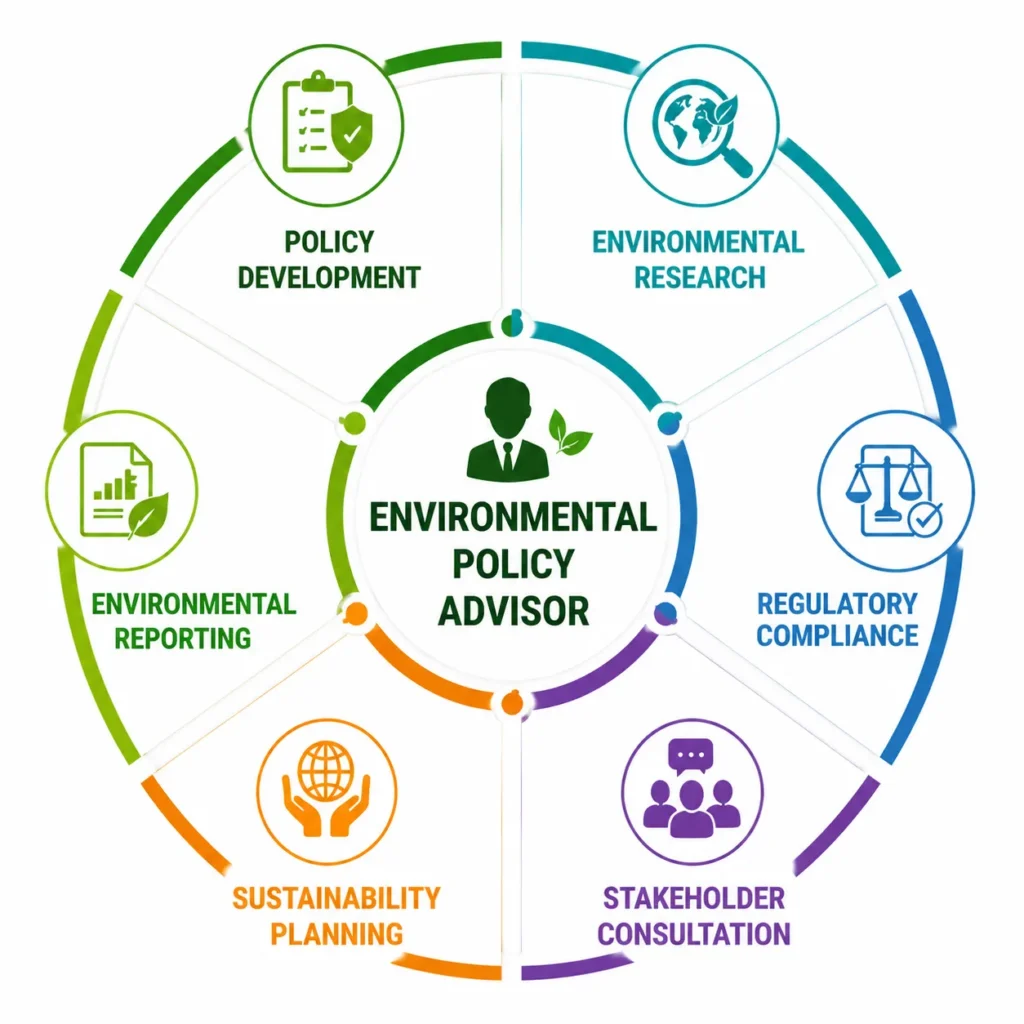
Key Roles and Responsibilities of an Environmental Policy Advisor
An Environmental Policy Advisor performs a variety of tasks to support environmental protection and sustainable development. Their key responsibilities include:
- Research environmental issues and emerging sustainability trends.
- Develop and review environmental policies and strategies.
- Ensure compliance with environmental laws and regulations.
- Assess the environmental impact of projects and proposed policies.
- Prepare policy reports, recommendations, and briefing documents.
- Analyse environmental data and scientific research.
- Advise decision-makers on environmental risks and opportunities.
- Collaborate with government agencies, businesses, and community stakeholders.
- Support the development of climate action and sustainability initiatives.
- Monitor the effectiveness of environmental policies and recommend improvements.
- Promote sustainable resource management and environmental best practices.
- Stay updated with changes in environmental legislation and international agreements.
A Day in the Life of an Environmental Policy Advisor
The daily responsibilities of an Environmental Policy Advisor vary depending on the organisation, but a typical day may include:
Morning
- Review environmental reports, legislation, and policy updates.
- Respond to emails and prepare for meetings.
- Analyse environmental data and research findings.
Midday
- Meet with government officials, project teams, or stakeholders.
- Discuss environmental concerns and proposed policy changes.
- Review project proposals to ensure environmental compliance.
Afternoon
- Draft policy documents, recommendations, or consultation responses.
- Conduct research on environmental regulations and sustainability initiatives.
- Prepare presentations or reports for senior management.
End of the Day
- Monitor the progress of environmental projects.
- Update policy documents based on new information.
- Plan priorities and tasks for upcoming projects and meetings.
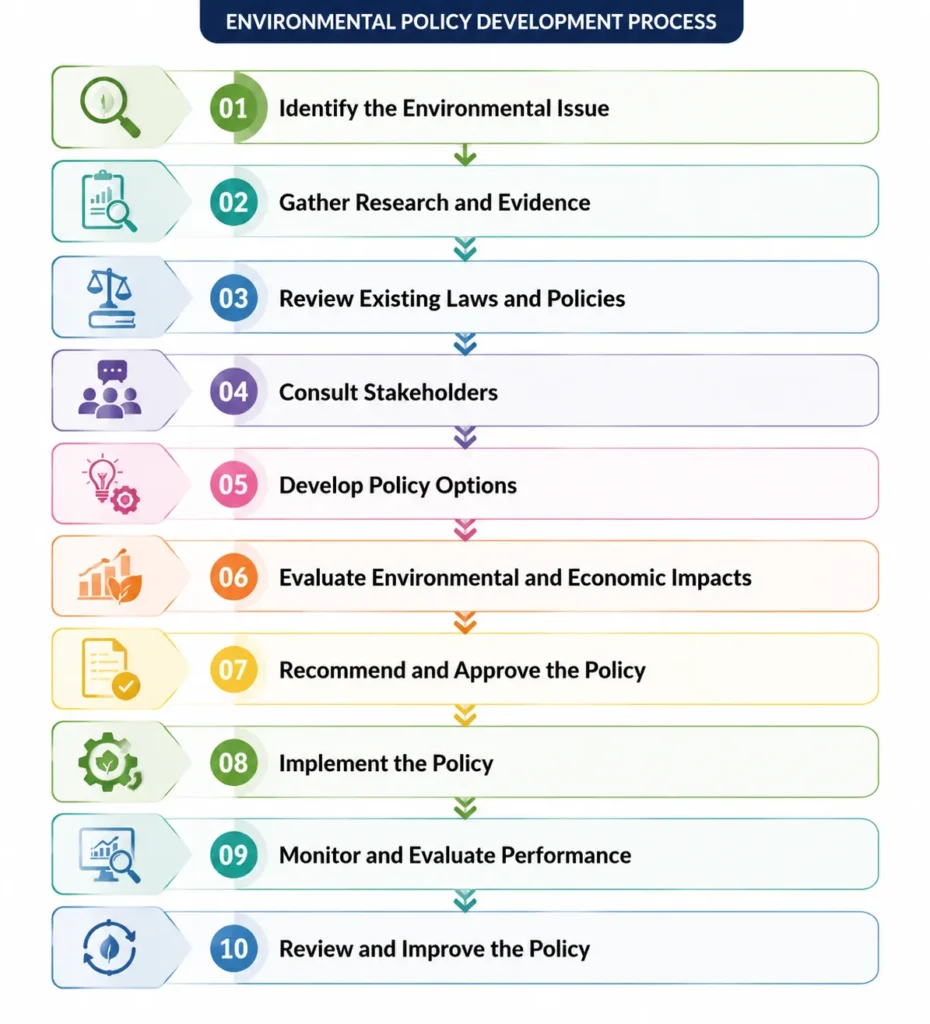
Environmental Policy Development Process (Step-by-Step)
Developing an effective environmental policy involves a structured process that ensures decisions are informed, practical, and aligned with environmental goals.
Step 1: Identify the Environmental Issue
Recognise a problem or challenge, such as air pollution, climate change, waste management, or water conservation, that requires policy action.
Step 2: Gather Research and Evidence
Collect scientific data, environmental reports, legal requirements, and stakeholder feedback to understand the issue and its potential impacts.
Step 3: Review Existing Laws and Policies
Examine current environmental legislation, regulations, and international agreements to identify requirements and opportunities for improvement.
Step 4: Consult Stakeholders
Engage with government agencies, businesses, environmental organisations, experts, and local communities to gather diverse perspectives and recommendations.
Step 5: Develop Policy Options
Create practical policy proposals that address the identified environmental issue while considering economic, social, and environmental factors.
Step 6: Evaluate Environmental and Economic Impacts
Assess the potential benefits, risks, costs, and long-term effects of each policy option before making recommendations.
Step 7: Recommend and Approve the Policy
Present the preferred policy to decision-makers with supporting evidence and implementation plans for review and approval.
Step 8: Implement the Policy
Work with relevant organisations and stakeholders to put the approved policy into action through programmes, regulations, or operational changes.
Step 9: Monitor and Evaluate Performance
Track the effectiveness of the policy using performance indicators, environmental data, and stakeholder feedback to measure its success.
Step 10: Review and Improve the Policy
Regularly update the policy to reflect new scientific evidence, technological advancements, changing regulations, and emerging environmental challenges, ensuring continuous improvement and long-term sustainability.
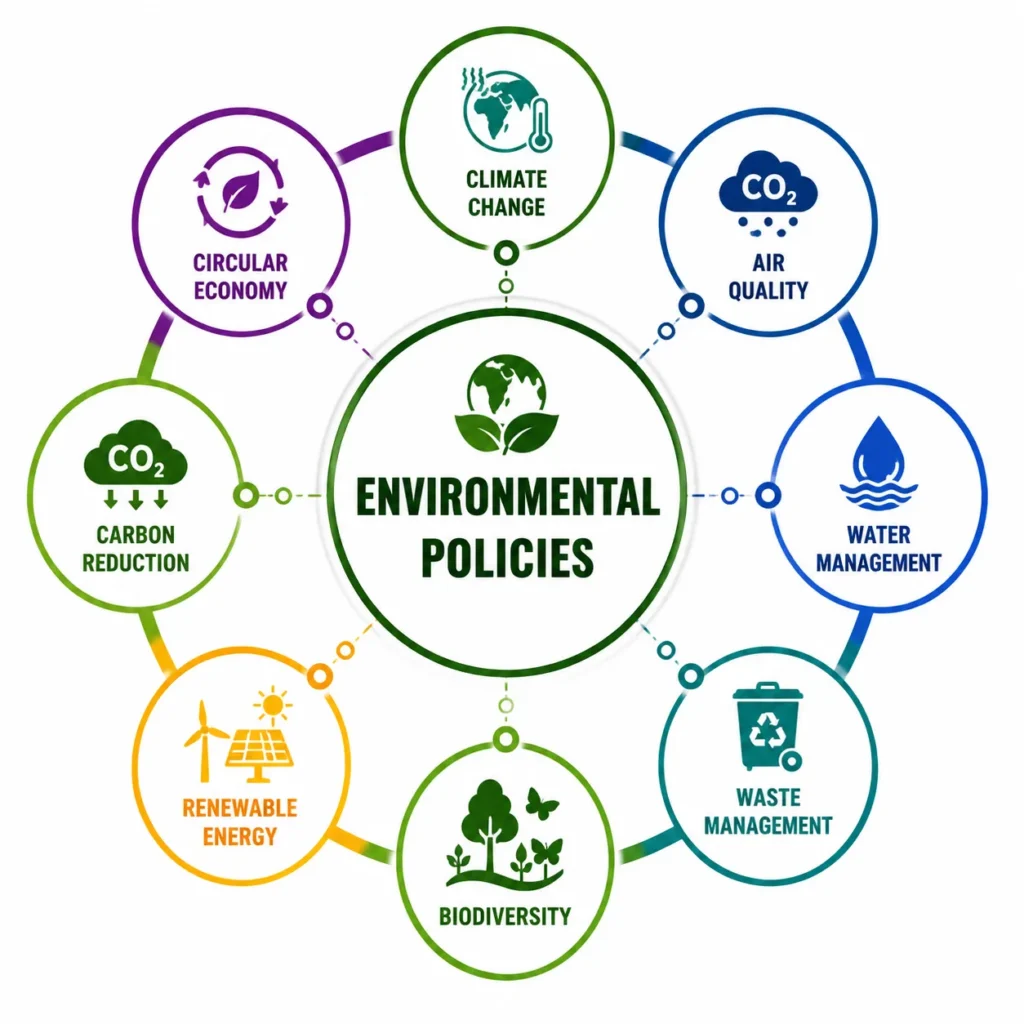
Types of Environmental Policies an Environmental Policy Advisor Works On
Environmental Policy Advisors contribute to the development and improvement of various environmental policies that promote sustainability, ensure legal compliance, and protect natural resources. Common policy areas include:
Climate Change Policy
Develops strategies to reduce greenhouse gas emissions and improve climate resilience.
Air Quality Policy
Focuses on reducing air pollution and improving air quality standards.
Water Resource Management
Supports the sustainable use, conservation, and protection of water resources.
Waste Management Policy
Promotes waste reduction, recycling, and responsible waste disposal practices.
Biodiversity Conservation
Protects ecosystems, wildlife, and natural habitats through conservation initiatives.
Renewable Energy Policy
Encourages the adoption of clean and renewable energy sources.
Environmental Impact Assessment (EIA)
Evaluates the environmental effects of proposed projects before implementation.
Circular Economy Policy
Supports resource efficiency through reuse, recycling, and sustainable production.
Sustainable Development Policy
Balances environmental protection with economic and social development.
Carbon Reduction and Net Zero Strategies
Helps organisations reduce carbon emissions and achieve long-term sustainability goals.
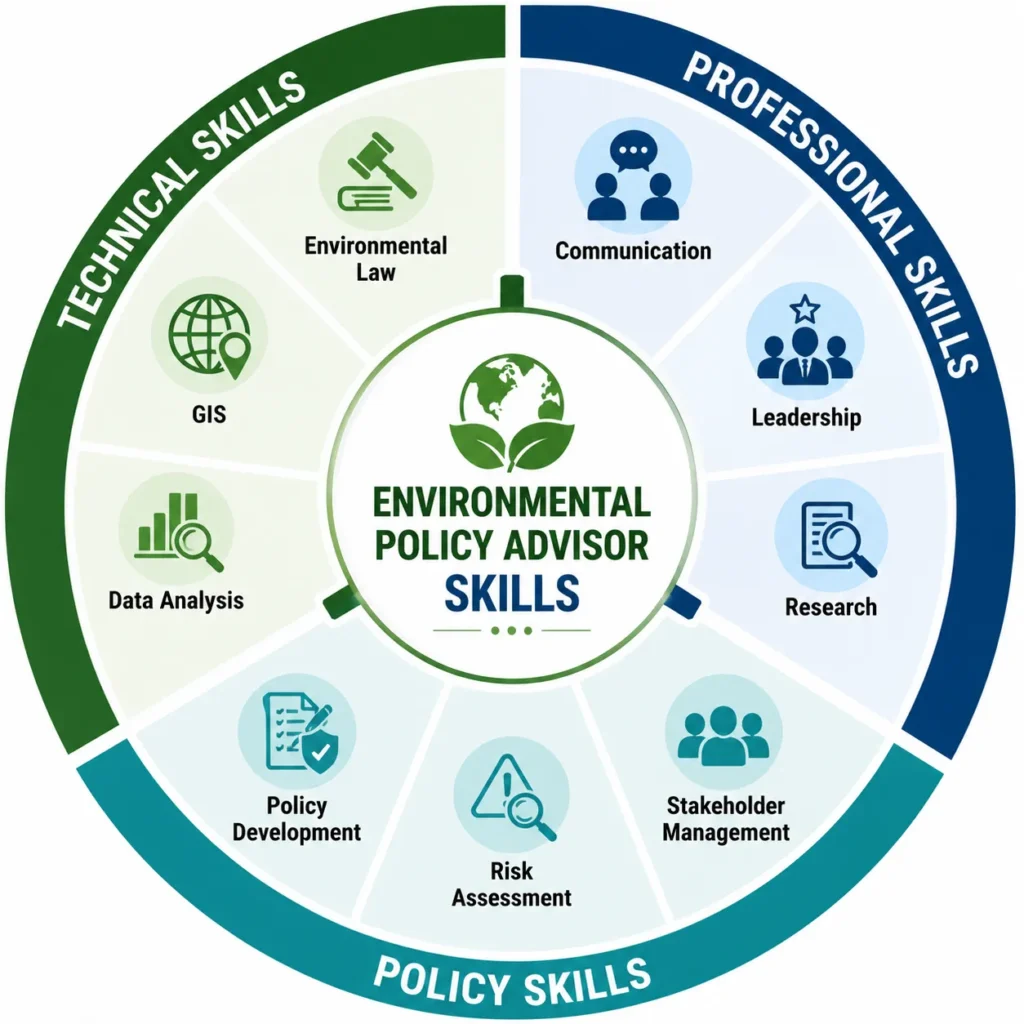
Key Skills Required to Become an Environmental Policy Advisor
Successful Environmental Policy Advisors combine technical knowledge with analytical thinking, communication, and leadership skills to develop effective environmental policies and support sustainable decision-making.
Technical Skills
- Understanding of environmental laws and regulations
- Knowledge of climate change and sustainability principles
- Environmental data analysis
- Risk assessment
- Environmental Impact Assessment (EIA)
- Carbon management
- GIS and environmental software
- Policy evaluation and reporting
Analytical Skills
Environmental Policy Advisors must analyse environmental data, identify trends, evaluate risks, and develop practical policy recommendations based on scientific evidence and research.
Communication Skills
Strong written and verbal communication skills are essential for preparing reports, presenting recommendations, explaining complex environmental issues, and working with diverse stakeholders.
Leadership Skills
Environmental Policy Advisors often lead projects, coordinate teams, and guide organisations in implementing environmental policies and sustainability initiatives.
Research Skills
They conduct detailed research on environmental issues, legislation, scientific studies, and international best practices to support evidence-based policy development.
Stakeholder Engagement Skills
Environmental policies often involve collaboration with government agencies, businesses, environmental organisations, and local communities. Advisors must build positive relationships, manage consultations, and consider different viewpoints.
Policy Development Skills
Environmental Policy Advisors should be able to draft, review, evaluate, and improve environmental policies that are practical, legally compliant, and aligned with sustainability objectives.
Educational Requirements and Qualifications
Most Environmental Policy Advisors hold a bachelor’s degree in a relevant field. However, advanced qualifications and specialised training can improve career opportunities and professional growth.
Common fields of study include:
- Environmental Science
- Environmental Management
- Environmental Policy
- Sustainability
- Ecology
- Geography
- Climate Change Studies
- Natural Resource Management
- Public Policy
- Environmental Engineering
- Law (Environmental Law)
Many employers also value postgraduate qualifications such as a master’s degree in Environmental Management, Sustainability, Environmental Policy, or Public Administration, particularly for senior advisory or leadership positions.
Practical experience through internships, research projects, environmental volunteering, or graduate programmes can also strengthen career prospects.
Professional Certifications That Can Boost Your Career
Professional certifications demonstrate expertise and help Environmental Policy Advisors stay up to date with industry standards, environmental regulations, and sustainability practices.
Popular certifications include:
- ISO 14001 Environmental Management Systems
- Environmental Impact Assessment (EIA) Training
- Sustainability and ESG Certifications
- Carbon Management Certification
- Climate Change and Net Zero Training
- Environmental Risk Assessment Certification
- Environmental Compliance Training
- GIS (Geographic Information Systems) Certification
- Project Management Certification (PRINCE2 or PMP)
- Data Analysis and Business Intelligence Certifications
- Health, Safety, and Environmental (HSE) Certifications
Earning relevant certifications can improve technical knowledge, enhance professional credibility, and increase opportunities for career advancement across government, consulting, construction, energy, manufacturing, and environmental organisations.
Environmental Policy Advisor Career Roadmap
🎓 Graduate
│
▼
🌱 Environmental Assistant
│
▼
📋 Environmental Officer
│
▼
📊 Environmental Analyst
│
▼
🌍 Environmental Policy Advisor
│
▼
⭐ Senior Environmental Policy Advisor
│
▼
📈 Environmental Policy Manager
│
▼
🏛️ Director of Environmental Policy
│
▼
🌿 Chief Sustainability Officer (CSO)
Industries Hiring Environmental Policy Advisors
Environmental Policy Advisors are employed across a wide range of sectors, including:
- Government Departments
- Environmental Protection Agencies
- Local Authorities
- Non-Governmental Organisations (NGOs)
- International Organisations
- Renewable Energy Companies
- Construction Industry
- Manufacturing
- Mining
- Oil and Gas
- Transportation
- Environmental Consulting Firms
- Utility Companies
- Universities
- Research Organisations
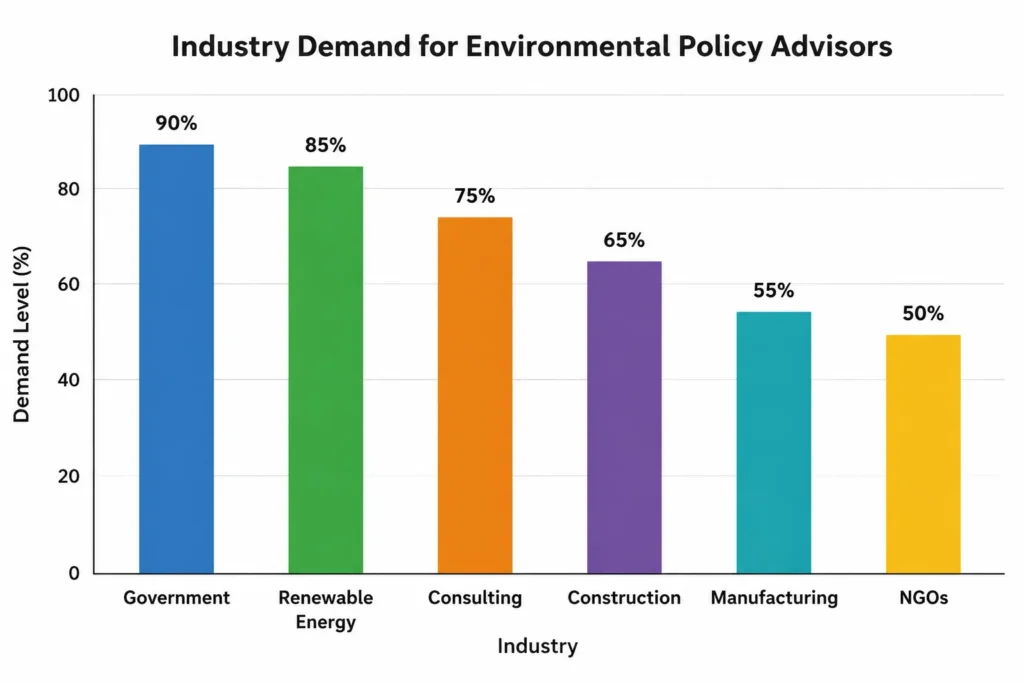
Environmental Policy Advisor Tools and Technologies
Environmental Policy Advisors use various tools to analyse data, manage projects, and support policy development, including:
- GIS Software (ArcGIS, QGIS)
- Microsoft Excel
- Power BI
- Tableau
- Google Earth Engine
- Environmental Monitoring Systems
- Carbon Accounting Software
- ESG Reporting Platforms
- AI-Powered Environmental Analytics
- Climate Modelling Software
- Project Management Tools
Environmental Policy Advisor KPIs and Success Metrics
The performance of an Environmental Policy Advisor is commonly measured by:
- Policy development and implementation
- Regulatory compliance
- Environmental impact reduction
- Stakeholder engagement
- Project completion
- Sustainability performance
- Carbon emission reduction
- Quality of policy recommendations
Environmental Policy Advisor vs Environmental Consultant
| Environmental Policy Advisor | Environmental Consultant |
|---|---|
| Develops and evaluates environmental policies and strategies. | Provides technical advice on environmental projects and compliance. |
| Focuses on environmental legislation, regulations, and policy development. | Focuses on environmental assessments, audits, and project implementation. |
| Works with governments, public agencies, NGOs, and organisations. | Typically works for consulting firms or private sector clients. |
| Advises decision-makers on environmental policies and sustainability initiatives. | Helps clients meet environmental regulations and minimise project impacts. |
| Supports long-term environmental planning and policy improvements. | Supports specific projects with environmental expertise and recommendations. |
Environmental Policy Advisor vs Sustainability Manager
| Environmental Policy Advisor | Sustainability Manager |
|---|---|
| Develops environmental policies and regulatory strategies. | Develops and implements organisational sustainability strategies. |
| Focuses on environmental legislation, policy, and compliance. | Focuses on improving environmental, social, and economic performance. |
| Advises governments, organisations, and decision-makers. | Manages sustainability programmes and initiatives within an organisation. |
| Recommends policy improvements based on research and regulations. | Monitors sustainability goals, performance, and reporting. |
| Primarily involved in policy development and environmental governance. | Primarily responsible for achieving sustainability objectives and operational improvements. |
Environmental Policy Advisor vs Environmental Scientist
| Environmental Policy Advisor | Environmental Scientist |
|---|---|
| Develops and evaluates environmental policies. | Conducts scientific research and field investigations. |
| Uses research and evidence to support policy decisions. | Collects, analyses, and interprets environmental data. |
| Focuses on environmental legislation, governance, and policy development. | Focuses on scientific studies, monitoring, and environmental assessments. |
| Works closely with governments, organisations, and policymakers. | Works in laboratories, research institutions, field sites, or environmental agencies. |
| Aims to influence environmental decision-making and sustainability strategies. | Aims to understand environmental issues and provide scientific evidence. |
Environmental Policy Advisor vs ESG Consultant
| Environmental Policy Advisor | ESG Consultant |
|---|---|
| Focuses on environmental policy, regulations, and governance. | Focuses on Environmental, Social, and Governance (ESG) performance. |
| Advises on environmental legislation and policy development. | Helps organisations improve ESG strategies, reporting, and compliance. |
| Works with governments, public agencies, NGOs, and private organisations. | Primarily supports businesses, investors, and corporate clients. |
| Develops policies to address environmental challenges and sustainability goals. | Assesses ESG risks, performance, and sustainability disclosures. |
| Emphasises public policy and environmental decision-making. | Emphasises corporate sustainability, responsible investment, and ESG reporting. |
Environmental Policy Advisor Salary
| Experience Level | Typical Role | Estimated Annual Salary* |
|---|---|---|
| Entry Level | Environmental Assistant / Graduate Environmental Officer | £25,000 – £35,000 |
| Early Career | Environmental Officer / Environmental Analyst | £35,000 – £45,000 |
| Mid-Level | Environmental Policy Advisor | £45,000 – £60,000 |
| Senior Level | Senior Environmental Policy Advisor | £60,000 – £80,000 |
| Management | Environmental Policy Manager | £75,000 – £95,000 |
| Executive | Director of Environmental Policy / Chief Sustainability Officer | £90,000 – £140,000+ |
Challenges Faced by Environmental Policy Advisors
Environmental Policy Advisors often work in a dynamic environment where they must balance environmental protection with organisational and economic priorities. Some of the most common challenges include:
- Keeping up with changing environmental laws and regulations.
- Balancing environmental protection with economic and business objectives.
- Managing the expectations of governments, businesses, and local communities.
- Addressing complex issues such as climate change and sustainability.
- Working within limited budgets, resources, and project timelines.
- Responding to emerging environmental risks and evolving policy requirements.
- Making decisions based on changing scientific data and research.
- Encouraging organisations to adopt sustainable policies and practices.
Emerging Trends in Environmental Policy
Environmental policy is continuously evolving to address new environmental challenges, technological advancements, and global sustainability goals. Some of the key emerging trends include:
- Artificial Intelligence (AI): Using AI to analyse environmental data, predict risks, and support better policy decisions.
- Climate Adaptation Policies: Developing strategies to help communities and businesses adapt to climate change.
- Carbon Neutrality: Supporting initiatives that reduce greenhouse gas emissions and achieve net-zero targets.
- Circular Economy: Promoting resource efficiency through recycling, reuse, and sustainable production.
- ESG Regulations: Strengthening Environmental, Social, and Governance (ESG) reporting and compliance requirements.
- Green Finance: Encouraging investments in environmentally sustainable projects and technologies.
- Nature-Based Solutions: Using natural ecosystems to address environmental challenges such as flooding and biodiversity loss.
- Environmental Data Analytics: Leveraging data and digital tools to improve environmental planning and decision-making.
- Smart Cities: Integrating sustainable technologies to create cleaner, more efficient urban environments.
- Digital Environmental Governance: Using digital platforms and technology to improve environmental monitoring, reporting, and policy implementation.
Conclusion
Environmental Policy Advisors play an important role in creating solutions that protect the environment and support sustainable development. They help governments, businesses, and organisations develop effective policies to address challenges such as climate change, pollution, and resource management.
With growing environmental concerns and increasing demand for sustainability expertise, the career opportunities for Environmental Policy Advisors continue to expand. By gaining the right education, skills, and professional experience, individuals can build a rewarding career while contributing to a more sustainable future.