
What Is a Sustainability Analyst? Career Guide 2026: Role, Skills, Responsibilities, Salary, and Future Opportunities
The growing focus on climate change, environmental responsibility, and sustainable business practices has increased the demand for sustainability professionals worldwide. Organisations are now using data-driven sustainability decisions to measure environmental performance, reduce carbon emissions, improve resource efficiency, and achieve long-term sustainability goals.
A Sustainability Analyst plays an important role in this transformation by collecting and analysing sustainability data, tracking environmental performance, supporting ESG reporting, and helping organisations develop effective strategies to reduce their environmental impact. With increasing investment in ESG, climate action, renewable energy, and sustainable development, Sustainability Analysts have growing career opportunities across industries such as energy, construction, manufacturing, finance, and consulting.
What Is a Sustainability Analyst?
A Sustainability Analyst is a professional who analyses environmental, social, and business data to help organisations improve their sustainability performance. They evaluate sustainability practices, monitor environmental impacts, prepare reports, and provide recommendations that support responsible decision-making and long-term sustainability goals.
Purpose of a Sustainability Analyst
The main purpose of a Sustainability Analyst is to help organisations understand their environmental impact and identify opportunities for improvement. They use data analysis, sustainability frameworks, and performance indicators to support areas such as carbon reduction, energy efficiency, waste management, resource conservation, and ESG reporting.
Importance of a Sustainability Analyst
Sustainability Analysts are becoming increasingly important as organisations face growing pressure to reduce environmental impacts, meet climate targets, and demonstrate responsible business practices. Their work helps companies make informed decisions, improve sustainability strategies, comply with environmental expectations, and create positive environmental and social outcomes.
Sustainability Analyst vs Environmental Analyst
| Sustainability Analyst | Environmental Analyst |
|---|---|
| Focuses on broader sustainability goals, including environmental, social, and governance (ESG) factors | Mainly focuses on environmental issues such as pollution, ecosystems, and natural resource impacts |
| Analyses sustainability performance data and supports organisational strategies | Conducts environmental assessments, monitoring, and impact studies |
| Works on carbon reporting, ESG disclosures, resource efficiency, and sustainability planning | Works on environmental compliance, impact assessments, and conservation activities |
| Often works with business teams to integrate sustainability into operations | Often works with environmental regulations, scientific data, and ecological management |
What Does a Sustainability Analyst Do?
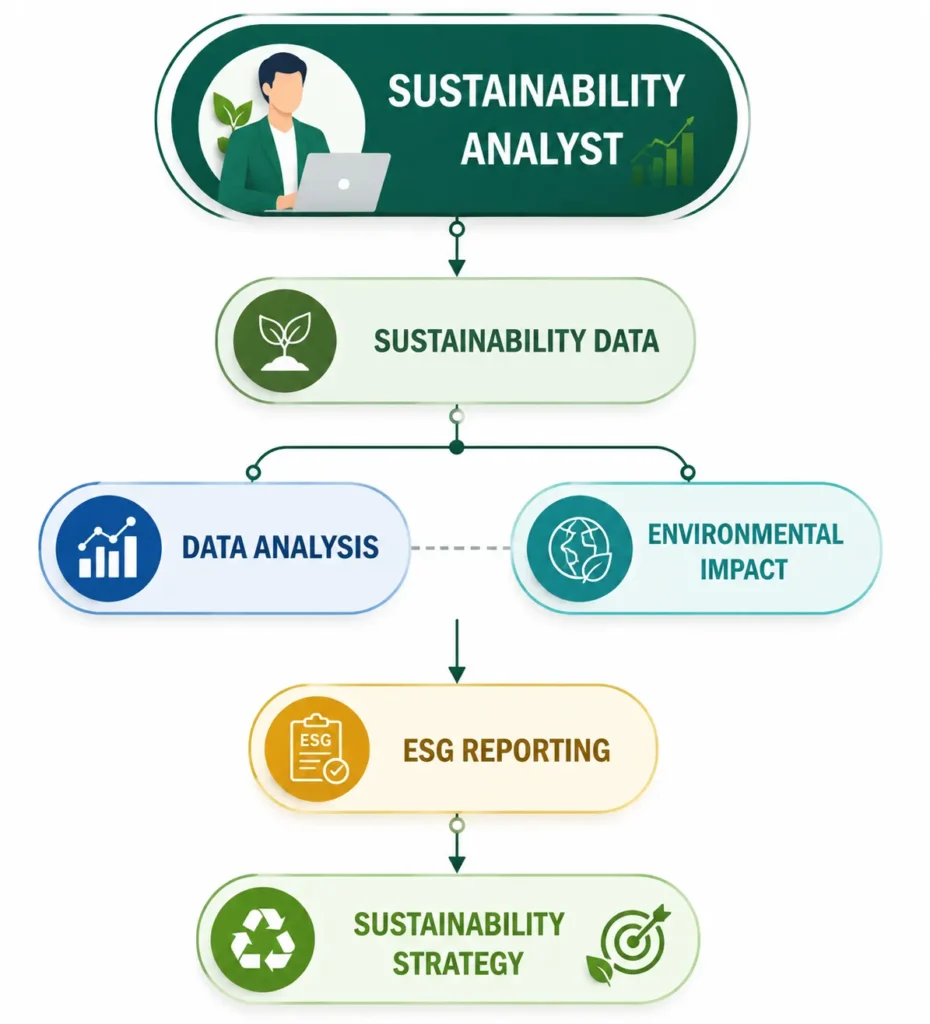
A Sustainability Analyst supports organisations in understanding and improving their sustainability performance by analysing environmental data, monitoring sustainability goals, and providing recommendations for better decision-making. They play an important role in helping businesses reduce environmental impacts, improve resource efficiency, and achieve ESG and climate-related objectives. Their work combines data analysis, reporting, environmental assessment, and strategic planning to create measurable sustainability improvements.
📥 Collect Sustainability Data
↓
📊 Analyse Environmental Performance
↓
📑 Prepare ESG Reports
↓
📈 Track Sustainability KPIs
↓
♻ Improve Sustainability Strategy
Sustainability Data Analysis
Sustainability Analysts collect, organise, and analyse data related to environmental performance, resource consumption, and sustainability initiatives. They transform complex data into meaningful insights that help organisations identify risks, improve efficiency, and make informed sustainability decisions.
Key activities include:
- Analysing energy, water, waste, and resource consumption data
- Identifying sustainability trends and improvement opportunities
- Preparing data summaries and performance reports
- Using analytical tools to support sustainability decision-making
ESG Reporting
Sustainability Analysts contribute to Environmental, Social, and Governance (ESG) reporting by gathering sustainability information and measuring organisational performance against ESG objectives. They help organisations communicate their sustainability progress to stakeholders and maintain transparency in environmental reporting.
Key responsibilities include:
- Collecting ESG performance data from different departments
- Supporting sustainability and corporate responsibility reports
- Tracking ESG indicators and sustainability targets
- Aligning reporting activities with recognised sustainability frameworks
Carbon Footprint Assessment
A major responsibility of Sustainability Analysts is evaluating an organisation’s carbon footprint. They measure greenhouse gas emissions from activities such as energy use, transportation, operations, and supply chains to identify opportunities for carbon reduction.
Their tasks may include:
- Calculating and analysing carbon emissions data
- Identifying major sources of greenhouse gas emissions
- Supporting carbon reduction and climate action plans
- Monitoring progress toward emission reduction targets
Environmental Performance Monitoring
Sustainability Analysts monitor environmental performance to ensure organisations are making progress toward sustainability goals. They review key performance indicators (KPIs) and assess whether sustainability initiatives are delivering effective results.
They often:
- Track environmental KPIs and sustainability targets
- Monitor waste reduction and resource efficiency programmes
- Evaluate environmental risks and improvement areas
- Provide recommendations for better environmental performance
Sustainability Strategy Support
Sustainability Analysts help organisations develop practical sustainability strategies by providing research, analysis, and recommendations. Their insights support businesses in implementing sustainable practices while balancing environmental responsibility with operational goals.
They support organisations by:
- Conducting sustainability research and assessments
- Recommending strategies to reduce environmental impacts
- Supporting sustainability projects and initiatives
- Helping integrate sustainability into business planning and decision-making
Key Responsibilities of a Sustainability Analyst
A Sustainability Analyst performs a range of activities to help organisations measure, manage, and improve their sustainability performance. They work with environmental data, reporting processes, and sustainability strategies to support responsible business practices and achieve environmental goals.
Key responsibilities include:
- Collect sustainability data from areas such as energy use, emissions, waste, and resource consumption.
- Analyse environmental performance to identify trends, risks, and opportunities for improvement.
- Prepare ESG reports by compiling sustainability information and performance results.
- Track sustainability KPIs to measure progress toward environmental targets.
- Support compliance requirements by ensuring sustainability activities align with relevant standards and regulations.
- Identify improvement opportunities that help reduce environmental impact and improve resource efficiency.
Skills Required to Become a Sustainability Analyst
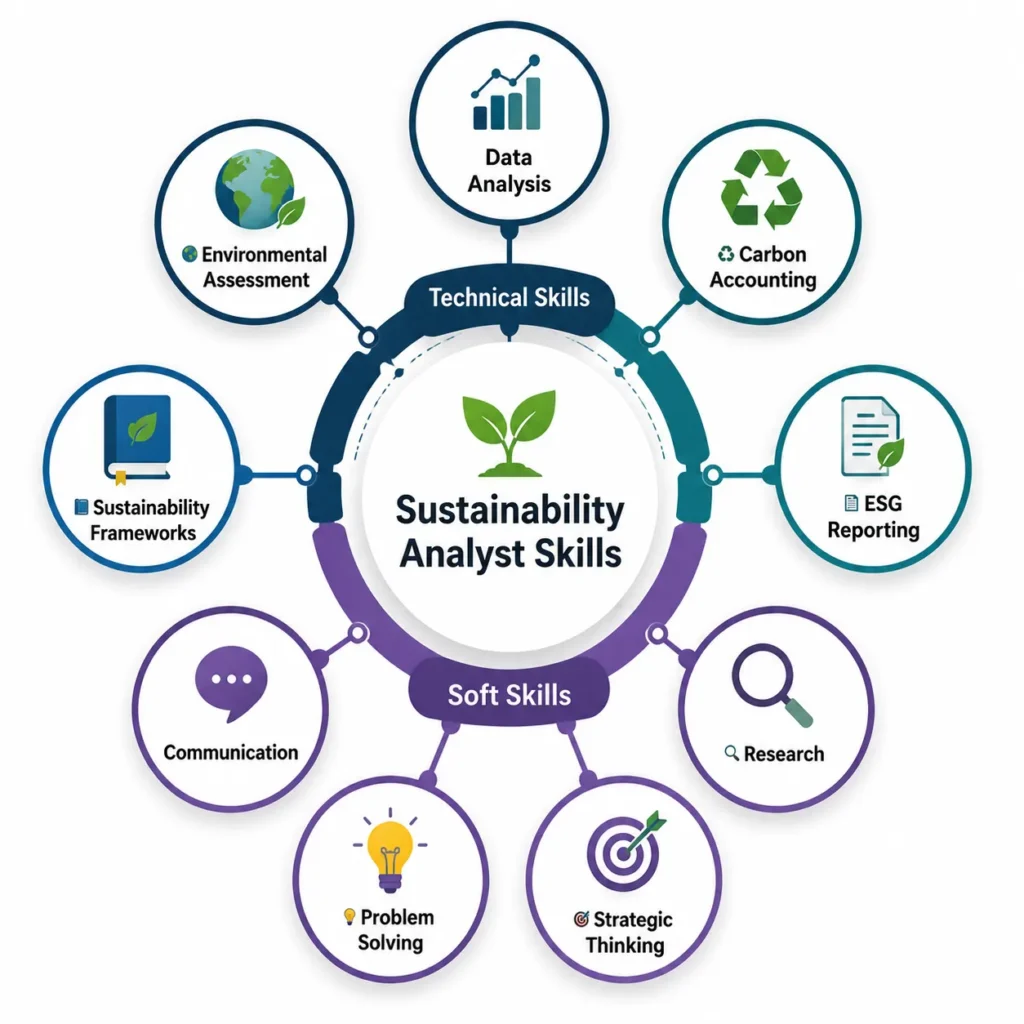
A Sustainability Analyst requires a combination of technical knowledge and professional skills to analyse sustainability data, support environmental initiatives, and contribute to organisational sustainability goals.
Technical Skills
- Data analysis for interpreting sustainability performance and environmental information.
- Carbon accounting to measure and manage greenhouse gas emissions.
- ESG reporting to prepare sustainability performance reports.
- Environmental assessment to evaluate environmental impacts and risks.
- Knowledge of sustainability frameworks such as GRI, SASB, and other reporting standards.
Soft Skills
- Communication skills to present sustainability findings clearly.
- Problem-solving skills to identify challenges and develop solutions.
- Research skills to analyse sustainability trends and industry developments.
- Strategic thinking to support long-term sustainability planning.
Education and Qualifications Required
A Sustainability Analyst typically requires a combination of environmental knowledge, business understanding, and analytical skills. Educational backgrounds can vary depending on the industry, but many professionals enter this field through environmental, sustainability, engineering, or business-related studies.
Common educational pathways include:
- Environmental Science: Provides knowledge of ecosystems, environmental impacts, climate change, and resource management.
- Sustainability Management: Develops skills in sustainable business practices, ESG strategies, and sustainability planning.
- Engineering: Supports careers involving energy efficiency, resource optimisation, and sustainable technology solutions.
- Business Studies: Helps understand corporate sustainability, reporting, and organisational decision-making.
- Data Analytics: Builds skills in analysing sustainability data, performance metrics, and environmental trends.
Relevant Certifications for Sustainability Analysts
Professional certifications can help Sustainability Analysts develop specialised knowledge, improve career opportunities, and demonstrate expertise in sustainability, ESG, and environmental management. Common certifications include:
- Sustainability Certifications: Courses focused on sustainable development, climate action, circular economy, and responsible business practices.
- ESG Certifications: Training in ESG reporting, sustainability disclosures, corporate responsibility, and stakeholder communication.
- Environmental Management Certifications: Qualifications covering environmental management systems, environmental performance improvement, and compliance practices.
- Carbon Accounting Certifications: Training in greenhouse gas measurement, carbon footprint assessment, and emissions reduction strategies.
- Sustainability Reporting Certifications: Programmes focused on sustainability reporting frameworks and data disclosure requirements.
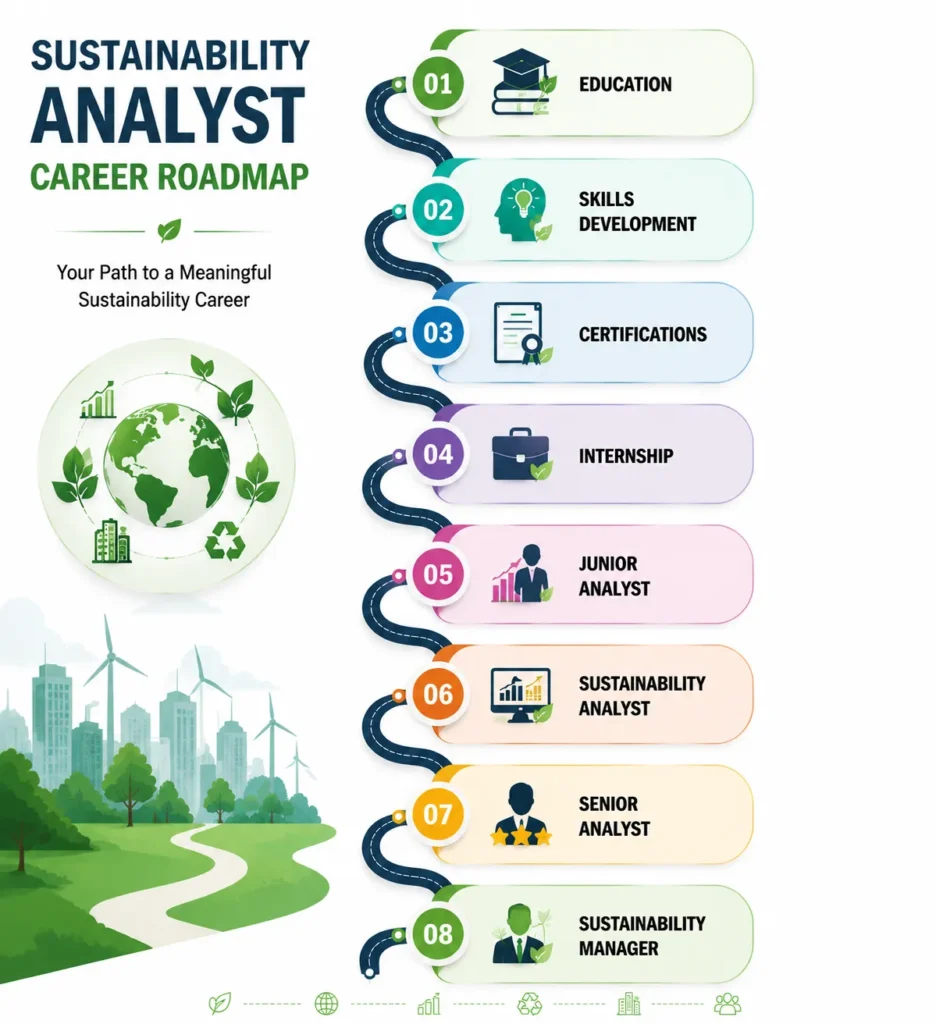
Sustainability Analyst Career Path
A career as a Sustainability Analyst develops through progressive stages, allowing professionals to build knowledge in sustainability practices, environmental data analysis, ESG reporting, and strategic sustainability management.
🌱 Career Growth Timeline
🎓 Student
↓
Build foundational knowledge through studies in environmental science, sustainability, engineering, business, or data analytics.
🌿 Sustainability Intern
↓
Gain practical experience by supporting sustainability projects, data collection, environmental assessments, and reporting activities.
📊 Junior Sustainability Analyst
↓
Assist with sustainability data analysis, ESG reporting, KPI tracking, and environmental performance monitoring.
🌍 Sustainability Analyst
↓
Manage sustainability assessments, analyse environmental data, support ESG strategies, and recommend improvement initiatives.
📈 Senior Sustainability Analyst
↓
Lead sustainability projects, develop advanced strategies, guide reporting processes, and support organisational climate goals.
🏆 Sustainability Manager
↓
Oversee sustainability programmes, manage teams, create long-term strategies, and drive environmental and ESG performance improvements.
Industries Hiring Sustainability Analysts
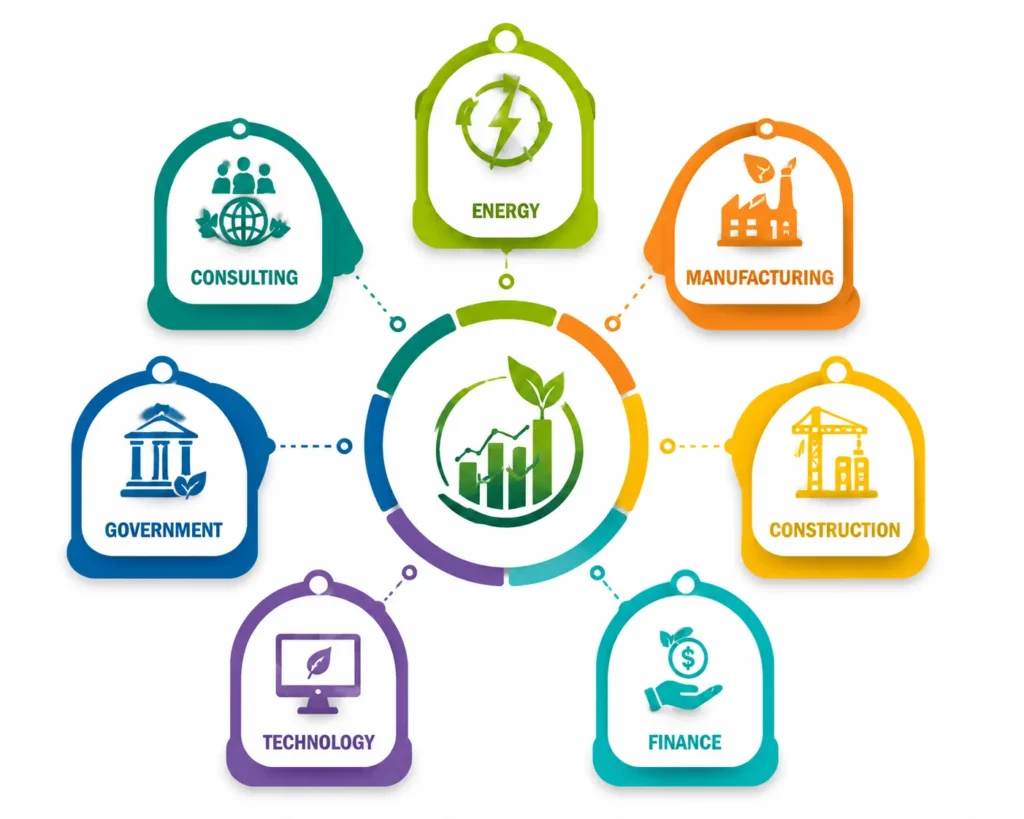
Sustainability Analysts are increasingly needed across industries as organisations focus on reducing environmental impacts, improving ESG performance, and achieving sustainability goals.
- Energy: Supporting renewable energy projects, emissions reduction, and energy efficiency initiatives.
- Manufacturing: Improving resource efficiency, waste reduction, and sustainable production practices.
- Construction: Supporting green building projects, sustainable materials, and environmental performance.
- Finance: Analysing ESG risks, sustainable investments, and corporate sustainability performance.
- Technology: Helping companies improve digital sustainability, energy use, and responsible innovation.
- Government: Supporting climate policies, environmental programmes, and sustainability planning.
- Consulting: Advising organisations on sustainability strategies, ESG reporting, and environmental improvements.
Sustainability Analyst Salary Worldwide
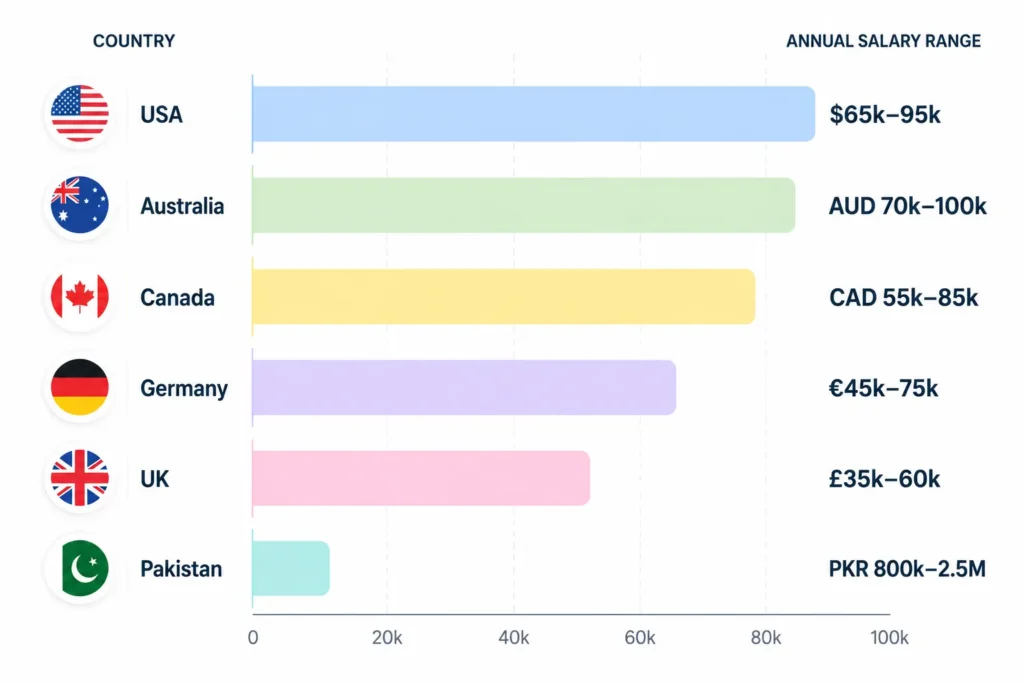
Sustainability Analyst salaries vary depending on location, industry, professional experience, education, and technical expertise. As organisations increase their focus on ESG reporting, climate action, and environmental performance, demand for skilled Sustainability Analysts continues to grow.
Sustainability Analyst Salary by Country
| Country | Average Annual Salary Range |
|---|---|
| USA | $65,000 – $95,000 |
| UK | £35,000 – £60,000 |
| Canada | CAD 55,000 – CAD 85,000 |
| Australia | AUD 70,000 – AUD 100,000 |
| Germany | €45,000 – €75,000 |
| Pakistan | PKR 800,000 – PKR 2,500,000 |
Salary by Experience Level
- Entry-Level Sustainability Analyst: Earns a lower salary while developing skills in sustainability data, reporting, and environmental analysis.
- Mid-Level Sustainability Analyst: Gains higher earning potential through experience in ESG reporting, carbon assessment, and sustainability projects.
- Senior Sustainability Analyst: Earns higher salaries by leading sustainability initiatives, managing complex projects, and supporting organisational strategies.
Factors Influencing Salary
Sustainability Analyst salaries are influenced by:
- Professional experience and level of responsibility
- Educational background and industry certifications
- Knowledge of ESG reporting and sustainability frameworks
- Data analysis and carbon accounting skills
- Industry sector and geographic location
- Organisation size and sustainability commitments
Sustainability Analyst vs Similar Careers
Sustainability careers often overlap, but each role has a different focus and area of responsibility. Understanding these differences can help professionals choose the right career path.
| Role | Main Focus |
|---|---|
| Sustainability Analyst | Analyses sustainability data, tracks environmental performance, and supports sustainability strategies. |
| Environmental Scientist | Conducts environmental research, assessments, and studies related to ecosystems, pollution, and natural resources. |
| ESG Analyst | Focuses on corporate ESG performance, sustainability reporting, risk analysis, and responsible investment practices. |
| Sustainability Manager | Leads sustainability programmes, develops strategies, manages teams, and drives organisational sustainability goals. |
Future of Sustainability Analyst Careers in 2026 and Beyond
The future of Sustainability Analyst careers is expected to grow as organisations focus more on climate action, ESG performance, and sustainable business practices. Advances in technology, increasing environmental regulations, and the global shift toward cleaner solutions are creating new opportunities for sustainability professionals.
🤖 AI-Powered Sustainability Analytics
Artificial intelligence is transforming sustainability analysis by helping professionals process large amounts of environmental data, identify trends, and improve decision-making.
📊 Growing Climate Reporting Requirements
Businesses are facing increased demand for transparent climate reporting, creating a need for Sustainability Analysts who can manage environmental data and support sustainability disclosures.
🌱 Expansion of ESG Practices
The growth of ESG strategies is increasing demand for professionals who can measure sustainability performance, analyse risks, and support responsible business decisions.
♻️ Carbon Reduction Strategies
Organisations are investing in emission reduction plans, carbon accounting, and climate initiatives, making Sustainability Analysts important contributors to achieving carbon targets.
☀️ Renewable Energy Transition
The global move toward renewable energy is creating new roles for Sustainability Analysts in energy efficiency, clean technology, and sustainable resource management.
As sustainability becomes a core business priority, Sustainability Analysts will continue to play a key role in helping organisations build environmentally responsible and resilient futures.
Conclusion
The role of a Sustainability Analyst is becoming increasingly important as organisations focus on sustainability, ESG performance, and climate action. With skills in data analysis, environmental assessment, and sustainability reporting, professionals in this field can support meaningful environmental improvements across different industries.
If you are interested in building a career that combines environmental responsibility, technology, and business strategy, becoming a Sustainability Analyst can provide valuable opportunities in the growing sustainability sector.