
What Is an Automated External Defibrillator (AED)?
Emergency response skills are becoming increasingly important because medical emergencies can happen anytime and anywhere. Having trained individuals who can provide immediate assistance before professional medical help arrives can significantly improve survival chances. Skills such as CPR and AED operation help people respond quickly and confidently during life-threatening situations.
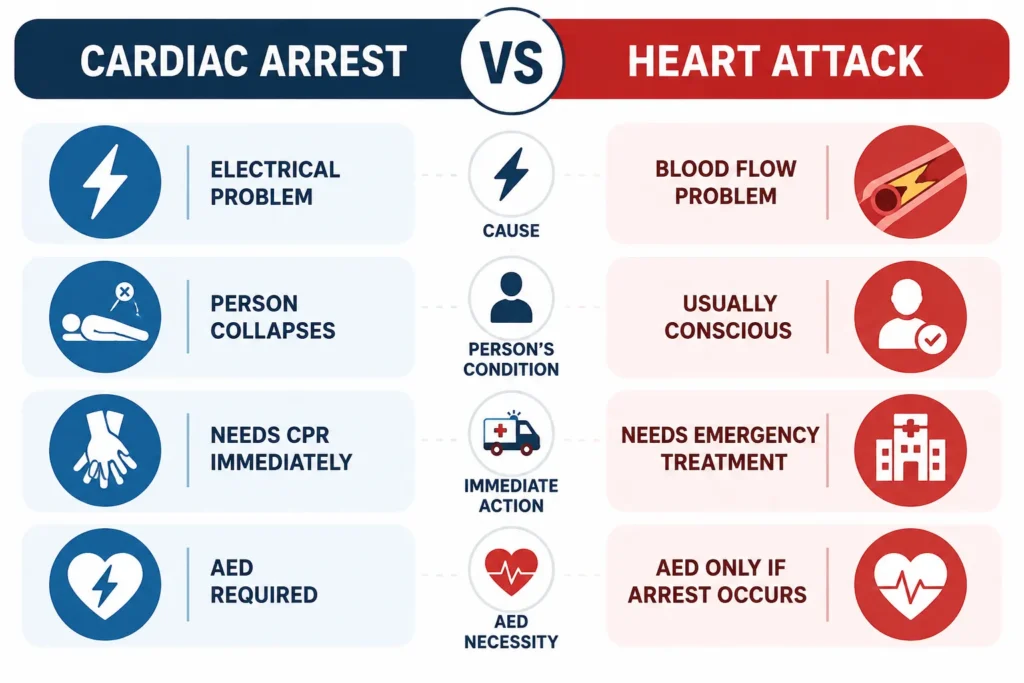
Cardiac arrest is a serious medical emergency where the heart suddenly stops pumping blood effectively. Without immediate action, the lack of oxygen reaching the brain and other vital organs can lead to severe consequences. Early CPR and the use of an AED can help restore normal heart rhythm and provide critical support until emergency services arrive.
AED-trained professionals play an important role in workplaces, healthcare settings, educational institutions, and public areas. They can quickly identify cardiac emergencies, perform CPR, and safely use an AED device when needed. Their ability to respond immediately helps create safer environments and improves emergency preparedness.
What Is an Automated External Defibrillator (AED)?
An Automated External Defibrillator (AED) is a portable medical device designed to analyse the heart’s rhythm and deliver an electrical shock when necessary during certain types of cardiac emergencies. It is easy to use and provides clear voice or visual instructions, allowing trained individuals and emergency responders to provide immediate assistance.
Purpose
The main purpose of an AED is to restore a normal heart rhythm when a person experiences sudden cardiac arrest caused by abnormal electrical activity in the heart. The device checks the heart rhythm and determines whether a shock is required, helping to restart effective heart function when appropriate.
How AED saves lives
AEDs save lives by providing rapid defibrillation, which is one of the most critical steps in responding to cardiac arrest. When used together with CPR, an AED can help maintain blood circulation, increase oxygen supply to the brain, and improve the chances of survival before emergency medical teams arrive.
Role during cardiac arrest
During cardiac arrest, every minute is important because the chances of survival decrease as time passes without treatment. An AED allows trained professionals, workplace responders, healthcare workers, and members of the public to provide immediate support by analysing the heart rhythm and delivering a life-saving shock when required. Its quick use can make a significant difference in emergency situations.
How Does an AED Work?
An AED works by analysing the heart’s electrical activity and delivering an electrical shock when required to help restore a normal heart rhythm. It is designed to be simple to operate, providing step-by-step instructions that guide users during a cardiac emergency.
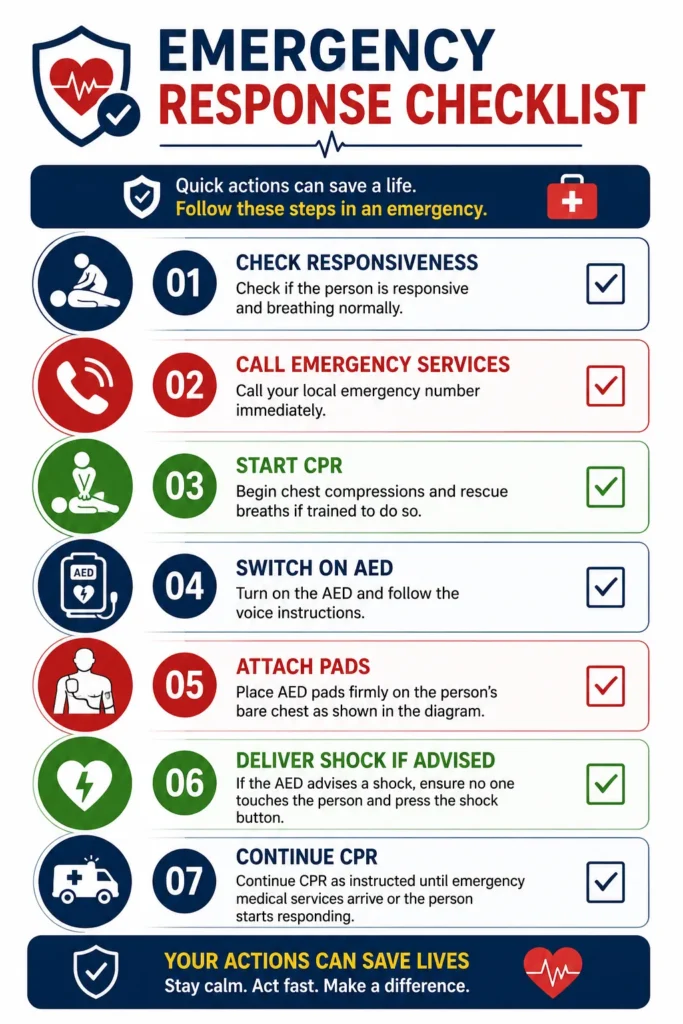
Step 1: Recognise Cardiac Arrest
Identify if a person is experiencing cardiac arrest by checking for signs such as sudden collapse, unresponsiveness, and abnormal or absent breathing. Quick recognition allows immediate emergency action.
Step 2: Call Emergency Support
Contact emergency medical services immediately to request professional help. Early communication ensures that advanced medical assistance is on the way while first aid actions begin.
Step 3: Start CPR
Begin cardiopulmonary resuscitation (CPR) to maintain blood circulation and oxygen supply to the brain and other vital organs until the AED is ready.
Step 4: Apply AED Pads
Place the AED pads correctly on the person’s bare chest according to the device instructions. The pads allow the AED to monitor the heart’s electrical activity.
Step 5: Analyse Heart Rhythm
Allow the AED to analyse the heart rhythm automatically. During this process, no one should touch the person to ensure accurate assessment.
Step 6: Deliver Shock If Required
If the AED detects a shockable heart rhythm, it will guide the user to deliver an electrical shock. The shock may help restore a normal heart rhythm, while CPR continues until emergency professionals arrive.
Importance of AED Training
AED training is important because it prepares individuals to respond quickly and effectively during sudden cardiac emergencies. In situations where a person experiences cardiac arrest, immediate action can significantly improve the chances of survival. Trained individuals understand how to recognise emergency signs, perform CPR, operate an AED safely, and provide support until professional medical assistance arrives.
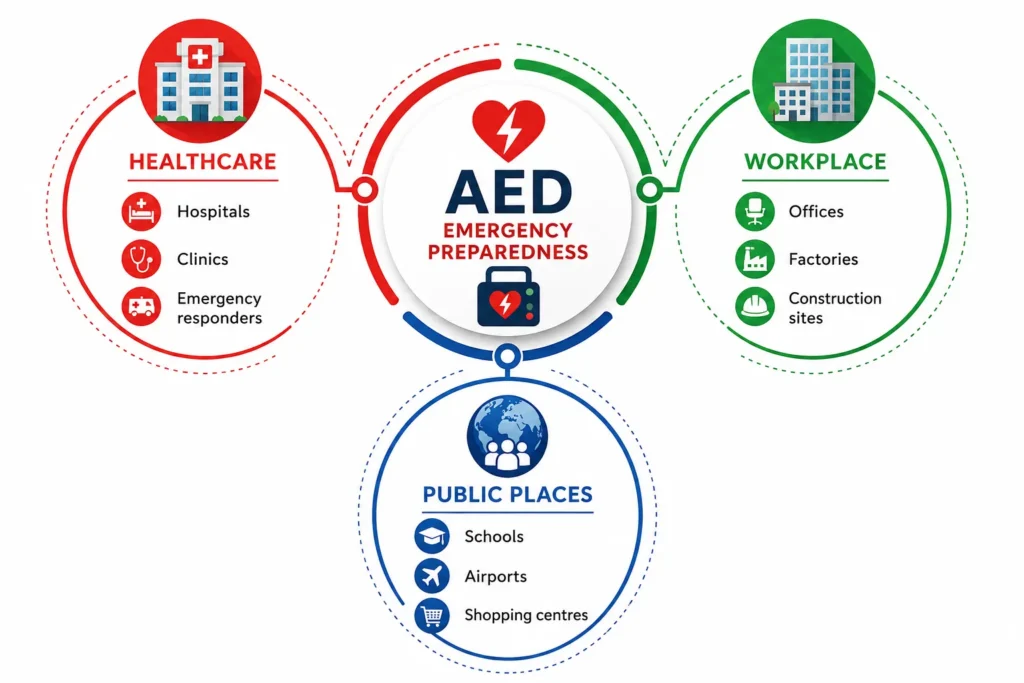
AED-trained people are valuable in different environments because cardiac emergencies can occur in healthcare facilities, workplaces, and public areas. Having trained responders nearby ensures faster intervention and creates safer communities where people are prepared to handle life-threatening situations.
Healthcare Settings
Healthcare professionals and emergency responders are often the first people expected to manage cardiac emergencies. AED training strengthens their ability to provide rapid and effective care alongside other medical procedures.
Key areas where AED skills are essential include:
- Hospitals: Supports healthcare staff in responding quickly to sudden cardiac arrest cases in emergency departments, wards, and patient care areas.
- Clinics: Helps medical teams provide immediate assistance when patients experience unexpected heart-related emergencies.
- Emergency Responders: Enables paramedics and first responders to use AED equipment confidently while providing critical care before hospital treatment.
Workplace Environments
Workplaces can contain risks that may contribute to medical emergencies, including physical strain, stress, accidents, or existing health conditions. AED training helps employees become prepared emergency responders and improves overall workplace safety.
AED-trained professionals are beneficial in:
- Offices: Provides employees with the ability to respond quickly if a colleague or visitor experiences cardiac arrest.
- Factories: Supports worker safety in industrial environments where machinery, physical activity, and workplace hazards may increase emergency risks.
- Construction Sites: Helps site teams respond effectively to medical emergencies in locations where immediate access to external healthcare support may be limited.
Public Places
Public areas experience a high number of visitors every day, making AED availability and trained users essential for community safety. Quick response from trained individuals can provide lifesaving support before emergency services arrive.
AED training is especially valuable in:
- Schools: Enables teachers, staff members, and administrators to respond to emergencies involving students, employees, or visitors.
- Airports: Supports rapid emergency response in busy environments where large numbers of passengers and staff are present.
- Shopping Centres: Helps security teams, employees, and trained personnel manage cardiac emergencies among customers and visitors.
By increasing the number of AED-trained individuals across healthcare facilities, workplaces, and public locations, communities can improve emergency preparedness and create safer environments for everyone.
AED Training vs CPR Training
AED training and CPR training are both essential emergency response skills, but they focus on different aspects of saving a person’s life during a medical emergency. CPR helps maintain blood circulation and oxygen supply, while AED training teaches individuals how to use a defibrillator to restore normal heart rhythm when required.
| Comparison Area | AED Training | CPR Training |
|---|---|---|
| Main Purpose | Teaches how to use an Automated External Defibrillator to analyse heart rhythm and deliver a shock if needed. | Teaches how to perform chest compressions and rescue techniques to maintain blood circulation and oxygen flow. |
| Primary Focus | Restoring normal heart rhythm during certain types of cardiac arrest. | Supporting vital body functions when the heart is not pumping effectively. |
| Equipment Used | Requires the use of an AED device with electrode pads. | Mainly involves manual chest compressions and breathing support techniques. |
| When It Is Used | Used when a person experiences sudden cardiac arrest with a shockable heart rhythm. | Used immediately when a person is unconscious and not breathing normally. |
| Key Skills Learned | AED operation, pad placement, heart rhythm analysis, and safe shock delivery procedures. | Chest compression techniques, rescue breathing, emergency assessment, and response procedures. |
| Role in Emergency Response | Provides electrical therapy that may help restart an effective heart rhythm. | Maintains blood circulation and oxygen delivery until further medical support is available. |
| Who Should Learn It | Healthcare workers, safety professionals, workplace responders, teachers, and community members. | Anyone who wants essential lifesaving skills, including healthcare staff, employees, parents, and caregivers. |
| Importance During Cardiac Arrest | Can significantly improve survival chances when used quickly with CPR. | Provides immediate support and keeps the body functioning until advanced treatment is available. |
Both AED and CPR training work together to provide a complete emergency response approach. CPR keeps blood flowing, while an AED can help correct dangerous heart rhythms. Individuals trained in both skills are better prepared to respond confidently and effectively during cardiac emergencies.
Professional Diploma in Automated External Defibrillator Programme Overview
The Professional Diploma in Automated External Defibrillator (AED) Programme helps learners develop essential knowledge and practical skills to respond to cardiac emergencies. The course covers cardiac arrest awareness, CPR support, safe AED operation, and emergency response procedures.
It is designed for individuals who want to improve their emergency response abilities and help create safer healthcare, workplace, and community environments.
Course Purpose
The purpose of this programme is to equip learners with the knowledge and skills needed to provide immediate assistance during sudden cardiac emergencies. It aims to improve emergency response capability by teaching learners how to assess situations, perform CPR, operate an AED, and support individuals until professional medical help arrives.
The course helps organisations and individuals develop a stronger safety culture by ensuring trained personnel are available to respond quickly and effectively when cardiac emergencies occur.
Learning Objectives
By completing the Professional Diploma in Automated External Defibrillator Programme, learners will be able to:
- Understand the causes, signs, and impact of cardiac arrest emergencies.
- Explain the purpose and function of an Automated External Defibrillator.
- Identify the correct steps for responding to a cardiac emergency.
- Apply appropriate CPR techniques alongside AED use.
- Operate an AED device safely and confidently.
- Understand emergency response procedures and safety considerations.
- Recognise the importance of rapid intervention in improving survival outcomes.
Skills Gained
Learners develop practical emergency response skills that can be applied in healthcare settings, workplaces, and public environments.
Key skills gained include:
- Cardiac Emergency Recognition: Ability to identify signs of cardiac arrest and take immediate action.
- AED Operation: Understanding how to set up, use, and operate an AED device safely.
- CPR Application: Developing skills to perform effective chest compressions and support circulation.
- Emergency Decision-Making: Ability to assess situations and follow appropriate response procedures.
- Patient Safety Management: Applying safe practices while assisting individuals during emergencies.
- Communication Skills: Coordinating with emergency services and other responders during critical situations.
Assessment Method
Assessment for the Professional Diploma in Automated External Defibrillator Programme is designed to evaluate both knowledge and practical understanding. Learners may be assessed through:
- Written Assessments: Evaluating understanding of AED principles, cardiac emergencies, and response procedures.
- Knowledge-Based Quizzes: Testing key concepts related to AED operation, CPR, and emergency management.
- Practical Demonstrations: Assessing the learner’s ability to correctly apply CPR techniques and operate an AED.
- Scenario-Based Assessments: Measuring the ability to respond effectively to realistic emergency situations.
Successful completion demonstrates that learners have developed the essential knowledge and practical competence required to support effective cardiac emergency response.
Which AED Certification Is Best?
The best AED certification depends on the learner’s professional goals, workplace needs, and the level of emergency response skills required. Different certifications focus on different areas, from basic lifesaving skills to advanced healthcare emergency response.
| Purpose | Recommended Certification | Details |
|---|---|---|
| Workplace Emergency Response | CPR/AED Certification or First Aid CPR AED Certification | Suitable for employees, managers, and workplace responders. It teaches how to recognise cardiac emergencies, perform CPR, use an AED, and provide immediate support before emergency services arrive. |
| Healthcare Career | Basic Life Support (BLS) Certification with AED Training | Designed for healthcare professionals such as nurses, doctors, and healthcare assistants. It focuses on high-quality CPR, AED operation, emergency assessment, and responding effectively in clinical environments. |
| General Lifesaving Skills | CPR/AED Certification | Ideal for individuals who want essential skills to help family members, colleagues, or community members during sudden cardiac emergencies. It provides practical knowledge of CPR and AED use. |
| Safety Officer Role | First Aid CPR AED Certification or Professional AED Diploma | Useful for health and safety professionals responsible for workplace emergency planning. It develops skills in emergency response, risk awareness, and maintaining safer work environments. |
| Healthcare Support Roles | BLS Certification with AED Skills | Helps healthcare assistants, caregivers, and support staff respond confidently to patient emergencies and provide immediate assistance when required. |
| Professional Development | Professional Diploma in Automated External Defibrillator (AED) Programme | Provides structured learning covering AED principles, cardiac emergencies, CPR integration, practical competency, and emergency response procedures. It is valuable for individuals seeking professional recognition and career growth. |
A CPR/AED Certification is suitable for most beginners who want basic emergency response skills, while BLS Certification is more appropriate for healthcare professionals. For safety professionals and individuals seeking stronger career value, a Professional Diploma in Automated External Defibrillator (AED) Programme provides a more comprehensive learning pathway with deeper knowledge and practical competency.
Skills You Gain From AED Training
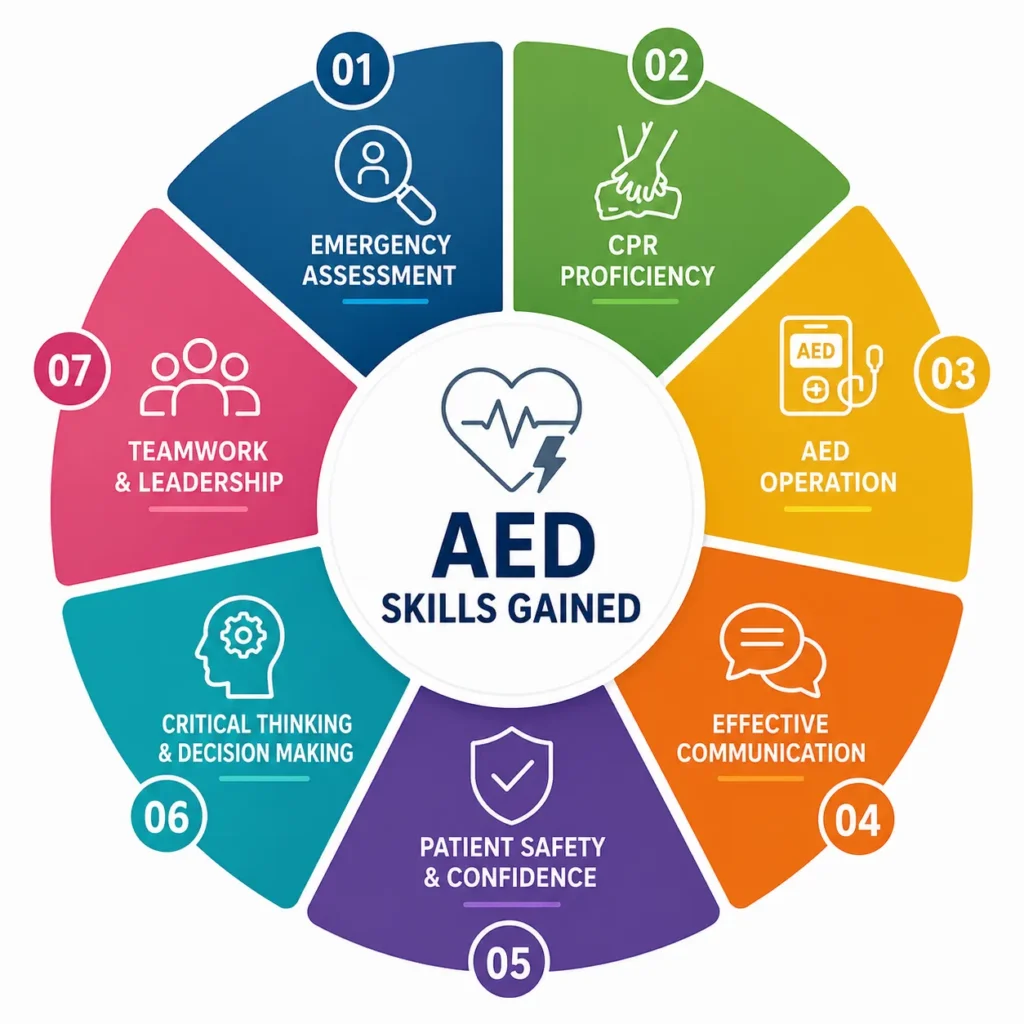
AED training provides learners with essential emergency response skills needed to handle cardiac emergencies effectively. The programme builds confidence in assessing situations, providing immediate care, and using an AED safely while waiting for professional medical assistance.
- Emergency Assessment: Learn how to quickly identify signs of cardiac arrest, evaluate an emergency situation, and take appropriate immediate action.
- CPR Techniques: Develop the ability to perform effective chest compressions and support blood circulation until further medical help is available.
- AED Operation: Gain practical knowledge of how to use an AED device, including applying pads, analysing heart rhythm, and delivering a shock when required.
- Emergency Communication: Improve communication skills for contacting emergency services, sharing important information, and coordinating with other responders during critical situations.
- Patient Safety: Understand how to provide safe assistance, follow emergency procedures, and protect the individual from further harm during a cardiac emergency.
Career Benefits of AED Certification
AED certification provides valuable emergency response skills that can improve professional opportunities in healthcare, safety, and support roles. The AED certification benefits include increased workplace confidence, improved employability, and the ability to respond effectively during life-threatening emergencies.
Professionals with AED skills are valued in many industries because organisations need trained individuals who can support emergency preparedness and create safer environments.
- Healthcare Assistant: AED certification helps healthcare assistants strengthen their emergency response skills and provide better support to patients during cardiac emergencies in hospitals, clinics, and care facilities.
- First Aid Trainer: Certified individuals can enhance their knowledge and credibility when delivering first aid awareness and emergency response training to others.
- Safety Officer: AED skills support safety officers in developing effective workplace emergency plans and ensuring employees are prepared to respond during medical incidents.
- Workplace Emergency Responder: Trained responders can act quickly during workplace cardiac emergencies, helping protect employees, visitors, and customers until professional medical help arrives.
- Care Worker: AED certification enables care workers to provide safer support for vulnerable individuals and respond confidently to sudden health emergencies in care environments.
Who Should Enrol?
The Professional Diploma in Automated External Defibrillator (AED) Programme is suitable for individuals who want to develop lifesaving emergency response skills. It is beneficial for professionals and community members who may need to respond during cardiac emergencies.
Suitable learners include:
- Healthcare Workers: Doctors, nurses, healthcare assistants, and medical support staff who want to improve their emergency response abilities.
- Teachers: School and college staff who need the skills to respond to emergencies involving students or colleagues.
- Security Staff: Security personnel who are often among the first responders in public places and workplaces.
- Workplace Safety Professionals: Safety officers and managers responsible for maintaining safe working environments.
- Care Professionals: Care workers who support individuals who may require immediate emergency assistance.
- Volunteers: Community volunteers who want to gain practical skills to help during emergency situations.
Why Choose Professional AED Diploma Instead of Short Courses?
A Professional AED Diploma provides a more structured and comprehensive learning experience compared with basic short courses. It helps learners develop both theoretical knowledge and practical skills required for effective emergency response.
Key advantages include:
- Structured Learning: Covers AED principles, cardiac emergencies, CPR support, and emergency procedures in an organised learning format.
- Professional Recognition: Provides evidence of specialised AED knowledge and commitment to emergency preparedness.
- Career Value: Enhances professional profiles for individuals working in healthcare, safety, education, and care sectors.
- Practical Competency: Develops confidence in assessing emergencies, operating AED equipment, and providing immediate support.
AED Training in Islamabad and Pakistan
The demand for AED training Islamabad and AED certification Pakistan is increasing as organisations become more aware of the importance of emergency preparedness. Workplaces, educational institutions, healthcare facilities, and public areas are recognising the need for trained individuals who can respond quickly during cardiac emergencies.
AED-trained professionals help improve safety standards by providing immediate assistance before emergency medical teams arrive.
Growing awareness has increased the need for:
- Trained workplace emergency responders
- Healthcare and care professionals with AED skills
- Safety personnel capable of managing medical emergencies
- Individuals prepared to support their communities during critical situations
Completing AED certification helps learners contribute to safer workplaces and communities across Pakistan.
Conclusion
The Professional Diploma in Automated External Defibrillator (AED) Programme helps learners gain essential skills to respond to cardiac emergencies. It teaches how to recognise emergencies, perform CPR, and use an AED safely.
AED certification improves confidence, career opportunities, and emergency preparedness. Trained individuals can help create safer workplaces, healthcare settings, and communities.