
10 Common Childhood Emergencies and How Paediatric First Aid Can Help
Every child experiences bumps, falls, illnesses, and unexpected situations while growing up. Although many childhood accidents are minor, some emergencies require immediate action to protect a child’s health and safety.
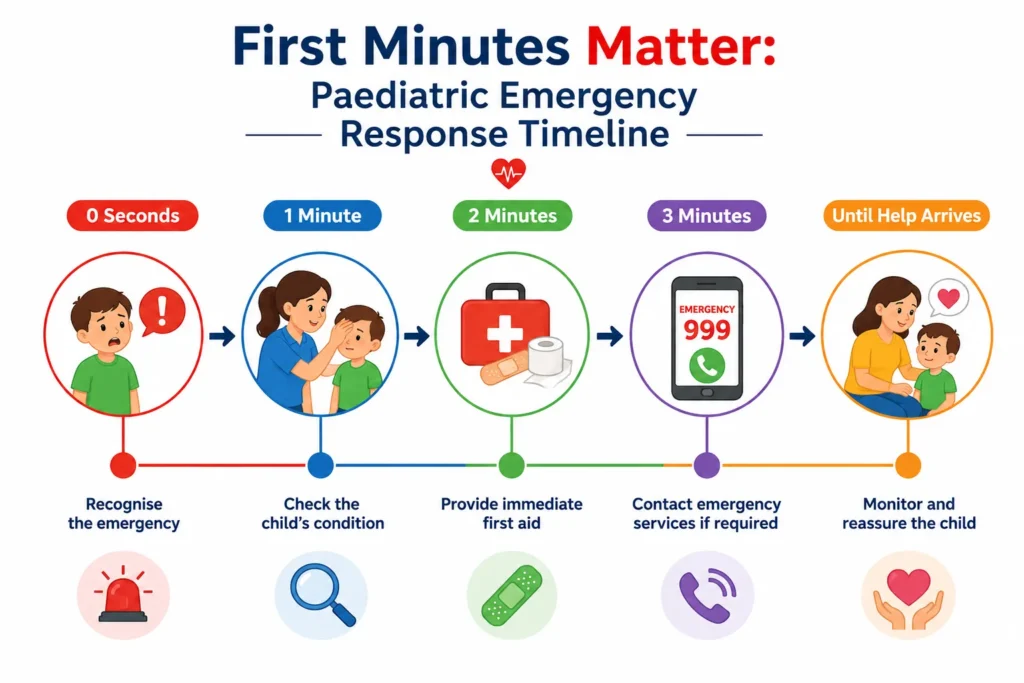
Knowing what to do during the first few minutes of an emergency can prevent complications and provide vital support until professional medical assistance arrives.
Paediatric First Aid gives parents, childcare workers, teachers, and caregivers the confidence and practical skills needed to respond effectively to emergencies involving babies and children.
This guide explains the most common childhood emergencies and how paediatric first aid training helps manage these situations safely.
What Is Paediatric First Aid?
Paediatric First Aid is specialised emergency care training designed to help individuals respond effectively to accidents, injuries, and sudden illnesses involving babies, toddlers, and children. It provides the knowledge and practical skills needed to offer immediate support, reduce risks, and protect a child’s wellbeing until professional medical assistance is available.
Children are not simply smaller versions of adults; their bodies, reactions, and medical needs are different. Paediatric First Aid focuses on these differences and teaches appropriate emergency responses based on a child’s age, size, and development stage.
It covers essential skills such as:
- Understanding common childhood emergencies and their causes
- Providing immediate first aid support during accidents and illnesses
- Performing infant and child CPR when required
- Managing choking incidents, burns, cuts, bleeding, and other injuries
- Recognising signs of serious conditions such as breathing difficulties, allergic reactions, and seizures
- Supporting and reassuring children during stressful emergency situations
- Knowing when and how to seek professional medical help
Unlike general first aid, paediatric first aid considers important factors that affect children, including:
- Child anatomy: Children’s bodies are smaller and more sensitive, requiring different first aid approaches.
- Breathing patterns: Infants and young children may show different signs when experiencing breathing difficulties.
- Communication abilities: Young children may not be able to clearly explain pain, symptoms, or what has happened.
- Development stages: Emergency risks vary depending on a child’s age, mobility, and level of understanding.
- Emergency response techniques: CPR, choking management, and injury care must be adapted for infants and children.
Paediatric First Aid is valuable for parents, childcare professionals, teachers, and anyone responsible for children’s safety. By developing confidence and emergency response skills, trained individuals can act quickly and appropriately when a child needs immediate care.
Adult First Aid vs Paediatric First Aid
| Feature | Adult First Aid | Paediatric First Aid |
|---|---|---|
| Focus | Designed to support adults during injuries, illnesses, and medical emergencies. | Designed specifically for babies, toddlers, and children with child-focused emergency care. |
| CPR Approach | Uses CPR techniques suitable for adult body size and physical needs. | Includes infant and child CPR techniques adapted for younger age groups. |
| Emergency Risks | Focuses on adult-related injuries, health conditions, and workplace emergencies. | Covers common childhood emergencies such as choking, falls, burns, allergic reactions, and seizures. |
| Communication | Involves communicating with adults who can usually explain their symptoms and needs. | Focuses on child-friendly communication and recognising signs when children cannot clearly explain what happened. |
| Techniques | Uses general first aid procedures based on adult anatomy and responses. | Uses age-appropriate techniques that consider children’s smaller size, development, and specific safety needs. |
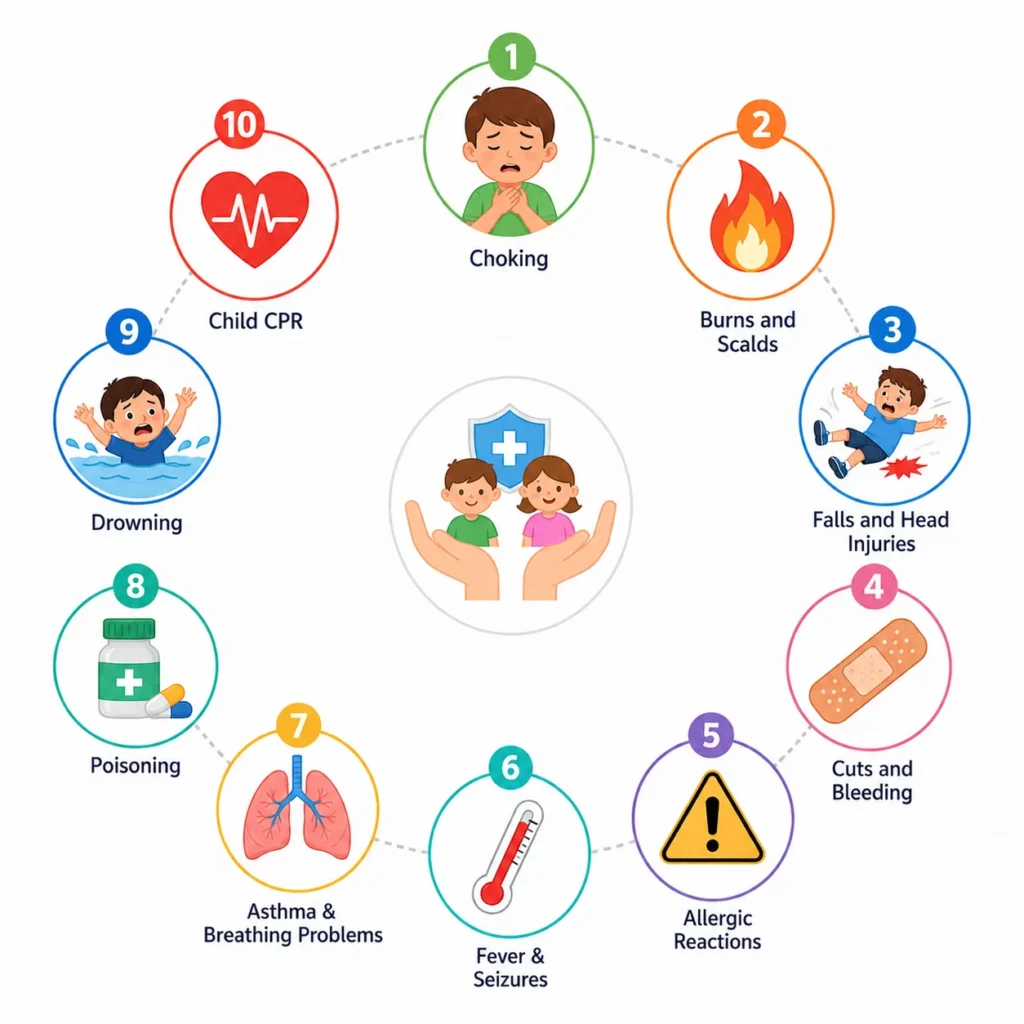
10 Common Childhood Emergencies and How Paediatric First Aid Can Help
1. Choking
Why Children Are at Risk
Choking is one of the most common childhood emergencies, especially among babies and young children. At an early age, children often explore objects by putting them in their mouths, which increases the risk of swallowing small items. Foods such as nuts, grapes, sweets, and hard pieces of food can also become trapped in the airway.
Because young children have smaller airways compared to adults, even a small object can cause a serious blockage and affect their ability to breathe.
Signs of Choking
A child who is choking may show signs such as:
- Difficulty breathing or making sounds
- Unable to cry, speak, or cough effectively
- Weak or silent coughing
- Holding their throat
- Becoming distressed or panicked
- Blue lips or skin due to lack of oxygen
How Paediatric First Aid Helps
Paediatric First Aid training helps parents, carers, and childcare professionals respond quickly and safely during a choking emergency. It teaches individuals how to:
- Recognise the difference between mild and severe choking
- Check if a child’s airway is blocked
- Apply the correct choking response techniques
- Use age-appropriate methods for babies and children
- Know when to call emergency services
Quick and confident action during a choking incident can help clear the airway and reduce the risk of serious harm.
2. Burns and Scalds
Why Children Are at Risk
Burns and scalds are common childhood injuries because children are naturally curious and may not understand the dangers of hot objects or substances. A child’s skin is more delicate than an adult’s, so burns can cause more serious damage even from a short exposure.
Common causes include:
- Hot drinks such as tea or coffee
- Hot water from baths or cooking
- Cooking equipment and appliances
- Fire and flames
- Electrical sources
Signs of Burns and Scalds
A child with a burn may experience:
- Red, painful skin
- Swelling or blistering
- Peeling or damaged skin
- Severe pain or distress
How Paediatric First Aid Helps
Paediatric First Aid training teaches individuals how to respond safely and provide immediate care. It helps them to:
- Remove the child from danger safely
- Cool the affected area correctly
- Protect the injured skin from further damage
- Recognise when a burn requires urgent medical attention
- Provide reassurance and comfort to the child
Quick and appropriate first aid can reduce the severity of burns and support better recovery while waiting for professional medical help.
3. Falls and Head Injuries
Why Children Are at Risk
Falls are one of the most common childhood accidents, especially as children learn to crawl, walk, run, and explore their surroundings. Children may fall from furniture, playground equipment, stairs, or during sports activities.
Examples include:
- Falling from beds, chairs, or changing tables
- Playground accidents
- Sports-related injuries
- Slips and trips at home or school
Signs of a Possible Head Injury
A child with a head injury may show:
- Headache or pain
- Dizziness or confusion
- Vomiting
- Unusual tiredness or sleepiness
- Loss of consciousness
How Paediatric First Aid Helps
Paediatric First Aid helps carers to:
- Assess the seriousness of an injury
- Provide immediate support and comfort
- Monitor symptoms after a fall
- Recognise possible concussion signs
- Understand when medical help is required
4. Cuts, Bleeding and Wounds
Why Children Are at Risk
Children are active and often experience minor cuts and wounds during play, sports, or daily activities. While many injuries are minor, some wounds may require proper care to prevent infection or further complications.
Common causes include:
- Falls during play
- Sharp objects
- Sports injuries
- Outdoor activities
How Paediatric First Aid Helps
Training teaches carers how to:
- Control bleeding safely
- Clean and protect wounds
- Apply suitable dressings
- Reduce the risk of infection
- Identify when medical attention is needed
Proper first aid can help a child recover comfortably and prevent minor injuries from becoming more serious.
5. Allergic Reactions and Anaphylaxis
Why Children Are at Risk
Some children can experience allergic reactions when exposed to certain substances. Severe allergic reactions, known as anaphylaxis, can develop quickly and may become life-threatening.
Common triggers include:
- Food allergies
- Insect bites or stings
- Certain medicines
- Environmental allergens
Signs of an Allergic Reaction
Symptoms may include:
- Skin rash or swelling
- Swelling of the lips, face, or throat
- Difficulty breathing
- Dizziness or collapse
How Paediatric First Aid Helps
Paediatric First Aid helps carers to:
- Recognise signs of a serious allergic reaction
- Respond quickly during an emergency
- Support the use of prescribed emergency medication
- Seek urgent medical assistance when required
6. Fever and Febrile Seizures
Why Children Are at Risk
Young children may sometimes experience seizures triggered by a high fever. Although these seizures can be frightening, knowing how to respond calmly is important.
How Paediatric First Aid Helps
Training teaches individuals how to:
- Keep the child safe during a seizure
- Prevent injuries during the episode
- Understand warning signs requiring medical support
- Provide appropriate care after the seizure
7. Asthma Attacks and Breathing Problems
Why Children Are at Risk
Breathing difficulties can occur suddenly due to asthma, allergies, infections, or other health conditions. Quick recognition and support are important during these situations.
Warning Signs Include:
- Wheezing or noisy breathing
- Fast breathing
- Difficulty speaking
- Chest tightness
- Signs of distress
How Paediatric First Aid Helps
Training helps carers to:
- Recognise breathing emergencies
- Support children using prescribed inhalers
- Keep the child comfortable and calm
- Understand when emergency help is required
8. Poisoning and Accidental Ingestion
Why Children Are at Risk
Young children are naturally curious and may accidentally swallow harmful substances found around the home, nursery, or school environment.
Common examples include:
- Medicines
- Cleaning products
- Chemicals
- Harmful household items
How Paediatric First Aid Helps
Paediatric First Aid teaches carers how to:
- Keep the child safe from further exposure
- Respond appropriately without causing additional harm
- Gather important information about what was swallowed
- Seek emergency medical advice when needed
9. Drowning Emergencies
Why Children Are at Risk
Young children can drown quickly because they may not recognise water dangers and may be unable to call for help. Drowning can happen in swimming pools, baths, ponds, or other water areas.
How Paediatric First Aid Helps
Training provides essential skills for:
- Responding safely to water emergencies
- Assessing the child’s condition
- Performing child and infant CPR
- Providing immediate support until emergency services arrive
10. Cardiac Emergencies and Child CPR
Why Children Are at Risk
Although cardiac emergencies are less common in children, they require immediate action when they occur. A quick response can be critical in supporting a child’s survival.
How Paediatric First Aid Helps
Paediatric First Aid teaches:
- Infant CPR techniques
- Child CPR techniques
- Basic AED awareness
- Emergency response procedures
- How to act quickly while waiting for medical professionals
Having these skills gives parents, carers, and professionals the confidence to respond effectively during a life-threatening emergency.
How Paediatric First Aid Training Improves Child Safety
Paediatric First Aid training helps parents, carers, and childcare professionals develop the skills and confidence needed to respond effectively during childhood emergencies. It improves safety by preparing individuals to act quickly, recognise risks, and provide appropriate support when children need help.
🛡️ Builds Emergency Confidence
Paediatric First Aid training helps individuals stay calm and make better decisions during stressful situations. Knowing the correct steps to follow reduces panic and allows carers to respond with greater confidence.
⚡ Supports Faster Response
Quick action during an emergency can reduce risks and prevent situations from becoming more serious. First aid training helps carers respond immediately while waiting for professional medical assistance.
🔍 Helps Identify Serious Symptoms
Training improves the ability to recognise warning signs of serious conditions such as breathing difficulties, allergic reactions, seizures, and severe injuries. Early recognition allows timely action and better outcomes.
🏠 Creates Safer Childcare Environments
Trained adults help create safer environments at home, schools, nurseries, and childcare settings. They can identify potential hazards, respond effectively to accidents, and support children’s health and wellbeing.
Preventing Childhood Emergencies
While not all accidents can be avoided, many childhood emergencies can be reduced by creating a safe environment and understanding common risks. Parents, carers, and childcare professionals can help protect children by following simple safety practices.
🏠 Create a Safe Home Environment
- Keep medicines, cleaning products, and chemicals out of children’s reach.
- Use safety gates and secure dangerous areas.
- Remove small objects that may cause choking.
🔥 Prevent Burns and Scalds
- Keep hot drinks away from children.
- Check bath water temperature before use.
- Keep children away from cooking areas.
🧸 Choose Safe Toys and Activities
- Select age-appropriate toys.
- Check toys regularly for broken parts.
- Supervise children during play.
🍽️ Encourage Safe Eating Habits
- Cut food into suitable sizes.
- Encourage children to sit while eating.
- Avoid high-risk choking foods for young children.
🌊 Improve Water Safety
- Always supervise children near water.
- Use appropriate safety equipment.
- Teach children basic water safety awareness.
👀 Provide Active Supervision
- Stay alert during playtime.
- Understand children’s abilities at different development stages.
- Identify potential hazards before accidents happen.
Who Should Learn Paediatric First Aid?
Paediatric First Aid is valuable for anyone responsible for the care, safety, or wellbeing of children. It helps individuals respond confidently during emergencies and provide immediate support when needed.
Suitable for:
- 👨👩👧 Parents and guardians
- 🏫 Nursery practitioners
- 👩🏫 Teachers and teaching assistants
- 🧸 Childcare workers
- 👶 Babysitters and child carers
- ⚽ Sports coaches
- 🏥 Healthcare assistants
Learning paediatric first aid helps these individuals create safer environments and respond effectively to common childhood emergencies.
Paediatric First Aid Skills Checklist
Paediatric First Aid training develops essential skills that help parents, carers, and professionals respond effectively during childhood emergencies. These skills support quick decision-making, reduce risks, and help provide appropriate care until medical assistance is available.
| Skill | Why It Matters |
|---|---|
| Child CPR | Helps provide life-saving support when a child or infant is not breathing normally or has no signs of life. Training ensures individuals understand the correct CPR techniques for different age groups. |
| Choking Response | Teaches how to recognise airway blockage and apply suitable techniques to help remove an obstruction and restore normal breathing. |
| Injury Management | Provides the ability to manage common childhood injuries such as cuts, burns, falls, and bleeding while reducing the risk of further harm. |
| Emergency Assessment | Helps carers quickly assess a child’s condition, recognise serious symptoms, and decide when emergency medical help is required. |
| Communication Skills | Supports calm and clear communication with children, parents, carers, and emergency services during stressful situations. It also helps reassure children and provide emotional support. |
Developing these skills allows trained individuals to respond confidently and effectively when children experience accidents, injuries, or sudden health emergencies.
Conclusion
Childhood emergencies can happen unexpectedly, but having the right knowledge and skills can make a big difference. Paediatric First Aid training helps parents, carers, and professionals respond quickly, stay calm, and provide essential support when a child needs help. By learning these skills, individuals can create safer environments and protect children’s health and wellbeing.