
Environmental Compliance Officer: Career Guide, Responsibilities, Skills, Salary, Qualifications & How to Become One (2026)
An Environmental Compliance Officer is a professional responsible for helping organisations follow environmental laws, regulations, and sustainability requirements. They monitor environmental performance, conduct inspections, prepare reports, and ensure that business activities reduce negative impacts on the environment.
Organisations need Environmental Compliance Officers to manage environmental risks, maintain legal compliance, and improve sustainable practices. This role supports pollution prevention, waste reduction, resource efficiency, and responsible business operations.
With growing focus on climate change and sustainability, Environmental Compliance Officers have increasing career opportunities across industries such as construction, energy, manufacturing, healthcare, and government sectors. This career is ideal for professionals interested in protecting the environment while supporting responsible organisational growth.
What Is an Environmental Compliance Officer?
An Environmental Compliance Officer is a professional who ensures that an organisation follows environmental laws, regulations, permits, and internal environmental policies. They monitor activities, identify environmental risks, conduct inspections, maintain records, and support organisations in reducing their environmental impact.
Purpose
The main purpose of an Environmental Compliance Officer is to help organisations operate responsibly while meeting environmental requirements. They ensure that activities related to waste management, emissions, resource use, and pollution control are carried out according to approved standards.
Importance
Environmental Compliance Officers play an important role in protecting natural resources and preventing environmental damage. They help organisations:
- Avoid legal penalties and compliance failures
- Reduce pollution and waste
- Improve sustainability performance
- Maintain environmental records and reports
- Support responsible business practices
- Prepare for environmental audits and inspections
As environmental regulations and sustainability expectations continue to increase, this role has become essential for organisations in industries such as construction, manufacturing, energy, healthcare, and infrastructure.
Difference Between Environmental Compliance and Environmental Management
| Environmental Compliance | Environmental Management |
|---|---|
| Focuses on meeting environmental laws, regulations, permits, and legal requirements | Focuses on improving overall environmental performance and sustainability practices |
| Helps prevent legal risks, penalties, and compliance failures | Supports long-term sustainability goals and environmental improvement |
| Includes activities such as audits, inspections, reporting, and corrective actions | Includes planning, environmental strategies, improvement programmes, and resource management |
| Mainly focuses on meeting current environmental obligations | Focuses on long-term environmental planning and continuous improvement |
| Ensures organisations operate within required environmental standards | Helps organisations reduce environmental impacts and improve sustainability performance |
| Reactive approach to addressing compliance requirements | Proactive approach to managing environmental challenges |
What Does an Environmental Compliance Officer Do?
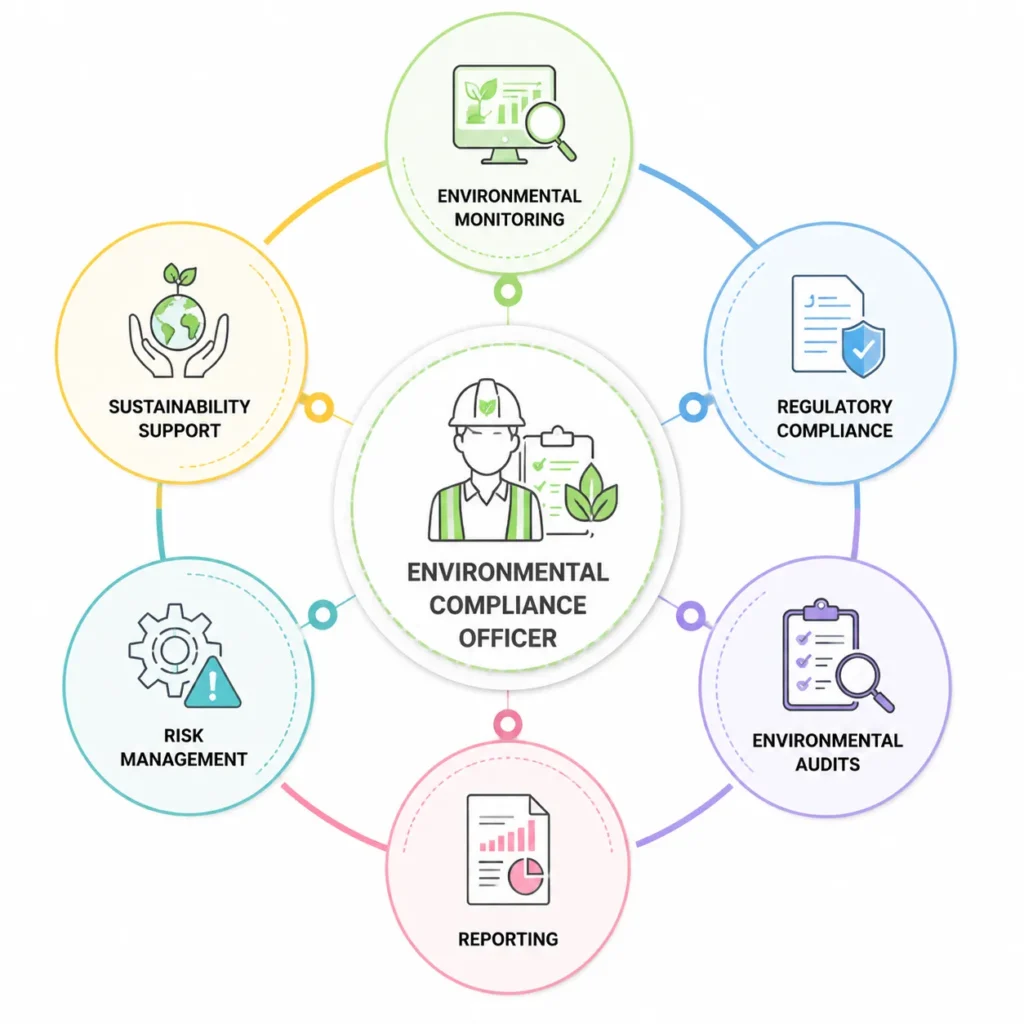
An Environmental Compliance Officer helps organisations follow environmental laws, reduce environmental risks, and improve their overall environmental performance. They play a key role in monitoring workplace activities, managing compliance requirements, and supporting sustainable business practices.
Their work combines field inspections, data review, reporting, and communication with different teams to ensure that organisational activities meet environmental standards.
Environmental Monitoring
Environmental Compliance Officers monitor environmental conditions to identify potential risks and ensure responsible operations.
Key activities include:
- Checking air quality, water quality, and waste management practices
- Monitoring energy use and environmental performance data
- Identifying possible environmental hazards
- Reviewing environmental conditions at operational sites
Regulatory Compliance Management
They ensure that organisations comply with environmental laws, regulations, permits, and industry requirements.
Key responsibilities include:
- Reviewing environmental regulations and compliance obligations
- Updating procedures when environmental requirements change
- Advising employees about compliance responsibilities
- Ensuring business activities meet legal standards
Environmental Audits
Environmental Compliance Officers conduct or support audits to evaluate whether an organisation is meeting environmental requirements.
Key activities include:
- Reviewing environmental records and procedures
- Identifying compliance gaps and improvement areas
- Supporting internal and external environmental audits
- Recommending corrective actions
Permit Management
They manage environmental permits and ensure that activities operate within approved requirements.
Key responsibilities include:
- Maintaining environmental permits and approvals
- Monitoring permit conditions and requirements
- Supporting permit renewal processes
- Ensuring emissions, waste disposal, and resource use remain within limits
Reporting and Documentation
Accurate reporting is an important part of environmental compliance. Officers prepare and maintain records to demonstrate compliance.
Key activities include:
- Preparing environmental compliance reports
- Recording inspection findings and monitoring results
- Maintaining legal and regulatory documentation
- Tracking corrective and preventive actions
Waste Management Compliance
They ensure that waste is handled safely and according to environmental requirements.
Key responsibilities include:
- Monitoring waste storage and handling procedures
- Ensuring proper transportation and disposal methods
- Supporting recycling and waste reduction programmes
- Checking compliance with waste regulations
Pollution Prevention
Environmental Compliance Officers help organisations reduce pollution and minimise environmental damage.
Key activities include:
- Identifying pollution sources
- Monitoring emissions and environmental impacts
- Recommending pollution reduction measures
- Supporting cleaner production practices
Sustainability Support
They contribute to sustainability goals by helping organisations improve resource efficiency and reduce environmental impacts.
Key responsibilities include:
- Helping organisations achieve long-term environmental objectives
- Supporting sustainability programmes
- Improving resource management practices
- Assisting with environmental improvement plans
Environmental Compliance Officer Legal Responsibilities
An Environmental Compliance Officer plays an important role in helping organisations meet legal environmental requirements and avoid regulatory violations. They ensure that business activities are carried out responsibly while protecting the environment and maintaining compliance with applicable laws and standards.
Ensuring Compliance with Environmental Laws
Environmental Compliance Officers monitor organisational activities to ensure they follow environmental regulations related to pollution control, waste management, emissions, resource use, and environmental protection.
Key responsibilities include:
- Reviewing environmental requirements and legal obligations
- Ensuring workplace activities follow approved environmental standards
- Advising teams about environmental compliance requirements
Managing Environmental Permits and Approvals
Many industries require environmental permits before carrying out certain activities. Compliance Officers help manage these permits and ensure organisations operate within approved conditions.
Their duties include:
- Maintaining environmental permits and licences
- Monitoring permit conditions
- Ensuring permit renewals are completed on time
Conducting Environmental Inspections and Audits
Environmental Compliance Officers perform inspections and support audits to identify compliance gaps and prevent environmental issues.
They may:
- Inspect operational areas and facilities
- Review environmental records
- Identify non-compliance issues
- Recommend corrective actions
Maintaining Environmental Records and Reports
Accurate documentation is essential for demonstrating compliance with environmental requirements. Compliance Officers maintain records related to monitoring, inspections, incidents, and improvements.
Their responsibilities include:
- Preparing environmental compliance reports
- Maintaining inspection records
- Documenting corrective and preventive actions
Reporting Environmental Incidents
When environmental incidents occur, such as pollution events or improper waste handling, Environmental Compliance Officers help investigate and report these issues.
They support:
- Incident investigation
- Regulatory reporting
- Corrective action planning
- Prevention of future environmental problems
Supporting Environmental Risk Management
Environmental Compliance Officers identify potential legal and environmental risks and help organisations develop measures to control them.
This includes:
- Assessing environmental hazards
- Recommending risk reduction strategies
- Supporting emergency response planning
Working with Regulators and Stakeholders
Compliance Officers often communicate with government agencies, auditors, contractors, and internal teams to ensure environmental requirements are understood and followed.
They help by:
- Responding to regulatory requests
- Supporting external inspections
- Communicating environmental responsibilities across the organisation
Key Environmental Regulations Professionals Should Understand
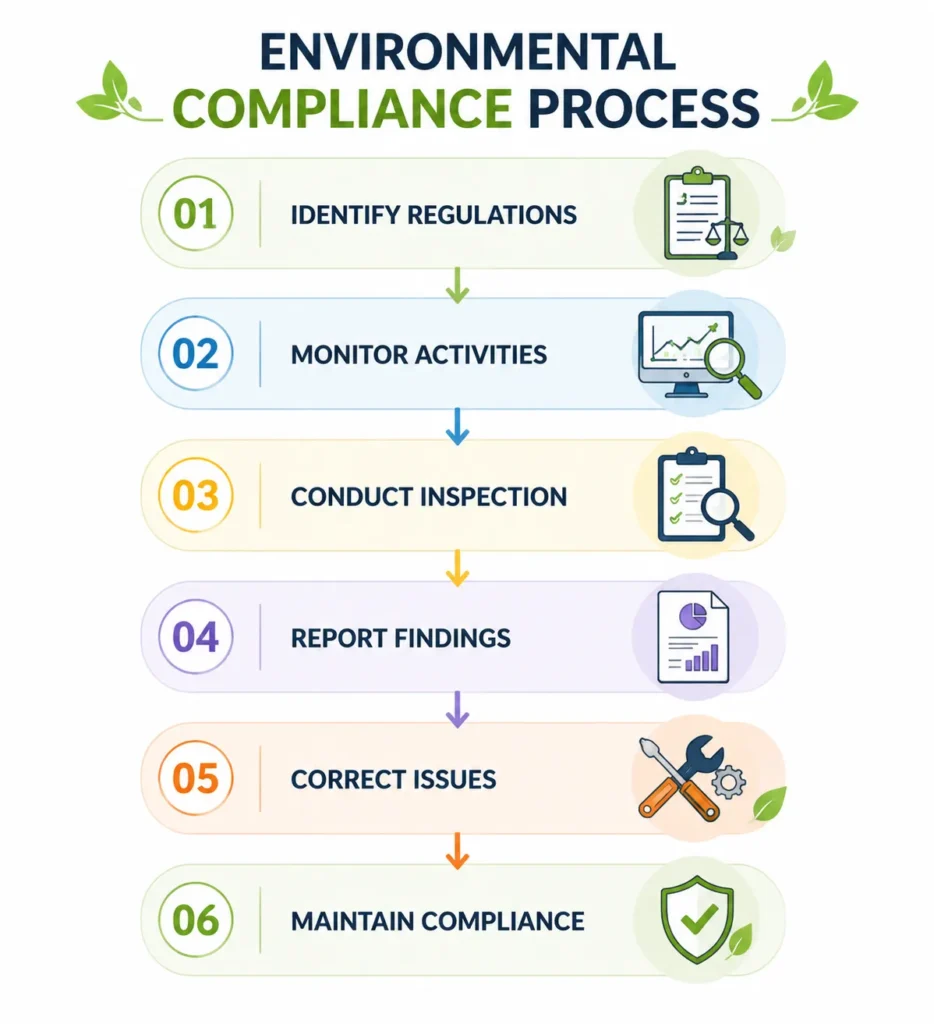
Environmental Compliance Officers must have a strong understanding of environmental regulations to help organisations operate legally and responsibly. These regulations guide businesses in managing pollution, waste, emissions, natural resources, and environmental risks.
The specific requirements vary by country and industry, but professionals generally need knowledge of the following key areas:
Environmental Protection Regulations
Environmental protection regulations establish requirements for reducing environmental damage and protecting natural resources.
Key areas include:
- Preventing pollution of air, water, and land
- Managing activities that may impact ecosystems
- Ensuring organisations follow environmental protection standards
- Reducing negative impacts from business operations
Waste Management Regulations
Waste management regulations ensure that waste is handled safely from generation to final disposal.
Environmental Compliance Officers monitor:
- Waste classification and storage requirements
- Safe transportation and disposal procedures
- Recycling and waste reduction practices
- Management of hazardous and non-hazardous waste
Air Quality and Emission Regulations
These regulations control emissions released from industrial activities, vehicles, and energy operations.
Professionals need to understand:
- Emission monitoring requirements
- Air pollution control measures
- Greenhouse gas reporting obligations
- Strategies for reducing atmospheric impacts
Water Protection Regulations
Water-related regulations help protect water resources from pollution and misuse.
Compliance responsibilities may include:
- Monitoring wastewater discharge
- Preventing contamination of water sources
- Managing water usage efficiently
- Ensuring compliance with discharge limits
Environmental Impact Assessment (EIA) Requirements
Environmental Impact Assessment requirements help organisations evaluate potential environmental effects before starting major projects.
Environmental Compliance Officers may support:
- Identifying possible environmental impacts
- Reviewing mitigation measures
- Monitoring environmental performance during projects
- Ensuring project activities follow approved environmental plans
Hazardous Materials Regulations
Industries that use chemicals or hazardous substances must follow strict requirements to protect people and the environment.
Professionals ensure:
- Proper storage and handling of hazardous materials
- Safe transportation procedures
- Emergency response preparation
- Accurate documentation and reporting
ISO 14001 Environmental Management Systems
Knowledge of ISO 14001 Environmental Management Systems helps professionals understand how organisations create structured approaches for managing environmental responsibilities.
Key principles include:
- Developing environmental policies
- Identifying environmental risks
- Setting improvement objectives
- Monitoring environmental performance
- Supporting continuous improvement
Climate Change and Carbon Reporting Requirements
Growing climate regulations require organisations to measure and manage their carbon impacts.
Environmental Compliance Officers may support:
- Carbon footprint assessments
- Greenhouse gas reporting
- Emission reduction programmes
- Net-zero and sustainability initiatives
Environmental Laws and Standards
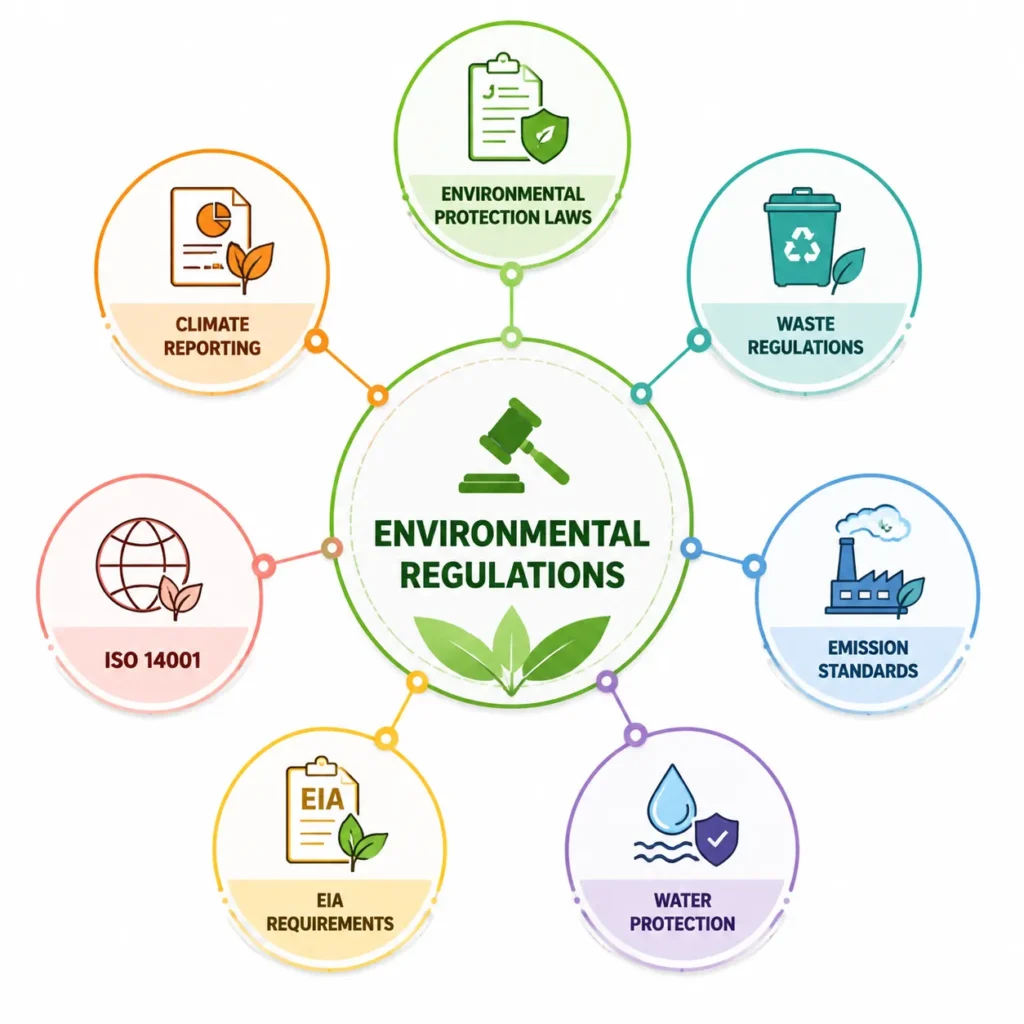
Environmental laws and standards help organisations protect the environment, reduce negative impacts, and operate in a responsible way. Environmental Compliance Officers use these requirements to ensure that business activities follow legal obligations and recognised environmental practices.
Purpose of Environmental Laws
Environmental laws are created to protect natural resources and control activities that may harm the environment. They provide clear requirements for organisations to manage environmental risks and prevent pollution.
Key purposes include:
- Protecting air, water, land, and natural resources
- Controlling pollution and waste management activities
- Setting requirements for environmental protection
- Defining legal responsibilities for organisations
- Reducing environmental risks from business operations
Importance of Environmental Laws for Organisations
Following environmental laws helps organisations avoid legal problems, improve environmental performance, and build responsible business practices.
They help organisations:
- Maintain compliance with environmental requirements
- Reduce pollution and environmental damage
- Improve resource efficiency
- Avoid penalties and compliance failures
- Support sustainability goals
Role of Environmental Compliance Officers in Following Standards
Environmental Compliance Officers help organisations understand, implement, and maintain environmental requirements. They monitor activities, review compliance performance, and support improvements.
Their role includes:
- Monitoring compliance with environmental laws and standards
- Conducting inspections and environmental audits
- Maintaining environmental records and reports
- Identifying compliance gaps and risks
- Supporting corrective actions and improvements
Environmental Standards
Environmental standards provide guidelines and structured approaches for managing environmental performance. They help organisations apply consistent practices and improve their sustainability efforts.
Key benefits include:
- Providing guidance for environmental management
- Supporting consistent environmental practices
- Helping organisations improve sustainability performance
- Assisting with audits and compliance monitoring
- Encouraging continuous environmental improvement
Examples of Important Environmental Standards
ISO 14001 Environmental Management Systems
ISO 14001 provides a framework for organisations to manage environmental responsibilities effectively. It helps businesses identify environmental risks, improve performance, and maintain a structured environmental management system.
Environmental Impact Assessment (EIA) Requirements
EIA requirements help organisations assess potential environmental impacts before starting major projects. They support better decision-making by identifying risks and developing mitigation measures.
Waste Management Standards
Waste management standards guide organisations in handling, storing, transporting, recycling, and disposing of waste safely and responsibly.
Emission Control Standards
Emission control standards help organisations monitor and reduce pollutants released into the environment. They support air quality protection and greenhouse gas reduction efforts.
Climate Reporting Requirements
Climate reporting requirements help organisations measure and communicate their environmental performance, including carbon emissions, reduction targets, and sustainability progress.
Environmental Compliance Officer Daily Tasks
The daily activities of an Environmental Compliance Officer involve monitoring environmental performance, checking compliance requirements, and supporting organisations in maintaining responsible operations.
Morning Tasks
At the start of the day, an Environmental Compliance Officer may:
- Review environmental compliance reports and previous inspection records
- Check monitoring data related to emissions, waste, water quality, and resource usage
- Review updates in environmental regulations and company procedures
During Inspections
During site visits or workplace inspections, they may:
- Conduct environmental inspections to check compliance with standards
- Identify environmental risks such as improper waste handling, pollution sources, or unsafe practices
- Discuss corrective actions with teams to resolve environmental issues
End-of-Day Tasks
Before completing their work, they usually:
- Prepare compliance documentation and inspection reports
- Record findings, actions taken, and recommendations
- Update environmental records for future audits and reviews
The daily work of an Environmental Compliance Officer combines field inspections, data analysis, reporting, and communication to help organisations maintain environmental compliance and sustainability goals.
Key Skills Required to Become an Environmental Compliance Officer
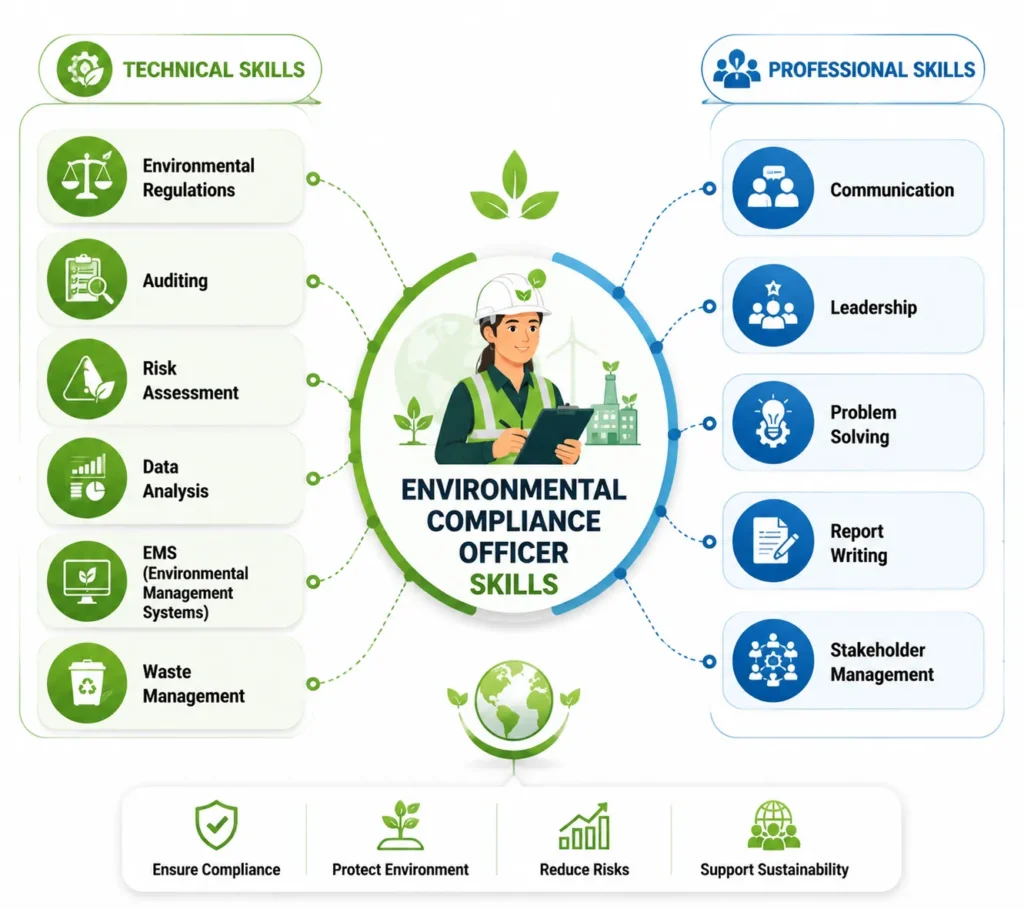
To become a successful Environmental Compliance Officer, professionals need a combination of technical knowledge and workplace skills. These skills help them monitor environmental performance, manage compliance requirements, and support sustainable business practices.
Technical Skills
Environmental Regulations
A strong understanding of environmental laws, standards, and regulations is essential. Environmental Compliance Officers must know the requirements related to pollution control, waste management, emissions, and environmental protection.
Environmental Auditing
They need auditing skills to inspect processes, review compliance records, identify gaps, and recommend improvements to meet environmental standards.
Risk Assessment
Environmental Compliance Officers must be able to identify environmental hazards, evaluate risks, and develop actions to reduce potential environmental impacts.
Data Analysis
They analyse environmental data such as monitoring results, waste records, and performance reports to identify trends and support decision-making.
Environmental Management Systems
Knowledge of Environmental Management Systems (EMS) helps them support structured approaches for improving environmental performance and maintaining compliance.
Waste Management
They need knowledge of waste handling, recycling, disposal procedures, and waste reduction strategies to ensure safe and compliant waste practices.
Professional Skills
Communication
Strong communication skills help them explain environmental requirements, provide guidance, and work effectively with employees and management teams.
Problem Solving
They must identify environmental issues and develop practical solutions that balance compliance requirements with business operations.
Report Writing
Environmental Compliance Officers prepare inspection reports, audit findings, and compliance documents, requiring clear and accurate writing skills.
Leadership
Leadership skills help them promote environmental awareness, guide teams, and encourage better environmental practices within organisations.
Stakeholder Management
They work with employees, regulators, contractors, and management, so they need the ability to build positive relationships and manage different stakeholder expectations.
Qualifications and Education Requirements
Becoming an Environmental Compliance Officer usually requires a combination of environmental knowledge, technical skills, and professional training. The required qualifications may vary depending on the industry, but employers generally look for candidates with relevant education and practical experience.
Environmental Science Degrees
A degree in Environmental Science, Environmental Management, Ecology, or a related field provides a strong foundation for this career. These programmes help professionals understand environmental regulations, pollution control, sustainability, conservation, and environmental monitoring.
Engineering Backgrounds
Professionals with backgrounds in Environmental Engineering, Civil Engineering, Chemical Engineering, or other technical disciplines can also pursue careers in environmental compliance. Engineering knowledge helps in areas such as industrial processes, emissions control, waste management, and environmental risk assessment.
Sustainability Qualifications
Sustainability-focused qualifications can improve career opportunities by developing knowledge of:
- Sustainable business practices
- Climate change management
- Carbon reduction strategies
- Environmental management systems
- Corporate sustainability reporting
These skills are increasingly valuable as organisations focus on environmental responsibility and ESG goals.
Health and Safety Qualifications
Environmental Compliance Officers often work closely with health and safety teams. Qualifications in occupational health and safety, risk management, or workplace environmental safety can support career development by improving knowledge of workplace risks, inspections, and compliance procedures.
Certifications That Support Environmental Compliance Careers
Professional certifications can help Environmental Compliance Officers improve their knowledge, demonstrate expertise, and increase career opportunities. These certifications develop skills in environmental management, auditing, sustainability, and regulatory compliance.
ISO 14001 Environmental Management Systems
Training in ISO 14001 Environmental Management Systems helps professionals understand how organisations manage environmental responsibilities. It covers areas such as environmental policies, risk control, compliance monitoring, and continuous improvement.
Environmental Auditing Certifications
Environmental auditing certifications develop skills in conducting environmental inspections, evaluating compliance performance, identifying gaps, and recommending corrective actions. These skills are valuable for professionals involved in audits and regulatory assessments.
Sustainability Certifications
Sustainability certifications help professionals understand modern environmental challenges, including climate change, carbon reduction, resource efficiency, and sustainable business practices. These qualifications support organisations in achieving long-term environmental goals.
Compliance Training
Compliance training provides knowledge of environmental regulations, legal requirements, reporting procedures, and industry standards. It helps professionals ensure that organisations operate within required environmental guidelines.
Environmental Compliance Officer Career Path
An Environmental Compliance Officer can progress through several career stages by gaining experience, developing technical skills, and completing professional qualifications.
Entry Level
Environmental Assistant
↓
Supports environmental monitoring, data collection, documentation, and basic compliance activities.
Environmental Compliance Officer
↓
Manages environmental inspections, compliance checks, reporting, and regulatory requirements.
Senior Compliance Officer
↓
Leads compliance programmes, manages complex environmental issues, and supports organisational decision-making.
Environmental Manager
↓
Oversees environmental strategies, sustainability initiatives, audits, and compliance teams.
Head of Sustainability
↓
Provides strategic leadership for environmental performance, sustainability goals, climate initiatives, and corporate responsibility programmes.
Industries Hiring Environmental Compliance Officers
Environmental Compliance Officers are needed across many industries where organisations must follow environmental regulations, reduce environmental risks, and improve sustainability performance. As environmental laws and sustainability expectations continue to grow, demand for these professionals is increasing in both private and public sectors.
Construction
Construction companies hire Environmental Compliance Officers to manage environmental risks related to site activities, waste disposal, pollution control, and sustainable construction practices.
Manufacturing
Manufacturing industries need compliance professionals to monitor emissions, chemical handling, waste management, and environmental performance.
Energy
Energy companies rely on Environmental Compliance Officers to ensure responsible operations, manage environmental impacts, and support renewable energy and sustainability initiatives.
Oil & Gas
The oil and gas sector requires environmental specialists to manage pollution risks, environmental permits, regulatory requirements, and environmental monitoring activities.
Mining
Mining organisations hire these professionals to manage land impacts, waste materials, water protection, and environmental restoration activities.
Healthcare
Healthcare facilities need Environmental Compliance Officers to ensure safe waste disposal, hazardous material management, and compliance with environmental standards.
Waste Management
Waste management companies employ compliance officers to monitor waste handling processes, recycling activities, disposal practices, and environmental regulations.
Transportation
Transport organisations require environmental professionals to manage emissions, fuel efficiency, pollution reduction, and sustainability programmes.
Government
Government departments and environmental agencies hire compliance professionals to support inspections, environmental policies, regulatory enforcement, and public environmental programmes.
Consulting
Environmental consulting firms employ Environmental Compliance Officers to provide auditing, compliance assessments, environmental advice, and support to different organisations.
Environmental Compliance Officer Salary Range (Estimated)
Salary levels for an Environmental Compliance Officer vary depending on experience, industry, location, qualifications, and job responsibilities.
| Experience Level | Job Position | Estimated Salary Range |
|---|---|---|
| Entry Level (0–2 years) | Environmental Assistant / Junior Compliance Officer | $40,000 – $55,000 per year |
| Mid-Level (3–5 years) | Environmental Compliance Officer | $55,000 – $75,000 per year |
| Experienced (5–10 years) | Senior Environmental Compliance Officer | $75,000 – $95,000 per year |
| Advanced Level (10+ years) | Environmental Manager / Compliance Lead | $95,000 – $130,000+ per year |
| Executive Level | Head of Sustainability / Environmental Director | $130,000+ per year |
Tools and Technologies Used by Environmental Compliance Officers
Modern Environmental Compliance Officers use advanced digital tools to monitor environmental performance, manage compliance activities, and improve decision-making. These technologies help organisations collect accurate data, maintain records, identify risks, and ensure compliance with environmental requirements.
Environmental Management Software
Environmental management software helps organisations organise and control their environmental activities. It supports compliance monitoring, document management, reporting, and continuous improvement.
Key uses include:
- Tracking environmental performance
- Managing compliance documents
- Monitoring environmental objectives
- Supporting audit preparation
GIS Mapping
Geographic Information System (GIS) tools help Environmental Compliance Officers analyse locations, identify environmental risks, and support better planning decisions.
Key uses include:
- Mapping environmental impacts
- Monitoring land and site conditions
- Analysing geographical risks
- Supporting environmental assessments
Compliance Tracking Platforms
Compliance tracking platforms provide a central system for managing regulatory requirements and compliance activities.
Key uses include:
- Tracking environmental regulations
- Managing permits and deadlines
- Recording inspections and corrective actions
- Improving compliance visibility
Digital Inspection Apps
Digital inspection applications allow professionals to complete site inspections more efficiently by replacing traditional paper-based processes.
Key uses include:
- Conducting mobile inspections
- Recording environmental findings
- Capturing images and evidence
- Creating inspection reports quickly
Data Analytics Tools
Data analytics tools help professionals understand environmental data and identify areas for improvement.
Key uses include:
- Analysing environmental trends
- Measuring performance indicators
- Identifying potential risks
- Supporting informed decision-making
Environmental Compliance Officer Challenges
Although Environmental Compliance Officers play an important role in protecting the environment, they also face challenges related to regulations, risk management, business operations, and data quality.
Changing Regulations
Environmental laws and standards continue to evolve, requiring professionals to stay updated and ensure organisations adjust their practices.
Key challenges include:
- Keeping up with new environmental requirements
- Updating compliance procedures
- Ensuring employees follow new standards
Managing Environmental Risks
Identifying and controlling environmental risks can be complex, especially in industries involving chemicals, emissions, waste, or large-scale operations.
Key challenges include:
- Assessing potential environmental impacts
- Preventing pollution incidents
- Developing effective risk control measures
Balancing Business Goals with Environmental Requirements
Environmental Compliance Officers often need to find practical solutions that support business growth while maintaining environmental responsibility.
Key challenges include:
- Meeting production targets while reducing environmental impacts
- Advising management on sustainable practices
- Finding cost-effective compliance solutions
Data Accuracy Issues
Reliable environmental data is essential for reporting, audits, and decision-making. Incorrect or incomplete information can create compliance risks.
Key challenges include:
- Ensuring accurate monitoring results
- Maintaining proper documentation
- Improving data collection processes
Role of an Environmental Compliance Officer in Sustainability and ESG
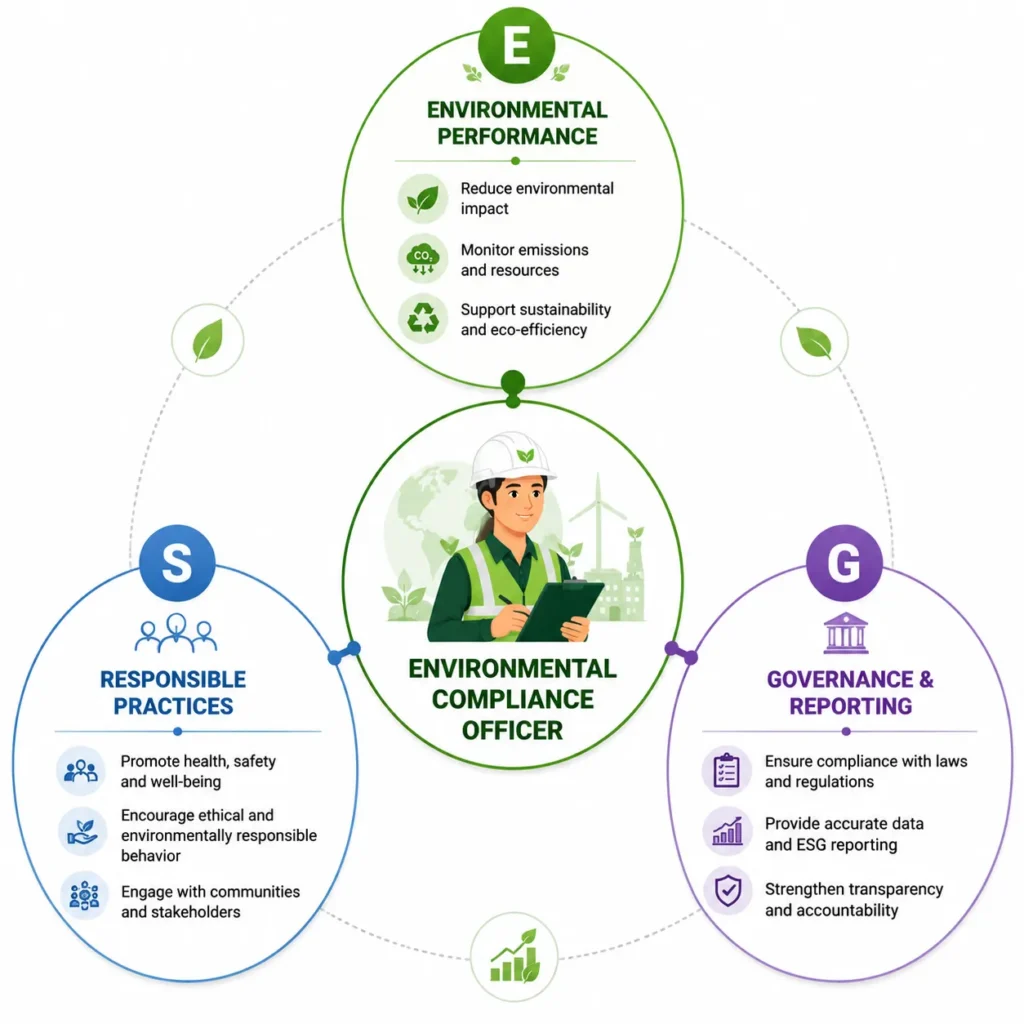
Environmental Compliance Officers play an important role in helping organisations achieve their sustainability and ESG (Environmental, Social, and Governance) goals. They ensure that business activities are environmentally responsible, follow regulations, and support long-term environmental improvement.
Their role in sustainability and ESG includes:
- Improving Environmental Performance
They help organisations reduce pollution, manage waste, use resources efficiently, and improve overall environmental practices. - Supporting ESG Reporting
They collect and maintain environmental data used in sustainability reports, including information about emissions, waste, energy use, and environmental performance. - Managing Environmental Risks
They identify potential environmental risks and help organisations develop strategies to prevent damage and improve compliance. - Supporting Carbon Reduction Goals
They assist with measuring carbon emissions, reducing environmental impacts, and supporting climate action plans. - Promoting Sustainable Practices
They encourage responsible use of resources, waste reduction, recycling, and environmentally friendly business operations. - Ensuring Transparency and Accountability
They maintain accurate records and reports to help organisations demonstrate their commitment to environmental responsibility.
Future of Environmental Compliance Careers
The future of Environmental Compliance Officer careers is expected to expand as organisations focus more on sustainability, climate action, and responsible business practices. Increasing environmental regulations and sustainability goals are creating new opportunities for qualified professionals.
ESG Growth
The growing importance of Environmental, Social, and Governance (ESG) practices is increasing demand for professionals who can support environmental reporting and sustainability strategies.
Key opportunities include:
- Managing environmental performance data
- Supporting ESG reporting
- Improving corporate sustainability practices
Climate Regulations
Stronger climate policies and environmental requirements are creating a need for experts who can help organisations reduce environmental impacts.
Key opportunities include:
- Supporting emission reduction programmes
- Managing climate-related compliance requirements
- Helping organisations achieve environmental targets
Sustainability Reporting
Businesses are increasingly required to measure and report their environmental performance, creating opportunities for compliance professionals with reporting skills.
Key opportunities include:
- Preparing sustainability reports
- Monitoring environmental indicators
- Supporting transparency and accountability
Carbon Management
The focus on carbon reduction and net-zero goals is increasing demand for professionals who understand carbon measurement and reduction strategies.
Key opportunities include:
- Supporting carbon footprint assessments
- Developing carbon reduction plans
- Monitoring emission reduction progress
Digital Environmental Monitoring
Emerging technologies such as sensors, automation, and data analytics are transforming environmental compliance practices.
Key opportunities include:
- Faster risk identification and reporting
- Real-time environmental monitoring
- Automated data collection
Conclusion
An Environmental Compliance Officer plays an important role in helping organisations follow environmental laws, reduce risks, and improve sustainability practices. They support activities such as environmental monitoring, audits, reporting, waste management, and pollution prevention.
With increasing focus on climate action, ESG, and sustainable business practices, the demand for Environmental Compliance Officers is growing across industries such as construction, energy, manufacturing, healthcare, and government.
A career in environmental compliance offers opportunities for professionals who want to protect the environment while helping organisations operate responsibly and meet future sustainability goals.