
What Is a Waste Management Manager? Roles, Responsibilities, Skills and Career Guide 2026
The world is producing more waste than ever before, creating challenges such as pollution, landfill growth, and environmental damage. Businesses, governments, and organisations are now focusing on better ways to manage waste, increase recycling, and reduce their impact on the environment. This need for sustainable waste solutions has increased the importance of waste management professionals.
Waste Management Managers help organisations manage their waste in a safe, efficient, and environmentally friendly way. They plan waste management activities, improve recycling systems, monitor waste processes, and find ways to reduce unnecessary waste.
As more organisations aim to become sustainable and reduce their environmental impact, the demand for Waste Management Managers is growing. These professionals help businesses save resources, lower waste costs, follow environmental rules, and create better waste management practices.
With increasing awareness of sustainability and responsible resource use, Waste Management Managers are becoming essential professionals who help create cleaner workplaces, healthier communities, and a more sustainable future.
What Is a Waste Management Manager?
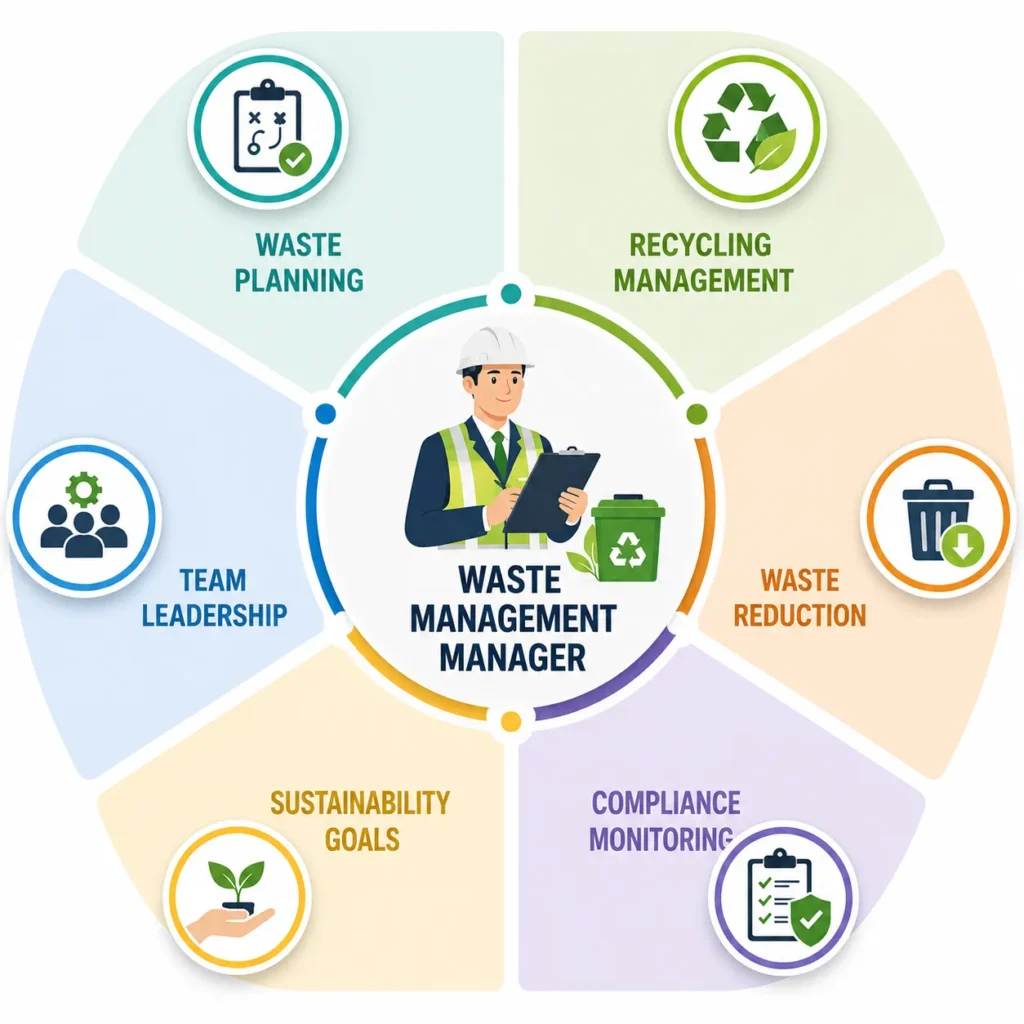
A Waste Management Manager is a professional who plans, manages, and improves waste management activities within an organisation, business, or public sector. They are responsible for ensuring that waste is collected, handled, recycled, treated, and disposed of in a safe and efficient way.
In simple terms, a Waste Management Manager helps organisations reduce waste, improve recycling, follow environmental requirements, and adopt better ways of managing resources. They work to create waste solutions that are practical, cost-effective, and environmentally responsible.
Purpose of a Waste Management Manager
The main purpose of a Waste Management Manager is to help organisations manage their waste effectively while reducing harm to the environment. They develop strategies and processes that support waste reduction, recycling, and responsible disposal.
Their purpose includes:
- Reducing the amount of waste produced by organisations
- Improving recycling and reuse practices
- Ensuring waste is managed safely and correctly
- Reducing environmental risks caused by poor waste handling
- Helping organisations achieve sustainability targets
- Improving waste management efficiency and reducing unnecessary costs
Importance of Waste Management Managers in Sustainability
Waste Management Managers play an important role in sustainability because they help organisations use resources more responsibly and reduce their environmental impact. Effective waste management helps lower pollution, reduce landfill use, conserve natural resources, and support a circular economy.
By creating waste reduction plans and improving recycling systems, these professionals help organisations move towards more sustainable operations. Their work also supports wider environmental goals, such as reducing carbon emissions and protecting ecosystems.
Role of Waste Management Managers in Organisations
Within an organisation, a Waste Management Manager is responsible for overseeing waste-related activities and ensuring that waste processes work effectively. They work with employees, contractors, and management teams to improve waste practices and meet environmental objectives.
Their role may include:
- Creating and implementing waste management plans
- Monitoring waste collection, recycling, and disposal processes
- Managing relationships with waste service providers
- Ensuring compliance with environmental regulations
- Training staff on proper waste handling practices
- Analysing waste data to identify improvements
- Supporting sustainability and environmental goals
Overall, Waste Management Managers help organisations reduce waste, improve efficiency, and create more sustainable working environments.
What Does a Waste Management Manager Do?
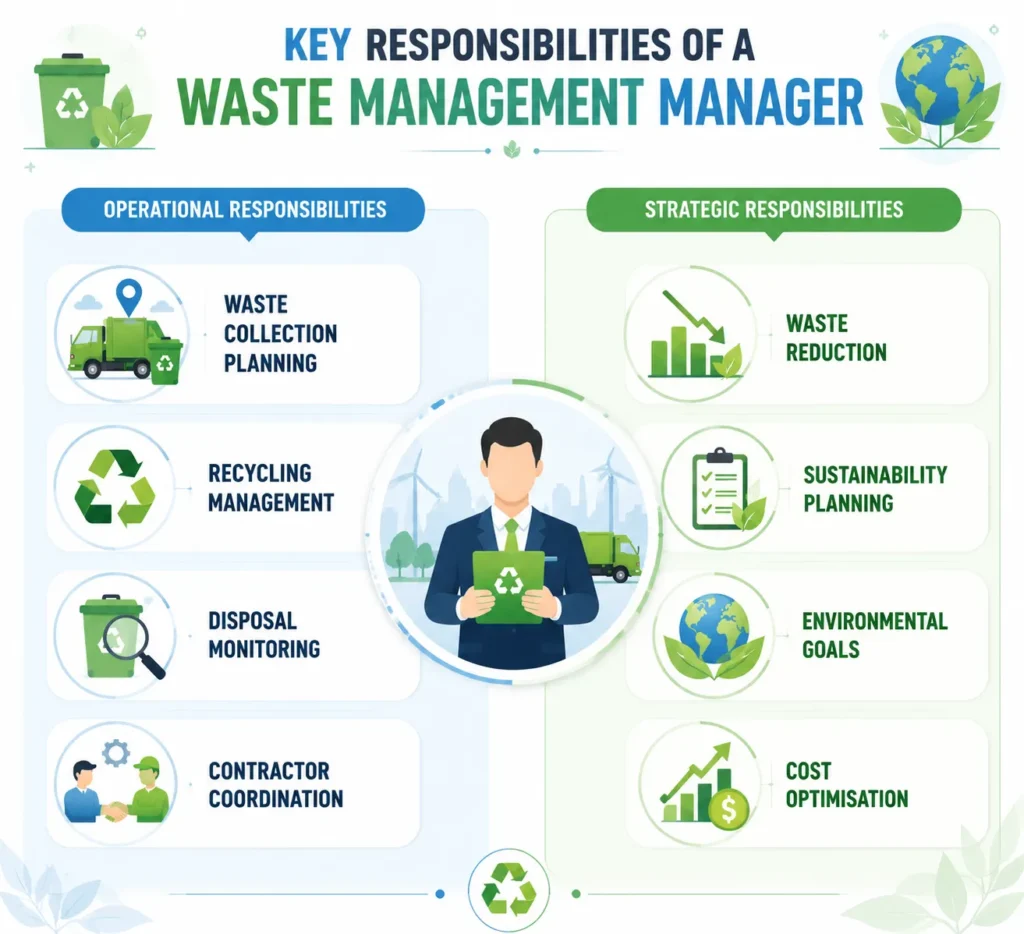
A Waste Management Manager is responsible for overseeing how an organisation handles its waste, ensuring that processes are efficient, environmentally responsible, and aligned with organisational goals. Their role includes both operational and strategic responsibilities that support sustainability and cost-effective waste management.
Operational Responsibilities
- Waste Collection Planning
Waste Management Managers organise and schedule waste collection activities to ensure waste is removed safely and efficiently. They assess waste volumes, determine appropriate collection frequencies, and ensure that storage and handling systems meet operational needs. - Recycling Management
They develop and manage recycling programmes to maximise the recovery of recyclable materials. This includes identifying recyclable waste streams, promoting proper sorting practices, and improving recycling rates across the organisation. - Disposal Monitoring
Waste Management Managers monitor how waste is treated and disposed of to ensure compliance with environmental standards. They track disposal methods, manage hazardous waste appropriately, and work to reduce reliance on landfill. - Contractor Coordination
They work closely with external waste service providers, managing contracts and ensuring services are delivered effectively. This includes monitoring contractor performance, resolving issues, and ensuring compliance with agreed standards.
Strategic Responsibilities
- Waste Reduction Strategies
Waste Management Managers develop strategies to minimise waste generation. They analyse waste sources and implement initiatives such as reuse programmes, improved procurement practices, and waste prevention measures. - Sustainability Planning
They contribute to broader sustainability goals by creating waste management plans that support environmental objectives. This includes promoting recycling, resource efficiency, and sustainable waste practices. - Environmental Goals
They help organisations meet environmental targets by tracking waste performance and implementing improvements. This may involve reducing landfill waste, increasing recycling rates, and lowering environmental impact. - Cost Optimisation
Waste Management Managers identify opportunities to reduce costs associated with waste handling. By improving efficiency, reducing waste volumes, and managing contracts effectively, they help organisations achieve financial and environmental benefits.
Key Responsibilities of a Waste Management Manager
A Waste Management Manager has a wide range of responsibilities that help organisations manage waste safely, reduce environmental impact, and improve sustainability. Their role involves planning waste activities, managing teams, following environmental requirements, and finding better ways to reduce and recycle waste.
Developing Waste Management Strategies
Waste Management Managers create plans and strategies to improve how an organisation handles waste. They analyse current waste practices, identify areas for improvement, and develop solutions to reduce waste, improve recycling, and increase efficiency.
These strategies help organisations manage waste in a more organised, sustainable, and cost-effective way.
Ensuring Regulatory Compliance
Waste Management Managers ensure that waste activities follow environmental laws, safety requirements, and industry standards. They monitor waste handling, storage, transportation, and disposal processes to make sure they are carried out correctly.
By maintaining compliance, they help organisations avoid environmental risks, penalties, and unsafe waste practices.
Managing Waste Reduction Programmes
Reducing waste is one of the main responsibilities of a Waste Management Manager. They develop programmes that help organisations produce less waste and use resources more efficiently.
They may introduce waste prevention methods, reuse systems, and better purchasing practices to reduce unnecessary waste generation.
Leading Waste Management Teams
Waste Management Managers lead and support teams involved in waste collection, recycling, and disposal activities. They provide guidance, assign responsibilities, and ensure employees follow correct waste management procedures.
Good team leadership helps improve safety, productivity, and the overall performance of waste operations.
Monitoring Environmental Performance
Waste Management Managers track and evaluate an organisation’s waste performance. They collect data on waste generation, recycling rates, disposal methods, and environmental improvements.
This information helps organisations measure progress, identify problems, and improve their sustainability performance.
Managing Budgets and Resources
Waste Management Managers are responsible for managing budgets and resources related to waste operations. They review costs, manage waste service contracts, and identify ways to improve efficiency while reducing unnecessary expenses.
Effective resource management helps organisations achieve better waste outcomes while controlling costs.
Implementing Recycling Initiatives
Waste Management Managers develop and improve recycling programmes to increase the recovery of valuable materials. They encourage proper waste separation, educate employees, and monitor recycling performance.
These initiatives help reduce landfill waste, conserve resources, and support sustainable waste management practices.
Skills Required to Become a Waste Management Manager
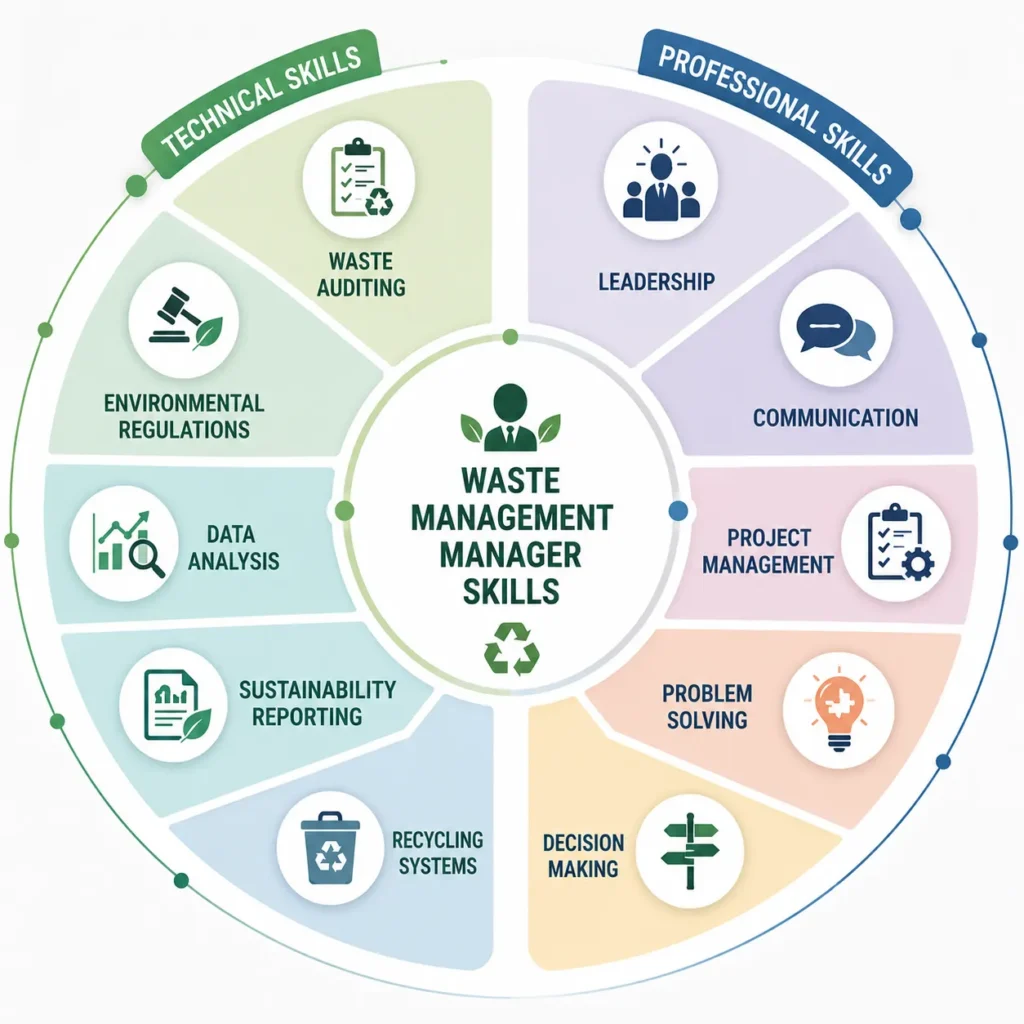
A successful Waste Management Manager needs a combination of technical knowledge and professional skills to manage waste operations effectively. These skills help them develop better waste solutions, improve sustainability practices, manage teams, and make informed decisions.
Technical Skills Required for Waste Management Managers
Waste Auditing
Waste Management Managers need waste auditing skills to understand how much waste an organisation produces and where improvements can be made. They analyse waste types, quantities, and disposal methods to identify opportunities for waste reduction and better resource management.
Environmental Regulations
Knowledge of environmental regulations is essential for Waste Management Managers. They need to understand waste handling requirements, safety standards, and environmental guidelines to ensure waste activities are carried out legally and responsibly.
Data Analysis
Waste Management Managers use data analysis skills to review waste records, recycling rates, costs, and operational performance. Analysing this information helps them identify problems, measure improvements, and make better waste management decisions.
Sustainability Reporting
Sustainability reporting skills help Waste Management Managers track and communicate environmental performance. They prepare reports on waste reduction, recycling achievements, and sustainability progress to support organisational goals.
Recycling Systems
Understanding recycling systems allows Waste Management Managers to design and improve recycling programmes. They need knowledge of waste separation methods, recycling processes, and resource recovery practices to increase recycling efficiency.
Professional Skills Required for Waste Management Managers
Leadership
Waste Management Managers need strong leadership skills to guide teams, manage daily operations, and create a positive working environment. Good leadership helps employees follow safe and effective waste management practices.
Communication
Effective communication skills are important because Waste Management Managers work with employees, contractors, management teams, and environmental professionals. They need to explain waste procedures, share information, and coordinate activities clearly.
Project Management
Project management skills help Waste Management Managers plan and deliver waste improvement projects. They manage timelines, resources, budgets, and teams to successfully implement waste reduction and sustainability initiatives.
Problem-Solving
Waste management often involves challenges such as increasing waste volumes, operational issues, or compliance concerns. Strong problem-solving skills help managers identify causes, evaluate solutions, and implement effective improvements.
Decision-Making
Waste Management Managers make important decisions about waste strategies, recycling methods, contractors, and resource use. Good decision-making skills help them choose solutions that support environmental, operational, and financial goals.
Overall, a combination of technical knowledge and professional skills enables Waste Management Managers to manage waste effectively, improve sustainability performance, and lead successful waste management programmes.
Waste Management Manager vs Waste Management Officer
Waste Management Officers and Waste Management Managers both play important roles in managing waste activities, but their responsibilities and level of decision-making are different. A Waste Management Officer usually focuses on supporting daily operations, while a Waste Management Manager is responsible for leading strategies, managing teams, and making wider organisational decisions.
| Area | Waste Management Officer | Waste Management Manager |
|---|---|---|
| Main Focus | Daily operations | Strategy and leadership |
| Decision Level | Supports decisions | Makes decisions |
| Responsibilities | Monitors activities | Manages systems |
| Team Role | Supports teams | Leads teams |
| Planning | Implements plans | Creates strategies |
| Primary Objective | Ensure smooth daily waste operations | Improve overall waste management performance |
| Leadership | Limited supervisory role | Leads teams and contractors |
| Compliance | Monitors compliance activities | Develops compliance strategies |
| Reporting | Prepares operational reports | Reviews performance and sets targets |
| Sustainability | Supports sustainability initiatives | Develops sustainability strategies |
| Budget Responsibility | Assists with operational costs | Manages waste management budgets |
| Career Level | Operational | Management |
In simple terms, a Waste Management Officer focuses more on carrying out and monitoring waste activities, while a Waste Management Manager takes a leadership role by planning strategies, managing resources, and improving overall waste management performance.
Importance of Waste Management Managers in Sustainability
Waste Management Managers play an important role in helping organisations achieve their sustainability goals. They help reduce waste, improve resource use, and create better systems for managing materials throughout their lifecycle. Their work supports environmental protection and helps organisations move towards more sustainable operations.
Supporting the Circular Economy
Waste Management Managers support the circular economy by promoting the reuse, recycling, and recovery of materials instead of sending waste directly to landfill. They help organisations find ways to keep resources in use for longer and reduce the need for new raw materials.
By developing recycling programmes and waste reduction strategies, they help create a system where waste materials can become valuable resources.
Helping Reduce Carbon Emissions
Poor waste management can contribute to greenhouse gas emissions through activities such as landfill disposal and inefficient resource use. Waste Management Managers help reduce these impacts by improving recycling, reducing waste generation, and encouraging more sustainable disposal methods.
Their strategies support organisations in lowering their carbon footprint and contributing to climate change action.
Improving Resource Efficiency
Waste Management Managers help organisations use resources more effectively by identifying where materials are being wasted and finding ways to reduce unnecessary consumption. They analyse waste processes, improve recycling systems, and encourage practices such as reuse and responsible purchasing.
Better resource efficiency helps organisations save materials, reduce costs, and improve overall sustainability performance.
Supporting ESG Goals
Environmental, Social, and Governance (ESG) goals are becoming increasingly important for organisations. Waste Management Managers support the environmental part of ESG by improving waste practices, reducing pollution, and helping organisations meet sustainability targets.
They also provide waste performance data and reports that help organisations measure and communicate their environmental progress.
Protecting the Environment
One of the most important roles of Waste Management Managers is protecting the environment from the harmful effects of poor waste management. They help ensure waste is handled safely, reduce pollution risks, and promote responsible disposal methods.
Through better waste planning and management, they contribute to cleaner communities, healthier ecosystems, and a more sustainable future.
Overall, Waste Management Managers are essential for creating sustainable waste systems that support environmental protection, reduce carbon emissions, improve resource efficiency, and help organisations achieve their long-term sustainability objectives.
Technologies Used by Modern Waste Management Managers
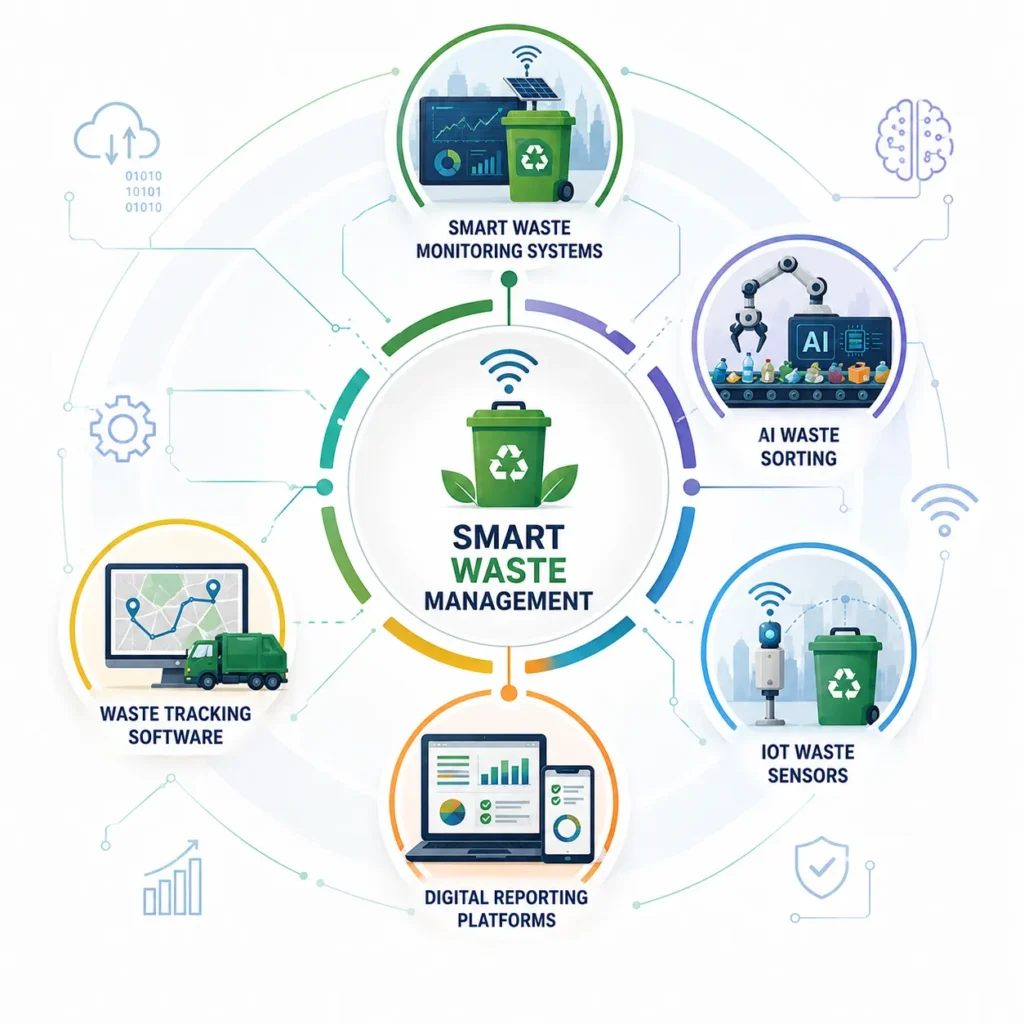
Modern technology is changing the way organisations manage waste. Waste Management Managers now use digital tools and smart systems to improve waste collection, increase recycling efficiency, monitor performance, and make better decisions based on accurate data.
These technologies help organisations reduce waste, save resources, improve operational efficiency, and achieve their sustainability goals.
Smart Waste Monitoring Systems
Smart waste monitoring systems help Waste Management Managers track waste levels, collection needs, and operational performance. These systems provide real-time information about waste containers and help organisations plan collections more efficiently.
By knowing when waste bins need emptying, organisations can reduce unnecessary collections, lower costs, and improve waste management efficiency.
AI-Based Waste Sorting
Artificial Intelligence (AI) is being used to improve waste sorting processes. AI-powered systems can identify and separate different types of waste materials, such as plastics, metals, and paper, more accurately and quickly.
Waste Management Managers use these technologies to improve recycling rates, reduce contamination, and increase the recovery of valuable materials.
IoT Waste Sensors
Internet of Things (IoT) waste sensors are smart devices placed in waste containers to collect information about waste levels and usage patterns. These sensors allow managers to monitor waste conditions remotely and make better collection decisions.
IoT technology helps reduce unnecessary transport, improve collection schedules, and support more sustainable waste operations.
Digital Reporting Platforms
Digital reporting platforms help Waste Management Managers collect, analyse, and share waste performance information. These platforms allow organisations to monitor recycling rates, waste volumes, environmental performance, and sustainability progress.
Accurate digital reporting supports better decision-making and helps organisations demonstrate their progress towards waste reduction targets.
Waste Tracking Software
Waste tracking software allows organisations to record and manage waste activities from collection to final disposal. It helps Waste Management Managers monitor waste movements, maintain compliance records, and identify opportunities for improvement.
By using waste tracking systems, organisations can improve transparency, ensure responsible waste handling, and make waste management processes more efficient.
Overall, modern technologies provide Waste Management Managers with better tools to manage waste operations, improve recycling outcomes, reduce environmental impact, and support the transition towards smarter and more sustainable waste management systems.
Career Pathway for a Waste Management Professional
Waste Management Assistant
(Basic waste tasks, sorting, records)
↓
Waste Coordinator
(Manage daily operations, schedules, recycling)
↓
Waste Management Specialist
(Improve systems, compliance, sustainability)
↓
Waste Management Manager
(Lead operations, strategy, teams)
↓
Sustainability Manager
(Oversee sustainability goals, environmental strategy)
Future of Waste Management Careers
Waste management careers are becoming more important as people focus more on protecting the environment and using resources wisely. As environmental problems grow, there is a greater need for professionals who can manage waste and create better solutions.
Growth of the Circular Economy
The circular economy is creating new job opportunities in waste management. Instead of throwing things away, this approach focuses on reducing waste, reusing materials, and keeping resources in use for longer.
Waste management professionals help improve recycling systems and support organisations in using resources more sustainably.
Increasing Zero Waste Initiatives
Many organisations and cities are trying to achieve zero waste by reducing the amount of waste sent to landfills. This creates a need for professionals who can plan waste reduction and improve recycling systems.
Waste management managers help by finding waste sources, improving processes, and helping organisations meet their waste reduction goals.
Supporting Climate Action
Waste management is linked to climate change because poor waste handling can increase harmful emissions. Professionals in this field help reduce environmental impact by improving recycling and reducing landfill use.
Their work helps organisations lower emissions and use resources more efficiently.
Development of Sustainable Cities
As cities grow, good waste management becomes more important for clean and healthy environments. Sustainable cities need better waste collection, recycling systems, and resource management.
Waste management professionals help design smarter systems that reduce pollution and improve public health.
Growth of Green Jobs
There is a growing demand for green jobs in waste management and environmental fields. Organisations need people with skills in recycling, waste reduction, and sustainability.
Careers in waste management are expected to grow as more businesses and governments focus on sustainability.
Overall, waste management careers have a strong future, with many opportunities for people who want to help protect the environment and create a cleaner world.
Conclusion
Waste Management Managers help organisations reduce waste, protect the environment, and meet sustainability goals. They do more than just handle waste—they plan better systems, improve recycling, manage teams, and make sure resources are used wisely.
As more focus is placed on sustainability and climate action, the need for skilled Waste Management Managers is increasing. They help organisations lower their environmental impact and work more efficiently.
With the rise of green jobs and sustainable practices, waste management offers good career opportunities for people who want to help create a cleaner and more sustainable future.