
Environmental Risk Manager: Role, Responsibilities, Skills, Salary, and Career Guide
Environmental challenges such as climate change, pollution, resource shortages, and biodiversity loss are increasing worldwide. Organisations now need skilled professionals to identify and manage environmental risks effectively.
Environmental Risk Managers help businesses reduce environmental impacts, meet compliance requirements, and develop sustainable strategies. They play an important role in protecting organisations, communities, and ecosystems for the future.
As environmental regulations become stricter and sustainability becomes a global priority, the demand for Environmental Risk Managers is growing across industries. These professionals help organisations understand potential environmental threats, improve decision-making, and create effective risk management plans that support long-term environmental protection.
What Is an Environmental Risk Manager?
An Environmental Risk Manager is a professional who identifies, evaluates, and manages environmental risks that can impact organisations, communities, and natural ecosystems. They help organisations prevent environmental harm, follow regulations, and develop sustainable practices.
They support organisations by:
- Preventing environmental damage and reducing negative impacts
- Ensuring compliance with environmental laws and standards
- Improving sustainability performance and resource management
- Reducing risks related to climate change and environmental challenges
- Developing strategies to protect people, businesses, and ecosystems
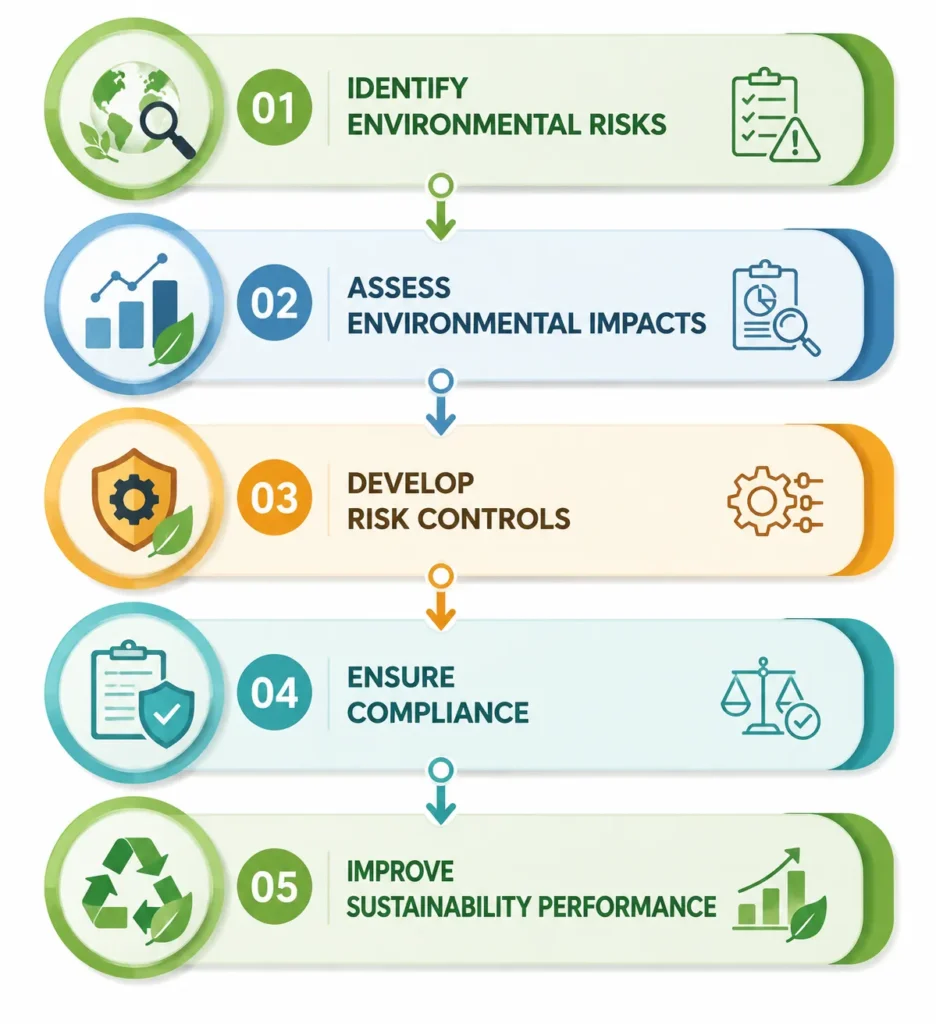
Importance of Environmental Risk Management
Environmental Risk Management helps organisations identify and control environmental threats before they cause serious damage. It supports sustainable operations, protects ecosystems, and helps businesses meet legal and environmental responsibilities.
Key benefits include:
- Reducing Environmental Damage
Helps prevent pollution, resource depletion, habitat loss, and other environmental impacts. - Ensuring Regulatory Compliance
Supports organisations in meeting environmental laws, standards, and permit requirements. - Managing Climate-Related Risks
Helps businesses prepare for climate challenges such as extreme weather events and carbon reduction requirements. - Improving Sustainability Performance
Supports efficient resource use, waste reduction, and long-term environmental goals. - Protecting Business Reputation
Reduces environmental incidents and helps organisations maintain stakeholder trust. - Supporting Better Decision-Making
Provides data and risk insights to help organisations make responsible strategic decisions.
Difference Between Environmental Manager and Environmental Risk Manager
Although both roles focus on protecting the environment and improving sustainability, their responsibilities and areas of focus are different. An Environmental Manager mainly manages overall environmental performance, while an Environmental Risk Manager focuses on identifying, assessing, and reducing potential environmental threats.
| Environmental Manager | Environmental Risk Manager |
|---|---|
| Focuses on managing an organisation’s overall environmental performance. | Focuses on identifying and controlling environmental risks that may impact organisations and ecosystems. |
| Develops and implements environmental policies and management systems. | Conducts environmental risk assessments and develops risk mitigation strategies. |
| Ensures compliance with environmental regulations and standards. | Evaluates potential risks related to climate change, pollution, resource shortages, and environmental incidents. |
| Manages environmental programmes such as waste reduction, recycling, and sustainability initiatives. | Prioritises environmental risks and recommends controls to reduce potential impacts. |
| Conducts environmental audits and monitors environmental performance. | Analyses risk data, prepares risk reports, and supports decision-making. |
| Mainly focuses on improving current environmental practices. | Focuses on predicting future environmental challenges and preventing possible damage. |
| Commonly works in operations, compliance, and sustainability departments. | Often works with risk management, ESG, sustainability, compliance, and strategic planning teams. |
What Does an Environmental Risk Manager Do?
An Environmental Risk Manager plays a key role in identifying, assessing, and controlling environmental risks that may affect organisations, communities, and ecosystems. They analyse potential threats, develop risk reduction strategies, and ensure that organisations follow environmental requirements while improving sustainability performance.
Their main responsibilities include:
1. Identify Environmental Risks
Environmental Risk Managers examine different factors that may create environmental harm, including:
- Pollution sources and potential contamination risks
- Climate-related threats and extreme weather impacts
- Resource usage and sustainability challenges
- Environmental impacts caused by business activities
2. Conduct Environmental Risk Assessments
They evaluate environmental risks to understand their severity and possible consequences. This includes:
- Assessing the likelihood of environmental incidents
- Measuring potential environmental damage
- Analysing impacts on business operations and stakeholders
3. Develop Risk Mitigation Strategies
They create practical solutions to reduce environmental risks and improve sustainability. These strategies may include:
- Pollution prevention measures
- Waste reduction and resource efficiency plans
- Sustainable resource management approaches
- Climate adaptation and resilience strategies
4. Ensure Environmental Compliance
Environmental Risk Managers help organisations meet legal and regulatory requirements by monitoring:
- Environmental laws and regulations
- Required permits and approvals
- Environmental reporting requirements
- Internal environmental policies and standards
Environmental Risk Assessment
Environmental Risk Assessment is a systematic process used to identify, evaluate, and manage environmental hazards that may affect organisations, communities, and ecosystems. Environmental Risk Managers use this process to understand potential impacts and develop effective control measures.
Key Steps in Environmental Risk Assessment:
1. Risk Identification
Identify potential environmental hazards such as pollution, emissions, waste, climate impacts, and resource issues.
2. Risk Analysis
Evaluate the likelihood and possible consequences of environmental incidents.
3. Risk Evaluation
Prioritise risks based on their severity and impact level.
4. Risk Control and Mitigation
Develop strategies to prevent, reduce, or manage environmental risks.
5. Monitoring and Review
Continuously monitor risks and improve environmental management practices.
Environmental Risk Manager Workflow
Environmental Risk Assessment Workflow
🔍 Risk Identification
↓
📊 Risk Assessment
↓
⚠️ Risk Prioritisation
↓
🛡️ Control Measures
↓
📈 Monitoring
↓
📋 Reporting and Improvement
Key Responsibilities of an Environmental Risk Manager
An Environmental Risk Manager is responsible for managing environmental risks and supporting sustainable practices within an organisation. Their key responsibilities include:
- Conducting environmental risk assessments
- Developing environmental risk management strategies
- Monitoring environmental laws and regulatory compliance
- Planning and managing environmental audits
- Analysing environmental data and performance trends
- Supporting ESG and sustainability reporting
- Preparing environmental risk assessment reports
- Collaborating with internal teams, regulators, and stakeholders
Skills Required to Become an Environmental Risk Manager
An Environmental Risk Manager needs a combination of technical knowledge and professional skills to identify risks, develop solutions, and support sustainable decision-making.
Technical Skills
- Environmental impact assessment
- Environmental risk management techniques
- Knowledge of environmental laws and regulations
- Understanding of sustainability frameworks
- Environmental auditing skills
- Environmental data analysis and reporting
Professional Skills
- Leadership and team management
- Effective communication
- Critical thinking and problem-solving
- Project management abilities
- Decision-making and strategic planning
Qualifications and Education Pathway
Becoming an Environmental Risk Manager usually requires a combination of education, practical experience, and professional training. A strong understanding of environmental science, risk management, and sustainability helps professionals identify and manage environmental challenges effectively.
Typical Career Pathway
Environmental Science Degree
A degree in Environmental Science, Environmental Management, Sustainability, or a related field provides foundational knowledge of ecosystems, environmental impacts, regulations, and sustainability principles.
Environmental Internship
Internships provide practical experience in environmental monitoring, compliance activities, data collection, and supporting environmental projects.
Environmental Specialist Role
Professionals gain industry experience by working on environmental assessments, audits, compliance monitoring, and sustainability initiatives.
Risk Assessment Experience
Developing skills in identifying hazards, evaluating environmental impacts, and creating risk control strategies prepares professionals for advanced environmental risk roles.
Environmental Risk Manager
With sufficient experience and technical knowledge, professionals can progress into Environmental Risk Manager positions, managing environmental risk assessments, compliance strategies, and sustainability improvements.
Additional Certifications and Training
Professionals can improve their career opportunities through:
- Environmental Management Qualifications – Develop knowledge of environmental systems, compliance, and sustainable practices.
- Sustainability Certifications – Build expertise in ESG, climate strategies, and sustainable business approaches.
- Risk Management Training – Improve skills in identifying, analysing, and controlling environmental risks.
- ISO 14001 Training – Gain knowledge of Environmental Management Systems and international environmental standards.
Environmental Risk Management Tools and Frameworks
Environmental Risk Managers use different tools and frameworks to identify, assess, and control environmental risks. These approaches help organisations reduce environmental impacts, improve compliance, and achieve sustainability goals.
ISO 14001 Environmental Management System
ISO 14001 provides a structured framework for organisations to manage their environmental responsibilities. It helps businesses control environmental impacts, improve resource efficiency, reduce waste, and maintain compliance with environmental requirements.
Environmental Impact Assessment (EIA)
Environmental Impact Assessment is used to evaluate the possible environmental effects of a project before it begins. It helps organisations identify potential risks and develop measures to reduce negative environmental impacts.
Environmental Risk Matrix
An Environmental Risk Matrix helps professionals evaluate and prioritise risks by considering:
- Likelihood of an environmental incident occurring
- Severity of potential environmental impacts
- Overall risk priority for action
ESG Reporting Frameworks
ESG reporting frameworks help organisations measure and communicate their environmental performance. They support:
- Environmental performance reporting
- Sustainability disclosures
- Tracking progress towards environmental goals and targets
Role of an Environmental Risk Manager in ESG
An Environmental Risk Manager plays an important role in the Environmental (E) aspect of ESG (Environmental, Social, and Governance) by helping organisations identify environmental risks, improve sustainability performance, and meet responsible business goals.
Their role includes:
- Assessing Environmental Risks: Identifying risks related to climate change, pollution, resource use, waste management, and environmental impacts.
- Supporting ESG Reporting: Collecting and analysing environmental data to support sustainability reports and ESG disclosures.
- Managing Climate Risks: Evaluating climate-related threats and developing strategies to improve organisational resilience.
- Improving Environmental Performance: Helping organisations reduce emissions, improve resource efficiency, and minimise environmental impacts.
- Ensuring Compliance: Monitoring environmental regulations and standards to support responsible business practices.
- Developing Sustainability Strategies: Supporting organisations in achieving sustainability targets, including carbon reduction and net-zero goals.
By connecting environmental risk management with ESG objectives, Environmental Risk Managers help organisations make informed decisions, reduce environmental impacts, and build long-term sustainable operations.
Industries Hiring Environmental Risk Managers
Environmental Risk Managers are needed across various industries to help organisations identify environmental challenges, reduce risks, and maintain sustainable operations. Their expertise supports compliance, environmental protection, and responsible decision-making.
Construction Industry
Environmental Risk Managers help construction companies reduce environmental impacts during planning and project execution. They focus on:
- Assessing environmental risks related to construction activities
- Supporting sustainable construction practices
- Ensuring compliance with environmental regulations and project requirements
- Managing risks related to waste, emissions, and resource use
Energy Sector
The energy sector relies on Environmental Risk Managers to manage environmental challenges associated with energy production and distribution. Their responsibilities include:
- Monitoring and reducing carbon emissions
- Managing environmental risks in renewable energy projects
- Supporting climate adaptation and sustainability strategies
- Ensuring compliance with environmental standards
Manufacturing Industry
Manufacturing organisations hire Environmental Risk Managers to control environmental impacts from production processes. They help with:
- Managing industrial waste and pollution risks
- Improving resource efficiency and reducing environmental impacts
- Monitoring environmental performance
- Developing strategies for sustainable operations
Government and Environmental Consulting
Government organisations and consulting firms use Environmental Risk Managers to support environmental planning and compliance activities. Their work includes:
- Developing and implementing environmental policies
- Advising organisations on regulatory requirements
- Conducting environmental assessments and audits
- Supporting sustainability and risk management programmes
Environmental Risk Manager Salary Worldwide
Environmental Risk Manager salaries vary depending on country, industry, professional experience, qualifications, and the size of the organisation. Professionals with strong expertise in environmental risk assessment, sustainability, ESG, and compliance often have greater career opportunities.
| Country | Average Annual Salary |
|---|---|
| USA | $80,000 – $120,000 |
| UK | £45,000 – £75,000 |
| Canada | CAD 70,000 – CAD 100,000 |
| Australia | AUD 80,000 – AUD 120,000 |
| Germany | €55,000 – €90,000 |
| Pakistan | PKR 1,500,000 – PKR 4,000,000 |
Environmental Risk Manager Career Progression
🎓 Student
↓
🌱 Environmental Graduate
↓
🔍 Environmental Specialist
↓
📊 Environmental Risk Analyst
↓
🌍 Environmental Risk Manager
↓
🏆 Senior Environmental Risk Manager
↓
🏢 Environmental Director
Future Demand for Environmental Risk Managers
The demand for Environmental Risk Managers is increasing as organisations face growing environmental challenges, stricter regulations, and greater expectations for sustainable business practices. These professionals play an important role in helping organisations manage risks, improve environmental performance, and achieve long-term sustainability goals.
🌍 Climate Change Regulations
- Governments worldwide are introducing stricter climate policies to reduce environmental impacts and control greenhouse gas emissions.
- Organisations need Environmental Risk Managers to identify climate-related risks and develop adaptation strategies.
- Professionals help businesses prepare for risks such as extreme weather events, resource shortages, and changing environmental requirements.
📊 Growth of ESG Practices
- Environmental, Social, and Governance (ESG) reporting is becoming a key priority for organisations and investors.
- Environmental Risk Managers support ESG initiatives by collecting environmental data, assessing risks, and improving sustainability performance.
- They help organisations demonstrate responsible environmental practices and maintain stakeholder trust.
♻️ Corporate Sustainability Requirements
- Companies are focusing more on sustainable operations, responsible resource use, and reducing environmental impacts.
- Environmental Risk Managers help develop sustainability strategies, improve environmental management systems, and reduce operational risks.
- Their expertise supports businesses in achieving environmental goals while maintaining compliance.
🎯 Net-Zero Targets
- Many organisations are committing to net-zero emissions targets to reduce their carbon footprint.
- Environmental Risk Managers help measure emissions, identify reduction opportunities, and develop carbon management plans.
- They support businesses in transitioning towards cleaner technologies and sustainable practices.
📜 Increasing Environmental Legislation
- Environmental laws and compliance requirements are becoming more complex across industries.
- Organisations require skilled professionals to monitor regulations, manage compliance risks, and avoid environmental penalties.
- Environmental Risk Managers help businesses stay prepared for changing legal requirements and maintain responsible operations.
Conclusion
Environmental Risk Managers play an important role in helping organisations identify, reduce, and manage environmental challenges. With increasing climate risks, stricter regulations, and growing sustainability goals, the demand for skilled professionals in this field continues to grow.
A career in environmental risk management offers opportunities to support sustainable development, protect ecosystems, and help organisations build a safer and more responsible future.