
What is a Climate Change Analyst?Roles, Responsibilities, Required Skills, and Career Growth
Climate change is creating new challenges for businesses, governments, and communities around the world. As organisations focus on reducing emissions, improving sustainability, and achieving net zero goals, the need for climate professionals is increasing.
A Climate Change Analyst helps organisations understand climate impacts by analysing environmental data, assessing risks, and developing solutions to support climate action. They work on areas such as carbon reduction, sustainability planning, climate risk management, and environmental improvement.
What Is a Climate Change Analyst?
A Climate Change Analyst is an environmental and sustainability professional who studies climate-related data, evaluates environmental risks, analyses climate trends, and develops evidence-based recommendations to help organisations, governments, and communities respond to climate change challenges.
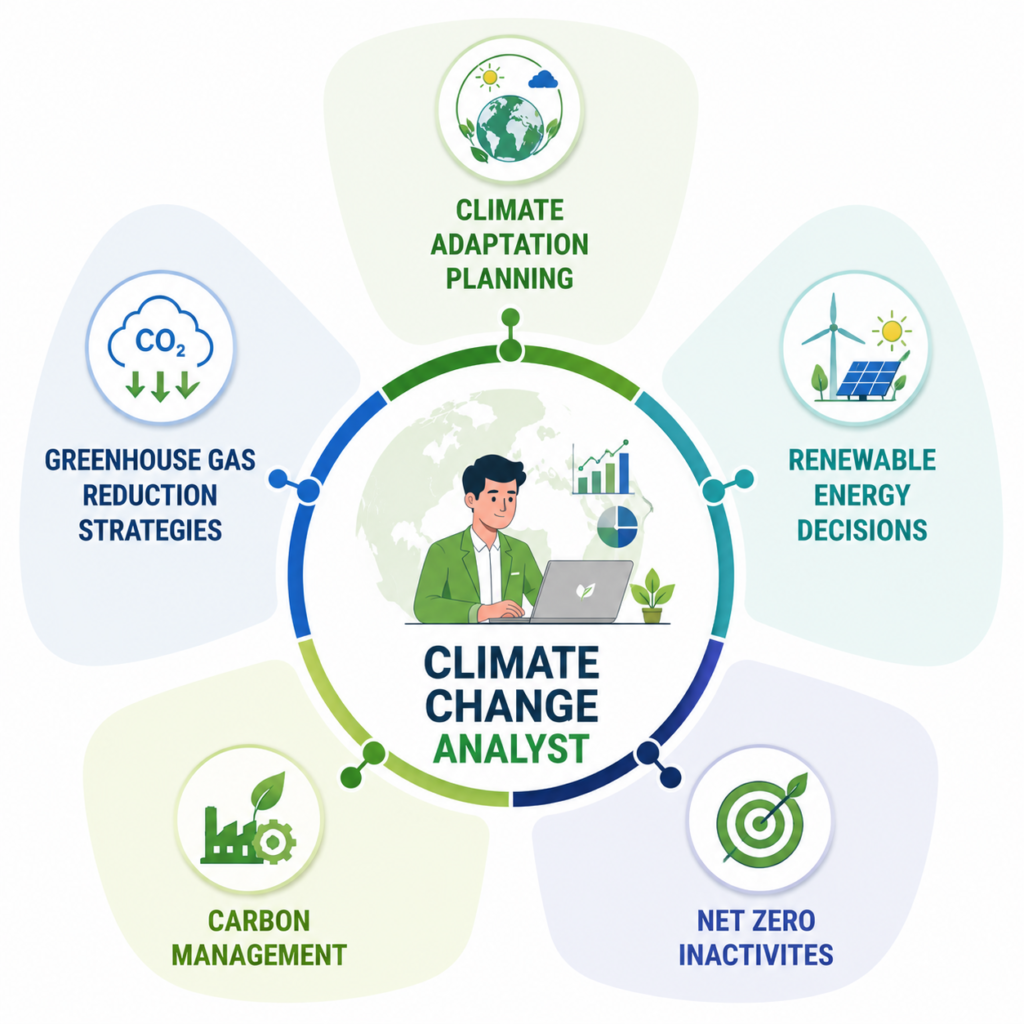
Climate Change Analysts combine scientific research, data analysis, environmental knowledge, and sustainability principles to understand how climate change affects ecosystems, businesses, economies, and societies. Their work supports climate adaptation planning, greenhouse gas reduction strategies, renewable energy decisions, carbon management, and net zero initiatives.
In today’s rapidly changing environmental landscape, Climate Change Analysts play an important role in helping organisations transition towards sustainable operations by transforming complex climate data into practical solutions.
What Does a Climate Change Analyst Do?
The main responsibility of a Climate Change Analyst is to collect, analyse, and interpret climate-related information to support sustainable decision-making.
Their work may include
1. Analysing Climate Data and Environmental Trends
Climate Change Analysts collect information from:
- Climate monitoring systems
- Environmental databases
- Satellite observations
- Scientific research reports
- Carbon emission records
- Weather and climate models
They analyse patterns such as:
- Temperature changes
- Extreme weather events
- Carbon emissions trends
- Sea-level changes
- Environmental risks
This analysis helps organisations understand climate impacts and prepare effective responses.
2. Measuring Greenhouse Gas Emissions
A major responsibility of Climate Change Analysts is supporting greenhouse gas (GHG) measurement and reduction strategies.
They help organisations:
- Calculate carbon footprints
- Analyse Scope 1, Scope 2, and Scope 3 emissions
- Identify major emission sources
- Develop carbon reduction strategies
- Track progress towards net zero targets
Their analysis supports corporate sustainability reporting and climate action plans.
3. Developing Climate Risk Assessments
Climate Change Analysts evaluate how climate change may affect organisations, industries, and communities.
They assess risks related to:
- Flooding
- Extreme temperatures
- Water shortages
- Supply chain disruption
- Agricultural impacts
- Infrastructure vulnerability
These assessments help organisations create climate adaptation and resilience strategies.
4. Supporting Sustainability and ESG Strategies
Many Climate Change Analysts work closely with sustainability and ESG teams.
They contribute to:
- ESG reporting
- Climate disclosure frameworks
- Sustainability strategies
- Environmental performance monitoring
- Net zero planning
Their expertise helps organisations meet increasing environmental expectations from governments, investors, customers, and stakeholders.
Role of a Climate Change Analyst in ESG
A Climate Change Analyst plays an important role in the environmental aspect of ESG (Environmental, Social, and Governance) by helping organisations understand, measure, and reduce their climate-related impacts.
They support ESG strategies by analysing greenhouse gas emissions, assessing climate risks, tracking environmental performance, and providing data-driven recommendations for sustainability improvements.
Key responsibilities include:
- Measuring and analysing carbon emissions and environmental impacts
- Supporting ESG reporting and climate-related disclosures
- Assessing risks from climate change, such as extreme weather and resource challenges
- Developing strategies for emission reduction and net zero targets
- Monitoring sustainability performance using environmental data
- Supporting compliance with climate regulations and reporting frameworks
- Providing insights to help businesses make sustainable decisions
By connecting climate data with business strategies, Climate Change Analysts help organisations improve environmental performance, manage climate risks, and achieve long-term sustainability goals.
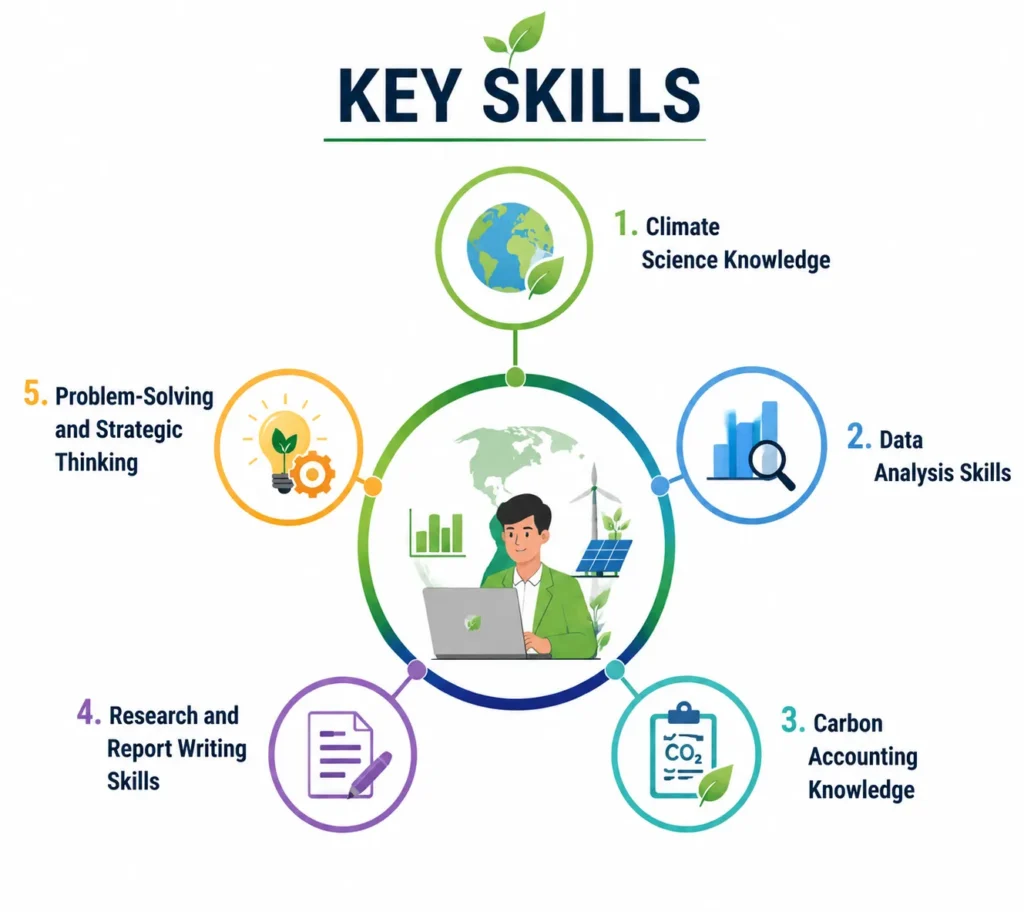
Key Skills Required to Become a Climate Change Analyst
Successful Climate Change Analysts require a combination of technical, analytical, and environmental skills.
1. Climate Science Knowledge
A strong understanding of:
- Climate systems
- Global warming impacts
- Climate adaptation
- Climate mitigation strategies
- Environmental sustainability principles
helps analysts interpret climate challenges accurately.
2. Data Analysis Skills
Climate Change Analysts work extensively with data.
Important skills include:
- Data collection
- Statistical analysis
- Data visualisation
- Trend analysis
- Research methods
- Environmental modelling
Common tools may include:
- Excel
- GIS software
- Data analytics platforms
- Carbon accounting software
- Climate modelling tools
3. Carbon Accounting Knowledge
Modern climate roles increasingly require knowledge of:
- Greenhouse gas accounting
- Carbon footprint assessment
- Emission reduction strategies
- Carbon reporting standards
- Net zero frameworks
This enables analysts to support organisational climate goals.
4. Research and Report Writing Skills
Climate Change Analysts must communicate complex information clearly.
They prepare:
- Climate assessment reports
- Sustainability reports
- Policy recommendations
- Risk analysis documents
- Research summaries
Strong written communication is essential for influencing decision-makers.
5. Problem-Solving and Strategic Thinking
Climate challenges often involve complex environmental and business factors.
Analysts need to evaluate:
- Environmental impacts
- Economic considerations
- Operational risks
- Long-term sustainability opportunities
to recommend practical solutions.
Main Responsibilities of a Climate Change Analyst
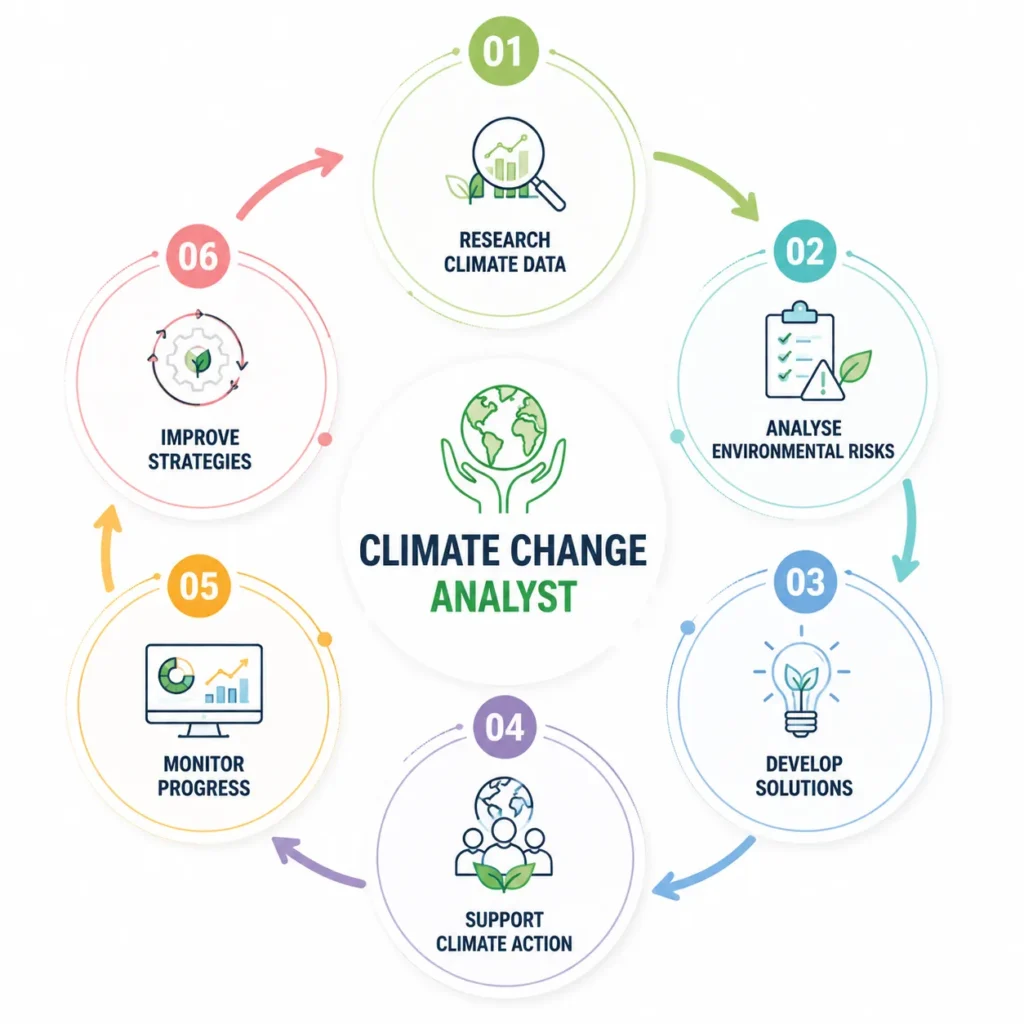
A Climate Change Analyst is responsible for researching climate impacts, analysing environmental data, and supporting organisations in developing effective climate and sustainability strategies.
The main responsibilities include:
- Collecting and analysing climate, environmental, and emissions data
- Measuring greenhouse gas emissions and supporting carbon footprint assessments
- Conducting climate risk assessments to identify environmental threats
- Researching climate trends, policies, and sustainability developments
- Supporting ESG reporting and climate-related disclosures
- Developing recommendations for emission reduction and climate adaptation strategies
- Monitoring progress towards net zero and sustainability targets
- Using data analysis and modelling tools to identify climate-related patterns
- Preparing climate reports, presentations, and research summaries
- Supporting renewable energy, sustainability, and environmental improvement projects
- Evaluating the impact of climate change on businesses, communities, and ecosystems
- Collaborating with sustainability teams, government bodies, researchers, and stakeholders
Through these responsibilities, Climate Change Analysts help organisations make informed decisions, reduce environmental impacts, manage climate risks, and improve long-term sustainability performance.
How to Become a Climate Change Analyst?
A career as a Climate Change Analyst usually develops through education, technical training, and practical experience.
Step 1: Build Environmental Knowledge
Start by understanding:
- Climate change science
- Environmental management
- Sustainability principles
- Energy systems
- Carbon reduction approaches
Relevant backgrounds include environmental science, geography, sustainability, engineering, agriculture, economics, and related disciplines.
Step 2: Gain Relevant Qualifications and Training
Professional qualifications can help develop practical knowledge in:
- Climate risk management
- Carbon management
- Sustainability reporting
- ESG principles
- Environmental assessment
Specialised climate and sustainability training helps professionals develop industry-relevant skills.
Step 3: Develop Data and Analytical Skills
Learn how to:
- Analyse environmental datasets
- Use sustainability reporting tools
- Interpret climate information
- Create climate impact assessments
Technical skills increase career opportunities in climate-related roles.
Step 4: Gain Practical Experience
Experience can be developed through:
- Sustainability projects
- Environmental research
- Carbon reduction programmes
- Climate consultancy work
- Environmental monitoring activities
Practical exposure helps build professional credibility.
Difference Between a Climate Change Analyst and a Climate Scientist
Although both roles focus on understanding climate change, they have different areas of responsibility. A Climate Scientist mainly conducts scientific research to understand climate systems, while a Climate Change Analyst applies climate knowledge and data to support practical decisions in organisations and industries.
| Feature | Climate Change Analyst | Climate Scientist |
|---|---|---|
| Main Focus | Applying climate data | Climate research |
| Work Area | Business and sustainability | Scientific studies |
| Main Tools | ESG tools, carbon software, analytics | Climate models and research tools |
| Output | Reports and strategies | Scientific findings |
| Employers | Companies, governments, consultancies | Universities and research organisations |
Climate Change Analyst Tools and Technologies
Climate Change Analysts use various digital tools to collect, analyse, and communicate climate information.
Common tools include:
Geographic Information Systems (GIS)
Used for:
- Climate mapping
- Environmental analysis
- Risk assessment
- Location-based climate studies
Carbon Accounting Software
Used for:
- Emission calculations
- Carbon footprint measurement
- Net zero tracking
Data Analytics Platforms
Used for:
- Data processing
- Trend identification
- Climate modelling
- Reporting
Sustainability Reporting Platforms
Used for:
- Regulatory compliance
- ESG reporting
- Environmental performance tracking
Industries That Hire Climate Change Analysts
Climate Change Analysts are needed across many industries as organisations focus on reducing emissions, managing environmental risks, and improving sustainability performance. Their skills help businesses and governments make informed decisions about climate action and long-term resilience.
Government and Public Sector
Government agencies hire Climate Change Analysts to support:
- Climate policy development
- Environmental planning
- Climate adaptation strategies
- Emission reduction programmes
- Sustainability regulations and reporting
Renewable Energy and Utilities
The energy sector requires Climate Change Analysts to support:
- Renewable energy projects
- Clean energy transition plans
- Carbon reduction strategies
- Energy efficiency improvements
- Climate impact assessments
Financial Services and Sustainable Finance
Banks, investors, and financial organisations use climate expertise for:
- Climate risk assessment
- ESG analysis
- Sustainable investment decisions
- Environmental performance evaluation
- Climate-related financial reporting
Construction and Infrastructure
Climate Change Analysts support the construction sector by working on:
- Climate-resilient building strategies
- Environmental impact assessments
- Sustainable construction practices
- Low-carbon development projects
- Infrastructure risk planning
Agriculture and Food Systems
The agriculture sector hires climate professionals to analyse:
- Climate impacts on crop production
- Agricultural resilience strategies
- Water and resource management
- Food security risks
- Sustainable farming practices
Environmental Consulting Firms
Environmental consultancies employ Climate Change Analysts to provide:
- Climate risk assessments
- Sustainability advice
- Carbon footprint analysis
- Environmental research
- Climate strategy development
Manufacturing and Industrial Organisations
Manufacturing companies use Climate Change Analysts to improve:
- Energy efficiency
- Emission reduction plans
- Sustainable supply chains
- Environmental compliance
- Resource management
Technology and Data Companies
Technology organisations hire climate professionals for:
- Climate data analysis
- Environmental software development
- Sustainability platforms
- Climate modelling solutions
- Digital climate monitoring systems
Non-Governmental Organisations (NGOs) and Research Organisations
NGOs and research institutions employ Climate Change Analysts for:
- Climate research projects
- Environmental programmes
- Policy analysis
- Community climate initiatives
- Sustainability studies
As climate change continues to influence business decisions and global policies, Climate Change Analysts are becoming valuable professionals across almost every sector that aims to build a sustainable and climate-resilient future.
Climate Change Analyst Career Path
A typical career progression may include:
Environmental Assistant
↓
Environmental Analyst
↓
Sustainability Analyst
↓
Climate Change Analyst
↓
Senior Climate Change Analyst
↓
Climate Risk Manager
↓
Sustainability Manager
↓
Head of Sustainability
↓
Chief Sustainability Officer (CSO)
Career progression depends on experience, technical expertise, leadership ability, and professional development.
Climate Change Analyst Salary and Career Outlook
Climate Change Analyst salaries vary depending on:
- Country
- Industry
- Education level
- Professional experience
- Technical expertise
Professionals with skills in climate data analysis, carbon accounting, ESG reporting, and sustainability strategy generally have stronger career opportunities.
The demand for climate professionals continues to increase as organisations worldwide focus on:
- Net zero targets
- Climate regulations
- Renewable energy transition
- Sustainable business practices
- Environmental risk management
Difference Between a Climate Change Analyst and Sustainability Analyst
| Climate Change Analyst | Sustainability Analyst |
|---|---|
| Focuses mainly on climate impacts and climate data | Covers broader sustainability issues |
| Analyses climate risks and emissions | Reviews environmental, social, and governance performance |
| Works with climate models and carbon data | Works with sustainability strategies and reporting |
| Supports climate adaptation and mitigation | Supports overall sustainability improvement |
Both roles contribute to organisational sustainability goals but have different areas of focus.
Future Demand for Climate Change Analysts
The demand for Climate Change Analysts is expected to grow as organisations worldwide focus on reducing emissions, managing climate risks, and achieving sustainability goals. Businesses, governments, and industries increasingly need professionals who can analyse climate data and develop practical solutions for environmental challenges.
Future opportunities for Climate Change Analysts will increase due to:
- Growing focus on net zero targets and carbon reduction strategies
- Increasing demand for ESG reporting and climate disclosures
- Expansion of renewable energy and clean technology projects
- Need for climate risk assessments in business planning
- Stronger environmental regulations and sustainability requirements
- Rising demand for climate adaptation and resilience planning
Industries such as energy, finance, construction, agriculture, manufacturing, government, and environmental consulting are expected to require more climate professionals.
As climate change continues to influence business decisions and global policies, Climate Change Analysts will play a vital role in helping organisations build sustainable, low-carbon, and climate-resilient futures.
Conclusion
A Climate Change Analyst plays a critical role in understanding climate challenges and helping organisations develop sustainable solutions. By combining environmental knowledge, data analysis, carbon management, and strategic thinking, these professionals support global efforts towards climate resilience and net zero development.
As businesses, governments, and communities continue responding to climate change, Climate Change Analysts will remain essential professionals in building a more sustainable future.