
Top Careers in Environmental Management and Sustainability
Environmental management and sustainability are becoming global priorities as organisations work to reduce environmental impacts, address climate change, and achieve sustainability goals. This has increased demand for professionals who can manage environmental risks, improve resource efficiency, and develop sustainable strategies.
The growth of the green economy, renewable energy, ESG practices, and stricter environmental regulations is creating new career opportunities across industries such as construction, energy, manufacturing, healthcare, and technology.
With advancements in technologies like AI, GIS, and environmental data analytics, sustainability professionals are playing a key role in helping organisations make better environmental decisions. Careers in this field offer opportunities to support climate action, business growth, and a more sustainable future.
What Is Sustainability?
Sustainability is the practice of meeting present needs without compromising the ability of future generations to meet their own. It focuses on balancing environmental protection, social well-being, and economic growth to create long-term value for people, businesses, and the planet. Rather than addressing environmental concerns alone, sustainability encourages organisations and communities to make responsible decisions that support natural resources, improve quality of life, and maintain economic prosperity.
Environmental Management vs Sustainability Careers: Detailed Comparison
| Comparison Area | Environmental Management Careers | Sustainability Careers |
|---|---|---|
| Primary Focus | Protecting the environment by managing environmental impacts, pollution, waste, and compliance. | Creating long-term environmental, social, and economic value for organisations and society. |
| Main Objective | Reduce environmental risks and ensure compliance with environmental legislation and standards. | Develop sustainable business strategies that balance environmental, social, and financial performance. |
| Scope of Work | Operational and technical environmental management activities. | Strategic organisational transformation and long-term sustainability planning. |
| Typical Responsibilities | Environmental monitoring, auditing, waste management, pollution prevention, compliance inspections, EMS implementation. | ESG reporting, sustainability strategy, carbon reduction planning, stakeholder engagement, sustainability reporting, governance initiatives. |
| Key Environmental Activities | Air quality monitoring, water management, biodiversity protection, hazardous waste management, resource conservation. | Net Zero planning, circular economy initiatives, sustainable procurement, climate resilience, sustainable supply chains. |
| Business Perspective | Minimise environmental impacts and ensure legal compliance. | Improve business resilience, reputation, investor confidence, and long-term organisational value. |
| Regulatory Focus | Strong emphasis on environmental laws, permits, standards, and regulatory compliance. | Focus on ESG frameworks, sustainability reporting standards, corporate governance, and voluntary sustainability commitments alongside regulations. |
| Decision-Making Level | Mainly operational and tactical. | Strategic and executive-level decision-making. |
| Common Job Titles | Environmental Manager, Environmental Consultant, Environmental Auditor, Environmental Compliance Officer, Waste Management Manager, Environmental Scientist. | Sustainability Manager, ESG Manager, Sustainability Consultant, Carbon Manager, Climate Risk Analyst, Sustainability Reporting Specialist. |
| Typical Employers | Environmental consultancies, manufacturing companies, construction firms, government agencies, utilities, waste management organisations. | Multinational corporations, financial institutions, consulting firms, NGOs, technology companies, renewable energy organisations, public sector bodies. |
| Key Performance Indicators (KPIs) | Pollution reduction, waste minimisation, regulatory compliance, environmental incidents, energy and water consumption. | ESG ratings, carbon reduction targets, sustainability performance, stakeholder engagement, responsible sourcing, sustainability reporting outcomes. |
| Required Technical Skills | Environmental auditing, Environmental Management Systems (EMS), ISO 14001, environmental risk assessment, waste management, environmental monitoring. | ESG reporting, sustainability strategy, carbon accounting, climate risk management, sustainable finance, stakeholder management, sustainability frameworks. |
| Important Soft Skills | Problem-solving, analytical thinking, regulatory interpretation, communication, project coordination. | Leadership, strategic thinking, business communication, stakeholder engagement, innovation, change management. |
| Technology Used | Environmental monitoring equipment, GIS, remote sensing, environmental data management systems, compliance software. | ESG reporting platforms, carbon accounting software, AI-powered sustainability analytics, sustainability dashboards, business intelligence tools. |
| Career Progression | Environmental Officer → Environmental Specialist → Environmental Manager → Head of Environmental Management. | Sustainability Coordinator → Sustainability Manager → Head of Sustainability → ESG Director → Chief Sustainability Officer (CSO). |
| Industry Demand | Strong demand in construction, manufacturing, mining, utilities, transport, and environmental consulting. | Rapidly growing demand across finance, technology, healthcare, retail, energy, consulting, government, and multinational organisations. |
| Global Trends Driving Growth | Environmental regulations, pollution control, biodiversity conservation, resource management. | Climate change, ESG investing, Net Zero commitments, circular economy, sustainable development, responsible business practices. |
| Long-Term Career Outlook | Stable demand due to increasing environmental regulations and compliance requirements. | Rapid growth driven by global sustainability goals, investor expectations, climate policies, and corporate transformation initiatives. |
Why Environmental Careers Are Growing Faster Than Ever
Environmental management and sustainability careers are expanding at an unprecedented pace as organisations worldwide respond to climate change, stricter environmental regulations, and growing expectations from governments, investors, customers, and communities. Once considered a niche profession, environmental management has evolved into a strategic business function that influences corporate decision-making, operational efficiency, and long-term growth.
The transition towards a low-carbon, resource-efficient, and sustainable economy has created thousands of new career opportunities across industries such as construction, manufacturing, renewable energy, finance, healthcare, transportation, agriculture, technology, and consulting. Organisations are actively recruiting professionals who can develop sustainability strategies, manage environmental risks, improve compliance, reduce carbon emissions, and support Environmental, Social, and Governance (ESG) objectives.
Whether working for multinational corporations, government agencies, environmental consultancies, or non-profit organisations, environmental professionals play a critical role in helping businesses adapt to rapidly changing environmental and economic challenges.
Climate Change Is Driving Global Demand
Climate change remains one of the most significant forces shaping the future of employment. Rising global temperatures, extreme weather events, biodiversity loss, water scarcity, and increasing pollution have prompted governments and organisations to prioritise environmental protection and climate resilience.
As businesses work to reduce their environmental impact and prepare for climate-related risks, they require professionals who can:
- Develop climate adaptation strategies.
- Conduct environmental impact assessments.
- Reduce greenhouse gas emissions.
- Improve resource efficiency.
- Manage environmental risks.
- Support climate resilience projects.
- Ensure compliance with environmental regulations.
This growing focus on climate action has significantly increased demand for environmental managers, sustainability consultants, climate analysts, and environmental compliance specialists.
Net Zero Commitments Are Creating New Career Opportunities
Many countries and organisations have committed to achieving Net Zero greenhouse gas emissions over the coming decades. Net Zero means balancing the amount of greenhouse gases emitted with the amount removed or offset, helping to limit the impacts of climate change.
Achieving Net Zero requires organisations to transform the way they operate, creating demand for professionals who can:
- Measure carbon footprints.
- Develop carbon reduction strategies.
- Improve energy efficiency.
- Implement renewable energy solutions.
- Monitor emissions.
- Prepare Net Zero roadmaps.
- Report environmental performance.
As more organisations adopt ambitious climate targets, careers in carbon management, energy management, environmental auditing, and sustainability leadership continue to grow.
ESG Has Become a Business Priority
Environmental, Social, and Governance (ESG) has transformed how organisations measure success. Investors, customers, regulators, and business partners increasingly evaluate organisations based on their environmental performance, ethical governance, and social responsibility.
Businesses now require professionals who can integrate ESG principles into corporate strategy by:
- Preparing ESG reports.
- Developing sustainability policies.
- Managing environmental risks.
- Monitoring sustainability performance.
- Supporting responsible supply chains.
- Improving stakeholder engagement.
- Ensuring regulatory compliance.
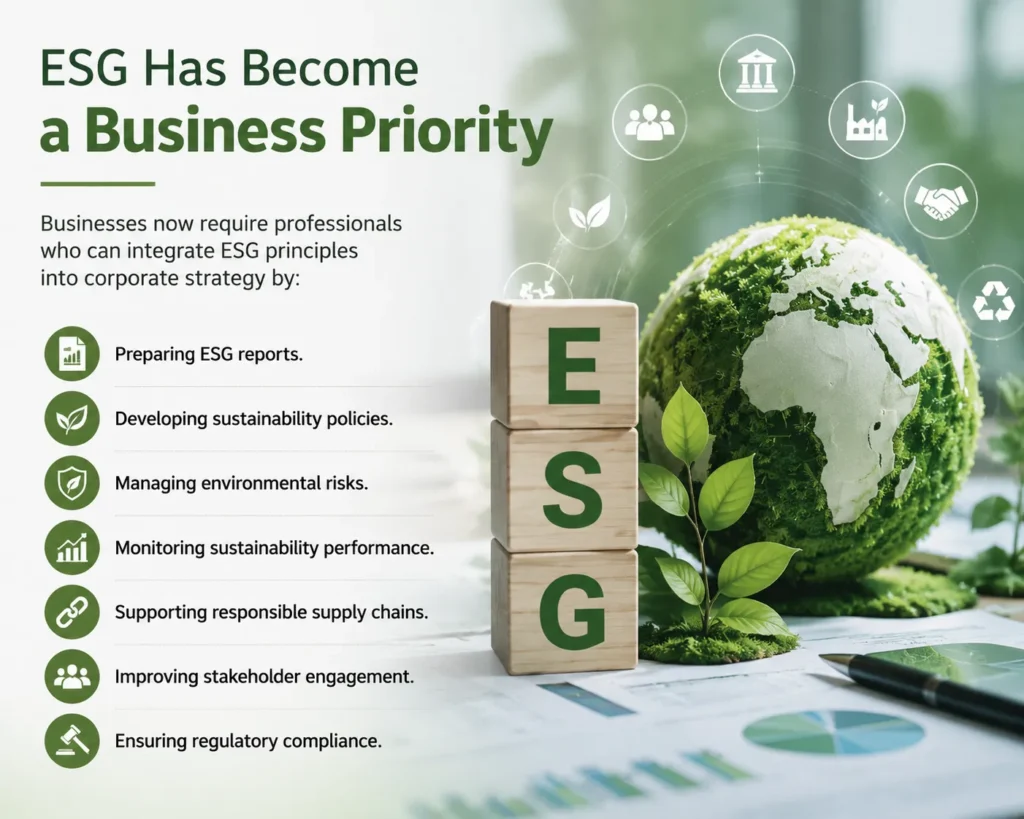
The rapid adoption of ESG frameworks has created strong demand for Sustainability Managers, ESG Consultants, Sustainability Analysts, Environmental Auditors, and Corporate Responsibility professionals across both public and private sectors.
Renewable Energy Is Expanding the Green Job Market
The global shift away from fossil fuels has accelerated investment in renewable energy technologies such as solar, wind, hydroelectric, geothermal, and bioenergy. Governments and businesses are investing heavily in clean energy projects to reduce emissions, improve energy security, and meet sustainability goals.
This transition has created a wide range of career opportunities, including:
- Renewable Energy Consultant
- Environmental Engineer
- Energy Manager
- Sustainability Consultant
- Environmental Planner
- Carbon Reduction Specialist
- Environmental Compliance Officer
- Project Manager for Renewable Energy
Professionals with expertise in environmental management are increasingly involved in planning, implementing, and monitoring renewable energy projects while ensuring environmental compliance and sustainable resource use.
The Circular Economy Is Redefining Business Practices
Traditional business models often follow a “take, make, and dispose” approach, leading to excessive waste and resource depletion. The circular economy promotes a more sustainable model by designing products and processes that minimise waste, maximise resource efficiency, and encourage reuse, recycling, and regeneration.
Organisations adopting circular economy principles need professionals who can:
- Design waste reduction programmes.
- Improve resource efficiency.
- Develop sustainable supply chains.
- Implement recycling initiatives.
- Promote sustainable product design.
- Reduce operational costs through efficient resource management.
As businesses embrace circular economy strategies, demand for specialists in waste management, resource efficiency, environmental consulting, and sustainable procurement continues to increase.
Artificial Intelligence (AI) Is Transforming Environmental Management
Artificial Intelligence is reshaping environmental management by enabling organisations to monitor environmental performance, analyse large datasets, and make faster, more informed decisions. AI-powered technologies help businesses identify environmental risks, optimise resource use, and improve sustainability outcomes.
Examples of AI applications include:
- Predicting climate-related risks.
- Monitoring air and water quality in real time.
- Analysing satellite imagery for environmental change.
- Optimising energy consumption in smart buildings.
- Improving waste sorting and recycling systems.
- Forecasting environmental trends using predictive analytics.
- Automating sustainability reporting and compliance monitoring.
As digital technologies become increasingly integrated into environmental management, employers are seeking professionals who combine sustainability expertise with data analysis, digital literacy, and technological innovation.
Environmental Legislation Is Increasing Demand for Specialists
Governments around the world continue to strengthen environmental laws and regulations to protect natural resources, reduce pollution, and encourage sustainable development. Organisations must comply with increasingly complex legal requirements related to emissions, waste management, water quality, biodiversity, environmental reporting, and resource conservation.
To remain compliant, organisations employ professionals who can:
- Interpret environmental legislation.
- Conduct environmental audits.
- Manage environmental permits and licences.
- Develop compliance strategies.
- Perform environmental risk assessments.
- Implement Environmental Management Systems (EMS).
- Train employees on environmental responsibilities.
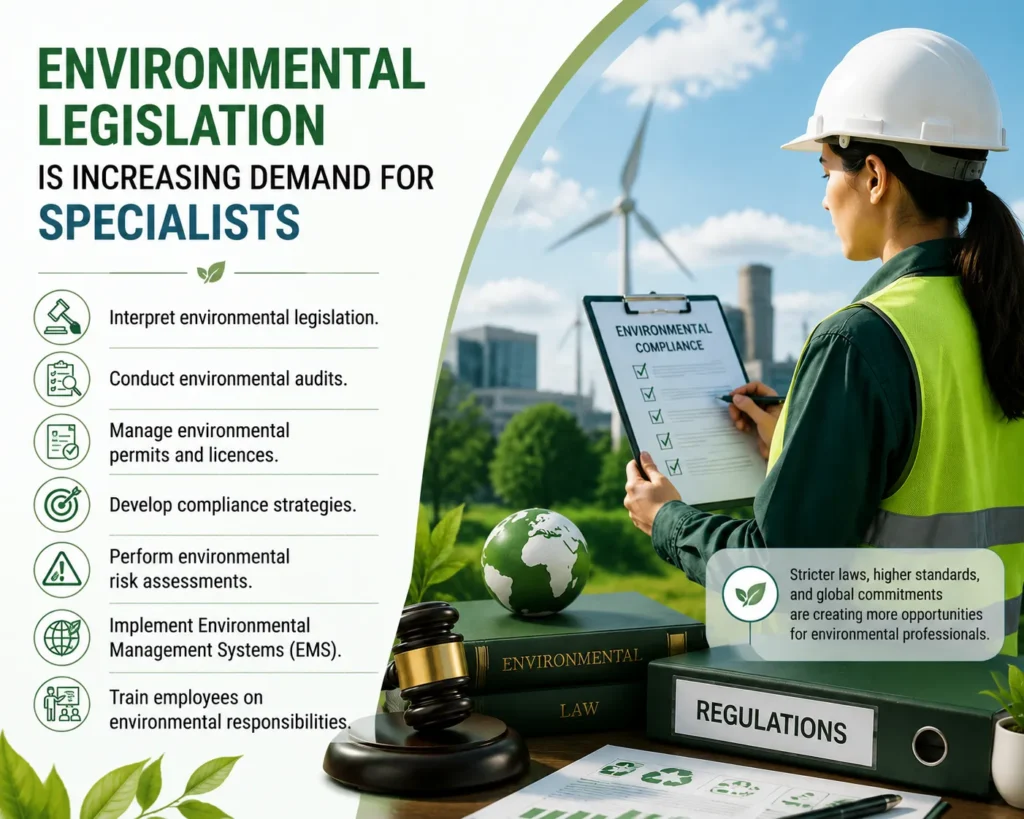
Environmental compliance has become a core business function, making experienced environmental professionals valuable across industries.
Corporate Sustainability Is Becoming a Competitive Advantage
Sustainability is no longer viewed solely as a corporate social responsibility initiative—it has become a strategic business priority. Organisations recognise that sustainable practices can reduce costs, improve operational efficiency, strengthen brand reputation, attract investors, and enhance customer trust.
Corporate sustainability professionals help organisations:
- Develop long-term sustainability strategies.
- Reduce carbon emissions.
- Improve energy and resource efficiency.
- Strengthen ESG performance.
- Enhance stakeholder engagement.
- Support sustainable innovation.
- Build resilient and responsible supply chains.
As organisations embed sustainability into their business models, leadership roles in environmental management and sustainability continue to expand.
Key Drivers Behind the Growth of Environmental Careers
| Growth Driver | Why It Matters | Career Opportunities Created |
|---|---|---|
| Climate Change | Organisations need strategies to reduce emissions and adapt to environmental risks. | Climate Risk Analyst, Environmental Manager, Sustainability Consultant |
| Net Zero Commitments | Governments and businesses are working towards carbon neutrality. | Carbon Manager, Energy Manager, Net Zero Consultant |
| ESG Adoption | Investors and regulators increasingly expect transparent sustainability reporting. | ESG Consultant, Sustainability Manager, ESG Analyst |
| Renewable Energy Expansion | Investment in clean energy continues to grow globally. | Renewable Energy Consultant, Environmental Engineer, Project Manager |
| Circular Economy | Businesses aim to reduce waste and maximise resource efficiency. | Circular Economy Specialist, Waste Management Manager, Sustainable Procurement Manager |
| Artificial Intelligence (AI) | AI improves environmental monitoring, reporting, and decision-making. | Environmental Data Analyst, AI Sustainability Specialist, Digital Sustainability Consultant |
| Environmental Legislation | Organisations must comply with evolving environmental regulations. | Environmental Compliance Officer, Environmental Auditor, Environmental Consultant |
| Corporate Sustainability | Sustainability is becoming a core element of business strategy and competitiveness. | Chief Sustainability Officer, Sustainability Director, Corporate Sustainability Manager |
The Future of Environmental Careers
Environmental management and sustainability are among the fastest-growing professional fields because they address some of the world’s most pressing challenges while supporting long-term economic development. Organisations across every sector are investing in professionals who can combine environmental expertise, strategic thinking, technological knowledge, and leadership to drive sustainable change.
As global priorities continue to evolve, careers in environmental management are expected to become even more diverse and influential. Professionals with advanced qualifications, practical experience, and expertise in areas such as ESG, climate strategy, environmental governance, renewable energy, and sustainability leadership will be well positioned to secure rewarding roles and contribute to building a more sustainable future.
Top 20 Careers in Environmental Management and Sustainability
Environmental management and sustainability offer diverse career opportunities across industries. These roles help organisations reduce environmental impacts, manage risks, improve sustainability performance, and support long-term development.
1. Environmental Manager
Job Overview:
Responsible for managing an organisation’s environmental performance and ensuring compliance with environmental standards.
Responsibilities:
- Develop environmental policies
- Manage environmental risks
- Monitor sustainability performance
- Implement Environmental Management Systems (EMS)
2. Sustainability Manager
Job Overview:
Develops and manages sustainability strategies within organisations.
Responsibilities:
- Create sustainability plans
- Manage ESG initiatives
- Reduce environmental impacts
- Report sustainability performance
3. ESG Consultant
Job Overview:
Helps organisations improve Environmental, Social, and Governance performance.
Responsibilities:
- Prepare ESG reports
- Assess sustainability performance
- Advise companies on ESG strategies
4. Environmental Consultant
Job Overview:
Provides expert advice on environmental issues and compliance.
Responsibilities:
- Conduct environmental assessments
- Identify environmental risks
- Recommend improvement solutions
5. Environmental Auditor
Job Overview:
Evaluates environmental performance and compliance.
Responsibilities:
- Conduct environmental audits
- Review policies and procedures
- Identify improvement areas
6. Carbon Manager
Job Overview:
Manages carbon reduction and emissions strategies.
Responsibilities:
- Measure carbon footprints
- Develop reduction plans
- Monitor emissions
7. Climate Change Analyst
Job Overview:
Studies climate risks and develops climate solutions.
Responsibilities:
- Analyse climate data
- Assess climate risks
- Support adaptation strategies
8. Sustainability Reporting Specialist
Job Overview:
Prepares sustainability and ESG reports.
Responsibilities:
- Collect sustainability data
- Prepare reports
- Monitor performance indicators
9. Renewable Energy Consultant
Job Overview:
Supports organisations in adopting renewable energy solutions.
Responsibilities:
- Evaluate renewable projects
- Improve energy efficiency
- Provide technical advice
10. Waste Management Manager
Job Overview:
Manages waste reduction and recycling programmes.
Responsibilities:
- Develop waste strategies
- Improve recycling systems
- Ensure compliance
11. Circular Economy Consultant
Job Overview:
Helps organisations reduce waste and improve resource efficiency.
Responsibilities:
- Design circular solutions
- Improve recycling systems
- Reduce resource consumption
12. Environmental Compliance Officer
Job Overview:
Ensures organisations follow environmental laws.
Responsibilities:
- Monitor compliance
- Manage permits
- Conduct inspections
13. Environmental Scientist
Job Overview:
Studies environmental conditions and develops solutions.
Responsibilities:
- Conduct research
- Analyse environmental data
- Support conservation projects
14. CSR Manager
Job Overview:
Manages corporate social responsibility programmes.
Responsibilities:
- Develop CSR strategies
- Manage community projects
- Support ethical business practices
15. Environmental Policy Advisor
Job Overview:
Develops environmental policies and strategies.
Responsibilities:
- Analyse regulations
- Advise governments and organisations
- Support environmental planning
16. Water Resource Manager
Job Overview:
Manages sustainable water use and conservation.
Responsibilities:
- Plan water management strategies
- Monitor water resources
- Reduce water risks
17. Biodiversity Specialist
Job Overview:
Protects ecosystems and biodiversity.
Responsibilities:
- Conduct biodiversity assessments
- Support conservation projects
- Monitor ecosystems
18. Environmental Risk Manager
Job Overview:
Identifies and manages environmental risks.
Responsibilities:
- Assess environmental hazards
- Develop risk controls
- Support decision-making
19. Sustainability Analyst
Job Overview:
Analyses sustainability data and supports strategies.
Responsibilities:
- Collect sustainability information
- Prepare reports
- Track environmental performance
20. Energy Manager
Job Overview:
Improves energy efficiency and reduces energy costs.
Responsibilities:
- Monitor energy use
- Develop efficiency plans
- Support renewable energy projects
Learn more in our complete guide: How to Become an Energy Manager: Complete Career Path for Beginners
Industries Hiring Sustainability Professionals
Sustainability professionals are now needed across almost every industry as organisations focus on reducing environmental impacts, improving efficiency, meeting ESG goals, and responding to climate challenges. From energy and construction to technology and finance, companies are hiring experts who can develop sustainable strategies and support responsible growth.
1. Construction
The construction industry is increasingly hiring sustainability professionals to develop greener buildings and reduce environmental impacts.
Career Opportunities:
- Sustainability Manager
- Environmental Manager
- Green Building Consultant
- Environmental Compliance Officer
Key Responsibilities:
- Improve energy efficiency
- Manage construction waste
- Support sustainable building practices
- Ensure environmental compliance
2. Manufacturing
Manufacturing companies require sustainability experts to reduce waste, improve resource efficiency, and lower emissions.
Career Opportunities:
- Environmental Specialist
- Sustainability Analyst
- Waste Management Manager
Key Responsibilities:
- Reduce production waste
- Improve energy efficiency
- Implement environmental management systems
- Monitor emissions
3. Oil & Gas
The oil and gas sector is investing in sustainability to reduce environmental risks and support energy transition.
Career Opportunities:
- Environmental Risk Manager
- Carbon Manager
- ESG Specialist
Key Responsibilities:
- Manage emissions
- Conduct environmental assessments
- Improve environmental performance
- Support sustainability reporting
4. Renewable Energy
The renewable energy sector is one of the fastest-growing areas for sustainability professionals.
Career Opportunities:
- Renewable Energy Consultant
- Energy Manager
- Environmental Consultant
Key Responsibilities:
- Support clean energy projects
- Assess environmental impacts
- Improve energy efficiency
- Manage sustainability goals
5. Government
Governments require sustainability professionals to create environmental policies and manage public sustainability programmes.
Career Opportunities:
- Environmental Policy Advisor
- Sustainability Officer
- Climate Change Analyst
Key Responsibilities:
- Develop environmental policies
- Support climate strategies
- Monitor environmental programmes
- Ensure regulatory compliance
6. NGOs and International Organisations
NGOs hire sustainability professionals to support conservation, climate action, and community development projects.
Career Opportunities:
- Environmental Project Manager
- Sustainability Coordinator
- Conservation Specialist
Key Responsibilities:
- Manage environmental projects
- Support sustainability campaigns
- Conduct research
- Work with communities
7. Agriculture
Agriculture is adopting sustainable practices to protect resources and improve food security.
Career Opportunities:
- Sustainable Agriculture Specialist
- Environmental Consultant
- Resource Manager
Key Responsibilities:
- Improve water management
- Reduce environmental impacts
- Promote sustainable farming
- Manage natural resources
8. Food Industry
Food companies are focusing on sustainable production, packaging, and supply chains.
Career Opportunities:
- Sustainability Manager
- Environmental Specialist
- Sustainable Supply Chain Manager
Key Responsibilities:
- Reduce food waste
- Improve packaging sustainability
- Manage supply chain impacts
- Improve resource efficiency
9. Healthcare
Healthcare organisations are improving sustainability through energy efficiency and waste reduction.
Career Opportunities:
- Healthcare Sustainability Manager
- Environmental Compliance Officer
Key Responsibilities:
- Manage medical waste
- Reduce energy consumption
- Improve sustainable operations
- Support green healthcare initiatives
10. Technology
Technology companies are investing in sustainability, renewable energy, and responsible digital operations.
Career Opportunities:
- Sustainability Analyst
- ESG Consultant
- Environmental Data Specialist
Key Responsibilities:
- Track environmental performance
- Manage carbon emissions
- Support sustainable technology solutions
11. Finance
Financial institutions are hiring sustainability experts due to growing ESG investment requirements.
Career Opportunities:
- ESG Analyst
- Sustainable Finance Consultant
- Climate Risk Specialist
Key Responsibilities:
- Assess environmental risks
- Support ESG investments
- Prepare sustainability reports
12. Transport
The transport sector needs sustainability professionals to reduce emissions and improve efficiency.
Career Opportunities:
- Sustainable Transport Manager
- Environmental Specialist
Key Responsibilities:
- Develop emission reduction plans
- Support electric mobility
- Improve transport sustainability
13. Logistics and Supply Chain
Companies are focusing on sustainable supply chains and lower-carbon operations.
Career Opportunities:
- Sustainable Supply Chain Manager
- Environmental Coordinator
Key Responsibilities:
- Reduce supply chain emissions
- Improve resource efficiency
- Develop sustainable logistics strategies
14. Consulting
Environmental consulting firms provide sustainability expertise to businesses and governments.
Career Opportunities:
- Environmental Consultant
- Sustainability Consultant
- ESG Advisor
Key Responsibilities:
- Conduct assessments
- Develop sustainability strategies
- Support compliance and reporting
15. Education
Educational institutions are creating sustainability programmes and improving campus operations.
Career Opportunities:
- Sustainability Coordinator
- Environmental Education Specialist
- Sustainability Manager
Key Responsibilities:
- Develop sustainability initiatives
- Promote environmental awareness
- Manage green campus projects
Conclusion
Environmental management and sustainability careers are growing as organisations focus on climate action, ESG, renewable energy, and sustainable business practices. Professionals with skills in environmental management, sustainability strategy, and risk management are becoming increasingly valuable across many industries.
As the green economy continues to expand, continuous learning and professional development are important for career growth. Gaining relevant qualifications and practical skills can help individuals build successful careers while contributing to a more sustainable future.